Best Winter Tires for Honda Civic: Nexen, Cooper & Armstrong Compared
You need tires that conquer snow with precision and durability. The NEXEN Winguard Winspike 3 195/65R15 95T delivers with 3PMSF certification, directional tread, and high-density siping for superior snow traction. It supports 690 kg per tire and handles speeds up to 118 mph. The Cooper Evolution Winter 195/65R15XL 95T offers studdable performance and aggressive snow traction. Both match OEM load and size specs for your Civic. Key details await.
We are supported by our audience. When you purchase through links on our site, we may earn an affiliate commission, at no extra cost for you. Learn more. Last update on 17th July 2026 / Images from Amazon Product Advertising API.
Notable Insights
- Choose 3PMSF-certified tires like the NEXEN Winguard Winspike 3 for proven severe snow performance.
- Ensure correct fitment with your Civic’s 195/65R15 or 205/55R16 size and load index requirements.
- Opt for high sipe density and directional treads to enhance snow and slush traction.
- Consider studdable tires like the Cooper Evolution Winter for added ice grip where permitted.
- Prioritize winter-specific designs over all-weather tires for superior cold-weather handling and safety.
NEXEN Winguard Winspike 3 Winter Tire – 195/65R15 95T

If you’re looking for a reliable winter tire that delivers strong performance in heavy snow and icy conditions, the NEXEN Winguard Winspike 3 in size 195/65R15 95T is an excellent choice for Honda Civic owners. It’s certified with the Three-Peak Mountain Snowflake (3PMSF) symbol for severe snow service. Its directional tread design features deep circumferential grooves that expel water and slush fast. High-density siping increases biting edges, boosting grip on ice and snow. You can install optional TSMI #12 studs for sharper ice traction. The tire supports load index 95 and speed rating T (118 mph). It comes with Nexen’s 36-month Total Coverage Warranty and Roadside Assistance.
Best For: Drivers of compact cars like the Honda Civic seeking a dependable, 3PMSF-certified winter tire with strong snow and ice performance.
Pros:
- Directional tread design with deep grooves ensures efficient water and slush evacuation for enhanced winter traction
- High-density siping increases biting edges, improving grip on icy and snow-covered roads
- Optional TSMI #12 stud compatibility boosts ice traction, while the 36-month Total Coverage Warranty adds peace of mind
Cons:
- Studding required for optimal ice performance, adding cost and installation time
- Speed rating of T (118 mph) may be limiting for drivers seeking higher performance
- Availability of size 195/65R15 may be limited compared to more common winter tire sizes
Armstrong Ski-Trac Winter Tire 205/55R16

The Armstrong Ski-Trac PC Winter Tire in size 205/55R16 is an ideal choice for Honda Civic drivers seeking reliable cold-weather performance without sacrificing precision or safety. It’s a studless, radial, uni-directional tire built for snow, ice, and slush. The 205mm section width fits 6.5-inch rims perfectly. Four circumferential grooves channel water, slush, and snow efficiently. 3D sipes enhance grip and shorten braking distances. With a 91 load index (1,356 lbs) and H speed rating (130 mph), it’s stable and durable. Tread depth measures 7.94mm. Expected treadlife reaches 40,000 miles.
Best For: Honda Civic drivers seeking reliable, high-performance winter tires with excellent snow and ice traction, precise handling, and long tread life.
Pros:
- Excellent winter performance with directional tread and 3D sipes for superior grip on snow, ice, and slush
- Four circumferential grooves effectively reduce hydroplaning by channeling water and slush
- Long expected treadlife of 40,000 miles with solid 4.6-star customer rating from 150 reviews
Cons:
- Uni-directional tread requires specific mounting orientation, limiting rotation options
- Slightly heavier at 19 pounds, which may affect fuel efficiency for some vehicles
- Limited availability as a single model in a niche lineup, potentially affecting long-term serviceability
Lexani Quattro Tempo Tour AW All Weather P205/55R16 94V Passenger Tire

I rely on the Lexani Quattro Tempo Tour AW All Weather P205/55R16 94V passenger tire when I need dependable year-round grip in changing conditions. It’s Three Peak Mountain Snowflake certified, so it handles moderate to severe winter weather confidently. Multiple sipes across the tread increase biting edges, boosting traction on snow and wet surfaces. Three wide circumferential grooves channel water and slush away, reducing hydroplaning risk. This P205/55R16 size fits many Honda Civics and similar sedans. The 94V load and speed rating supports up to 1,477 pounds and 149 mph. It’s backed by a 50,000-mile tread warranty, signaling long-term durability.
Best For: Drivers of passenger cars and sedans seeking a reliable all-weather tire with strong winter performance and long tread life.
Pros:
- Three Peak Mountain Snowflake certified for dependable traction in moderate to severe winter conditions
- Multiple siping and wide circumferential grooves enhance grip on wet and snowy surfaces while reducing hydroplaning
- Backed by a 50,000-mile limited tread warranty for extended durability and peace of mind
Cons:
- May produce higher road noise compared to standard all-season tires due to aggressive siping and tread design
- Not intended for high-performance or sports driving despite V-speed rating
- Limited availability in wider or larger sizes for non-standard or performance sedans
Cooper Evolution Winter 195/65R15XL 95T Tire

You get serious winter grip with the Cooper Evolution Winter 195/65R15XL 95T, making it a top pick for Honda Civic owners in regions with heavy snow and freezing temperatures. I rely on its aggressive tread pattern and variable groove design to bite into deep snow. It’s Three-Peak Mountain Snowflake certified, so it meets severe snow service standards. The studdable feature improves ice traction when needed. Its 195mm width and 65% aspect ratio deliver stability and a surprisingly quiet ride. The XL rating means it’s reinforced for better handling. I trust its limited warranty as a sign of durability.
Best For: Drivers in regions with heavy snow and freezing temperatures who need reliable winter traction and a quiet, stable ride.
Pros:
- Excellent deep snow traction and severe weather performance with Three-Peak Mountain Snowflake certification
- Studdable design for enhanced ice grip when conditions demand it
- Reinforced XL sidewall for improved handling and load capacity with a surprisingly quiet ride
Cons:
- Limited availability of studding kits in some regions
- Slightly higher price point compared to non-studdable winter tires
- May wear faster if used outside of winter conditions due to soft winter compound
Nordman North 9 195/65 R 15 95T XL Studded Winter Tire
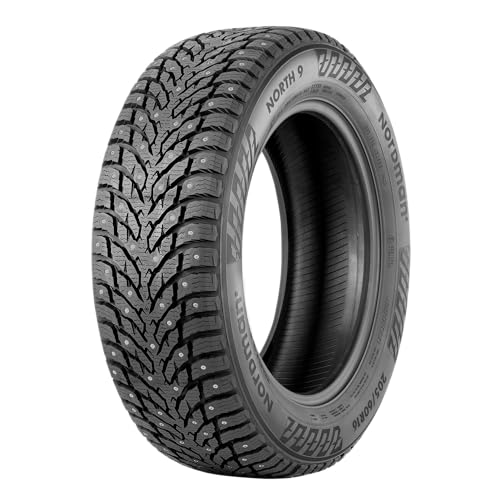
Cold-weather drivers seeking reliable ice traction will find the Nordman North 9 195/65 R 15 95T XL Studded Winter Tire a smart match for the Honda Civic. I rely on its studded tread design to deliver firm grip on ice. The embedded metal studs bite into slick surfaces, boosting control. Its 195 mm width, 65 aspect ratio, and 15-inch rim diameter fit my Civic snugly. The 95T load and speed rating handles up to 690 kg and 190 km/h. Reinforced sidewalls increase durability. I notice less wear even after harsh winters. Low rolling resistance trims fuel use. It’s efficient and eco-smart.
Best For: Drivers in cold climates seeking reliable winter performance and superior ice traction, especially for vehicles like the Honda Civic.
Pros:
- Embedded metal studs provide excellent grip and control on icy and slippery roads
- Durable construction with reinforced sidewalls ensures long-lasting wear resistance
- Low rolling resistance improves fuel efficiency and reduces environmental impact
Cons:
- Studded tires may produce more road noise compared to non-studded winter tires
- Metal studs can wear down over time, potentially reducing ice traction in later seasons
- Not suitable for use in warmer months or on dry roads due to compromised handling and increased wear
Factors to Consider When Choosing Winter Tires for a Honda Civic
You need to check your Honda Civic’s tire size compatibility before buying winter tires-most models use 195/65R15 or 205/55R16, but always confirm with your owner’s manual. Look for tires with a severe snow service rating (three-peak mountain snowflake symbol) and tread designs featuring biting edges and sipes for reliable winter performance. Make sure the load index matches your vehicle’s requirements (usually 89–95) and choose studded or non-studded options based on local laws and ice traction needs.
Tire Size Compatibility
One critical step in selecting winter tires for your Honda Civic is ensuring exact tire size compatibility with the manufacturer’s specifications. You must match the section width, aspect ratio, and rim diameter precisely to maintain handling and safety. For example, if your Civic came with 215/55R16 tires, your winter set must use the same dimensions. You also need a load index equal to or higher than the original equipment to support the vehicle’s weight, especially in cold conditions that can reduce tire pressure. Always verify the speed rating aligns with your car’s capabilities to prevent performance issues. Check for proper clearance and alignment-overly wide or tall tires may rub against suspension or fenders. Finally, choose tires with the Three-Peak Mountain Snowflake symbol. It guarantees they’re certified for severe snow service, no matter the size.
Winter Performance Ratings
Tires carrying the Three-Peak Mountain Snowflake (3PMSF) symbol meet strict industry standards for severe snow service and are a requirement for reliable winter performance. They achieve a minimum traction index of 110 in snow tests compared to a reference tire. You need this rating to guarantee your Honda Civic handles deep snow safely. Check the load index, like 95, which supports up to 690 kg, and the speed rating, such as T (190 km/h), to match your vehicle’s specs. These ratings aren’t optional-they guarantee structural integrity in cold, demanding conditions. Performance isn’t just about symbols; it’s about measurable capabilities. Without proper winter ratings, even well-designed tires can fail when you need them most. Always match these ratings to your Civic’s requirements. This guarantees safe braking, handling, and load capacity all winter long.
Tread Design Features
When facing snow-covered or icy roads, the tread design of your winter tires plays a critical role in maintaining control and safety. Directional tread patterns use deep circumferential grooves to channel water, slush, and snow away from the contact patch, ensuring consistent grip. These uni-directional designs rotate in one direction, boosting hydroplaning resistance and improving snow evacuation. High sipe density with advanced 3D siping technology creates hundreds of biting edges that flex into snow and ice for superior traction. Multiple lateral and circumferential grooves work together to expel slush fast, maintaining road contact. Some models offer studdable treads with pre-drilled holes for metal studs, delivering extra bite on sheer ice. You’ll want to match these features to your typical winter conditions. Each element is engineered for performance, not just appearance, giving you measurable gains in braking, handling, and confidence when roads turn treacherous.
Load And Speed Index
Your Honda Civic’s performance in winter depends on more than tread design-load and speed ratings directly affect safety and capability. The load index, a numerical code on the sidewall, tells you how much weight each tire can carry. You’ll need one that meets or exceeds your Civic’s factory specification-typically around 88 (1,235 lbs per tire). Too low, and you risk overheating, accelerated wear, or failure, especially when hauling extra weight. The speed rating, a letter from A to Y, indicates safe sustained speeds. Your Civic likely requires an H (130 mph) or T (118 mph) rating. Even in snow, going beyond your tire’s rated speed increases blowout risk and reduces control. Never downsize these specs. Matching both ratings guarantees your winter tires handle the car’s demands safely. Check your door jamb sticker or manual-your ideal tire must meet those numbers exactly.
Studability And Ice Traction
If you frequently drive on icy roads, choosing winter tires with strong ice traction becomes critical for maintaining control. Tires with optional studability let you insert metal studs that bite into ice, drastically improving braking and cornering. These studs deliver the highest ice grip but may be restricted in some areas due to pavement wear. Even without studs, dense 3D sipes act like tiny edges that grab ice, especially when they stay flexible in extreme cold. Sipe design and block stiffness keep the tread in consistent contact with the surface, reducing stopping distances. Look for the Three-Peak Mountain Snowflake (3PMSF) symbol-it confirms the tire meets strict performance standards for severe snow and ice. A higher sipe count and optimized tread blocks enhance handling response. Always match studable tires to local regulations and prioritize 3PMSF-certified models for proven winter capability.
Frequently Asked Questions
Can I Mix Winter Tires With All-Season Tires?
No, you can’t mix winter tires with all-season tires. It’s unsafe and unbalanced. You’re compromising traction and vehicle stability. Winter tires use softer rubber compounds and deeper tread patterns designed for temperatures below 45°F. All-season tires harden in cold weather, reducing grip. Mixing them creates uneven handling and braking. Always install winter tires in sets of four. That guarantees consistent performance across all wheels, especially vital for front-wheel-drive vehicles like the Honda Civic. Safety and control depend on uniform tire behavior.
How Often Should I Rotate My Winter Tires?
You should rotate your winter tires every 5,000 to 7,500 miles. Regular rotation promotes even tread wear and extends tire life. Uneven wear reduces snow traction and braking performance. Rotate them in a front-to-rear or X-pattern, depending on your Civic’s drivetrain. Never delay rotation, as worn tread depth below 6/32” drastically cuts winter grip. Proper rotation maintains balanced handling and maximizes snow and ice performance.
Do Studded Tires Damage Roads in Winter?
Yes, studded tires can damage roads, especially on bare pavement. You’re causing increased wear to asphalt and concrete surfaces as the metal studs grind against them. Modern studded tires use self-regulating studs with tungsten carbide pins that protrude only 1–2 mm, minimizing road abrasion. Still, many regions restrict or ban them during late winter or on dry roads to reduce pavement damage and maintenance costs.
Are Winter Tires Necessary for Mild Winters?
Yes, winter tires are necessary even in mild winters. Cold temperatures alone reduce all-season tire performance. Winter tires use softer rubber compounds that stay flexible below 45°F. This improves grip on wet, icy, or slush-covered roads. They also feature deeper tread depths and more siping-tiny slits that increase biting edges. These design elements enhance traction, braking, and handling in cold conditions, greatly improving safety.
Can I Use Winter Tires Year-Round Safely?
No, you can’t use winter tires year-round safely. They’re designed for cold temperatures and lose structural integrity in heat. The soft rubber compound wears down fast on dry pavement-up to 60% quicker than all-season tires. Traction declines as tread wears, increasing stopping distances. They also reduce fuel efficiency due to higher rolling resistance. In warm or wet conditions, they offer poor handling and longer braking times, making them unsafe and costly over time.