Best Oil Filter for Subaru: 3 Top Picks Compared
You trust genuine OEM filters like the Subaru 15208AA21A because they meet exact factory specs for flow, pressure, and filtration. It features a 68 mm diameter, M20 x 1.5 threads, and pleated media for 7,500-mile intervals. High-performance options like the Purolator PL14615 and K&N HP-1008 offer synthetic media, anti-drainback valves, and service up to 20,000 miles with full-synthetic oil. These filters maintain engine protection under thermal stress and high RPM. Peak performance starts with reliable filtration and proper fitment-knowing the right part guarantees long-term engine health.
We are supported by our audience. When you purchase through links on our site, we may earn an affiliate commission, at no extra cost for you. Learn more. Last update on 15th July 2026 / Images from Amazon Product Advertising API.
Notable Insights
- Genuine OEM Subaru oil filters meet factory specifications for flow, filtration, and pressure, ensuring reliable engine protection.
- The 15208AA21A OEM filter is trusted for 2011–2025 4-cylinder Subaru models, including Outback, Legacy, and Crosstrek.
- High-performance aftermarket filters like Purolator PL14615 offer 15,000-mile service intervals with superior contaminant capture.
- K&N HP-1008 and BOSCH 3974 provide extended durability and efficient filtration for turbo and high-stress Subaru engines.
- Proper fitment, anti-drainback valves, and crush washers are critical for maintaining oil pressure and preventing leaks at startup.
Subaru Oil Filter & Crush Washer Kit

If you own a Subaru from the past decade and demand genuine OEM reliability, the Subaru Engine Oil Filter & Crush Washer Kit is your best choice for maintaining peak engine performance. It includes a genuine Subaru oil filter (Part Number: 15208AA21A) and crush washer (803916010). This update replaces older versions like 15208AA160 and 15208AA20A. The filter captures microscopic contaminants, protecting your engine. It fits models from 2011–2025, including Outback, Legacy, Forester, and Ascent. Replace it every 7,500 miles or 6 months. The 2-pack offers convenience and consistency.
Best For: Subaru owners from 2011–2025 seeking genuine OEM parts for reliable engine protection and performance.
Pros:
- Includes genuine Subaru oil filter and crush washer for optimal compatibility and engine protection
- Replaces outdated part numbers with updated, improved design for better performance
- Convenient 2-pack ensures consistency and has extended maintenance fit for multiple services
Cons:
- Only compatible with select Subaru models and engine types, limiting universal use
- May be priced higher than aftermarket alternatives
- Design update may cause confusion with older filter appearances
Subaru Oil Filter & Gasket Kit (3-Pack)

The Subaru Oil Filter & Gasket Kit (3-Pack) stands as the ideal maintenance solution for Subaru owners who prioritize factory-grade reliability and long-term engine health. I use genuine Subaru parts because they meet exact OEM specifications. Each kit includes one oil filter (Part: 15208AA21A) and one crush gasket (803916010). These kits fit 2013–2025 Outback and Legacy (4-cylinder), 2012–2025 Impreza (non-turbo), 2011–2025 Forester, all XV Crosstrek models (2013–2025), and 2019–2025 Ascent. The filter traps microscopic contaminants, protecting my engine. I change it every 7,500 miles or 6 months.
Best For: Subaru owners seeking genuine OEM-quality oil filters and gaskets for routine maintenance on compatible Outback, Legacy, Impreza, Forester, Crosstrek, and Ascent models.
Pros:
- Genuine Subaru parts engineered to meet OEM specifications for optimal engine protection
- Includes both filter and crush gasket for convenient, complete oil changes
- Compatible with a wide range of Subaru models and engine types from 2011 to 2025
Cons:
- Only suitable for specific Subaru models and non-turbo or 4-cylinder engines
- May be priced higher than aftermarket alternatives
- Design updates may differ from older filters, causing confusion during replacement
Subaru Oil Filter & Crush Gasket Kit

My Subaru’s longevity starts with using the right components, and the Subaru Engine Oil Filter & Crush Gasket Kit delivers precision engineering tailored to my vehicle’s needs. It includes genuine parts 15208AA100, the updated oil filter replacing SOA6351520812, and crush gasket 11126AA000. I rely on this kit for my 1990–2009 Legacy or 1996–2009 Outback with 4-cylinder engines. It also fits 1993–2011 Impreza, 2002–2014 WRX/STI, 2015–2021 STi, and 1998–2010 Forester or 2003–2006 Baja. The filter’s design may differ visually from older versions. For 2010–2012 2.5L models, I must buy crush washer 803916010 separately.
Best For: Subaru owners with 4-cylinder Legacy, Outback, Impreza, WRX, STI, Forester, or Baja models from 1990–2021 seeking genuine OEM replacement parts for oil changes.
Pros:
- Includes both genuine OEM oil filter and crush gasket for a complete, proper fit
- Specifically designed for a wide range of Subaru models and engines
- Ensures optimal engine protection and performance with updated, factory-correct components
Cons:
- Crush washer 803916010 not included and required for 2010–2012 2.5L models
- Visual design differences may cause confusion when comparing to older filter versions
- Not compatible with turbocharged or 6-cylinder Subaru engines
Purolator PL14615 Advanced Oil Filter

You’ll get top-tier engine protection on every drive with the Purolator PL14615 PurolatorONE Advanced Engine Protection Spin On Oil Filter, especially if you rely on long oil change intervals. It delivers reliable filtration for up to 15,000 miles. High-density synthetic blend media removes up to 99% of contaminants. The silicone anti-drainback valve stops oil from draining back into the pan, preventing dry starts. A PTFE-treated gasket stays flexible under extreme heat, ensuring a leak-proof seal. Reinforced metal end caps and a steel center tube resist collapse. This filter holds its integrity under pressure and temperature swings. It’s built tough for performance and longevity.
Best For: Drivers seeking long-lasting engine protection with extended oil change intervals up to 15,000 miles.
Pros:
- High-density synthetic blend filtration media removes up to 99% of contaminants for superior engine protection
- Integrated silicone anti-drainback valve prevents dry starts and oil leakage
- PTFE-treated gasket and reinforced metal construction ensure durability and leak-proof performance under extreme conditions
Cons:
- Higher initial cost compared to conventional oil filters
- May not be necessary for drivers with short oil change intervals or standard driving conditions
- Limited availability in some retail locations compared to mainstream competitor filters
15208AA21A Engine Oil Filter for Subaru

Looking for reliable, high-performance protection for your Subaru? I’ve found the 15208AA21A engine oil filter delivers. It replaces 15208AA160, 15208AA20A, 15208AA15A, and SOA6351520815. It fits 2011–2025 Forester, 2013–2025 Outback and Legacy (4-cylinder), 2012–2025 Impreza, 2013–2025 XV Crosstrek, and 2019–2025 Ascent. High-efficiency filtration captures microscopic contaminants, ensuring clean oil reaches critical engine parts. I recommend changing it every 6 months or 7,500 miles. It comes one per pack. If issues arise, support responds within 24 hours by email.
Best For: Subaru owners seeking a reliable, high-efficiency oil filter compatible with a wide range of models from 2011 to 2025.
Pros:
- High-efficiency filtration removes microscopic contaminants, enhancing engine protection and longevity
- Direct replacement for multiple OEM part numbers with broad compatibility across Subaru models
- Comes with responsive customer support and a friendly return policy
Cons:
- Fits only specific Subaru models and engine types, requiring careful vehicle verification
- Recommended replacement every 6 months or 7,500 miles may not suit all driving conditions
- Sold individually, which may be less convenient for bulk maintenance planning
SOA6351520815 Engine Oil Filter for Subaru

The SOA6351520815 Engine Oil Filter stands as the OEM-standard choice for Subaru owners who prioritize factory-level reliability and precise compatibility across a wide range of models and engine types. It fits Ascent, Crosstrek, Forester, Impreza, Legacy, and Outback models from 2013 to 2025. It works with 2.0L, 2.4L, and 2.5L engines, including turbocharged XT trims. The filter replaces OEM numbers like 15208AA160 and 15208-AA15A. Its pleated media supports longer oil change intervals. A spring-loaded safety valve guarantees oil flow during cold starts. It measures 68 mm in diameter and 84 mm in height, with M20 x 1.5 threads. The blue housing has an O-ring gasket, designed to prevent leaks.
Best For: Subaru owners seeking an OEM-spec oil filter with broad compatibility across 2013–2025 models and 2.0L–2.5L engines, including turbocharged variants.
Pros:
- Direct OEM replacement ensuring precise fit and reliable performance in Subaru vehicles
- Pleated filter media and spring-loaded valve support extended oil change intervals and consistent flow during cold starts
- Leak-resistant design with O-ring gasket and durable blue housing for added reliability
Cons:
- Limited to Subaru applications, reducing versatility for non-Subaru vehicles
- Slightly higher price point compared to non-OEM or generic oil filters
- Some users may find availability restricted to dealerships or authorized retailers
K&N Premium Oil Filter HP-1008

A filter built for drivers who demand both longevity and engine protection, the K&N Premium Oil Filter HP-1008 stands out for Subaru owners following extended oil change intervals. I rely on its pleated synthetic-blend media to trap harmful contaminants effectively. It’s laboratory tested for high contaminant capacity and burst strength, ensuring consistent oil flow under pressure. Rated for up to 20,000 miles, it handles extended service confidently. Its heavy-duty canister resists dents and leaks. The wrench-off nut design makes removal quick, even after long intervals. I’ve used it with synthetic, conventional, and blended oils-performance stays sharp. It fits select 1990–2023 Subaru models and comes with a 1-year warranty.
Best For: Drivers of select Subaru models who prioritize extended oil change intervals and reliable engine protection.
Pros:
- High filtration efficiency with pleated synthetic-blend media for superior contaminant capture
- Durable heavy-duty canister construction rated for up to 20,000-mile service intervals
- Wrench-off nut design allows for quick and easy removal after extended use
Cons:
- Compatibility limited to specific vehicle makes and models, not universal fit
- Higher initial cost compared to conventional oil filters
- Extended service life depends on driving conditions and oil quality
BOSCH 3974 Premium Oil Filter for Subaru
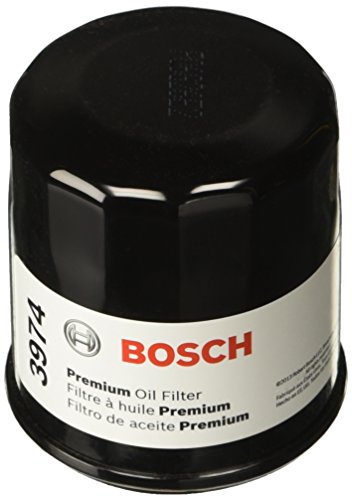
You rely on your Subaru to deliver performance and durability, and choosing the BOSCH 3974 Premium Oil Filter means trusting a filter engineered to match the precision of Subaru’s own standards. I count on its FILTECH media to capture up to 14 grams of dirt, protecting my engine. The reinforced spiral-wound center tube resists collapse under pressure. Steel base plates prevent warping and leaks. A high-lubricity gasket seals tightly yet allows easy removal. The silicone anti-drain back valve guarantees immediate oil flow at startup. It fits my Forester and many other Subaru models from 1990–2021. OEM-level construction delivers reliable, long-term protection-no compromises.
Best For: Subaru owners seeking an OE-level oil filter with superior filtration and durable construction for long-term engine protection.
Pros:
- Utilizes FILTECH media technology to capture up to 14 grams of contaminants, enhancing engine longevity
- Features a reinforced center tube and steel components for improved durability and leak resistance
- Equipped with a high-lubricity gasket and silicone anti-drain back valve for secure sealing and instant lubrication at startup
Cons:
- Fitment varies by engine and trim; not universal across all Subaru models without verification
- May be priced higher than standard aftermarket oil filters
- Limited availability for newer Subaru models beyond 2021
Subaru Oil Filters & Drain Seals (3-Pack)

Few options deliver the exact fit and factory-level reliability that this 3-pack of Subaru oil filters and drain seals provides, especially for owners of 2010–2012 Legacy and Outback models with 4-cylinder engines. Each kit includes three OEM-spec filters (part number 15208AA100) and three drain plug crush gaskets (803916010), replacing SOA6351520812. Subaru updated the filter design after September 1, 2022. The new version may look different than the original, but it installs the same and meets current factory standards. I recommend replacing the gasket each time you change the oil to prevent leaks. These filters match Subaru’s flow, filtration, and pressure specs exactly.
Best For: Owners of 2010–2012 Subaru Legacy and Outback models with 4-cylinder engines seeking OEM-spec oil filters and drain seals for reliable, leak-free performance.
Pros:
- Includes genuine OEM-spec filters and crush gaskets for exact fit and reliable sealing
- Matches Subaru’s factory flow, filtration, and pressure specifications
- Pack of three provides enough filters and gaskets for multiple oil changes
Cons:
- Limited vehicle compatibility-only fits specific 2010–2012 4-cylinder Subaru models
- Updated filter design may look different from original, potentially causing confusion
- Slightly higher cost compared to non-OEM or generic oil filter options
Factors to Consider When Choosing Oil Filter Subaru
You need the right oil filter for your Subaru’s specific model year-using the wrong one can cause leaks or poor oil flow. Check fitment carefully, as Subaru updated filter threads and gasket sizes across generations, like the switch from 3/4″-16 to 20mm threads in some 2.5L engines. Your choice between genuine OEM and aftermarket filters also affects performance, with differences in filtration efficiency, service life, and sealing reliability.
Fitment By Model Year
A critical factor in selecting the right oil filter for your Subaru is ensuring proper fitment based on model year, as design changes over time affect compatibility. Always verify your specific model year-engines from 2010–2012 often require a unique crush washer not found on earlier or later models. Filters for 2011–2013 non-turbo engines may not suit 2014 and newer units due to updated housing designs. Pre-2010 models use different part numbers and sealing systems than those from 2013 onward. From 2013, some naturally aspirated and turbocharged engines share filters if they have the same displacement and configuration. Even within the same model year, units produced after September 2022 may have revised filter designs that differ in shape or mounting. Always match the filter to your engine’s exact specs-using the wrong one risks leaks, poor sealing, or engine damage. Double-check OEM numbers and service bulletins for accuracy.
Genuine Vs Aftermarket
Proper fitment by model year sets the foundation for reliable oil filtration, but the choice between genuine and aftermarket filters determines long-term engine protection. Genuine Subaru filters are built to exact OE specifications, ensuring correct thread size, gasket design, and consistent performance. They use updated part numbers that reflect design improvements for better reliability. Aftermarket options may cost less, but some still reference outdated specs without critical updates. Genuine units include precisely calibrated anti-drainback and relief valves matched to your Subaru’s oil system. Some aftermarket filters claim extended durability up to 20,000 miles, but they’re often tested under different standards. Subaru validates their OEM filters for 7,500-mile changes, aligning with recommended maintenance intervals. While certain aftermarket brands achieve 99% filtration efficiency, performance consistency across batches can vary. For guaranteed compatibility and system-specific engineering, OEM remains the trusted standard.
Filtration Efficiency Rating
Most high-performance oil filters for Subarus remove over 95% of contaminants down to 25 microns, with top-tier models achieving up to 99% efficiency at 10–25 microns. You need this level of filtration to block abrasive particles that cause engine wear. Efficiency measures how well a filter traps microscopic debris, typically rated using ISO 4548-12 lab tests. Filters with synthetic or high-density blend media outperform basic cellulose, capturing more silt, metal, and carbon. More pleats mean greater surface area, letting the filter hold more junk without slowing oil flow. Think of it like a bigger net catching more trash in a river. High-efficiency models use precision-engineered fibers to target particles as small as a red blood cell. This protection is critical in turbocharged Subarus where clean oil sustains performance. Always check independent test data to confirm claims before buying.
Service Interval Compatibility
Matching your oil filter to your maintenance schedule guarantees your Subaru’s engine stays protected over time. Standard filters suit 6-month or 7,500-mile intervals, offering reliable filtration under normal conditions. If you extend oil changes, choose an extended-life filter rated for 15,000 miles. These use reinforced media and structural design to sustain performance. High-performance options support intervals up to 20,000 miles when paired with full-synthetic oil and moderate driving. Filter media density directly affects longevity-high-density synthetic blend media traps more contaminants without clogging. Durable construction and anti-drainback valves maintain oil pressure at startup, preventing dry starts. A quality seal prevents leaks during long service periods. Compatibility with your oil type and driving habits assures consistent protection. Match filter specs to your service plan-don’t stretch intervals with a basic filter. Doing so risks sludge buildup and engine wear. Choose wisely for sustained engine health.
Design Updates And Changes
While older and newer Subaru oil filters may look different, they often share the same fitment and core functionality. You should verify compatibility despite cosmetic changes. Manufacturers update internal components like filtration media, boosting contaminant capture without altering size. Improved gasket materials enhance sealing, reducing leak risks under thermal cycling. Some redesigned filters feature reinforced end caps or optimized housing geometry for better structural integrity at high pressures. Thread pitch or O-ring placement may change slightly to meet updated engine specs, so always confirm specifications. Anti-drainback valves are sometimes repositioned or resized to improve oil retention on startup. Revised designs typically carry new part numbers; check service bulletins for superseded items. Don’t assume visual differences mean incompatibility-always reference OEM cross-matches. These updates guarantee reliable performance, even if the filter looks different than older versions you’ve used before.
Included Components Check
Ever wonder why some oil filter purchases leave you scrambling for extra parts? You need every component accounted for before starting an oil change. Many kits include both the filter and a crush washer, guaranteeing a complete, leak-free install. Always verify if a new drain plug gasket is included-this small part is critical for sealing and maintaining oil pressure. Crush washers should be replaced every time to prevent leaks and engine damage. Some packages offer multiple filters and gaskets, letting you handle several services without repurchasing. Not all brands bundle these components, so check the contents list carefully. Manufacturers update specifications, and using an outdated gasket can compromise the seal. Match the included parts to your Subaru’s current service requirements. A proper kit saves time, reduces errors, and guarantees factory-level performance with every change. Never assume-confirm what’s in the box.
Frequently Asked Questions
How Often Should I Change My Subaru’s Oil Filter?
You should change your Subaru’s oil filter every 3,000 to 6,000 miles if using conventional oil. With synthetic oil, you can extend that to 7,500 miles. Subaru recommends pairing filter changes with every oil change to prevent clogging. A clogged filter restricts oil flow, starving engine components of lubrication. Filters trap dirt, metal particles, and sludge. Using genuine or high-efficiency filters guarantees proper micron capture-typically 20–25 microns.
Can I Reuse a Subaru Oil Filter Crush Washer?
No, you can’t reuse a Subaru oil filter crush washer. It’s a one-time-use component designed to compress and create a proper seal. Reusing it risks oil leaks or contamination. The washer’s soft metal deforms under torque, and any reuse compromises its ability to seal. Always install a new crush washer when changing the filter. It’s inexpensive insurance for engine protection. Follow Subaru’s service specs: correct torque is 18–22 ft-lbs.
Are OEM Subaru Oil Filters Better Than Aftermarket Ones?
Yes, OEM Subaru oil filters are better than most aftermarket ones. They’re engineered to meet strict Subaru specifications, ensuring maximum flow rate and filtration efficiency. Each OEM filter captures particles as small as 20 microns, uses high-strength steel casings, and features anti-drain back valves that prevent dry starts. Aftermarket units often cut corners on materials. You’re guaranteed correct fit and performance with OEM.
Do I Need a Torque Wrench for Oil Filter Installation?
Yes, you need a torque wrench for oil filter installation. Overtightening damages the seal, risking leaks or filter failure. Under-tightening causes oil seepage. Most Subaru filters require 15–20 ft-lbs of torque. Hand tightening plus a quarter-turn isn’t precise enough. A torque wrench guarantees accuracy. Proper torque maintains seal integrity, prevents housing warping, and guarantees safe operation. Always follow factory specs. Use a calibrated tool for consistent, reliable results.
Will the Wrong Oil Filter Damage My Subaru Engine?
Yes, the wrong oil filter can damage your Subaru engine. Using an incorrect filter risks improper fit, reduced oil flow, and poor filtration. A mismatched thread size (typically 3/4″-16 UNF) or wrong gasket diameter leads to leaks or blockages. Suboptimal micron ratings (above 20–25) let harmful debris circulate. Over time, this accelerates wear in precision-tight components like bearings and camshafts, potentially causing catastrophic internal failure.