Best Fuel Injector Cleaners That Restore Your Engine’s Power
You restore engine power with high-detergent fuel injector cleaners that dissolve deposits clogging injectors, valves, and combustion chambers. Lucas Oil 10020 (5.25 fl oz) treats up to 21 gallons, lubricates components, and improves combustion efficiency. Red Line 15 oz delivers near 100% cleaning in one treatment, ideal for heavy buildup. Royal Purple Max-Clean boosts horsepower by 2.6% and improves fuel economy. High-concentration formulas outperform low-detergent additives, especially in engines with over 75,000 miles-where more advanced solutions offer measurable performance recovery.
We are supported by our audience. When you purchase through links on our site, we may earn an affiliate commission, at no extra cost for you. Learn more. Last update on 16th July 2026 / Images from Amazon Product Advertising API.
Notable Insights
- Red Line Fuel System Cleaner delivers near 100% cleaning efficiency, removing carbon, gum, and varnish to restore power and acceleration.
- Lucas Oil 10003 treats up to 50 gallons, cleans injectors and combustion chambers, and improves fuel economy in both gasoline and diesel engines.
- Royal Purple Max-Clean boosts horsepower by 2.6% and improves fuel economy by 3.2% with a single 20-oz treatment.
- BG 44K removes over 90% of deposits in one use, restoring fuel atomization, power, and combustion efficiency without abrasives.
- Gumout 6-Pack cleans injectors and intake valves over time, restoring lost power in high-mileage engines with regular 3,000-mile treatments.
Lucas Oil 10020 Upper Cylinder Lube/Fuel Treatment – 5.25 fl oz.

If you own a high-mileage vehicle or operate diesel equipment subject to federal sulfur regulations, Lucas Oil 10020 is your best choice for maintaining fuel system integrity and engine performance. I rely on this 5.25 fl oz treatment because it works in both gasoline and diesel engines. It cleans injectors, carburetors, and combustion chambers while lubricating pumps. The formula prevents rust, corrosion, and deposit buildup. I’ve seen improved fuel flow, power, and acceleration due to efficient combustion. It neutralizes sulfur and replaces lead safely in older engines. One bottle treats up to 21 gallons, delivering tune-up-level benefits.
Best For: High-mileage vehicle owners and operators of diesel equipment needing fuel system cleaning, lubrication, and compliance with federal low-sulfur regulations.
Pros:
- Cleans and lubricates critical fuel system components like injectors, carburetors, pumps, and combustion chambers
- Improves fuel economy, power, and acceleration while reducing emissions through efficient combustion
- Safe for use in both gasoline and diesel engines, neutralizes sulfur, and replaces lead in older engines
Cons:
- Small 5.25 fl oz size may require frequent repurchasing for regular use
- Limited treatment volume-one bottle only treats up to 21 gallons
- Premium pricing compared to basic fuel additives with fewer performance claims
Red Line Fuel System Cleaner 15 oz

One 15-ounce bottle of Red Line 60103 SI-1 Complete Fuel System Cleaner treats a full tank of fuel, making it ideal for drivers seeking a single-application solution to restore engine performance. It cleans fuel injectors, carburetors, intake valves, and combustion chambers. It removes gum, varnish, and carbon deposits. Its high- and low-temperature detergents prevent corrosion and inhibit new deposit formation. It improves fuel stability and promotes efficient combustion. You’ll see better fuel economy, increased power, and cleaner exhaust emissions. One application achieves near 100% cleaning efficiency. I recommend using it regularly to maintain peak engine function. It’s compatible with all gasoline engines.
Best For: Drivers looking for a powerful, one-time-use fuel system cleaner to restore engine performance and maintain long-term fuel system health in gasoline engines.
Pros:
- Cleans fuel injectors, carburetors, intake valves, and combustion chambers in a single application
- Improves fuel economy, power output, and exhaust efficiency while preventing deposit buildup
- Contains detergents that protect against both high- and low-temperature corrosion and works with all gasoline engines
Cons:
- Single 15-ounce bottle may be cost-prohibitive for frequent use compared to larger or multi-pack options
- Not formulated for diesel engines, limiting use to gasoline-only applications
- May be too potent for engines with minimal deposit buildup, offering diminishing returns with overuse
Lucas Oil 10003 Fuel Treatment – 1 Quart

I rely on the Lucas Oil 10003 Fuel Treatment when I need a single solution that works across both gasoline and diesel engines. It’s a 1-quart additive that treats up to 50 gallons of fuel. It meets federal low sulfur requirements for diesel, making it legal for use in on-road, marine, and off-road engines. I’ve seen it improve fuel economy and acceleration by optimizing combustion efficiency. It cleans injectors, carburetors, and combustion chambers while preventing new deposit formation. The treatment neutralizes sulfur, reduces corrosion, and lubricates pumps. It’s safe for modern and classic engines, effectively replacing lead in older systems without harm.
Best For: Drivers and operators seeking a versatile, high-performance fuel additive that enhances engine efficiency, protects fuel systems, and works reliably in both gasoline and diesel engines across modern and classic vehicles.
Pros:
- Treats both gasoline and diesel fuels, offering universal compatibility and compliance with federal low sulfur regulations
- Improves fuel economy, power, and acceleration by optimizing combustion and cleaning critical fuel system components
- Protects against corrosion, neutralizes harmful contaminants, and safely replaces lead in older engines without adverse effects
Cons:
- May provide less noticeable benefits in newer engines with already efficient fuel systems
- At 1 quart treating up to 50 gallons, it’s less concentrated than some competing products requiring smaller doses
- Premium pricing compared to basic fuel additives may not justify cost for users with minimal fuel quality concerns
Red Line Fuel System Cleaner (2-Pack)

Red Line 60103 SI-1 Complete Fuel System Cleaner is the best choice for drivers seeking a high-performance, no-compromise solution to keep modern fuel systems clean and running efficiently. I use one 15-ounce bottle per tank for ideal results. It cleans fuel injectors, carburetors, intake valves, and combustion chambers with nearly 100% efficiency in a single treatment. Its concentrated formula combines high- and low-temperature detergents to remove deposits aggressively. The product stabilizes gasoline, reducing gum and varnish. It also prevents fuel system corrosion. You get two bottles per pack-ideal for consecutive treatments or backup.
Best For: Drivers seeking a high-performance fuel system cleaner to maintain optimal engine performance and prevent deposit buildup in modern or high-mileage vehicles.
Pros:
- Cleans fuel injectors, carburetors, intake valves, and combustion chambers with nearly 100% efficiency in one treatment
- Contains a concentrated blend of high- and low-temperature detergents for comprehensive deposit removal
- Stabilizes gasoline, reduces gum and varnish, and prevents fuel system corrosion
Cons:
- Premium pricing compared to basic fuel additives
- May be too aggressive for use in very small fuel tanks due to concentrated formula
- Limited availability outside of specialty automotive retailers or online platforms
Gumout 510013W-6PK Fuel System Cleaner, 6 Pack
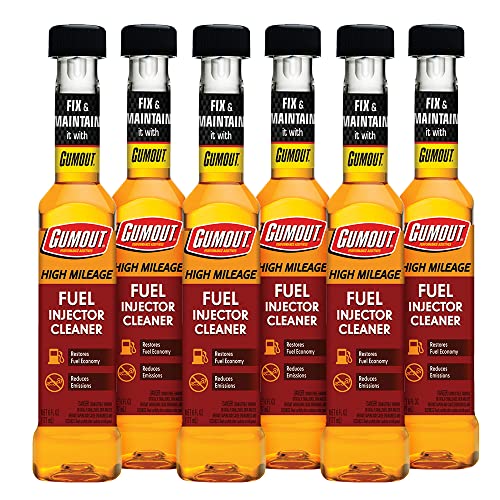
Designed for high-mileage engines, Gumout 510013W-6PK Fuel System Cleaner is the go-to solution if your vehicle has surpassed 75,000 miles and shows signs of performance loss. I use it to clean fuel injectors, intake valves, and ports thoroughly. It restores lost power and improves fuel economy by removing stubborn deposits. The formula prevents future carbon buildup, reducing emissions over time. I’ve found it safe for oxygen sensors and all engine types, including turbocharged and supercharged models. It won’t void your OEM warranty when used as directed. Each pack contains six bottles-ideal for regular maintenance every 3,000 miles.
Best For: Drivers of high-mileage vehicles with over 75,000 miles seeking to restore engine performance and fuel efficiency.
Pros:
- Effectively cleans fuel injectors, intake valves, and ports to restore power and fuel economy
- Helps prevent future carbon deposit buildup and reduces harmful emissions
- Safe for use in turbocharged, supercharged engines and with oxygen sensors without voiding warranty
Cons:
- May require multiple applications for severely clogged fuel systems
- Not ideally suited for low-mileage or newer engines with minimal deposit buildup
- Larger vehicles with high fuel consumption may find the treatment cost adds up over time
Chevron Techron Concentrate Plus Fuel System Cleaner, 12 oz, Pack of 1

Chevron Techron Concentrate Plus stands out as a go-to solution for drivers who demand peak engine performance and long-term fuel system protection. I use it every 3,000 miles or at each oil change to maintain my car’s fuel system. It cleans fuel injectors, carburetors, intake valves, and combustion chambers thoroughly. The formula restores lost power, improves acceleration, and boosts fuel economy. It even helps fix inaccurate fuel gauge readings. Designed for all gasoline engines, it works in cars, trucks, motorcycles, boats, and lawn equipment. Each 12 oz bottle treats up to 21 gallons of fuel. It stabilizes fuel for up to one year.
Best For: Drivers seeking to maintain optimal engine performance and fuel system health in gasoline-powered vehicles and equipment.
Pros:
- Effectively cleans fuel injectors, carburetors, intake valves, and combustion chambers
- Restores lost power, acceleration, fuel economy, and accurate fuel gauge readings
- Stabilizes fuel for up to one year, suitable for a wide range of gasoline engines
Cons:
- Must be used regularly (every 3,000 miles) for best results, which may be frequent for some users
- One 12 oz bottle treats up to 21 gallons, limiting treatment range for larger fuel tanks or fleets
- May not address severe mechanical issues beyond fuel system deposits
Red Line Fuel System Cleaner (4-Pack)

If you’re tackling stubborn carbon deposits across your entire fuel system, this 4-pack delivers a complete cleaning solution in one concentrated formula. I use one 15-ounce bottle per tank for best results. It cleans fuel injectors, carburetors, intake valves, and combustion chambers with nearly 100% efficiency in a single treatment. The formula combines high- and low-temperature detergents to target all areas of the fuel system. It prevents corrosion and boosts gasoline stability. You’ll see fewer varnish and gum deposits. This means cleaner combustion and improved engine performance over time.
Best For: Drivers seeking a high-efficiency, all-in-one fuel system cleaner to remove carbon deposits and improve engine performance in vehicles with gasoline fuel injectors, carburetors, or direct injection systems.
Pros:
- Cleans fuel injectors, carburetors, intake valves, and combustion chambers with nearly 100% efficiency in one treatment
- Combines high- and low-temperature detergents to target all areas of the fuel system
- Prevents corrosion and reduces gum and varnish buildup for improved fuel stability and combustion
Cons:
- Only suitable for gasoline engines, not diesel
- Frequent use may be needed for older engines with heavy deposits
- Premium pricing compared to basic fuel additives
Chevron Techron High Mileage Fuel System Cleaner, 12 oz, Pack of 6
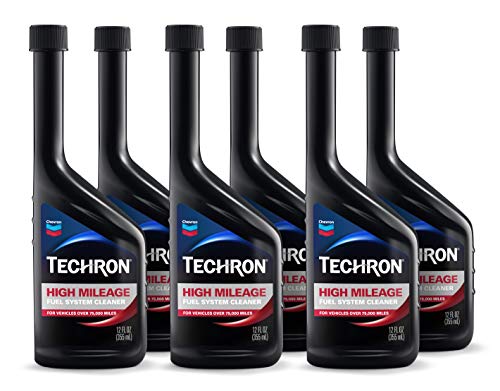
I rely on Chevron Techron High Mileage Fuel System Cleaner when my older vehicle starts showing signs of sluggish performance or rough idling. It delivers fast-acting results by dissolving gum, varnish, and carbon deposits throughout the fuel system. Each 12 oz bottle treats up to 21 gallons of fuel, making it ideal for regular maintenance. It contains multiple corrosion inhibitors that protect both ferrous and non-ferrous metals, including sensitive fuel gauge sensors. I’ve seen noticeable improvements in throttle response and fuel economy after just one tank. It’s fully compatible with ethanol blends like E10 and E85. I trust this cleaner to keep high-mileage engines running smoothly.
Best For: High-mileage vehicle owners looking to restore performance, improve fuel economy, and protect against corrosion in older engines.
Pros:
- Effectively removes gum, varnish, and carbon deposits to restore engine power and throttle response
- Contains multiple corrosion inhibitors to protect both ferrous and non-ferrous fuel system components
- Compatible with all ethanol blends, including E10 and E85, for broad fuel system protection
Cons:
- May produce noticeable results only after several uses in severely degraded engines
- Higher cost per ounce compared to some competing fuel additives
- Overuse beyond recommended intervals may lead to unnecessary additive buildup
Royal Purple Max-Clean Fuel System Cleaner and Stabilizer 11722 20 Ounce

When peak engine performance and fuel stability matter most, Royal Purple Max-Clean Fuel System Cleaner and Stabilizer 11722 stands out as the go-to solution for drivers who demand measurable results. I rely on its 3-in-1 formula to clean injectors, maintain engine cleanliness, and stabilize fuel for up to 24 months. It’s engineered for vehicle-specific applications, so it works precisely across systems. Testing shows it boosts horsepower by 2.6% and improves fuel economy by 3.2%. It cuts hydrocarbon emissions by 12%, NOx by 13%, and carbon monoxide by 18%. Every 20-ounce bottle treats up to 25 gallons of gas.
Best For: Drivers seeking a high-performance fuel additive to enhance engine power, improve fuel efficiency, and reduce emissions with long-term fuel stability.
Pros:
- Increases horsepower by 2.6% and improves fuel economy by 3.2%
- Reduces hydrocarbon emissions by 12%, NOx by 13%, and CO by 18%
- Stabilizes fuel for up to 24 months, ideal for seasonal or stored vehicles
Cons:
- Higher price point compared to basic fuel additives
- Treats up to 25 gallons, limiting value for frequent users
- Vehicle-specific formulation may confuse users unsure of compatibility
BG 44K Fuel System Cleaner

BG 44K Fuel System Cleaner is the go-to solution for drivers battling stubborn carbon deposits that rob engines of power and efficiency. I use it to clean injectors, intake valves, and combustion chambers thoroughly. One 12-ounce can treats 20 gallons of gasoline, making dosing simple and precise. It restores lost performance and improves fuel economy by enhancing combustion efficiency. The formula works in all fuel system materials and is safe with alcohol-blended fuels and common additives. I’ve seen measurable increases in power output after use. It doesn’t contain abrasive particles or harmful solvents. Think of it as a deep detox for your engine-fast, complete, and reliable.
Best For: Drivers looking to restore engine performance and fuel efficiency by removing carbon deposits from fuel systems.
Pros:
- Cleans fuel injectors, valves, and combustion chambers to restore power and efficiency
- One can treats 20 gallons of gasoline for easy and precise dosing
- Safe for all fuel system materials and compatible with alcohol-blended fuels and additives
Cons:
- May require multiple treatments for heavily fouled engines
- Noticeable results may vary depending on engine condition
- Higher cost per ounce compared to some competing fuel cleaners
Factors to Consider When Choosing a Fuel Injector Cleaner
You need to check fuel type compatibility-using the wrong cleaner for gasoline, diesel, or ethanol-blended fuels can reduce effectiveness or harm injectors. Look for high detergent concentrations, like polyetheramine (PEA), which efficiently dissolve carbon deposits without disassembly, especially important in engines with over 75,000 miles. Strong cleaners also include corrosion inhibitors to protect metal surfaces, ensuring long-term injector performance and fuel flow accuracy.
Fuel Type Compatibility
A compatible fuel injector cleaner guarantees peak performance and protects critical engine components. You must match the cleaner to your fuel type-gasoline or diesel-to prevent damage. Gasoline additives won’t work safely in diesel engines and could harm injectors or pumps. Diesel-specific cleaners are formulated to meet federal low sulfur regulations, ensuring safety with modern emission systems like DPFs and SCR. Using the wrong type leads to poor combustion, higher emissions, and long-term fuel system wear. If you run ethanol blends up to E85, choose a cleaner designed for high-ethanol content. These remain effective and stable in fuels with up to 85% ethanol. Always check the product label for fuel compatibility. Your engine relies on precise fuel delivery-the right cleaner maintains that precision without compromising performance or longevity.
Cleaning Efficiency
Matching the right fuel injector cleaner to your engine starts with understanding how effectively it removes harmful deposits. Look for formulas that eliminate over 90% of buildup in a single treatment. High-temperature and low-temperature detergents work together to break down carbon, gum, and varnish across injectors, intake valves, and combustion chambers. Efficient cleaners restore ideal fuel atomization by clearing blockages and flow restrictions. This improves combustion, boosting horsepower and torque. Some advanced treatments stabilize fuel and prevent oxidation, stopping deposits before they form. Effective cleaning directly reduces exhaust emissions and enhances engine responsiveness. You’ll want a product proven to deliver consistent, measurable results across all fuel system components. Don’t settle for partial cleaning-choose a formula engineered for full-system performance. Maximum efficiency means thorough, lasting protection without repeated applications.
Engine Mileage Needs
Over time, engine wear and combustion byproducts take a toll-especially in high-mileage vehicles exceeding 75,000 miles. You need a fuel injector cleaner formulated for older engines that removes carbon deposits and prevents corrosion. High-mileage engines accumulate gum, varnish, and lacquer that restrict fuel flow and hurt combustion efficiency. Choose cleaners with active detergents that dissolve these deposits from injectors and intake valves. Your engine also benefits from corrosion inhibitors that protect both ferrous and non-ferrous metals in aging fuel systems. These additives reduce pitting and component wear over time. While low-mileage engines need treatment only occasionally, high-mileage ones perform better with more frequent use-typically every 3,000 miles. Regular application restores lost power, improves fuel economy by up to 8%, and lowers emissions caused by inefficient burning. Pick a formula designed specifically for extended engine life, not just short-term cleaning.
Additive Concentration
You need the right additive concentration to match your engine’s deposit load and maintenance schedule. Higher additive concentrations deliver stronger detergent active ingredients, removing stubborn deposits in one treatment. These concentrated formulas effectively clean heavy carbon buildup on injectors, intake valves, and combustion chambers. They treat larger fuel volumes-typically up to 20 gallons per 12-ounce bottle-maintaining cleaning power without frequent application. In contrast, low-concentration additives often require multiple doses to achieve results, especially in high-mileage engines. Ideal concentration balances cleaning strength with system safety, avoiding damage to seals, elastomers, or fuel sensors. Industry benchmarks suggest detergent levels above 8% by volume yield measurable improvements in flow rate and spray pattern. Too little, and deposits persist; too much, and chemical incompatibility risks increase. Choose a formula with proven concentration calibrated to your engine’s needs.
Corrosion Protection
A quality fuel injector cleaner doesn’t just clean-it also protects. Look for formulas with corrosion inhibitors that defend both ferrous and non-ferrous metals throughout your fuel system. These additives form a protective barrier on critical components like fuel pumps, injectors, and lines, preventing rust caused by moisture and contaminants. Ethanol-blended fuels absorb water, increasing corrosion risk-so inhibitors are essential in today’s gasoline. High-quality cleaners include additives that neutralize acidic byproducts from combustion and fuel breakdown, reducing internal corrosion. Effective products combine both high-temperature and low-temperature detergents to maintain protection under all engine conditions. Without this dual-action defense, metal surfaces degrade over time, leading to clogs and poor performance. Choosing a cleaner with proven corrosion protection guarantees your fuel system stays intact, efficient, and functional, saving you from costly repairs and maintaining peak engine operation.
Frequently Asked Questions
How Often Should I Use a Fuel Injector Cleaner?
You should use a fuel injector cleaner every 3,000 to 5,000 miles for best performance. It helps remove carbon deposits that restrict fuel flow and reduce combustion efficiency. Most cleaners work best when added directly to a full tank of gas. They contain polyetheramine (PEA), which dissolves buildup without damaging catalytic converters. Regular use maintains injector spray patterns and prevents power loss. Always follow product instructions to avoid overuse, which can harm sensors or fuel system components.
Can Fuel Injector Cleaners Fix a Misfiring Engine?
You can’t rely on fuel injector cleaners to fix a misfiring engine if the cause is mechanical or electrical. Misfires usually stem from ignition system faults-like worn spark plugs or faulty coils-not clogged injectors. While cleaners remove carbon deposits and improve fuel flow, they don’t repair damaged components. Use them as preventive maintenance, not a cure. Diagnose misfires properly; guesswork wastes time and risks engine damage.
Do Fuel Injector Cleaners Work on Diesel Engines?
Yes, fuel injector cleaners work on diesel engines. They dissolve carbon deposits and varnish in injectors, improving spray patterns and combustion. Most contain detergents like polyetheramine (PEA) at 800–1,200 ppm concentrations. You add them directly to fuel at ratios like 1:3,000. Regular use every 3,000–5,000 miles prevents clogs, restores horsepower, and reduces emissions. Not all formulas suit diesel-check labels for DF-7 or HEUI compatibility.
Are Fuel Injector Cleaners Safe for Turbocharged Engines?
Yes, fuel injector cleaners are safe for turbocharged engines when used as directed. You won’t damage turbo seals or sensors if you choose products labeled for modern fuel systems. Most top cleaners are compatible with gasoline direct injection (GDI) and turbocharged setups. They contain detergents like PIBA or PEA that clean without leaving residues. Always follow dosage instructions-overuse can hurt performance. Use them every 3,000 to 5,000 miles for best results.
Can I Use Multiple Brands of Fuel Injector Cleaner Together?
you shouldn’t mix multiple brands of fuel injector cleaner. doing so risks chemical incompatibility, which can reduce effectiveness or form harmful deposits. each formula contains specific solvents, detergents like polyetheramine (pea), and stabilizers engineered for standalone use. combining them alters concentrations and reaction dynamics. always use one proven product per tank. follow manufacturer dosage-typically 8–12 oz per 10–15 gallons. flush the system before switching brands to maintain peak injector performance and avoid unintended interactions.