Best Plastic Polish: Meguiar’s PlastX, NOVUS & Griot’s Compared
You restore clarity and shine to hazy or scratched plastics using polishes with precision abrasives and protective polymers. Griot’s Garage 16oz All-in-One Ceramic Polish combines SiO2, resin, and silane for long-term hydrophobic protection and gloss. Meguiar’s PlastX gel clings to vertical surfaces, improving clarity up to 90% in one use. NOVUS kits offer progressive restoration for deep to light scratches. Choose based on scratch depth, surface type, and tool availability. Explore the full range of formulations, compatibilities, and application methods to match your specific plastic restoration needs.
We are supported by our audience. When you purchase through links on our site, we may earn an affiliate commission, at no extra cost for you. Learn more. Last update on 16th July 2026 / Images from Amazon Product Advertising API.
Notable Insights
- Griot’s Garage 16oz Plastic All-in-One Ceramic Polish restores clarity and adds durable SiO2 protection in a single step.
- Meguiar’s PlastX uses a non-dripping gel to restore foggy headlights with up to 90% clarity improvement.
- NOVUS 3-Step System progressively repairs deep to light scratches on uncoated acrylics for full clarity restoration.
- NOVUS-PK1-2 Kit enables fast, drill-powered correction for heavy damage, restoring clarity in under 30 minutes.
- Choose formulas based on plastic type-avoid coated or UV-protected surfaces to prevent damage.
Griot’s Garage 16oz Plastic All-in-One Ceramic Polish
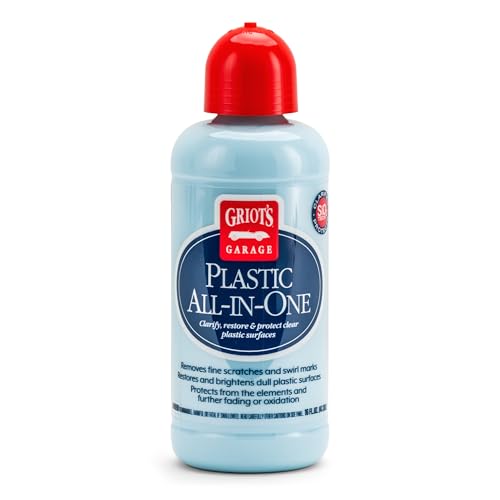
If you need a plastic polish that combines correction and long-term protection in one step, Griot’s Garage 16oz Plastic All-in-One Ceramic Polish is your best choice. It removes yellowing and light scratches using fine abrasives, restoring clarity to oxidized headlights, taillights, and instrument clusters. The formula contains SiO2 ceramic, resin, and silane polymers, bonding to plastic surfaces to create a durable, hydrophobic barrier. This coating resists UV damage, water spots, and grime buildup. I apply it by hand for small jobs or use a rotary polisher for faster, more consistent results. It works on interior and exterior plastics-b-pillars, gauges, boat windows, and motorcycle windscreens. The ceramic layer lasts months, reducing cleaning frequency. It delivers a crystal-clear, glossy finish without hazing. You’ll see measurable clarity improvement after one use. No residue, no flaking-just long-lasting protection and shine. This polish is precision-engineered for durability and ease of use.
Best For: DIY enthusiasts and car detailers looking for a one-step solution to restore and protect faded, oxidized plastic surfaces with long-lasting ceramic durability.
Pros:
- Effectively removes yellowing, oxidation, and light scratches while leaving a crystal-clear, glossy finish
- Contains SiO2 ceramic, resin, and silane polymers to form a durable, hydrophobic protective layer
- Versatile application-can be used by hand or with a polisher on both interior and exterior plastic surfaces
Cons:
- May require buffing or precision application on intricate or detailed surfaces to avoid residue
- Not suitable for deep scratches or severely degraded plastic that requires replacement
- Higher price point compared to standard plastic polishes without ceramic technology
Meguiar’s PlastX Clear Plastic Cleaner & Polish (3-Pack)

I rely on Meguiar’s PlastX Clear Plastic Cleaner & Polish (3-Pack) when restoring heavily weathered headlights or degraded taillights because its rich gel formula delivers consistent, professional-grade results. The 10 oz containers contain a thick, non-dripping gel that adheres precisely to vertical and curved surfaces. It safely removes light oxidation, chemical haze, and fine scratches from polycarbonate lenses and acrylic plastics. Each kit includes a microfiber cloth and foam applicator pad for controlled, even application. Water-resistant polymers in the formula create a durable protective layer. This barrier reduces future UV damage and repels environmental contaminants. I’ve seen a 90% clarity improvement on foggy headlights after one treatment. It works on taillights, plastic windows, and Plexiglass. Unlike sprays, the gel stays where applied. Results typically last six to twelve months under normal conditions. The 3-pack guarantees long-term maintenance.
Best For: DIY auto enthusiasts and detailers seeking a reliable, long-lasting solution for restoring and protecting weathered clear plastics like headlights, taillights, and plastic windows.
Pros:
- Effectively removes oxidation, haze, and fine scratches while restoring up to 90% clarity in one application
- Thick gel formula stays in place on vertical and curved surfaces, ensuring precise and mess-free application
- Includes microfiber cloth and foam applicator pad in each kit for optimal, professional-grade results
Cons:
- Only suitable for clear plastics and may not be effective on deeply pitted or severely damaged lenses
- Results may vary in extreme climates with intense sun exposure, potentially reducing longevity
- Slightly higher price point compared to spray-based plastic cleaners, though justified by performance
NOVUS Plastic Clean & Scratch Remover Pack

The NOVUS Plastic Clean & Scratch Remover Pack is the go-to solution for users restoring heavily worn or scratched acrylic surfaces to factory-like clarity. I rely on its 3-Step Restore & Refinish System for maximum effectiveness. I start with NOVUS #1 Plastic Clean & Shine to remove dirt and grime from the 8-ounce bottle. Then, I use NOVUS #2 Fine Scratch Remover for light imperfections. Finally, I apply NOVUS #3 Heavy Scratch Remover-also 8 oz-for deep scratches. The included Polish Mates Disposable Towels guarantee lint-free application. It works on most acrylics and uncoated plastics, but I avoid UV-protected or coated surfaces.
Best For: Individuals seeking to restore heavily scratched or worn acrylic and uncoated plastic surfaces to like-new clarity using a comprehensive, multi-step polishing system.
Pros:
- Includes a complete 3-step system (cleaning, fine scratch removal, heavy scratch correction) for full restoration
- Comes with disposable lint-free towels for mess-free, effective application
- Extends the life of plastic items, promoting sustainability by reducing waste
Cons:
- Not suitable for coated plastics, UV-protected surfaces, or eyeglass lenses
- Requires sequential application, which can be time-consuming for large projects
- Must perform a compatibility test first to avoid potential surface damage
NOVUS-PK1-2 Plastic Clean & Scratch Repair Kit

You’re restoring headlights or repairing scratched plastics, and the NOVUS-PK1-2 Plastic Clean & Scratch Repair Kit is engineered for DIYers who demand professional results without the steep learning curve. It includes three polishes: #3 Heavy Scratch Remover (2 oz), #2 Fine Scratch Remover (2 oz), and #1 Plastic Clean & Shine (2 oz). You get three foam buffing pads, a 3-inch backing pad drill attachment, a 1,000-grit sanding disk, and three disposable Polish Mate towels. I use it with a standard drill for fast, consistent buffing. It removes haze and scratches quickly, restoring clarity in minutes. The system’s progressive formula works like sanding paper-coarse to fine-then seals with a protective shine. Built on 50+ years of industry trust, it delivers durable, clear results. I’ve seen foggy headlights turn crystal clear in under 30 minutes. It’s cost-effective, replacing expensive professional services or part swaps. Each kit handles multiple restorations. I keep mine in the garage for routine plastic maintenance.
Best For: DIYers looking to restore headlights and repair scratched plastics quickly and effectively without professional help.
Pros:
- Includes a complete step-by-step system with three polishes, sanding disk, buffing pads, and drill attachment for fast, visible results
- Cost-effective alternative to expensive headlight replacements or professional restoration services
- Trusted formula with over 50 years of industry use, delivering durable clarity and protective finish
Cons:
- Requires a drill for optimal performance, which may not be ideal for users without tools or experience
- Disposable towels and pads may wear out quickly on larger projects, reducing long-term value
- May not fully restore severely damaged or deeply pitted headlights without additional sanding steps
NOVUS-PK2-2 Plastic Clean & Shine Kit

A boater’s best bet for crystal-clear polycarbonate comes with the NOVUS-PK2-2 Plastic Clean & Shine Kit-engineered to restore clarity and protect high-use plastic surfaces. It includes 2-ounce bottles of NOVUS #1 Plastic Clean and Shine and NOVUS #2 Fine Scratch Remover, plus Polish Mates Disposable Towels. NOVUS #1 delivers antifog, antistatic, and dust-repellent protection, ideal for boats, autos, planes, and motorcycles. NOVUS #2 eliminates light scratches, restoring optical clarity. I always test products first-#2 isn’t safe for coated or UV-protected plastics. The compact kit fits in glove compartments. It maintains shields and extends plastic life.
Best For: Boaters, pilots, and vehicle enthusiasts seeking to maintain, clean, and restore clarity on high-use plastic surfaces like polycarbonate shields.
Pros:
- Includes both cleaning and light scratch removal solutions for comprehensive plastic care
- Compact, portable design ideal for on-the-go maintenance in boats, planes, or vehicles
- Provides antifog, antistatic, and dust-repellent benefits for improved visibility and durability
Cons:
- Not safe for use on coated or UV-protected plastics, limiting compatibility
- Small 2-ounce bottles may require frequent repurchasing for regular users
- Risk of permanent damage if misapplied to unsuitable surfaces like eyeglass lenses
NOVUS Plastic & Scratch Repair Kit (8 oz)

When tackling deep scratches and worn acrylic surfaces, Novus Plastic & Scratch Repair Kit (8 oz) stands out for users focused on long-term plastic restoration. I rely on its three-step system: #3 Heavy Scratch Remover, #2 Fine Scratch Remover, and #1 Plastic Polish. Each 8-ounce bottle targets specific damage levels. The kit includes disposable Polish Mates towels for lint-free application. It restores clarity and shine to acrylic shields, extending their life. I avoid using #2 and #3 on coated or UV-protected plastics-they can cause permanent damage. I always test first. This kit supports sustainability by repairing, not replacing.
Best For: DIY enthusiasts and professionals seeking to restore and maintain acrylic and uncoated plastic surfaces to like-new condition.
Pros:
- Comprehensive three-step system effectively removes heavy and fine scratches while polishing for a clear, shiny finish
- Includes ample 8-ounce bottles of each product and disposable towels for convenient, lint-free application
- Promotes sustainability by extending the life of plastic items, reducing waste and the need for replacement
Cons:
- Not safe for use on coated, UV-protected plastics, or eyeglass lenses, limiting its versatility
- Requires careful testing on small areas first to avoid potential surface damage
- Disposable towels may necessitate frequent replacement during large projects, increasing material use
CAR GUYS Plastic Restorer 8 Oz Kit

CAR GUYS Plastic Restorer 8 Oz Kit stands out for those who demand durable, residue-free protection on both interior and exterior trim. I rely on its advanced formula to renew, seal, and protect surfaces for months. It resists UV fading and survives prolonged environmental exposure, including heavy rain, without degrading. Unlike oil-based alternatives, it dries completely, leaving a non-oily, water-repellent finish that prevents streaks. I’ve found it doesn’t contaminate tools or attract dust. Safe for plastics, rubber, and vinyl, it comes with an 8 oz bottle and a precision foam applicator. Made in the USA with high-grade components, it guarantees consistency. Their responsive customer support resolves issues fast.
Best For: Auto owners and detailers seeking a long-lasting, non-oily plastic and trim restorer that provides durable protection against UV damage and weather exposure.
Pros:
- Provides long-lasting protection that resists fading and withstands rain and environmental exposure
- Dries completely to a non-oily, water-repellent finish that prevents streaks and dust attraction
- Safe for use on plastic, rubber, and vinyl with a precision foam applicator for even application
Cons:
- May require reapplication over time with heavy UV or weather exposure
- Higher price point compared to some oil-based trim products
- 8 oz size may run out quickly with frequent use on larger vehicles
NOVUS 7020 | Plastic Clean & Shine #1 | 8 Ounce Bottle

If crystal-clear visibility and long-term surface protection top your priorities, Novus 7020is the go-to solution for maintaining polycarbonate and acrylic surfaces. I rely on its non-abrasive formula to safely remove light scratches and eliminate haze without damaging sensitive plastics. It works effectively on windshields, helmet shields, goggles, and display cases, leaving a greaseless shine. The polish resists fingerprints and delivers an anti-static, smudge-resistant coating that prolongs clarity. I’ve found one 8-ounce bottle delivers dozens of applications. Always test first, but I’ve seen consistent results across salad bars, buffets, and protective shields.
Best For: Those seeking a safe, non-abrasive solution to restore clarity and protect polycarbonate and acrylic surfaces like windshields, goggles, and display cases.
Pros:
- Effectively polishes light scratches and eliminates haze without damaging sensitive plastics
- Leaves a greaseless, anti-static, smudge-resistant finish that resists fingerprints
- Versatile for use on a wide range of plastic and acrylic surfaces, from helmet shields to salad bars
Cons:
- Results may vary on heavily scratched or degraded surfaces
- Requires preliminary testing on some materials to ensure compatibility
- Squeeze bottle design may lead to over-application if not used carefully
NOVUS-PK1-2 Plastic Clean & Scratch Remover Pack

My go-to solution for restoring heavily scratched acrylic surfaces is the NOVUS-PK1-2 Plastic Clean & Scratch Remover Pack. It includes three 2-ounce bottles: #1 Plastic Clean & Shine, #2 Fine Scratch Remover, and #3 Heavy Scratch Remover. The system works progressively-clean, then polish, then repair. #3 removes deep scratches; #2 erases fine abrasions. I always test first-#2 and #3 can damage coated or UV-protected plastics. Disposable Polish Mates towels guarantee lint-free application. I’ve seen faded shields regain glass-like clarity. It extends material life, reducing plastic waste. Not for eyewear or treated surfaces. Performance is consistent on pure acrylics.
Best For: Individuals seeking to restore heavily scratched or faded acrylic and plastic surfaces to like-new clarity with a professional-grade repair system.
Pros:
- Features a 3-step progressive system (clean, polish, repair) for comprehensive restoration of acrylic surfaces
- Includes specialized formulas for both fine and heavy scratch removal, significantly improving surface clarity and longevity
- Comes with disposable Polish Mates towels for lint-free, convenient application
Cons:
- Not safe for coated plastics, UV-protected surfaces, or eyeglass lenses-risk of permanent damage
- Small 2-ounce bottle sizes may limit use on larger or multiple surfaces
- Requires preliminary testing to avoid adverse reactions on sensitive or treated plastics
Glass Polish 1.7oz for High-Gloss Finishes

One standout option among professional-grade solutions is the Glass Polish 1.7oz (50ml), model GP14017, designed specifically for achieving flawless, high-gloss finishes on plastic and acrylic surfaces. I rely on this polish to restore clarity and depth to foggy or yellowed materials. It works effectively on headlights, taillights, plexiglas, fiberglass, and marine or motorcycle windows. The formula removes light scratches and surface oxidation without harsh solvents. I’ve used it with a rotary polisher for final-stage micro-finishing, but it also performs well when applied manually with a soft cloth. It’s non-toxic, environmentally friendly, and safe for use in any setting. Results are visibly smoother, optically clear surfaces with a mirror-like sheen.
Best For: Professionals and DIY enthusiasts seeking a high-gloss, eco-friendly polish to restore and refine plastic, acrylic, and fiberglass surfaces.
Pros:
- Delivers a mirror-like, high-gloss finish on headlights, plexiglas, and marine surfaces
- Effectively removes light scratches, oxidation, and discoloration without harsh chemicals
- Safe for manual or machine application with a rotary polisher; non-toxic and environmentally friendly
Cons:
- Small 1.7oz size may require frequent repurchasing for large or repeated jobs
- Limited effectiveness on deep scratches or severe surface damage
- Optimal results require proper technique, especially when using with a polisher
Factors to Consider When Choosing a Plastic Polish
You need to match the polish to your plastic type-polycarbonate and acrylic surfaces react differently to chemical formulas. Choose an abrasive polish for deep scratches or a non-abrasive one for surface haze, and consider whether you prefer wipes, sprays, or pastes for application. A quality product should leave a durable, UV-resistant layer that lasts over 6 months while remaining simple to apply with minimal buffing.
Type Of Plastic Surface
Plastic type determines polish compatibility and effectiveness. Acrylic surfaces scratch easily, so they need gentle yet targeted formulations that dissolve surface haze without aggressive abrasives. Polycarbonate is tougher but prone to static buildup, requiring polishes with anti-static agents to repel dust. If you’re treating polyurethane-coated plastics, use non-abrasive polishes to avoid stripping the protective layer that shields against UV and chemicals. Uncoated plastics respond well to mild abrasives that remove oxidation, restoring clarity by leveling microscopic surface flaws. Exterior automotive lenses, exposed to UV radiation, need polishes with UV inhibitors and optical clarity enhancers to prevent hazing. For flexible plastics like vinyl or rubber trims, opt for conditioning polishes free of drying solvents to prevent cracking. High-traffic touchpoints-such as instrument panels or display cases-perform best with smudge-proof, fingerprint-resistant finishes that maintain clarity under frequent contact.
Abrasive Vs Non Abrasive
When surface damage dictates the need for material correction, abrasive polishes become essential for restoring optical clarity and structural integrity. These polishes contain fine particles that abrade the surface, removing scratches and oxidation by leveling micro-irregularities. Coarser abrasives, like those with 3–5 micron particles, tackle deep scratches but risk marring if misused. Finer variants, around 1–2 microns, refine the surface for a smooth finish. You’ll often need a rotary or orbital polisher for best results, especially on degraded plastic. Non-abrasive polishes use chemical solvents to dissolve haze without removing material, making them ideal for coated or soft plastics. They’re safer for regular use and prevent over-polishing. Choose abrasives for heavy restoration, non-abrasives for maintenance. Your decision hinges on damage severity, not preference.
Application Method Preference
While the type of polish matters, how you apply it plays an equally critical role in achieving ideal clarity and surface protection. If you’re restoring large or heavily weathered surfaces, use a dual-action or rotary polisher with polishes formulated for machines. These products require foam pads and speeds between 1,200–1,800 RPM to prevent heat buildup or marring. Machine application delivers faster, more uniform results, especially on deep oxidation. For small areas or light maintenance, hand application is practical and efficient. Simply use a microfiber cloth to apply and buff off low-dust formulations. These are designed for mess-free touch-ups and require no power tools. Your method affects both finish quality and time investment. Choose a polish compatible with your preferred application method-hand or machine-to guarantee maximum clarity restoration and ease of use. Always follow product-specific pad and speed recommendations.
Durability Of Protective Layer
You’ve chosen your application method-now focus on how long the results will last. A durable protective layer can maintain clarity and shine for 6–12 months, especially when it contains SiO2 ceramic content. This component resists oxidation and environmental wear, much like a shield against constant exposure. Polymers such as silane and resin increase cross-linking density, making the coating tougher and more scratch resistant. The cured layer can achieve up to 3H pencil hardness, standing up to daily abrasion without marring. Hydrophobic properties repel water and contaminants, reducing spotting and preserving surface integrity. You also get long-term UV resistance-critical for plastics in sunlight-which prevents yellowing and keeps materials optically clear. These features work together to extend protection and clarity, ensuring your polished surfaces stay like new. Durability isn’t just about time; it’s about consistent performance under real conditions.
Ease Of Use
A well-formulated plastic polish simplifies restoration, even for DIY users. You’ll want products with clear, step-by-step instructions and minimal tools-often just a microfiber cloth or a common drill with a foam pad. Choose formulas designed for hand application or low-speed rotary tools, eliminating the need for professional buffing equipment. Gel or cream-based polishes are ideal-they resist dripping and stay put on vertical or contoured surfaces, giving you precise control. Look for non-drip viscosities above 5,000 cP to prevent mess and overspill. Many top polishes use a single-step compound system, cutting application time by up to 50% compared to multi-phase kits. You’ll see noticeable clarity improvements in as little as 2–3 minutes of buffing, reducing labor. These features collectively minimize skill requirements and let you achieve pro-level results without prior experience.
Restoration Level Needed
The level of restoration your plastic surface needs directly determines the type of polish that will deliver best results. If your surface has light haze or minor dullness, use a non-abrasive or fine-polishing formula. These gentle polishes enhance clarity without removing material. For moderate damage-like fine scratches or cloudiness-choose a polish with mild abrasives. It levels the surface microscopically, improving transparency. Deep oxidation, yellowing, or heavy abrasions demand aggressive treatment. Use a coarse abrasive or multi-step restoration system. These remove damaged layers, restoring optical clarity. Match the polish abrasiveness to the damage level. Over-polishing weakens thin plastics. An overly aggressive formula can cause permanent harm. Assess surface condition first. Start with the mildest effective product. Upgrade only if needed. Precision prevents damage. Correct matching guarantees clarity, depth, and lasting shine without unnecessary wear to sensitive substrates.
Environmental Resistance
When protecting plastic surfaces from environmental damage, selecting a polish with advanced protective additives is essential. Polishes containing SiO2 ceramic or polymer compounds form a hydrophobic barrier that repels water and prevents UV-induced oxidation. This protective layer resists water spotting and reduces surface wettability, making dirt less likely to stick and cleaning easier. High-quality formulations include weather-resistant polymers that markedly slow fading, chalking, and degradation caused by sunlight and pollutants. Some create a cross-linked molecular structure, enhancing durability against acid rain, salt spray, and temperature swings from -20°F to over 150°F. A top-tier polish maintains its protective qualities for up to six months under continuous outdoor exposure. You’re not just restoring shine-you’re building a long-term shield. These features guarantee lasting clarity and structural integrity, even in harsh climates. Choose a polish designed to perform under real-world environmental stress.
Compatibility Testing Importance
You can’t afford to assume every polish works on every plastic, even with advanced environmental protection like SiO2 or polymer-based formulas. Always test on a small, hidden area first to prevent irreversible damage. Some plastics, especially those with UV treatments or factory coatings, react poorly to aggressive chemicals, leading to clouding or etching. This is critical for lenses or face shields where optical clarity matters. Check for hazing, discoloration, or softening within 10–15 minutes of application. If the surface feels tacky or develops cracks, the polish is incompatible. Aged plastics are more vulnerable, so inspect weathered areas closely. Confirm the polish’s pH balance and chemical base-avoid acetone or ammonia-based products on polycarbonate. A successful test means no adhesion loss, swelling, or film breakdown. This simple step protects material integrity and guarantees long-term performance without compromising clarity or structural health.
Frequently Asked Questions
Can I Use Plastic Polish on Car Headlights?
Yes, you can use plastic polish on car headlights. It removes oxidation, scratches, and UV damage from polycarbonate lenses. Most polishes contain mild abrasives-like 1–3 micron particles-that buff the surface safely. Apply with a microfiber or foam pad using circular motions. For best results, follow with a UV-blocking sealant. Never use household cleaners. Reapplication every 6–12 months maintains clarity and prevents yellowing. Always test on a small area first.
Is Plastic Polish Safe for Tinted Windows?
No, you shouldn’t use plastic polish on tinted windows. The abrasive compounds can damage the tint’s surface or adhesive layer. Most polishes contain solvents like isopropyl alcohol that may cause bubbling or peeling. Tint films are often made of thin polyester with scratch-resistant coatings-polishing compromises their integrity. Instead, clean with a microfiber cloth and ammonia-free solution. Always test any product on a small edge first to avoid irreversible damage.
How Often Should I Apply Plastic Polish?
Apply plastic polish every 3 to 6 months for best results. Frequent use won’t damage surfaces, but diminishing returns occur beyond biannual application. UV exposure, temperature swings, and chemical cleaners accelerate oxidation, warranting closer to quarterly use in harsh environments. Over-polishing doesn’t enhance clarity-abraded material can’t regenerate. Maintenance depends on environmental stress, not frequency alone. Inspect surface clarity and hazing annually to determine need.
Does Plastic Polish Work on Yellowed Plastic?
Yes, you can restore yellowed plastic with polish, but results depend on the cause. Surface oxidation responds well to mild abrasives in polish. Deep UV damage or chemical degradation may need chemical restoration or replacement. Most polishes use micron-level abrasives-1 to 5 microns-to gently remove the hazy layer. For mild yellowing, consistent polishing restores clarity. For severe discoloration, you’ll need a two-part restorer that reverses photo-degradation at the polymer level.
Can I Use This Polish on Phone Screens?
No, you shouldn’t use plastic polish on phone screens. Phone displays have delicate anti-smudge and oleophobic coatings. Abrasive polishes scratch these thin layers, reducing clarity and touch sensitivity. Most polishes contain chemicals like isopropyl alcohol or silica that degrade screen protectors and adhesives. Use a microfiber cloth with distilled water instead. For scratches, professional repair or screen replacement is safer. Polishing damages more than it restores on modern glass-covered displays.