Best Oil Pressure Gauges for Peak Engine Performance
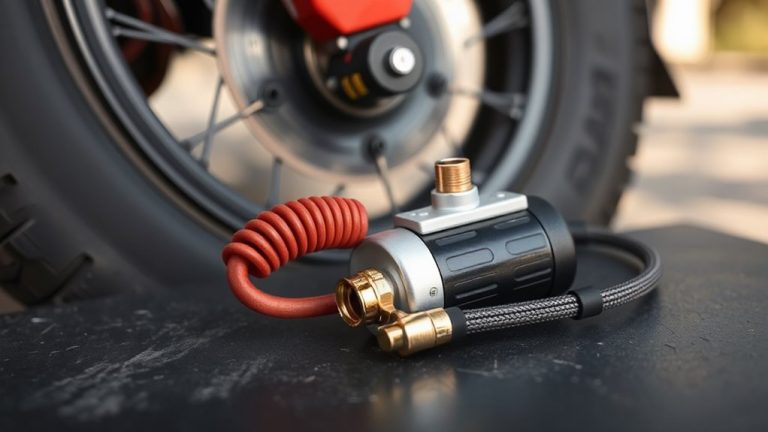
You need a reliable oil pressure gauge to monitor peak engine performance under extreme conditions. The Bosch Style Line 2″ gauge offers 0–100 PSI range with a 270-degree sweep for real-time accuracy. GlowShift’s 7 Color Kit provides customizable lighting and electronic sensing for 0–100 PSI monitoring. For high-pressure engines, the 0–150 PSI Universal Kit guarantees precise tracking with programmable alerts. Durable brass fittings, high-temp tubing, and rugged housings protect against vibration and heat. Each model balances range, durability, and clarity for performance applications-discover which one matches your setup.
We are supported by our audience. When you purchase through links on our site, we may earn an affiliate commission, at no extra cost for you. Learn more. Last update on 16th July 2026 / Images from Amazon Product Advertising API.
Notable Insights
- Choose a gauge with a 0–150 PSI range for high-performance engines to ensure accurate tracking of peak pressures.
- Opt for a 2-1/16-inch diameter gauge, the standard size for easy installation in most performance dash pods.
- Select mechanical gauges like Bosch Style Line for real-time, electronics-free pressure monitoring with 270-degree sweep accuracy.
- Use kits with high-temp nylon or copper tubing and multiple NPT fittings for reliable, leak-free connections under extreme conditions.
- Consider electronic gauges with backlight customization and programmable warnings, such as GlowShift, for enhanced visibility and functionality.
Bosch Style Line 2″ Oil Pressure Gauge

If you’re upgrading a classic truck or building a no-nonsense engine bay, the Bosch Style Line 2″ Oil Pressure Gauge is the best choice for drivers who prioritize reliability and straightforward installation. It fits standard 2-1/16-inch dash openings and measures 0–100 PSI with a 270-degree sweep for precise readings. The black dial and bezel offer clean visibility. It includes a 72-inch high-temp nylon tube, 1/2 NPT and 1/4 NPT fittings, and mounting hardware. The 12-volt backlight guarantees nighttime readability. I connect it directly-no extra electronics needed. It’s built for durability and accuracy.
Best For: Drivers upgrading classic trucks or building minimalist engine bays who value reliability, precise oil pressure monitoring, and easy installation.
Pros:
- Fits standard 2-1/16-inch dash openings with a wide 0–100 PSI range and smooth 270-degree sweep for accurate readings
- Includes 72-inch high-temperature nylon tubing and both 1/2 NPT and 1/4 NPT fittings for versatile, straightforward installation
- 12-volt internal backlight ensures clear nighttime visibility without requiring additional electronics
Cons:
- Mechanical gauge design may not appeal to users preferring digital displays or wireless connectivity
- Black dial and bezel, while sleek, may offer less contrast in low-light conditions compared to colored faces
- Limited to 12-volt systems, making it incompatible with higher-voltage or specialized vehicle electrical setups
GlowShift 7 Color Oil Pressure Gauge Kit

My GlowShift 7 Color Oil Pressure Gauge Kit is ideal for drivers who demand precision monitoring and a clean, customizable dash display. The 2-1/16″ (52mm) gauge features a black dial, red illuminated needle, smoked lens, and matte black trim ring for a sleek, factory-like fit. It measures oil pressure from 0 to 100 PSI with reliable accuracy. Seven solid color modes-blue, red, green, teal, purple, white, and yellow-and two color cycle options let you match your interior lighting. A dimmer wire reduces brightness by 30% when headlights are on. The kit includes an electronic 1/8-27 NPT sensor, 9″ harness, dual power leads, visor, bracket, hardware, and instructions. I’ve found installation simple, thanks to the step-by-step guide. GlowShift, established in 2004, backs every purchase with a one-year limited warranty, free lifetime tech support, and 30-day no-hassle returns.
Best For: Drivers seeking a reliable, customizable, and visually striking oil pressure gauge that integrates seamlessly into their vehicle’s dashboard.
Pros:
- Offers 7 solid color modes and 2 color cycle modes for full display customization to match interior lighting
- Includes a high-quality electronic sensor and all necessary components for easy installation
- Backed by a one-year limited warranty, free lifetime technical support, and 30-day no-hassle returns
Cons:
- Limited to 2-1/16″ dash openings, which may require modifications in some vehicles
- Smoked tinted lens may reduce readability in low-light conditions despite illumination
- Color cycling modes may consume more power over extended use
Oil Pressure Tester Kit 0-140 PSI

This Oil Pressure Tester Kit 0-140 PSI delivers precise, real-time readings for mechanics and DIYers who demand reliability when diagnosing engine performance. I rely on its dual-display gauge head for clear, accurate pressure monitoring. The rubber buffer cover protects against shocks and scratches. Its oil- and heat-resistant hose bends freely without cracking. Brass straight and elbow quick fittings guarantee leak-resistant, secure connections. Ten numbered metal adapters fit most gasoline and small diesel engines. I’ve used it on cars, trucks, motorcycles, and boats under 140 PSI. Adapters store neatly in a red case. Durable, non-toxic materials guarantee long-term safety and performance.
Best For: Mechanics and DIY enthusiasts who need a reliable, accurate oil pressure testing solution for gasoline and small diesel engines in cars, trucks, motorcycles, and boats.
Pros:
- Dual-display gauge head provides clear, real-time pressure readings for enhanced accuracy
- Includes 10 numbered metal adapters and a organized red storage case for convenience and broad compatibility
- Durable construction with oil- and heat-resistant hose, brass quick fittings, and rubber-protected gauge for long-term reliability
Cons:
- Limited to engines with oil pressure under 140 PSI, which may not suit high-performance or heavy-duty diesel engines
- Adapters may not fit all international or specialty engine models despite broad compatibility
- Red case, while organized, may be compact and less durable under heavy workshop use
Oil Pressure Gauge Kit (Universal)

You’ll find the 7-153 precision Mechanical Oil Pressure Gauge Kit ideal if you need a reliable, universal-fit solution for monitoring engine oil pressure across a range of vehicles. It works with gasoline and diesel engines. The kit includes a chrome or black gauge, plastic tube, mounting panel, installation hardware, adapter fittings, and instructions. The durable plastic tube resists high temperatures and wear while staying flexible. No special tools are needed for setup. Everything undergoes strict inspection to guarantee accuracy and longevity. Mounting is simple and secure. This universal system delivers consistent performance.
Best For: Drivers and mechanics seeking a reliable, universal-fit oil pressure gauge kit for monitoring engine performance in gasoline and diesel vehicles.
Pros:
- Universal compatibility with gasoline and diesel engines for broad application
- Easy installation with no special tools required and includes all necessary components
- Durable, high-temperature-resistant plastic tube ensures long-term reliability
Cons:
- Plastic tube may not be as robust as metal alternatives in extreme conditions
- Limited aesthetic options with only chrome and black finish choices
- Mechanical gauge may require periodic calibration to maintain accuracy
Oil Pressure Tester Kit (0-140 PSI)

While some oil pressure gauges serve niche applications, the Oil Pressure Tester Kit (0–140 PSI) stands out for anyone working on gasoline or small diesel engines across cars, trucks, motorcycles, or boats. I rely on its 0–140 PSI range to cover most standard engine requirements. The dual display gauge features a clear scale and rubber buffer for shock and scratch resistance. High-quality metal construction includes brass fittings-both straight and curved-for secure, leak-free connections. Its oil- and heat-resistant hose handles tough conditions. Ten numbered adapters fit most vehicles, stored neatly in a red case. I’ve found installation fast and reliable. Gnhydxfe backs it with direct support and a 100% satisfaction guarantee.
Best For: DIY mechanics and professional technicians working on gasoline or small diesel engines in cars, trucks, motorcycles, or boats who need a reliable, versatile oil pressure testing solution.
Pros:
- Durable construction with high-quality metal and brass fittings ensures long-term reliability and leak-free performance
- Dual display gauge with rubber buffer provides clear readings and protection against shock and scratches
- Includes 10 numbered adapters and a well-organized red case for quick identification and portability across various vehicle types
Cons:
- Limited to a maximum of 140 PSI, making it unsuitable for high-pressure diesel engines or specialized applications
- Package weight of 2.33 pounds may be slightly heavy for minimalistic toolkits
- Brand reputation of Gnhydxfe may be less established compared to legacy automotive tool manufacturers
Bosch 2″ Mechanical Oil Pressure Gauge

A reliable mechanical oil pressure gauge matters most when you demand real-time, accurate engine feedback without relying on electrical systems. I trust the Bosch SP0F000044 Style Line 2” gauge for its precision. Its white dial and chrome bezel deliver clean readability. The 270-degree sweep guarantees smooth needle movement for accurate pressure tracking. It fits standard 2-1/16″ dash openings. It measures 0–100 psi, ideal for most performance and street engines. I appreciate the included 72″ high-temperature nylon tubing. It comes with 1/2″ and 1/4″ NPT fittings. Mounting hardware and 12-volt internal backlighting simplify installation. The removable chrome panel offers flexibility.
Best For: Enthusiasts and professionals seeking a reliable, electric-free oil pressure monitoring solution for performance or street vehicles.
Pros:
- Durable mechanical design with 270-degree sweep for precise, real-time pressure readings
- Includes high-temperature nylon tubing and multiple NPT fittings for versatile installation
- 12-volt backlighting and clean chrome-and-white design enhance visibility and aesthetics
Cons:
- Requires physical engine tapping for installation, which may complicate setup
- Mechanical gauges can be less accurate over time compared to digital systems
- Limited to 100 psi range, which may not suit extreme performance applications
OTC Tools 5610 Trans-Eng Oil Press Tester

The OTC Tools 5610 Trans-Eng Oil Press Tester stands out for technicians who demand versatility and durability in both shop and field diagnostics. I rely on its dual 3-1/2 inch gauges: one reads 0–400 psi for engine testing, the other 0–100 psi for transmissions. Chrome bezels and protective boots boost longevity. Quick couplers speed connections, and built-in hooks allow hands-free use. The kit includes 13 adapters, fitting most domestic and import vehicles. I store everything in the blow-molded case-it’s rugged, organized, and travel-ready. An instruction manual guides precise setup. This tool delivers accurate, real-time pressure readings for static or on-road analysis.
Best For: Automotive technicians and DIY enthusiasts who need a durable, versatile oil pressure testing kit for both engine and transmission diagnostics on domestic and import vehicles.
Pros:
- Dual large 3-1/2 inch gauges (0–400 psi and 0–100 psi) provide accurate readings for a wide range of applications
- Includes 13 adapters and a blow-molded case for excellent compatibility and organized, portable storage
- Rugged design with chrome bezels, protective boots, and quick couplers ensures durability and ease of use
Cons:
- No rubber overmolding on the case, which may reduce grip and impact resistance
- Adapters are not labeled, making selection time-consuming without the manual
- Higher price point compared to basic pressure testers with fewer features
Universal Oil Pressure Gauge Kit 150 PSI

You get exact oil pressure monitoring with this Universal Oil Pressure Gauge Kit rated for 150 PSI, ideal for drivers who demand precision in cars, trucks, boats, and marine engines. I rely on its 0–150 PSI range for accurate real-time feedback. The 1/8 NPT sensor fits most standard ports. It runs on 12V or 24V DC, drawing under 0.3A. I appreciate the programmable buttons for peak recall, warnings, and metric conversion. The red LED needle sweeps cleanly, and the central LED is 87% brighter. Its slim 18.8mm depth saves space. The display offers a 33% larger viewing area. I’ve found it durable and responsive.
Best For: Drivers and marine enthusiasts seeking precise, real-time oil pressure monitoring across cars, trucks, and boats with a compact, feature-rich digital gauge.
Pros:
- Wide 0–150 PSI range with high visibility from 87% brighter LED and 33% larger display
- Programmable features including peak/recall, threshold warnings, and metric unit conversion
- Slim 18.8mm design allows for flexible, space-saving installation in tight dash spaces
Cons:
- Requires a 1/8 NPT port, which may not be available on all engines without an adapter
- No backlighting mentioned for the faceplate or buttons, potentially limiting night visibility
- Limited to 12V or 24V DC systems, making it unsuitable for non-standard voltage vehicles
72″ Oil Pressure Gauge Tubing Kit

Purple copper tubing sets this Oil Pressure Gauge Tubing Kit apart, making it the best choice for mechanics who demand durability and ease of installation. I rely on its 72-inch length to route cleanly from engine to gauge. The 1/8 NPT fitting connects directly to most oil ports. I also get extra 1/8 and 1/4 NPT adapters for flexibility. The tubing resists kinking, thanks to high ductility. It handles heat and pressure far beyond typical engine demands. This kit includes one metal tube and seven precision-threaded fittings. I use it only with mechanical oil or boost gauges-not fuel systems. It works on cars, trucks, and tractors. I confirm specs before installing.
Best For: Mechanics and DIY enthusiasts installing mechanical oil or boost pressure gauges in cars, trucks, or tractors who need a durable, flexible, and easy-to-install tubing solution.
Pros:
- Made from high-ductility purple copper that resists kinking and withstands high heat and pressure
- Includes multiple NPT fittings (1/8 and 1/4) for versatile installation options
- 72-inch length provides ample reach for routing from engine to gauge in most vehicles
Cons:
- Not compatible with fuel gauge systems, limiting use to oil and boost pressure applications only
- Requires careful specification check before installation to ensure fitting compatibility
- May be overkill in length for compact engine bays, leading to excess tubing needing management
7 Color Oil Pressure Gauge 52mm

Built for drivers who demand precision under the hood, this 7 Color Oil Pressure Gauge in 52mm delivers real-time monitoring with laboratory-grade accuracy. It measures 0–140 PSI using an electronic sensor and stepping motor, preventing engine damage like cylinder pulling. The black dial and tinted lens reduce glare, while the red-illuminated needle guarantees readability. You can choose from seven solid backlight colors via a button on the lens, including full blackout mode for stealth. It includes a sensor, harness, U-bracket, and hardware. Wiring errors may cause inaccurate readings-contact the seller for technical help. I rely on it for consistent, clear feedback.
Best For: Drivers who want precise, real-time oil pressure monitoring with customizable lighting for both performance and aesthetic appeal.
Pros:
- Offers 7 selectable backlight colors and blackout mode for personalized dashboard lighting and nighttime visibility
- Features electronic sensor and stepping motor for accurate 0–140 PSI readings to prevent engine damage
- Includes all necessary components (sensor, harness, bracket, hardware) for straightforward installation
Cons:
- Inaccurate readings may occur due to wiring errors, requiring troubleshooting
- Limited to 52mm size, which may not fit all dashboard configurations
- Red illumination only for the needle, reducing color customization impact on overall readability
Factors to Consider When Choosing an Oil Pressure Gauge
You need to pick an oil pressure gauge that matches your engine’s requirements and your dash space. Consider the measurement range first-most gas engines run best with a 0–100 psi scale, while diesels may need up to 150 psi; gauge size matters too, with 2 1/16” (52mm) being standard for most panels. Look for LED or electroluminescent lighting, guarantee the sender wiring fits your setup, and choose a gauge with a dampened sensor to protect against vibration damage.
Measurement Range
When selecting an oil pressure gauge, the measurement range is a critical factor that directly affects both accuracy and durability. Most standard automotive engines operate within 0 to 100 PSI, so a gauge with this range delivers precise readings under normal conditions. If you’re running a high-performance engine, choose a gauge that measures up to 150 PSI or more to handle increased pressure demands. Avoid selecting a range too high for your needs-excess capacity reduces needle sensitivity and makes small pressure changes harder to detect. Dual-range gauges provide versatility, offering both low (0–100 PSI) and high (0–400 PSI) scales for use in engine and transmission diagnostics. Always guarantee the gauge’s maximum range exceeds your system’s peak pressure by a safe margin to prevent damage during spikes. This protection preserves accuracy and extends the gauge’s life.
Gauge Size
Gauge size plays a key role in both installation and usability, following closely from the importance of accurate pressure measurement. You’ll find most oil pressure gauges in standard 2-inch (50.8mm) or 2-1/16-inch (52mm) diameters. The 2-1/16-inch size is the most common, fitting nearly all aftermarket pods and dash panels. This standardization makes it easy for you to replace or upgrade without modifying your dashboard. Larger 3-1/2-inch gauges offer superior readability from a distance and are often used in professional diagnostic setups. For tight spaces, compact digital gauges with depths under 19mm fit neatly into crowded instrument clusters. Always match the gauge’s size to your dashboard’s cutout to guarantee a secure fit and proper alignment. A well-fitted gauge looks clean and functions reliably.
Lighting Options
Why settle for a dim or incompatible readout when critical oil pressure data depends on clear visibility? Choose a gauge with 12-volt internal backlighting for seamless integration into your vehicle’s standard electrical system. You can customize your dash with models offering 7 solid backlight colors and dual-color cycling modes. For nighttime driving, connect the dimmer wire to reduce brightness up to 30% when headlights turn on-this cuts glare and matches factory gauge behavior. Illuminated red needles boost readability in darkness by creating sharp contrast against black dials. If you prefer a stealth setup, select a model with full blackout mode to disable all backlighting completely. These lighting options give you control over clarity, comfort, and cockpit aesthetics without sacrificing functionality or precision during day or night operation.
Installation Type
If you’re upgrading your engine’s monitoring system, the installation type of the oil pressure gauge plays a critical role in both setup time and long-term reliability. Mechanical gauges connect directly to the engine using 1/8″ or 1/4″ NPT ports and require rigid tubing to transmit pressure. You must apply thread tape or sealant to prevent leaks at the fitting. Electric models eliminate tubing by using a remote sensor linked to the gauge via a wiring harness. This simplifies routing in tight engine bays. Most gauges fit a standard 2-1/16″ dashboard hole and mount flush, surface-mounted, or with brackets and visors. Installation complexity depends on whether your kit includes preset wiring and sensor locations. Custom runs demand more planning. Choose mechanical for direct feedback without power needs, or electric for cleaner layout and easier placement.
Durability Features
Your engine’s harsh environment demands a gauge built to endure. Choose models with rugged housing materials like high-quality metal to resist deformation under stress. Rubber buffer protection covers safeguard internal components, offering shock and scratch resistance during operation. Durable brass fittings-available in straight and elbow quick-connect types-guarantee secure, leak-resistant connections and long service life. These metal fittings withstand constant vibration and thermal cycling better than plastic alternatives. Use oil-resistant, high-temperature hoses to maintain integrity in extreme conditions, preventing cracks or swelling over time. Scratchproof lenses preserve visibility and structural strength, even with prolonged UV and chemical exposure. Protective outer boots add another layer of defense against impacts and abrasions. Together, these features guarantee reliable performance in demanding applications. A well-constructed gauge won’t fail when you need it most. Prioritize build quality to guarantee accuracy and longevity under real-world operating conditions.
Display Clarity
A high-contrast dial with bold markings and a 270-degree sweeping needle guarantees you can read oil pressure at a glance. You need immediate feedback, and this design delivers precise, real-time monitoring. Tinted or smoked lens covers cut glare, boosting visibility in direct sunlight or bright conditions. For night driving, illuminated needles and adjustable backlighting make certain the gauge stays readable in total darkness. You’ll want a larger face-52mm or 3.5-inch models-because they offer a broader viewing area and improved legibility from the driver’s seat. Anti-reflective coatings and matte finish dials further reduce reflections, maintaining clarity whether you’re under stadium lights or desert sun. These features work together like a cockpit instrument, giving you instant, accurate data without distortion or delay. Clarity isn’t just convenience-it’s critical for catching pressure drops before damage occurs. Choose visibility every time.
Frequently Asked Questions
How Often Should I Calibrate My Oil Pressure Gauge?
You should calibrate your oil pressure gauge annually for peak accuracy. Mechanical gauges drift over time due to diaphragm fatigue and temperature exposure. If you frequently drive under heavy loads or extreme conditions, check it every six months. Use a calibrated reference tester with ±0.5 psi accuracy. Connect in parallel to the existing sender unit. A deviation over 5% from reference means recalibration or replacement. Digital gauges typically hold calibration longer.
Can Oil Pressure Gauges Work With Diesel Engines?
Yes, oil pressure gauges work with diesel engines. You must guarantee compatibility with higher cold-start pressures, which often exceed 60 psi. Most modern gauges handle ranges up to 100 psi, making them suitable. Use a 1/8 NPT sender unit placed near the engine’s oil gallery. Analog and digital models function accurately, provided they’re designed for industrial or heavy-duty use. Always verify temperature rating and sensor durability.
Do Oil Pressure Gauges Affect Engine Performance?
No, oil pressure gauges don’t affect engine performance-you’re just monitoring pressure, not altering it. They give real-time feedback on lubrication system health. A typical gauge reads 10–80 psi, using a 1/8 NPT sender unit. Accuracy is usually ±2 psi. Think of it like a thermometer: it shows temperature but doesn’t change it. You’re only measuring output, not influencing engine operation.
Are Wireless Oil Pressure Gauges Reliable and Accurate?
Yes, wireless oil pressure gauges are reliable and accurate when built with quality sensors and digital transmission. You get real-time readings via Bluetooth or RF signals, typically within ±2% accuracy. They use 0–100 psi ranges and 1/8″ NPT sensors with temperature compensation. Latency is under 0.5 seconds. Signal interference is rare but possible near high-voltage sources. Calibrated units match wired gauge precision, making them a solid, clean-install option for monitoring engine health.
Can I Install an Oil Pressure Gauge Myself?
Yes, you can install an oil pressure gauge yourself with basic tools and mechanical knowledge. You tap into the engine’s oil gallery using a tee-fitting at the sender port. Secure the gauge in a dash pod or cluster. Route the power, ground, and signal wires cleanly, avoiding heat and moving parts. Most kits include NPT fittings-ensure proper thread sealing. Calibration matches your engine’s psi range, typically 0–100 psi.