Top Synthetic Oils for Diesel Engines That Maximize Performance
You get superior wear protection and extended drain intervals with full synthetic diesel oils like Shell Rotella T6 15W-40. It exceeds API CK-4 and CJ-4 standards, offers triple protection technology, and flows better in cold starts than conventional oils. Mobil Delvac 1 5W-30 flows at -30°C and resists breakdown up to 50,000-mile drains. These oils maintain viscosity under heat, protect DPFs, and improve fuel economy. The top choices combine low-temperature reliability with long-term performance in modern emissions-compliant engines. More details on specific applications await.
We are supported by our audience. When you purchase through links on our site, we may earn an affiliate commission, at no extra cost for you. Learn more. Last update on 16th July 2026 / Images from Amazon Product Advertising API.
Notable Insights
- Shell Rotella T6 Full Synthetic 15W-40 offers triple protection against wear, deposits, and oil breakdown for peak diesel performance.
- Valvoline Heavy Duty Full Synthetic 15W-40 reduces valve train wear by 35% and extends oil life up to 28% versus standards.
- Mobil Delvac 1 Advanced 5W-30 flows at -30°C and resists sludge for reliable cold-start protection and 50,000-mile drain intervals.
- Valvoline Premium Blue 5W-40 is Cummins-validated for X15/X12 engines, improving fuel economy by up to 1.5% over 15W-40 oils.
- Full synthetic 5W-40 oils provide superior cold-weather flow down to -35°C and stable performance above 150°C for maximum engine protection.
Shell Rotella T6 Full Synthetic 15W-40 Diesel Engine Oil, 1 Gallon (3 Pack)

If you’re running a modern diesel engine under heavy loads or extreme conditions, Shell Rotella T6 Full Synthetic 15W-40 is built for your needs. I rely on its full synthetic formulation with Triple Protection Plus technology to fight wear, deposits, and oil breakdown. It outperforms API CJ-4 standards, offering superior oxidation resistance and engine cleanliness. It flows better in cold weather than conventional 15W-40 oils, ensuring faster cold cranking. I know it meets API CK-4, CJ-4, and ACEA E11 specs. It’s approved for Cummins CES 20086, Detroit DFS 93K222, and Mack EOS-4.5. It protects up to 500,000 miles if I use it exclusively.
Best For: Heavy-duty diesel engine operators facing extreme conditions, high temperatures, or frequent cold starts who demand superior wear protection and engine cleanliness.
Pros:
- Full synthetic formula with Triple Protection Plus technology delivers enhanced wear protection, deposit control, and resistance to oil breakdown
- Meets or exceeds API CK-4, CJ-4, ACEA E11, and OEM specifications for major diesel engines, including Cummins, Detroit, and Mack
- Improved cold-weather performance ensures reliable cold cranking and low-temperature pumpability compared to conventional 15W-40 oils
Cons:
- Higher price point compared to conventional or synthetic blend diesel oils
- Overperformance may not be necessary for light-duty or older diesel applications
- Warranty benefits (up to 500,000 miles) only apply when exclusively using Shell Rotella T6, limiting oil mixing or switching
Valvoline Heavy Duty Full Synthetic 15W-40 Diesel Engine Oil 1 Gallon

Valvoline Heavy Duty Full Synthetic 15W-40 Diesel Engine Oil is the go-to choice for fleet operators and long-haul truckers who demand maximum engine protection under extreme operating conditions. I rely on it because it’s proven to maximize diesel engine life. It controls wear, deposits, and oil breakdown better than conventional oils. In Cummins ISB testing, it reduces valve train wear by 35% versus industry standards. My oil lasts up to 28% longer, based on Volvo T-13 tests. It meets API CK-4, CJ-4, and other specs. It’s approved for Cummins, Ford, Volvo, Mack, Detroit Diesel, and Caterpillar engines.
Best For: Fleet operators and long-haul truckers who need maximum diesel engine protection under extreme operating conditions.
Pros:
- Proven to maximize diesel engine life with 35% reduction in valve train wear versus industry standards
- Up to 28% longer oil life, reducing maintenance frequency and operating costs
- Meets or exceeds multiple API service categories and is approved by major engine manufacturers including Cummins, Volvo, and Caterpillar
Cons:
- Higher upfront cost compared to conventional diesel engine oils
- May not be necessary for light-duty or short-haul applications where extreme protection isn’t required
- Limited availability in some rural or remote areas
Shell Rotella T6 Full Synthetic 15W-40 Diesel Engine Oil, 1 Gallon

I rely on Shell Rotella T6 Full Synthetic 15W-40 Diesel Engine Oil when extreme durability and consistent performance under harsh conditions are non-negotiable. It uses full synthetic formulation with Triple Protection Plus technology. This means superior resistance to oxidation, heat, and viscosity breakdown. It exceeds API CK-4 and CJ-4 standards, ensuring robust wear protection. The oil maintains excellent low-temperature pumpability for easier cold starts. It’s compatible with DPF and SCR emissions systems. Approved for use in Caterpillar, Cummins, Detroit, Ford, and Volvo engines. Warranty covers up to 500,000 miles or 15 years when used exclusively.
Best For: Heavy-duty diesel engine owners who demand extreme durability, superior wear protection, and reliable performance in harsh conditions and cold climates.
Pros:
- Full synthetic formulation with Triple Protection Plus technology provides exceptional resistance to oxidation, deposits, and viscosity breakdown
- Meets or exceeds API CK-4, CJ-4, and multiple OEM specifications, making it suitable for a wide range of diesel engines including Caterpillar, Cummins, and Volvo
- Compatible with modern emissions systems like DPF and SCR, while offering enhanced cold-start performance and low-temperature pumpability
Cons:
- Higher price point compared to conventional and synthetic blend diesel oils
- Warranty benefits require exclusive, long-term use, which may not suit those who switch brands
- Overkill for light-duty or non-commercial applications where extreme performance is not required
Shell Rotella T5 Synthetic Blend 15W-40 Diesel Engine Oil, 1 Gallon

Shell Rotella T5 Synthetic Blend 15W-40 Diesel Engine Oil is my go-to choice for heavy-duty diesel engines that demand reliable performance under extreme conditions. Its synthetic blend uses Triple Protection Plus technology to fight wear, deposits, and oil breakdown. It controls engine wear 37% better than API CK-4 requirements. The low-ash formula helps prevent exhaust after-treatment clogging, supporting emissions compliance. It meets API CK-4, CJ-4, and ACEA E11 specs. Compatible with Caterpillar, Cummins, Detroit, and Volvo engines. It supports extended drain intervals. Warranty covers up to 300,000 miles when used exclusively.
Best For: Heavy-duty diesel engine owners seeking reliable wear protection, emissions compliance, and extended oil drain intervals in demanding on-highway, construction, agricultural, or industrial applications.
Pros:
- Provides 37% better engine wear protection than API CK-4 requirements
- Low-ash formulation helps prevent clogging of exhaust after-treatment systems
- Supports extended drain intervals while maintaining engine cleanliness and reliability
Cons:
- May not be suitable for gasoline engines requiring non-diesel-specific formulations
- Synthetic blend offers less thermal stability than full-synthetic alternatives
- Limited warranty only applies when exclusively using Rotella products and following strict guidelines
Delo 400 XLE Diesel Engine Oil 15W-40

For fleet operators aiming to maximize uptime and protect modern diesel engines under heavy loads, Delo 400 XLE Diesel Engine Oil 15W-40 stands out as a top-tier choice. I rely on its synthetic blend formulation for long drain intervals in mixed fleets. It uses Isosyn Advanced Technology to resist breakdown and extend oil life. Isoclean-certified, it meets strict OEM cleanliness standards, reducing sludge and deposits. I’ve seen it deliver superior piston deposit control and turbo protection. Its high-performance detergents handle soot and oxidation, keeping engines clean. It resists wear in cylinders, rings, and valve trains, even under soot-rich conditions.
Best For: Fleet operators managing mixed on-highway diesel fleets seeking extended drain intervals and enhanced engine protection in GHG 17-compliant and heavy-duty applications.
Pros:
- Utilizes Isosyn Advanced Technology for longer oil life and superior wear protection
- Isoclean-certified to meet OEM cleanliness standards, reducing sludge and deposit formation
- Excellent soot dispersancy and piston deposit control, ideal for modern, emissions-compliant diesel engines
Cons:
- Higher cost compared to conventional mineral-based diesel oils
- Synthetic blend may not match full synthetic performance in extreme conditions
- Limited availability in some regional markets or smaller retail outlets
Shell Rotella T5 Synthetic Blend 15W-40 (3-Pack)

A dependable workhorse in demanding environments, the Shell Rotella T5 Synthetic Blend 15W-40 (3-Pack) stands out for fleet managers and owners of heavy-duty diesel engines who need consistent performance across long intervals. I rely on its Triple Protection Plus technology to fight wear, deposits, and oil breakdown. It controls wear 37% better than API CK-4 requirements. The low-ash formulation protects exhaust after-treatment systems, aiding emissions compliance. It meets API CK-4, CJ-4, ACEA E11, and JASO DH-2 specs. I use it in on-highway, construction, and agricultural equipment. It supports extended drain intervals. I trust its compatibility with Caterpillar, Cummins, Detroit, and Allison systems.
Best For: Fleet managers and owners of heavy-duty diesel engines seeking reliable, long-lasting protection in on-highway, construction, and agricultural applications.
Pros:
- Provides 37% better wear control than API CK-4 requirements, enhancing engine longevity
- Low-ash formulation helps protect exhaust after-treatment systems and supports emissions compliance
- Suitable for extended oil drain intervals while maintaining engine cleanliness and performance
Cons:
- May not be cost-effective for light-duty or short-interval oil change applications
- Not a full synthetic, so extreme temperature protection is limited compared to full synthetic options
- Warranty claim limited to 300,000 miles or 10 years, which may not cover all long-term users
Valvoline European Vehicle Full Synthetic SAE 5W-40 Motor Oil 5 QT

Valvoline European Vehicle Full Synthetic SAE 5W-40 Motor Oil 5 QT stands out for diesel owners who demand precision-engineered protection in both extreme heat and frigid cold. I rely on its full synthetic formulation to deliver unmatched defense against wear, friction, heat, and deposits. It meets or exceeds API SP, ACEA A3/B3, and A3/B4 standards. Premium anti-wear additives surpass OEM requirements. It’s approved for MB-229.5, VW 502.00/505.00, BMW LL-01, and Porsche A40. Enhanced detergents prevent sludge. Premium antioxidants boost thermal stability. This oil performs reliably in temperatures from -30°C to over 150°C. It’s American-made by a brand with 150+ years of trust.
Best For: European diesel and gasoline vehicle owners seeking high-performance, full synthetic motor oil with broad OEM approvals and extreme temperature protection.
Pros:
- Meets or exceeds API SP, ACEA A3/B3, and A3/B4 standards with superior wear, heat, and deposit protection
- Approved for use in major European brands including Mercedes-Benz, BMW, Volkswagen, Porsche, and Renault
- Engineered for exceptional performance in temperatures ranging from -30°C to over 150°C
Cons:
- Not specifically formulated for American or Asian vehicle engines, limiting universal application
- Higher price point compared to conventional or semi-synthetic oils
- 5W-40 viscosity may not suit all modern engines requiring lower viscosity grades like 5W-30 or 0W-20
Valvoline Premium Blue 5W-40 Diesel Oil (3-Pack)
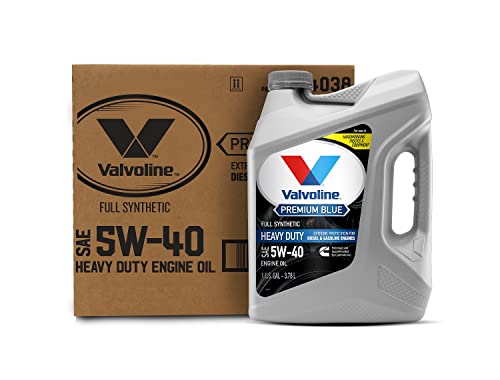
Precision matters when your engine operates under extreme stress, and the Valvoline Premium Blue 5W-40 Diesel Oil (3-Pack) is built for those who demand maximum durability in heavy-duty diesel applications. I rely on its full synthetic 5W-40 viscosity to protect engines in temperatures from sub-zero to extreme heat. Its 390°F flash point guarantees stability under pressure. Formulated with advanced additives, it resists sludge, oxidation, and wear. I’ve seen it control soot during long idles and safeguard engines during cold starts. It’s exclusively endorsed by Cummins for on- and off-highway use. I trust it in modern diesel systems with EGR and DPF. It’s American-made, supports 5,000-mile oil drains in Cummins X15/X12 engines at 7+ mpg, and improves fuel economy by up to 1.5% over 15W-40.
Best For: Heavy-duty diesel engine operators seeking maximum wear protection, extended oil drain intervals, and reliable performance in extreme temperatures and demanding on- or off-highway applications.
Pros:
- Provides excellent wear, sludge, and oxidation resistance with full synthetic 5W-40 formulation and advanced additive technology
- Exclusively endorsed by Cummins for use in X15/X12 engines with potential 5,000-mile oil drain extensions under qualifying conditions
- Improves fuel economy by up to 1.5% compared to conventional 15W-40 oils and supports modern diesel emissions systems like EGR and DPF
Cons:
- Limited to specific diesel engine types and may not be cost-effective for non-Cummins or lighter-duty applications
- Higher upfront cost compared to conventional motor oils due to full synthetic formulation
- Oil drain extension eligibility depends on strict operating conditions, including fuel economy of 7+ mpg
5W-40 Synthetic Diesel Engine Oil (5 QTS)

You demand peak protection for high-stress diesel engines, and this 5W-40 synthetic oil delivers exactly that. My Pro-Tech synthetic formulation guarantees advanced wear protection and thermal stability under heavy loads. The 5W-40 viscosity flows quickly at -35°C, safeguarding during cold starts, then maintains ideal thickness at 100°C for consistent high-temperature performance. I meet API CK-4 and SN standards, making me compatible with modern diesel and gasoline engines. My 5-quart (4.73L) bottle covers most full oil changes. I’m engineered to resist oxidation and deposit formation, extending engine life and uptime in severe service conditions.
Best For: Heavy-duty diesel engine owners seeking reliable, high-performance synthetic oil protection in extreme operating conditions.
Pros:
- Advanced synthetic formulation provides superior wear protection and thermal stability under heavy loads
- 5W-40 viscosity ensures reliable cold starts down to -35°C and consistent performance at high temperatures
- Meets API CK-4 and SN standards, making it suitable for modern diesel and gasoline engines
Cons:
- May be over-specified for light-duty or older engines not requiring synthetic CK-4 performance
- 5-quart size may not be sufficient for larger engines requiring more than 5 quarts per change
- Higher cost compared to conventional or lower-grade diesel oils
Mobil Delvac 1 Advanced Full Synthetic Diesel Engine Oil 5W-30, 1 Gal

A workhorse in extreme conditions, Mobil Delvac 1 Advanced Full Synthetic Diesel Engine Oil 5W-30 is the best choice for fleet operators and owner-operators relying on modern, high-efficiency diesel engines. I trust it in turbocharged, direct-injection engines where stress runs high. Its full synthetic formula fights oxidation and wear better than conventional oils. It flows fast at -30°C, guarding against cold-start scuffing. I’ve seen it resist sludge and viscosity breakdown even after 50,000-mile drains. It’s compatible with low-sulfur diesel and B20 biodiesel. This oil meets or exceeds API CK-4 and supports OEM fuel economy claims.
Best For: Fleet operators and owner-operators using modern, high-performance diesel engines under severe operating conditions.
Pros:
- Superior oxidation resistance and anti-wear protection extend engine life and maintain performance under heavy loads
- Excellent low-temperature fluidity ensures quick oil flow and protection during cold starts down to -30°C
- Resists sludge and viscosity breakdown, enabling extended drain intervals up to 50,000 miles
Cons:
- Higher upfront cost compared to conventional or synthetic blend diesel oils
- May not deliver full benefits in older, non-turbocharged diesel engines not designed for synthetic oils
- Over-specified for light-duty or short-haul applications, potentially limiting return on investment
Factors to Consider When Choosing Synthetic Oil for Diesel Engines
You need to match the oil’s viscosity grade to your engine’s specs-modern diesel engines often require multi-grade oils like 5W-30 or 10W-40 for ideal flow in cold starts and high-temperature protection. Look for oils with the right API certification, like CK-4 or FA-4, since these standards guarantee the oil handles soot, thermal breakdown, and wear in today’s high-pressure, high-temperature diesel systems. Also, check OEM approvals-Cummins, Volvo, and Detroit Diesel each have specific performance demands, and using oil without the proper approval can void warranties or shorten engine life.
Viscosity Requirements
When selecting synthetic oil for a diesel engine, viscosity grade plays a decisive role in ensuring proper lubrication across varying temperatures and operating conditions. You’ll see ratings like 15W-40 or 5W-40, where the “W” stands for winter performance and the second number indicates viscosity at normal operating temps. A lower first number, like 5W, means the oil flows faster in cold weather, protecting essential parts during startup. That’s critical if you’re in a colder climate. Higher viscosity at operating temperature-like the 40 in 5W-40-maintains a durable lubricating film under intense heat and pressure. This matters during heavy loads when engine temps can surpass 100°C. Multi-grade oils balance both needs, offering fluidity when cold and stability when hot. Always match the manufacturer’s recommended viscosity. Getting it wrong risks wear, oil degradation, or lower fuel economy.
API Certification Standards
Why do certain synthetic oils outperform others in modern diesel engines? Because they meet the latest API certification standards designed for today’s demanding performance needs. You need API CK-4 oil if you’re running a high-speed four-stroke diesel-it delivers superior oxidation resistance, shear stability, and soot handling. CK-4 oils pass rigorous engine tests to guarantee wear protection and deposit control under extreme conditions. Older API CJ-4 oils work in 2007-compliant engines but aren’t backward-compatible due to diesel particulate filter requirements. CI-4 Plus offered a stopgap improvement with better soot tolerance for EGR-equipped engines. While API SN is for gasoline engines, some diesel oils include it for mixed-fleet compatibility. Always check the API donut-it confirms the oil passed standardized tests. Choosing the right certification guarantees engine protection, longevity, and peak efficiency. Don’t guess-verify the API mark on every bottle.
OEM Approvals Needed
Meeting API standards sets a baseline for performance, but OEM-specific approvals guarantee the synthetic oil is fully compatible with your diesel engine’s design and emissions systems. You must verify approvals listed on the oil’s spec sheet match your manufacturer’s requirements. Oils often need API CK-4, ACEA E11, or JASO DH-2 compliance as a starting point. Top-tier brands meet strict OEM specs like Caterpillar ECF-3, Cummins CES 20086, or Detroit Fluids Specification 93K222. These guarantee protection under high-stress conditions and extended drain intervals. Low-SAPS (sulfated ash, phosphorus, sulfur) formulations prevent damage to diesel particulate filters and SCR systems. Using unapproved oil risks poor lubrication, increased wear, and voided warranties. Always check the product data sheet for exact OEM stamps. Matching the right oil to your engine’s approval list maximizes efficiency, emissions performance, and longevity without compromise.
Cold Temperature Performance
How does your diesel engine fare in subzero conditions? Full synthetic oils outperform conventional and synthetic blends by maintaining superior low-temperature pumpability. They flow quickly to critical components during cold starts, reducing wear. A 5W-40 viscosity grade ensures reliable cold cranking in temperatures as low as -30°C. This rating means the oil flows like a 5-weight at startup, protecting your engine even in freezing climates. Synthetic oils have lower pour points, often below -40°C, so they remain fluid when temperatures plummet. This fluidity prevents oil starvation in crucial parts like bearings and camshafts. Enhanced flow properties deliver lubrication faster, minimizing damage during the critical warm-up phase. You get immediate protection the moment you turn the key. Choosing a full synthetic with excellent cold temperature performance isn’t optional-it’s essential for diesel engine longevity in winter.
High Temperature Stability
When your diesel engine runs under heavy load, temperatures in the combustion chamber can soar above 200°C, placing extreme stress on the oil. High temperature stability prevents thermal breakdown, guaranteeing the oil maintains its viscosity and lubrication efficiency. Synthetic oils resist oxidation at these extremes, reducing sludge and deposit formation. This means cleaner engine components and longer oil life. Superior formulations have low volatility, minimizing oil consumption and maintaining proper levels during extended operation. Advanced additive packages neutralize acids and prevent viscosity increase from prolonged heat exposure. The oil stays fluid and protective, not thick or gel-like. High temperature stability also supports extended drain intervals by reducing thickening and degradation. You get fewer oil changes and better engine protection. Choosing a synthetic with proven high-temperature performance guarantees reliability under stress. It’s essential for heavy-duty diesel operation where heat is unavoidable.
Emissions System Compatibility
If your diesel engine relies on advanced emissions systems, choosing the right synthetic oil isn’t optional-it’s critical. You need oils that protect sensitive components like EGR valves, DPFs, and SCR catalysts. High SAPS levels-especially phosphorus, sulfur, and ash-can poison these systems, reducing efficiency and increasing emissions. Look for oils meeting API CK-4 standards, specifically engineered for low-ash formulations. These oils typically contain less than 1% sulfated ash by weight, minimizing DPF clogging and ensuring smooth regeneration. For SCR systems, low-ash oil prevents catalyst contamination, preserving NOx reduction performance. EGR systems benefit from cleaner oil that resists deposit buildup, maintaining ideal airflow and combustion. Using the wrong oil can lead to failed emissions tests and costly repairs. Choose synthetic oils labeled for compatibility with modern after-treatment systems-you’re not just protecting your engine; you’re keeping it compliant, efficient, and ready for real-world demands.
Warranty Coverage Terms
Your choice of synthetic oil doesn’t just affect engine performance and emissions system longevity-it directly impacts warranty coverage. If you use the wrong oil, you risk voiding protection. Many extended warranties last up to 15 years or 500,000 miles, but only if you use approved synthetic oil exclusively. These policies demand full synthetic, not blends, and prohibit mixing brands. You must stick to recommended change intervals and keep accurate maintenance records. Coverage hinges on oil that meets strict standards-API CK-4 or ACEA E11-at every service. Using subpar or off-spec fluids invalidates claims. Think of it like a homeowner’s warranty: skip a required inspection, and the insurer walks away. Stick to the rules, use the right oil consistently, and your warranty stays strong. Ignore them, and you’re on your own.
Frequently Asked Questions
Can Synthetic Oil Be Mixed With Conventional Diesel Oil?
Yes, you can mix synthetic oil with conventional diesel oil. The resulting blend won’t harm your engine. However, you’ll dilute the superior thermal stability and oxidation resistance of synthetic oil. Most synthetics use PAO or ester base stocks with viscosity indices over 140, while conventional oils range between 90–100. Mixing lowers overall performance, especially under high heat or extended drain intervals. For best protection, stick to one type.
How Often Should I Change Synthetic Diesel Engine Oil?
You should change synthetic diesel engine oil every 15,000 to 25,000 miles under normal conditions. Severe duty-like frequent towing, idling, or dusty environments-requires changes every 7,500 to 10,000 miles. Synthetic oil resists thermal breakdown and sludge formation better than conventional oil. Its superior viscosity stability and shear resistance maintain engine protection longer. Always follow your engine manufacturer’s guidelines and monitor oil life via onboard diagnostics when available.
Is Synthetic Diesel Oil Suitable for Cold Weather Starts?
Yes, synthetic diesel oil handles cold weather starts better than conventional oil. It flows faster at low temperatures due to its lower pour point, often rated down to -40°C. Its uniform molecular structure reduces internal resistance, allowing quicker lubrication. This means less engine wear during startup. You’ll see improved cranking speed and faster oil pressure buildup, critical in diesel engines with high compression.
Does Synthetic Oil Reduce Diesel Engine Noise?
Yes, you’ll notice less diesel engine noise with synthetic oil. Its uniform molecular structure improves lubrication under high pressure. Synthetic oil maintains stable viscosity across temperatures, reducing metal-to-metal contact. Lower friction in components like lifters and camshafts cuts mechanical noise. Compared to conventional oils, synthetics resist breakdown, ensuring consistent film strength. That means quieter valve train operation and reduced combustion chamber deposits contributing to smoother, quieter performance over time.
Can I Use Synthetic Oil in Older Diesel Engines?
Yes, you can use synthetic oil in older diesel engines without harm. Modern synthetics are fully compatible with legacy seals and materials. They offer superior viscosity control, like a 5W-40 grade maintaining stability from -30°C to 150°C. Synthetics reduce sludge buildup by up to 75% compared to conventional oils. You’ll improve cold starts, engine cleanliness, and wear protection, even in high-mileage engines.