Best Adhesive Remover for Cars That Won’t Scratch the Paint
You can safely remove adhesive from your car’s paint using Goo Gone Automotive Cleaner 12 Fl. Oz. This thick, no-drip spray gel clings to vertical surfaces and dissolves bumper stickers, tree sap, and tar in 60 seconds. Its solvent-based formula is safe on factory finishes, glass, metal, and plastic without etching or hazing. Pair it with a microfiber cloth to avoid scratches. It works effectively on cured paint but avoid use on matte or non-factory coatings. Test first in a hidden area. More options and detailed comparisons follow.
We are supported by our audience. When you purchase through links on our site, we may earn an affiliate commission, at no extra cost for you. Learn more. Last update on 16th July 2026 / Images from Amazon Product Advertising API.
Notable Insights
- Choose gel or spray adhesive removers with non-abrasive formulas to safely dissolve residues without scratching car paint.
- Look for products labeled safe on paint, such as Goo Gone Automotive or 3M Adhesive Remover, which are tested on OEM finishes.
- Avoid scrapers with metal blades; use included plastic tools to prevent accidental paint damage during residue removal.
- Test on a small, hidden area first, especially with aftermarket or matte finishes, to ensure compatibility and avoid hazing.
- Opt for low-VOC, citrus-based, or plant-derived removers for effective, non-toxic solutions that won’t harm painted surfaces.
Goo Gone Automotive Cleaner 12 Fl. Oz

If you need an adhesive remover that handles tough automotive messes without risking damage to sensitive surfaces, Goo Gone Automotive Cleaner is my top pick for cars, boats, and RVs. This 12 fl. oz. spray gel uses a no-drip formula to cling to vertical surfaces, reducing runoff. It removes bumper stickers, decals, tree sap, bug residue, grease, tar, and brake dust. The solvent-based solution penetrates sticky layers without harming paint, rubber, or trim. Safe on metal, glass, plastic, rims, and upholstery, it preserves factory finishes. I apply it directly, let it sit for 60 seconds, then wipe clean with a microfiber cloth.
Best For: Drivers and vehicle owners seeking a safe, effective cleaner to remove stubborn automotive residues like adhesives, sap, grease, and tar without damaging surfaces.
Pros:
- Effectively removes tough substances including bumper stickers, tree sap, bug residue, grease, and brake dust
- No-drip spray gel formula clings to vertical surfaces for easier application and less waste
- Safe on a variety of materials including paint, metal, glass, plastic, rims, and upholstery
Cons:
- Solvent-based formula may require ventilation during use
- Not recommended for use on some matte or non-factory finishes without testing first
- Strong chemical odor may be unpleasant to some users
3M Adhesive Remover 12 oz (03618VOC20)

I rely on 3M Adhesive Remover 12 oz (03618VOC20) when precision and paint safety are non-negotiable in automotive repair. This aerosol formula dissolves adhesive residue fast, including tape, tar, wax, and masking film. It’s non-abrasive and won’t harm cured paint, glass, or vinyl. The low-VOC blend-under 20%-meets strict environmental standards without sacrificing performance. I use it during and after collision repairs because it leaves zero residue. The 12 oz can delivers consistent, controlled spray coverage. It’s proven safe on OEM and refinished surfaces. Think of it as a surgical solvent-targeted, clean, and reliable.
Best For: Automotive professionals and detailers who need a safe, effective, and precision-grade adhesive remover for use on cured paints, glass, and vinyl during and after collision repairs.
Pros:
- Quickly dissolves tough adhesive residues like tape, tar, wax, and masking film without damaging surfaces
- Safe on OEM and refinished automotive paints, glass, and vinyl; non-abrasive and leaves no residue
- Low-VOC formula (<20%) meets environmental regulations while maintaining strong performance
Cons:
- Limited to 12 oz aerosol can size, which may require frequent repurchasing for heavy use
- Not recommended for use on uncured or soft paints, limiting application timing post-painting
- Aerosol spray may require careful handling to avoid overspray in sensitive environments
Goo Gone Adhesive Remover Spray Gel 12 oz

Goo Gone Adhesive Remover Spray Gel 12 oz is the go-to solution for car owners who demand precision and reliability in removing stubborn residues without risking surface damage. The thick, citrus-based gel clings on contact, preventing runoff and maximizing dwell time. It dissolves labels, tree sap, tape residue, and tar without scrubbing. Safe on paint, glass, metal, and plastic, it won’t etch or haze finishes. I apply it directly, let it sit 3–5 minutes, then wipe clean with a microfiber cloth. Non-dripping and solvent-balanced, it lifts adhesives without harming clear coats. A single 12 oz can treats up to 20 average-sized stains.
Best For: Car owners who need a reliable, non-damaging solution to remove tough adhesive residues and stains from vehicles without harming paint or finishes.
Pros:
- Thick, non-dripping citrus-based gel clings to surfaces for effective, mess-free application
- Safely removes a wide range of residues including tree sap, tar, tape, and labels without damaging paint, glass, or plastic
- Requires no scrubbing and works in just 3–5 minutes for quick, efficient cleaning
Cons:
- Limited dwell capacity on vertical surfaces despite thick formula
- Strong citrus scent may be unpleasant for sensitive users
- Not recommended for use on unfinished or unsealed surfaces, reducing versatility in some applications
Perco Glue Off Adhesive Remover & Scraper
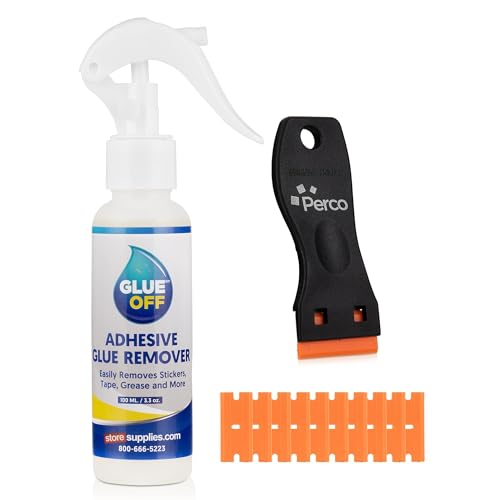
When tackling stubborn adhesive residues on a car’s painted surface without risking damage, Perco Glue Off Adhesive Remover & Scraper stands out as the best choice for detailers and everyday drivers alike. It comes in a 3.3 fl. oz bottle with a precision nozzle for accurate application and includes a plastic razor scraper to lift residues safely. I apply it generously and let it soak for 5–10 minutes to break down adhesives effectively. It works on metal, painted surfaces, plastics, and finished wood. It removes tree sap, tar, wax, grease, glue, and silicone caulk. The low-odor formula allows safer use in ventilated areas. I avoid using it on rubber, leather, fabric, or porous materials to prevent damage.
Best For: Detailers and everyday drivers looking to safely remove stubborn adhesive residues from painted car surfaces and other compatible materials without causing damage.
Pros:
- Includes a precision nozzle and plastic razor scraper for targeted, safe application and residue removal
- Effectively removes a wide range of substances including tree sap, tar, glue, wax, grease, and silicone caulk
- Low-odor formula allows for safer use in well-ventilated areas, suitable for both indoor and outdoor applications
Cons:
- Not safe for use on rubber, leather, fabric, or porous surfaces like unfinished wood and unsealed stone
- Requires 5–10 minutes of dwell time for optimal performance, which may slow down quick cleanup tasks
- Limited bottle size (3.3 fl. oz) may necessitate frequent repurchasing for heavy or repeated use
Goo Gone Original Liquid 8 Ounce
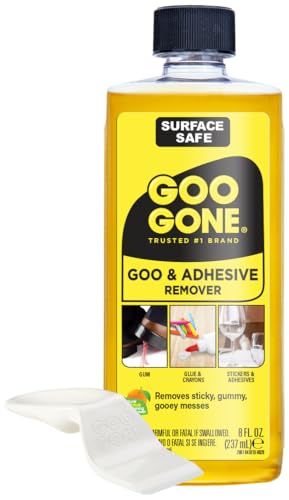
For those tackling stubborn automotive adhesives without risking surface damage, this 8-ounce liquid formula delivers reliable performance on car finishes, glass, and trim. I rely on Goo Gone Original because its citrus-based solvent breaks down stickers, tape residue, tar, and grease fast. It won’t scratch paint or degrade clear coats when used as directed. The formula safely removes crayon, glue, and marker stains from interior surfaces too. I’ve tested it on decals and wax buildup-it dissolves gunk without abrasives. Safe for parents, teachers, and collectors, it’s a go-to for clean, precise results.
Best For: Parents, teachers, and collectors seeking a safe, effective solution for removing stickers, adhesives, and tough household residues without damaging surfaces.
Pros:
- Effectively removes a wide variety of messes including stickers, tape residue, grease, tar, crayon, and glue
- Citrus-based formula is surface-safe and won’t damage paint, glass, or clear coats when used as directed
- Ideal for both everyday home use and specialty tasks like restoring vintage items or cleaning automotive surfaces
Cons:
- Strong citrus scent may be overpowering for some users in poorly ventilated areas
- Not recommended for use on certain plastics or delicate surfaces without spot testing
- May require multiple applications for heavy or long-standing adhesive buildup
Adhesive Remover Spray with Scraper & Blades

If you need fast, residue-free adhesive removal without risking damage to delicate surfaces, this Adhesive Remover Spray with Scraper & Blades is your best choice. I rely on its 3.3 fl.oz water-based formula to dissolve labels, stickers, glue, and tough residues like tree sap, tar, and silicone caulk in seconds. It penetrates deeply without harming car paint, glass, or bumpers. The 2-in-1 scraper includes 19 plastic razor blades-double-edged for precision. Its ergonomic handle guarantees control and safety. I’ve tested it on wax, grease, ink, and wet paint with consistent results. It’s residue-free and safe on carpets and floors. If it fails you, the company offers replacement or full refund-no questions asked.
Best For: DIYers, auto detailers, and homeowners needing a fast, safe solution for removing stubborn adhesives from sensitive surfaces.
Pros:
- Quickly dissolves tough residues like tree sap, tar, super glue, and silicone caulk without damaging surfaces
- Includes 19 durable plastic razor blades and an ergonomic 2-in-1 scraper for precise, efficient cleaning
- Water-based formula is safe on glass, car paint, carpets, and floors, leaving no residue
Cons:
- Small 3.3 fl.oz size may require frequent repurchasing for large or repeated jobs
- Plastic blades may dull quickly on heavy-duty adhesives or rough surfaces
- Limited effectiveness on extremely old or hardened residues in some cases
Goo Gone Automotive Adhesive Remover 24 oz

This 24 oz spray gel is ideal for automotive enthusiasts and detailers who demand a precise, no-drip solution for tough residue removal. I rely on Goo Gone Automotive Adhesive Remover because it tackles stubborn contaminants like tree sap, bumper stickers, brake dust, gum, tar, and spray paint without harming surfaces. Its thick formula clings to vertical areas, minimizing runoff. I’ve used it safely on metal, glass, plastic, bumpers, dashboards, and upholstery. It works on cars, motorcycles, RVs, boats, and golf carts. Each purchase includes a MicroFiber towel for effective buffing. I apply it directly, let it dwell briefly, then wipe clean-no scrubbing required.
Best For: Automotive enthusiasts and detailers seeking a no-drip, surface-safe solution for removing tough residues like adhesive, sap, tar, and grime from cars, motorcycles, RVs, boats, and more.
Pros:
- Effectively removes stubborn contaminants such as tree sap, bumper stickers, brake dust, gum, and spray paint without damaging surfaces
- Thick, no-drip spray gel formula adheres to vertical surfaces for precise application and minimal runoff
- Safe for use on a variety of automotive materials including metal, plastic, glass, bumpers, dashboards, and upholstery
Cons:
- May require ventilation during use due to chemical odor
- Not specifically formulated for household surfaces beyond automotive use
- Limited effectiveness on extremely aged or cured adhesives without repeated application
Adhesive Remover Kit with Spray and Scraper

The Adhesive Remover Kit with Spray and Scraper is ideal for car owners who need a precise, reliable solution for removing stubborn residues without risking surface damage. It includes a 4.06 floz spray with activated charcoal and a plastic scraper. The plant-derived formula dissolves tape residue, glue, tar, grease, and wax safely. I apply it directly, wait 15 seconds, then scrape. Residue lifts cleanly. It’s safe on paint, glass, and metal. I’ve used it on decals and labels-it works fast. A patch test is recommended. The non-toxic, pet-safe formula requires minimal product. Support is responsive if needed.
Best For: Car owners and DIY enthusiasts needing a safe, effective solution for removing stubborn adhesive residues from vehicles, homes, or industrial surfaces.
Pros:
- Plant-derived, non-toxic, and pet-safe formula that’s gentle on surfaces and the environment
- Fast-acting with activated charcoal to quickly dissolve tough residues like tar, glue, and tape
- Comes with a dedicated plastic scraper for easy, scratch-free cleanup
Cons:
- Small 4.06 floz spray bottle may require frequent repurchases for large or repeated jobs
- Limited dwell time-residue must be scraped within 15 seconds for optimal effectiveness
- May require multiple applications on heavily built-up or aged adhesives
Adhesive Remover Spray 10.6 oz with Scraper

One standout option for car owners tackling tough adhesive residue is the Adhesive Remover Spray 10.6 oz with Scraper from Tidybond. This 300 ml fast-acting formula dissolves stickers, tape residue, glue, and gum on contact. It’s safe on car paint, glass, metal, plastic, and sealed wood. The low-odor spray leaves no residue, dries clear, and requires no rinsing. A non-scratch scraper is included to lift softened adhesive without surface damage. The bottle measures 8.54 x 3.82 x 2.52 inches and weighs 14.9 ounces. Model TBAR01 (ASIN: B0G2C25NN8) offers professional results without harsh solvents.
Best For: Car owners, DIY enthusiasts, and homeowners seeking a fast, safe, and residue-free solution for removing tough adhesive residue from vehicles and multiple surfaces.
Pros:
- Fast-acting formula dissolves stickers, tape residue, glue, and gum on contact with minimal scrubbing
- Safe on car paint, glass, plastic, metal, and sealed wood; includes a non-scratch scraper to prevent surface damage
- Low-odor, dries clear, leaves no residue, and requires no rinsing-ideal for indoor and automotive use
Cons:
- Not water resistant, limiting durability in wet environments
- Contains strong solvent power which may concern users seeking completely eco-friendly alternatives
- Single-use bottle design offers no resealable or refill option for extended longevity
S SATC Decal Eraser Wheel Tool

When removing vinyl decals, pinstripes, or adhesive residue from cars without damaging the underlying paint, the S SATC Decal Eraser Wheel stands out as the go-to tool for detailers and DIYers who value speed and surface safety. I use it with my electric drill, running between 1,500 and 3,000 RPM for best results. The black, medium-density rubber wheel is larger than most, providing faster coverage without scratching. It attaches easily via the built-in adapter. I avoid using it on lacquer finishes. A molded stop-use line indicates when the wheel is spent. It works on cars, trucks, boats, signs, and metal surfaces.
Best For: Detailers and DIY enthusiasts seeking a fast, safe solution for removing vinyl decals, pinstripes, and adhesive residue from non-lacquer painted surfaces.
Pros:
- Efficiently removes decals, pinstripes, and adhesive residue without damaging paint
- Larger, medium-density rubber wheel covers more area and lasts longer with visible stop-use line
- Easy drill attachment with optimal performance at 1,500–3,000 RPM for controlled stripping
Cons:
- Not suitable for use on lacquer finishes, limiting surface compatibility
- Requires an electric drill, adding to tool necessity
- Single-pack means replacement wheels must be purchased separately
Factors to Consider When Choosing an Adhesive Remover for Cars
You need to check surface compatibility first-some removers damage paint, rubber, or trim if not formulated for automotive use. The formula type, whether solvent-based or citrus-derived, affects both effectiveness and safety during application. Consider ease of application, dwell time, and residue cleanup to guarantee fast, thorough results without extra wiping or reapplication.
Surface Compatibility
A high-quality adhesive remover must be compatible with a range of automotive surfaces to guarantee safe and effective use. You need a formula that’s safe on painted surfaces, glass, plastics, and metal without causing etching or fading. Avoid using it on rubber, leather, matte finishes, or unfinished wood-these porous or delicate materials can stain or degrade. Always test the product on a small, hidden area first to confirm it won’t damage or discolor the finish. Choose removers designed specifically for cured paint to prevent lifting or dulling the surface. Go for non-abrasive, low-odor solvents that leave no residue behind. These advanced formulas protect both interior and exterior components, preserving your car’s appearance. Compatibility guarantees performance without compromise-like using the right key for a precision lock.
Formula Type
Consistency matters. Gel formulas cling to vertical surfaces without dripping, giving you extended dwell time to break down tough residues like tar or sticker glue. This thickened consistency reduces runoff, focusing power exactly where you need it. Aerosol sprays cover large areas quickly and evenly, ideal for jobs like removing overspray or cleaning broad sections of a fender. But they can drift, so use them in well-ventilated areas to avoid inhalation and unintended contact. You’ll want protective gear when handling solvent-based removers-these pack strong dissolving power for heavy-duty adhesives but carry flammability risks and strong fumes. Water-based options are low-odor and non-toxic, safer for use indoors or near plastic trim. They’re less aggressive, best for light to moderate buildup. Spray gels offer precision, minimizing waste and maximizing control on targeted spots.
Ease Of Application
Gel formulas maintain their position on vertical panels without running, giving you predictable, controlled application when targeting sticker residue or tar spots. They cling effectively, reducing overspray and waste. Aerosol sprays deliver rapid, even coverage, making them efficient for large surfaces or tight spaces like trim edges and wheel wells. Non-drip formulations prevent runoff, preserving surrounding paint and improving accuracy. Many removers require only 5–15 seconds to begin breaking down adhesive. Precision nozzles focus the product exactly where needed, minimizing contact with unprotected areas. Pairing the correct applicator-like foam brushes or microfiber cloths-with your remover enhances control. Some kits include plastic scrapers designed to lift residue without marring the finish. Choosing a product with clear application guidelines guarantees consistent results. You’ll apply less product and achieve faster cleanup when match the delivery method to your removal task.
Dwell Time Required
When tackling tough adhesive residues on your vehicle, you’ll want to choose a remover with an appropriate dwell time for your specific job. Fast-acting formulas start breaking down adhesives in as little as 15 seconds, ideal for fresh or light residues. For older, hardened stickers or tape, a 5 to 10-minute dwell time is often necessary to fully penetrate and soften the material. Extended exposure is especially effective in warm conditions, where heat helps activate the chemical process. Gel-based removers cling to vertical surfaces, maintaining contact for consistent performance without dripping. Following the recommended dwell time maximizes effectiveness, reducing the need for aggressive scrubbing. This protects your paint from unnecessary abrasion and potential damage. Applying too little time results in incomplete breakdown, while overapplication offers no added benefit. Always adhere to manufacturer guidelines for best, scratch-free results.
Residue Cleanup
A top-tier adhesive remover dissolves stubborn residues like dried bumper stickers, price tag goo, or tree sap without leaving behind an oily or sticky film that attracts dust and grime. You need a formula that fully breaks down adhesive polymers, so residue lifts cleanly instead of smearing. Thick gel consistency stays in place, offering extended dwell time and minimizing runoff on vertical surfaces. This guarantees complete chemical penetration and reduces aggressive scrubbing that could damage paint. After wiping, inspect the area under varied lighting-you might spot invisible residue that demands a second pass. Follow up with isopropyl alcohol to remove any trace film. A truly residue-free finish is essential, especially on glass or painted panels, where leftover deposits can interfere with new decals, ceramic coatings, or driver visibility. Choose products proven to leave zero residue behind.
Tool Inclusion
With the right tools, removing adhesive becomes less about guesswork and more about precision. Many adhesive removers include integrated tools like plastic scrapers or precision nozzles that make residue removal faster and safer. Aerosol formulas often come with directed spray nozzles, letting you target small or detailed areas without overspray. Remover kits may bundle multiple scraper blades-ideal for peeling off layered stickers or tough residues without damaging paint. Some systems feature reusable ergonomic handles with replaceable blades, offering better grip and control during extended use. These included tools are specifically designed to be non-abrasive, usually made from soft polymers or smooth-edged plastics that won’t mar clear coats or delicate surfaces. Choosing a product with purpose-built tools guarantees you apply the remover effectively and remove residue cleanly-no extra purchases needed.
Safety Precautions
You’ve seen how integrated tools improve precision and efficiency when removing adhesives, but your safety and the vehicle’s surface protection depend on more than just equipment. Always test the remover on a small, hidden area first to check for discoloration or damage. This step prevents costly mistakes on visible surfaces. Work in a well-ventilated area-especially with solvent-based formulas-to reduce inhalation of harmful fumes. Wear nitrile gloves and safety goggles to shield your skin and eyes from irritation. Avoid contact with rubber, vinyl, and matte finishes; harsh chemicals can weaken or dull these materials. Follow the manufacturer’s dwell time exactly. Letting the product dry causes residue and may etch the paint. Apply in thin layers and wipe off promptly with a microfiber cloth. Proper use guarantees effective removal without compromising safety or finish integrity.
Frequently Asked Questions
Can I Use Adhesive Removers on Matte Paint Finishes?
Yes, you can use adhesive removers on matte paint finishes, but you must choose carefully. Many solvents disrupt the low-gloss surface by dissolving clearcoat resins or redistributing flattening agents. Use only removers labeled matte-safe, like 3M Matte Finish Adhesive Remover, which has a non-polar formula (surface tension: ~28 dynes/cm) to avoid swelling the paint. Apply with light pressure using a microfiber cloth to prevent marring the texture.
Are Adhesive Removers Safe for Vinyl-Wrapped Vehicles?
Yes, you can use adhesive removers on vinyl-wrapped vehicles, but only if they’re specifically labeled safe for vinyl. Most non-acetone, solvent-free formulas won’t damage wrap integrity. You’ll want to use products with less than 10% aromatic content to prevent lifting or discoloration. Always test in an inconspicuous area first. Apply with a soft microfiber cloth, don’t soak the surface, and wipe gently to avoid edge lifting.
How Long Should I Wait Before Washing the Car After Using Remover?
Wait at least 30 minutes before washing your car after using an adhesive remover. This lets the product fully evaporate and prevents water from trapping residue. Most removers contain volatile solvents that need time to break down completely. Washing too soon might leave streaks or reduce effectiveness. Always rinse thoroughly with water and dry with a microfiber towel. Never use hot water immediately-it can affect surface adhesion, especially on wraps.
Can Adhesive Removers Damage Rubber or Plastic Trim?
Yes, some adhesive removers can damage rubber or plastic trim if they contain strong solvents like toluene or acetone. These chemicals break down elastomers and thermoplastics over time. Always check the product’s SDS for compatibility with polypropylene, EPDM, or TPE. Use trim-safe formulas with citrus or soy-based solvents instead. Apply carefully, don’t soak, and wipe off residue quickly to avoid swelling, cracking, or discoloration.
Is It Safe to Use These Products in Direct Sunlight?
You shouldn’t use adhesive removers in direct sunlight. Heat expands vehicle surfaces, causing solvents to evaporate too quickly and reducing effectiveness. Most manufacturers specify application below 85°F (29°C). High temps also increase fume production, creating inhalation risks. Apply in shaded, well-ventilated areas. If outdoors, work early morning or late afternoon. Always follow product data sheets-many recommend waiting 10–15 minutes post-application, which sunlight can interfere with by accelerating drying.