Foamy Transmission Fluid: Causes & Fixes (Overfilling, Air Leaks)
You’ll see foamy transmission fluid when air mixes with the fluid, often from overfilling or air leaks. Just one quart too much causes churning, creating a whipped-cream-like froth. Air enters through faulty seals, loose lines, or low fluid levels leading to cavitation. Foam reduces hydraulic pressure, hurts cooling, and accelerates oxidation. Check the dipstick with the engine running and warm-foam looks like tiny bubbles, lightening the red fluid to a milky hue. Use the correct ATF type and level, typically 7–12 quarts, to restore performance and prevent damage. The full breakdown of causes and fixes follows.
Notable Insights
- Foamy transmission fluid often results from overfilling, which causes excessive agitation and air entrapment in the fluid.
- Check fluid level with the engine running and warm, as overfilling by even one quart can create visible foam.
- Air leaks at seals or gaskets introduce air into the system, leading to foamy fluid and reduced hydraulic performance.
- Foam appears as tiny bubbles that lighten the fluid’s color and give it a milky or sudsy texture on the dipstick.
- Use manufacturer-specified transmission fluid and correct fill levels to prevent foaming and maintain proper operation.
What Causes Foamy Transmission Fluid?
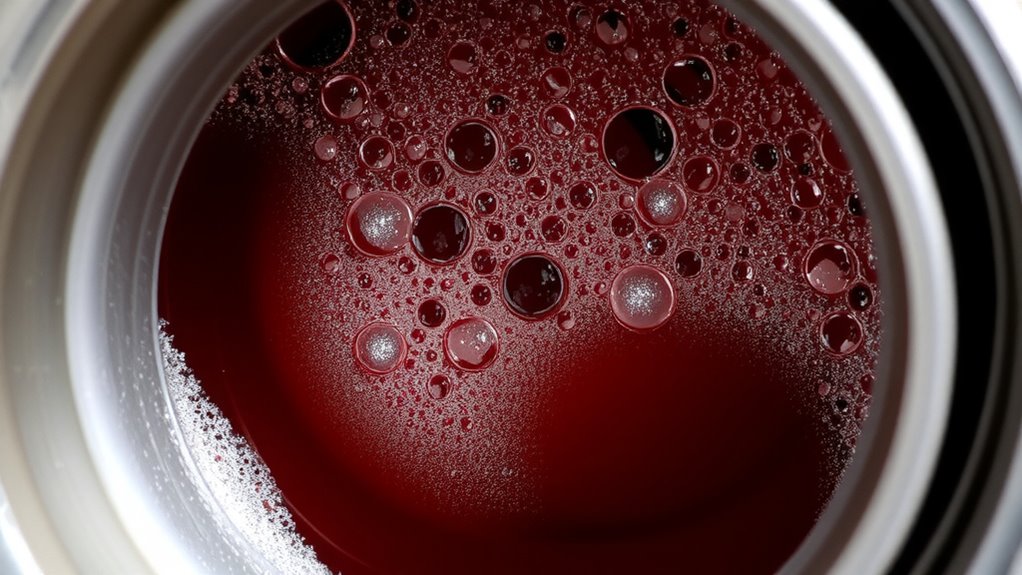
What leads to that milky, frothy appearance in your transmission fluid? Air entrapment and overfilling are primary causes. When you overfill the transmission, excess fluid agitates the rotating components, whipping air into the lubricant. This creates foam, reducing hydraulic efficiency and cooling capacity. Foaming also accelerates fluid degradation, as trapped air bubbles collapse under pressure, generating heat and oxidative stress. You’ll see reduced lubricity, which increases wear on gears and bearings. Contamination exposure-like water or incompatible fluids-worsens this effect. Water ingress, even in amounts as small as 0.5%, disrupts surface tension, promoting foam stability. Certain additives break down under high heat, losing anti-foam properties. Always use manufacturer-specified fluid, such as ATF+4 or Mercon LV, to maintain viscosity ratings (e.g., 7.0 cSt at 100°C) and prevent premature breakdown. Foam isn’t just a sign-it’s a symptom of compromised system integrity.
How to Check for Foam on the Dipstick
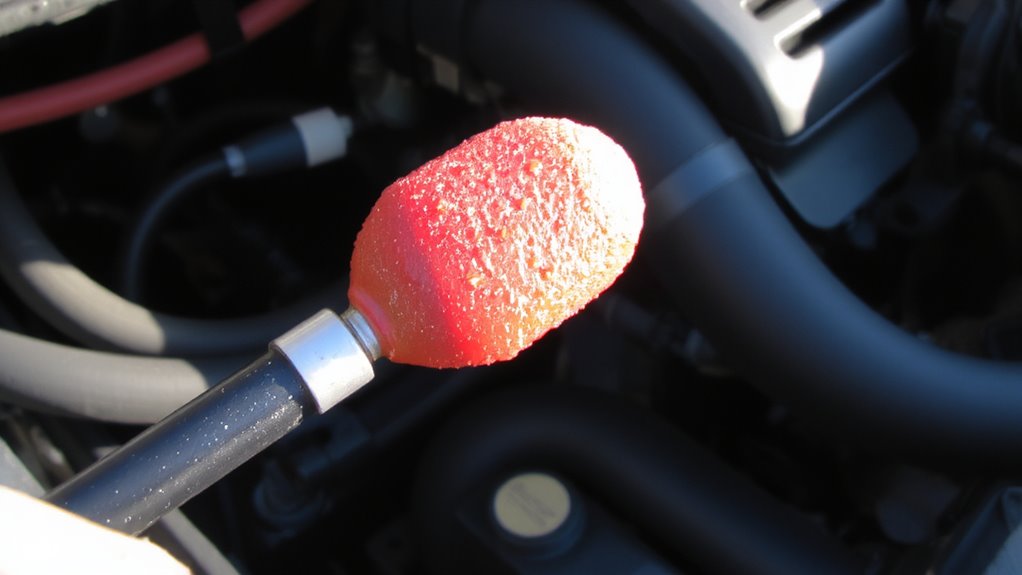
How do you spot trouble before it leaves you stranded? Perform a dipstick inspection with the engine running and transmission warmed up. Pull the dipstick, wipe it clean, then reinsert fully before checking the fluid level and color. Foam appears as tiny bubbles throughout the fluid, often lightening its natural red hue. Poor fluid clarity indicates air contamination-foam reduces hydraulic efficiency and lubrication. Normal transmission fluid is translucent and slick; foam creates a milky or sudsy texture. Conduct the check after at least 10 minutes of driving to guarantee accurate temperature and expansion. Avoid cold-engine checks, as viscosity skews results. Immediate foaming suggests air ingestion or improper fluid level. Consistent texture and color across the dipstick rule out minor agitation. Any persistent foam demands system evaluation. This simple step detects early failure signs.
Can Overfilling Make Transmission Fluid Foamy?
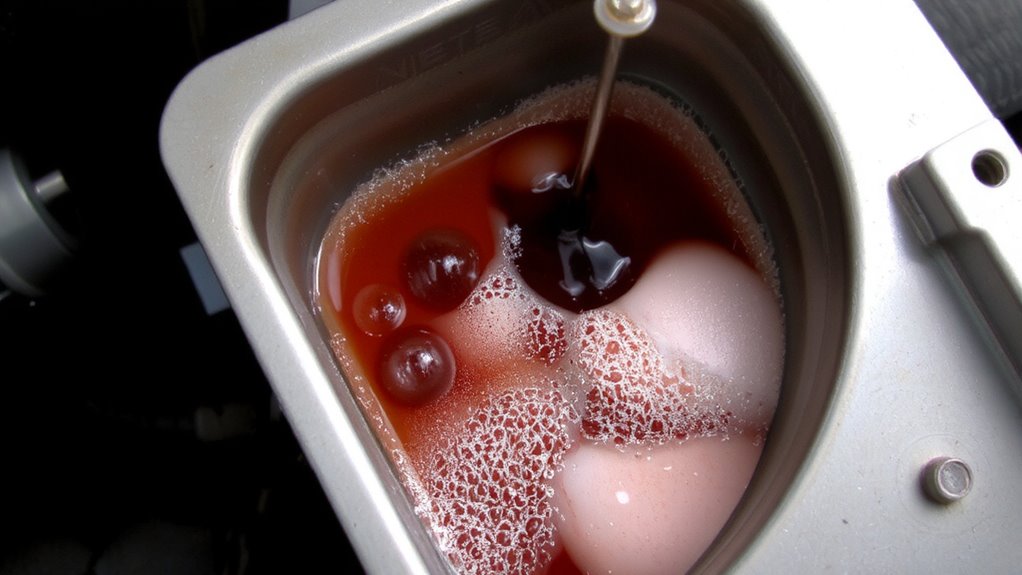
Even a small overfill-just one quart too much-can turn your transmission fluid foamy. When fluid levels exceed the dipstick’s “Full” mark, rotating components like the torque converter churn the liquid, introducing excess air. This aeration creates a frothy, whipped-cream-like consistency that compromises hydraulic pressure and lubrication. Foamy fluid reduces transmission efficiency, leading to delayed shifts and potential overheating. Overfilling also increases internal pressure, which accelerates seal degradation over time. Compromised seals allow leaks and further contamination. Additionally, trapped air in the fluid cycle promotes fluid oxidation due to higher operating temperatures and increased surface area exposure. Oxidized fluid breaks down faster, forming sludge and losing viscosity. Maintaining exact fluid volume-as specified in your owner’s manual-is essential. Check levels when warm, with the engine idling, and verify the level sits between “Add” and “Full” marks.
Why Air Gets Into Your Transmission Fluid?
Why does your transmission fluid suddenly look like a milkshake after a routine check? Air is likely entering the system, and you need to identify how. Air leaks are a common culprit, often occurring at seals, gaskets, or fluid lines. When the transmission draws in outside air, bubbles mix with the fluid, creating foam. These leaks typically form when connections loosen due to vibration or thermal expansion. Another cause is pump cavitation, which happens when the transmission pump spins too fast or fluid levels are too low. In cavitation, pressure drops force fluid to vaporize, forming tiny bubbles that collapse violently, risking internal damage. The pump can’t move air efficiently, reducing hydraulic pressure and slowing shift response. Both air leaks and pump cavitation compromise lubrication and cooling, endangering transmission longevity. Foam means air is present-find the source before damage escalates.
How to Fix Foamy Transmission Fluid and Prevent It
Foamy transmission fluid signals trapped air, and now it’s time to fix the problem at its source. Start by checking the fluid level-you’ve probably overfilled it. Excess fluid churns in the transmission, trapping air and creating foam. Drain fluid to the correct level marked on the dipstick; most systems require between 7–12 quarts, depending on make and model. Proper fluid circulation depends on accurate fill levels. Foam disrupts flow, reducing lubrication and slowing response times. Use the manufacturer-specified transmission fluid-wrong viscosity hampers performance. Guarantee the transmission cooler lines are clear to maintain effective heat dissipation. Restricted lines cause overheating, accelerating fluid breakdown. After correction, run the engine briefly and recheck the fluid. Clean, non-foamy fluid guarantees smooth shifting, efficient fluid circulation, and consistent heat dissipation. Prevention includes routine checks and avoiding rapid shift cycles when cold.
On a final note
You should check transmission fluid regularly to catch foaming early. Overfilling forces fluid into the pan’s air space, introducing bubbles. Air trapped during fluid changes or due to low fluid levels creates foam. Foamy fluid reduces lubrication and cooling efficiency. Drain fluid to the correct level on the dipstick. Inspect vent tubes and seals for air ingress. Use OEM-specified fluid to maintain viscosity and performance. Prevent foaming by following factory procedures precisely.