Placing Berms Around Diesel Fuel Dispensing Tanks to Prevent Runoff Spread
You need berms around diesel fuel dispensing tanks because spills can release benzene and PAHs, which contaminate water at concentrations as low as 5 parts per billion. A single liter of diesel may pollute one million liters of water. Berms act as impermeable barriers, typically 6–12 inches high, made from 30–40 mil polyethylene or fuel-resistant PVC. They must contain 110% of the largest tank’s volume and resist degradation under ASTM F739 standards. Proper installation and material selection guarantee long-term containment. There’s more to examine about system durability and compliance.
Notable Insights
- Install berms around diesel tanks to contain spills and prevent hazardous runoff from contaminating soil and water.
- Use fuel-resistant materials like reinforced polyethylene or rubber that meet ASTM F739 and UL 142 standards.
- Ensure berms are 6 to 12 inches high and can contain at least 110% of the largest tank’s volume.
- Properly anchor berms every 2 feet and overlap seams by 6 inches to maintain structural integrity.
- Perform annual hydrostatic tests and regular inspections to detect damage, blockages, or wear.
Why Diesel Runoff Poses a Serious Environmental Risk
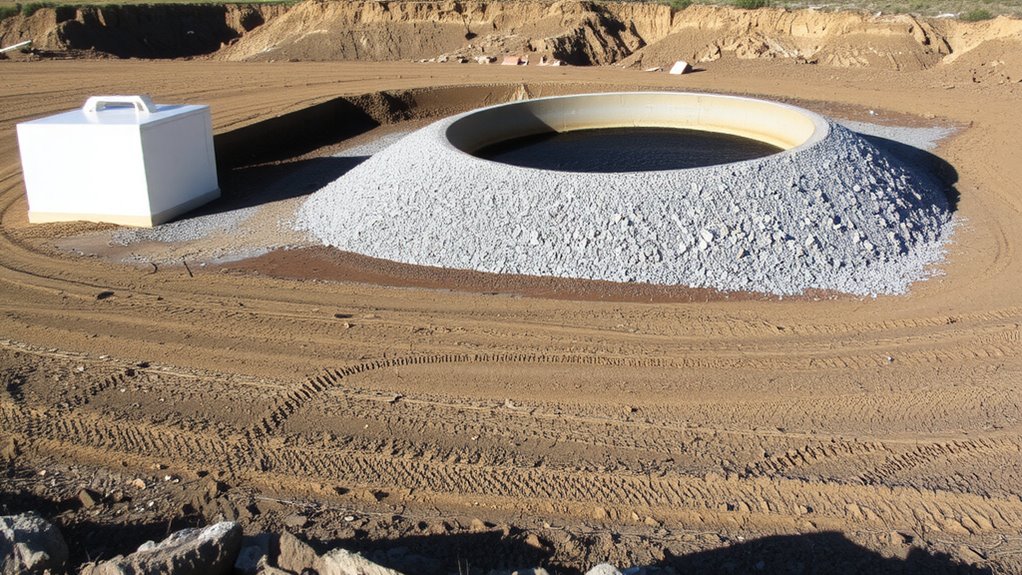
While diesel fuel itself isn’t classified as acutely toxic, its runoff poses serious environmental risks because it contains hazardous compounds like benzene, toluene, and polycyclic aromatic hydrocarbons (PAHs). You may not see immediate harm, but these substances persist in ecosystems. They cause soil contamination by binding to organic matter, reducing microbial activity and plant growth. Once in the ground, diesel leaches downward, threatening groundwater reserves. This leads directly to water pollution, especially when runoff reaches storm drains or nearby streams. PAHs are particularly stable, resisting degradation and accumulating in aquatic organisms. Benzene, a known carcinogen, contaminates drinking water even at low concentrations-just 5 parts per billion can pose health risks. Diesel runoff spreads easily across impervious surfaces, covering large areas quickly. A single liter can contaminate one million liters of water. Without containment, you’re risking long-term ecological damage and regulatory penalties.
How Berms Work to Contain Fuel Spills and Leaks
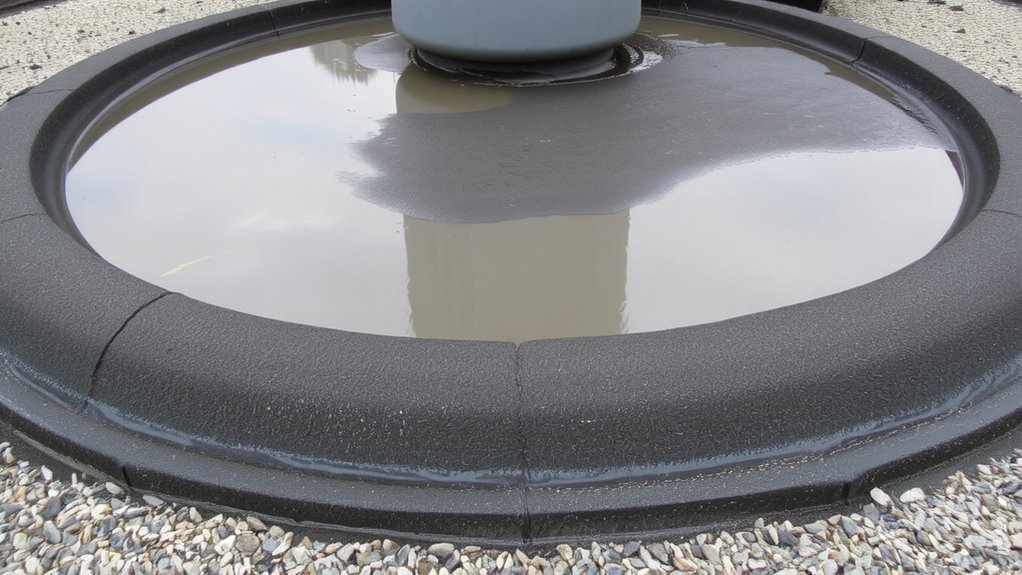
When a diesel tank leaks or spills occur during fuel transfer, berms act as the first line of defense by immediately containing the flow. You’ll see how they redirect the spill trajectory, preventing fuel from spreading into soil or waterways. Berms form a physical barrier, typically 6 to 12 inches high, creating a contained basin. Their low berm permeability guarantees diesel can’t seep through quickly, giving you time to respond. Most are made of impermeable polymers or rubber, with permeability ratings below 1×10⁻⁸ cm/sec. This containment slows lateral movement, reducing environmental impact. The berm’s height and wall thickness-often 0.125 to 0.25 inches-dictate its capacity and durability. By altering the spill trajectory, berms keep fuel pooled in a controlled area. This makes cleanup faster and compliance easier under EPA regulations. You’re not just blocking leaks-you’re managing them efficiently.
Choosing the Right Berm Material for Fuel Dispensing Areas
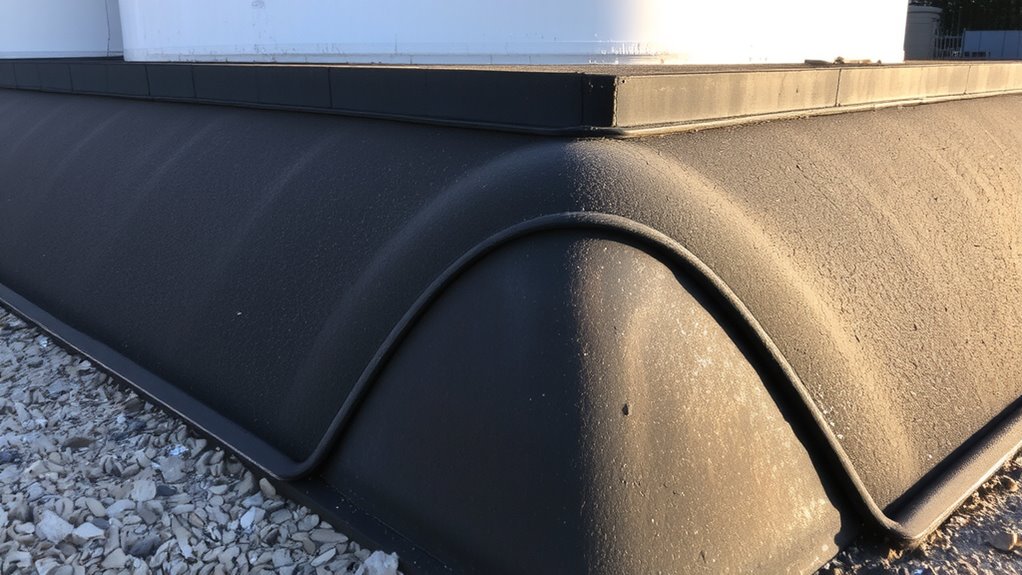
Since not all berm materials handle fuel exposure the same, picking the right one is critical for long-term containment. You need material durability and chemical resistance to protect against diesel’s degrading effects. Polyethylene berms, especially 30- to 40-mil reinforced versions, offer strong resistance to hydrocarbons and UV damage. PVC-coated fabrics work too, but make certain they’re labeled fuel-resistant-some soften or crack when exposed. For heavy equipment traffic, consider reinforced rubber berms rated for 10,000+ psi. They maintain integrity under repeated compression. Avoid lightweight, single-layer materials-they tear easily and lack containment reliability. Chemical resistance isn’t just about avoiding dissolution; it includes preventing swelling or embrittlement over time. Always check manufacturer data sheets for ASTM F739 and UL 142 compliance. These standards confirm performance under fuel exposure. Choosing smart now prevents costly leaks later.
Step-by-Step: Installing a Berm Around Diesel Tanks
Proper installation of a berm around diesel tanks begins with site preparation to guarantee a stable, level base free of sharp debris. You’ll need to clear vegetation, stones, and rubble to prevent punctures. Position the berm segments tightly around the tank perimeter, ensuring seams overlap by at least 6 inches. Secure with ground anchors every 2 feet for wind and fluid resistance. Baffle installation is critical-place vertical baffles at corners and high-flow zones to reduce surge forces during spills. These limit wave action, improving containment stability. Integrate flow control features like self-closing drains or manual gates to regulate liquid movement during cleanup. Use durable, chemically resistant materials like 30+ mil PVC or polyethylene. The berm wall should be at least 12 inches high and support 100% secondary containment. Confirm integrity with a hydrostatic test before use.
Maintaining Berms to Ensure Long-Term Effectiveness
Though durability is built into high-quality berms, you still need consistent upkeep to maintain their protective function over time. Regular inspections prevent berm degradation from weather, UV exposure, or fuel contact. Address cracks or shrinkage immediately-these weaken containment. Vegetation growth inside the berm compromises integrity; roots can puncture liners, and plant matter traps moisture. Remove weeds manually or with non-herbicidal tools to avoid chemical damage.
| Issue | Action |
|---|---|
| Cracks or brittleness | Replace section or reseal with compatible polymer patch |
| Soil buildup | Clear debris to maintain 6-inch wall height |
| Vegetation growth | Pull plants weekly; inspect root penetration |
| Berm degradation signs | Test containment annually with controlled water check |
Clean spills promptly using non-abrasive tools. Avoid pressure washers-they accelerate wear. Make certain drainage ports remain unblocked but sealed during non-use.
Meeting Environmental Regulations With Proper Spill Containment
You’re responsible for guaranteeing your diesel storage setup complies with environmental regulations, and that starts with effective spill containment. Berms must hold 110% of the largest tank’s volume to meet EPA standards. This prevents diesel from causing soil saturation, which can lead to runoff and pooling. Fully saturated soil loses permeability, increasing spill mobility. Your berm’s liner should be chemically resistant, 20–30 mil thick, and extend under the entire surface. Without such protection, leaks may seep into subsurface layers, risking groundwater contamination. Secondary containment systems must be impermeable and structurally sound, rated for hydrocarbon exposure. A spill of just 50 gallons can contaminate 1 million gallons of groundwater. Regular inspections guarantee seams, joints, and drainage points remain intact. Use vertical walls at least 12 inches high to contain fluid spread during dispensing. Proper containment isn’t optional-it’s a regulatory necessity with real environmental stakes.
On a final note
You must install berms correctly to guarantee full containment. A properly constructed berm holds at least 110% of the largest tank’s volume. Use chemical-resistant materials like 40-mil reinforced polyethylene. Seams must be radio-frequency welded for leak prevention. The berm floor should slope 2% toward a sump for drainage control. Regular inspections prevent degradation. These steps meet EPA SPCC regulations. Effective berms protect soil and groundwater.