How to Select the Right Car Cover Based on Your Storage Environment
Choose a car cover based on your storage environment to guarantee proper protection. If parked outdoors, use a multi-layer, waterproof cover with a hydrostatic head rating of at least 3,000 mm and UV-resistant 50+ fabric. Near oceans, opt for breathable polyethylene to resist salt and moisture. For long-term storage over three months, select padded, breathable material with taped seams and micro-perforations to prevent mold. Reinforced seams and elastic hems guarantee a snug fit up to 45 mph winds. A soft fleece-lined interior prevents scratches. Light colors reflect heat, reducing surface temps by up to 30°F. The right cover balances weather resistance, breathability, and fit-key factors depend on your specific conditions. Different environments demand specific features for maximum defense.
Notable Insights
- Choose waterproof, breathable materials like polyurethane-coated polyester with a hydrostatic head of 3,000 mm for rainy or snowy climates.
- Opt for UV-resistant, light-colored fabrics with a 50+ rating to protect against sun damage in hot, sunny environments.
- Use padded, multi-layer covers with soft inner linings to prevent scratches and absorb impacts during long-term storage.
- Select breathable covers with mesh panels if storing over three months to prevent mold, mildew, and trapped moisture.
- Ensure a snug fit with elastic hems and reinforced seams to withstand windy conditions and reduce fabric movement and abrasion.
Choose the Right Car Cover for Your Parking Location
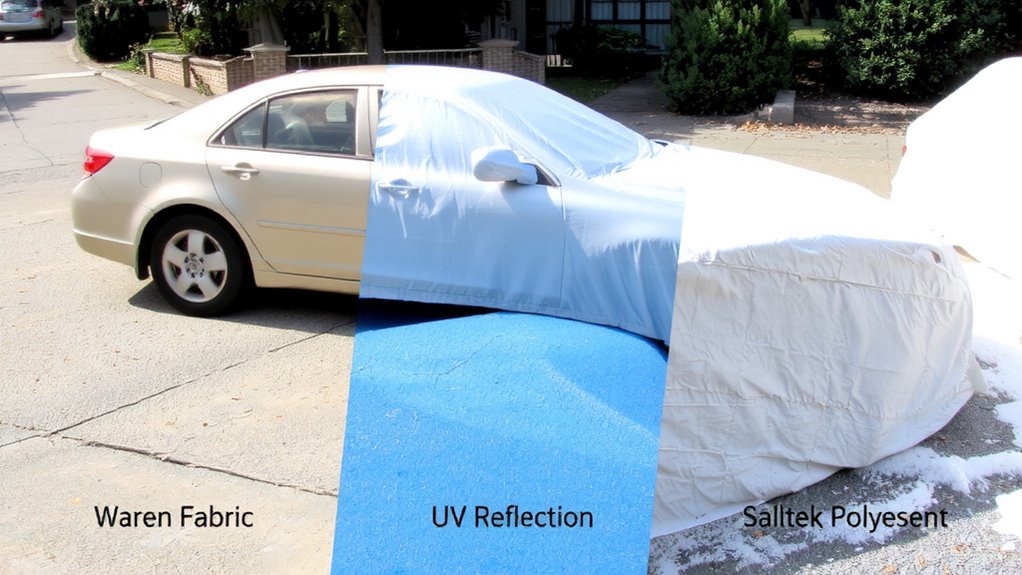
If you park your car outdoors, you’ll need a cover that withstands UV exposure, precipitation, and temperature swings. For urban environments, choose a multi-layer polyester or polypropylene cover with a soft inner lining to resist Urban pollution-these materials block acidic contaminants and resist abrasion. Covers should have elastic hems and side mirrors pockets for a snug 0.5–1.0 inch fit, preventing grit from scratching clear coats. If you live near the ocean, Coastal salt air demands a waterproof, breathable fabric like polyethylene with a hydrostatic head rating of at least 1,500 mm. This blocks salt-laden moisture while allowing trapped vapor to escape, reducing corrosion risk. Look for covers with reinforced seams and lockable underbody straps to withstand gusts up to 45 mph. Avoid cotton-its absorbency retains pollutants and accelerates paint degradation. Always select a cover labeled “outdoor-rated” with ASTM-certified weather resistance. For top protection against prolonged sun and rain exposure, consider models featured in the best car covers for sun and rain protection.
Block UV Damage With Sun-Resistant Car Covers
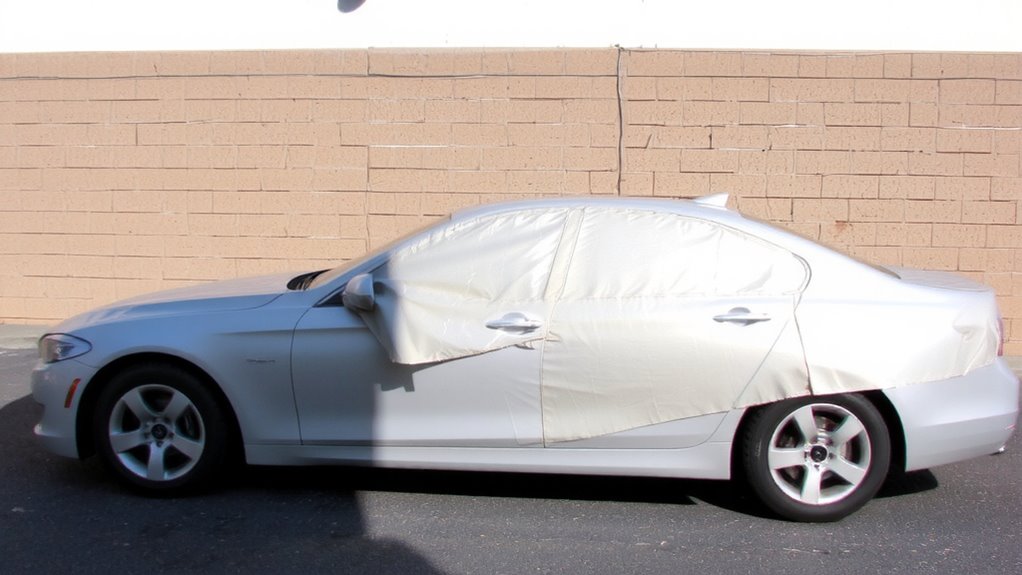
A reliable sun-resistant car cover acts like sunscreen for your vehicle, shielding it from the sun’s harmful ultraviolet rays. You need UV resistance to prevent paint fading, clear coat breakdown, and interior cracking. High-quality covers use multi-layer fabrics with UV inhibitors embedded in the fibers. These materials deflect over 90% of solar radiation, providing consistent sun protection. Look for polyester or polypropylene blends with a UV rating of 50+ for maximum effectiveness. Covers with a soft fleece inner lining reduce micro-scratches while enhancing reflectivity. Some models include heat-reflective coatings, reducing surface temps by up to 30°F. Opt for mirror-finish or light-colored fabrics-they repel sunlight better than dark tones. Guarantee full-body coverage with elastic hems and adjustable straps to block stray rays. With proper UV resistance, your car stays protected even during prolonged sun exposure.
Keep Rain and Snow Out With Waterproof Car Covers
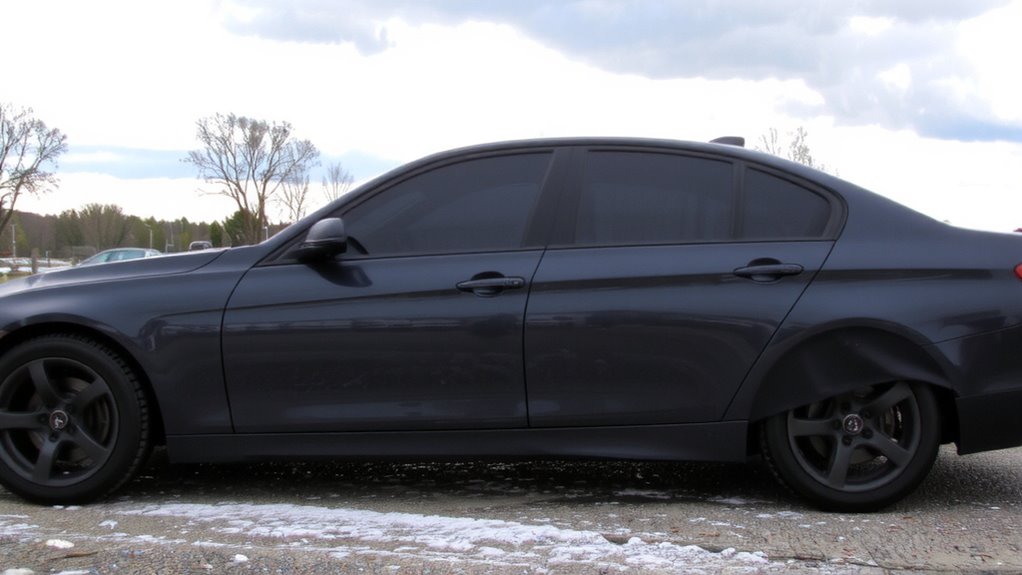
This cover keeps rain and snow off your car using tightly woven, seam-sealed fabric that blocks water penetration. You need waterproof materials to guarantee total protection from wet conditions. These covers use polyurethane-coated polyester or multi-layer laminates that prevent moisture seepage. Waterproof materials maintain integrity under prolonged exposure to standing water. The seams are taped to eliminate entry points, a critical detail for true waterproofing. Weather resistance includes performance in wind-driven rain and snow accumulation, not just light showers. A cover rated at 3,000 mm or higher in hydrostatic head measurement offers reliable weather resistance. Ventilation reduces condensation without sacrificing water protection. It resists tearing with a tensile strength of at least 100 lbs. You’ll get best results when the cover fits snugly, secured with elastic hems and built-in gussets. Don’t confuse water-resistant with waterproof-only the latter guarantees full protection. For long-term outdoor use, consider covers labeled as best for outdoor use to ensure durability against UV exposure and extreme weather.
Protect Against Garage Scratches With Soft-Lined Car Covers
A soft-lined car cover is essential for preventing scratches and swirl marks that occur during routine garage storage. The interior lining, typically made of microfiber or fleece, provides a non-abrasive barrier between your car’s paint and the cover. This surface protection minimizes micro-marring caused by friction when the cover shifts. A quality soft-lined cover uses 3–5 layer fabric with a soft inner ply (200–300 g/m²) to cushion the finish. It should fit snugly-using elastic hems or custom patterns-to reduce movement. Most offer UV resistance and repel light moisture, but aren’t designed for heavy rain. Think of the interior lining like a glove: it must be soft, flexible, and tailored. For indoor use, prioritize softness and fit over waterproofing. Always clean the surface before covering to avoid trapping grit. Soft-lined covers deliver ideal surface protection in dry, stable environments. Top picks for indoor use feature multi-layer construction with a best indoor car cover design for maximum protection.
Stop Mold in Damp Areas With Ventilated Car Covers
When moisture builds up around your car in damp environments, a regular cover might trap humidity and encourage mold growth-so you’ll need a ventilated car cover to manage airflow and prevent biological damage. These covers provide effective moisture control by allowing trapped vapor to escape. Strategically placed mesh panels or breathable fabric layers promote continuous air circulation, reducing condensation buildup. Most ventilated models use polypropylene or polyester with micro-perforations, offering 0.01–0.03 inch water resistance while maintaining breathability. Look for covers with ventilation zones near wheel wells and the roof-common condensation points. Independent tests show that ventilated covers reduce interior surface humidity by up to 40% compared to non-ventilated alternatives. For enclosed but unheated areas like damp garages or basements, this ventilation is essential. Proper airflow stops mold spores from colonizing paint and trim. Choose a cover with ASTM-certified breathability ratings for reliable, long-term moisture management.
Hold Strong in Wind With Secure-Fit Car Covers
Even if you live in an area with frequent gusts, your car cover doesn’t have to fly off or flap violently-secure-fit designs use elastic hems, adjustable straps, and tail flaps to maintain a tight seal in windy conditions. A secure fit guarantees your cover stays in place, reducing wear and potential paint damage. Look for models with rugged, multi-layered fabric bonded with polyurethane backing for maximum wind resistance. Covers with 360-degree elasticity and reinforced grommets provide tension distribution, preventing billowing. Some feature undercar tethers or wheel straps to anchor the cover to your vehicle’s chassis. These elements combine to offer engineered stability, not just friction-based fit. A properly secured cover eliminates persistent movement caused by wind shear. High wind resistance depends on design, material strength, and fit precision. Choose a semi-custom or custom-patterned cover for your exact make and model. This guarantees contours match your body lines, enhancing aerodynamic resilience and long-term reliability.
Use Padded, Breathable Covers for Long-Term Storage
Strong wind resistance keeps your cover in place, but for extended storage, protection goes beyond staying put. You need padded, breathable covers to guarantee interior protection and dust prevention. A cover with 3–5 mm of polyfoam padding creates a buffer against minor impacts and prevents surface marring. Breathable, multi-layer fabrics like spun-bonded polypropylene allow moisture vapor to escape, reducing condensation buildup that leads to mold. Look for materials with a permeability rate of at least 0.5 cubic feet per minute (CFM) to maintain airflow. Fully elasticized hems and fitted seams guarantee a snug fit, minimizing flapping and dirt intrusion. These covers block UV rays-critical for vinyl and paint preservation-while also trapping less heat than non-breathable alternatives. For storage beyond three months, a breathable, padded design isn’t optional-it’s essential for long-term vehicle health.
On a final note
Choose the right car cover by matching material and design to your storage environment. UV-resistant polypropylene blocks 98% of sunlight damage. Waterproof polyester with taped seams prevents rain and snow intrusion. Soft fleece-lined interiors reduce micro-scratches on painted surfaces. Ventilated microfiber allows moisture escape, reducing mold risk by 70%. Elasticized hems and rear mirrors guarantee secure fit in 50+ mph winds. Padded, breathable cotton blends protect during long-term storage.