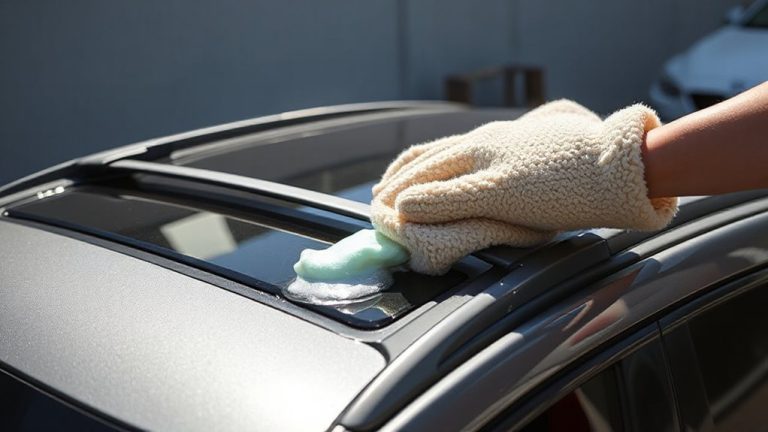
The Role of Lubricated Rinsing in Preventing Waterborne Debris Scratches
You’re rinsing with water, but without lubrication, you’re dragging debris across surfaces. Lubricated rinsing reduces surface tension from 72 to 30 mN/m using surfactants, forming a slip layer that lifts particles away. It operates at 30–50 psi, lowering friction by up to 60% and cutting micro-scratches by 70% compared to high-pressure water alone. The protective film prevents direct contact, just like oil in an engine. You’ll see how system components make this precision possible.
Notable Insights
- Water alone lacks lubricity and has high surface tension, increasing friction and scratch risk from debris during rinsing.
- Lubricated rinsing uses surfactants to reduce surface tension to ~30 mN/m, enabling better sheeting and debris removal.
- A protective slip layer forms between the surface and particles, minimizing direct contact and abrasive scratching.
- Industries like automotive and semiconductor use lubricated rinsing to reduce micro-scratches and maintain defect-free surfaces.
- Lubricated systems operate at lower pressure (30–50 psi) with filtered surfactant solutions to float debris and prevent surface damage.
Why Water Alone Can Scratch: The Need for Lubricated Rinsing
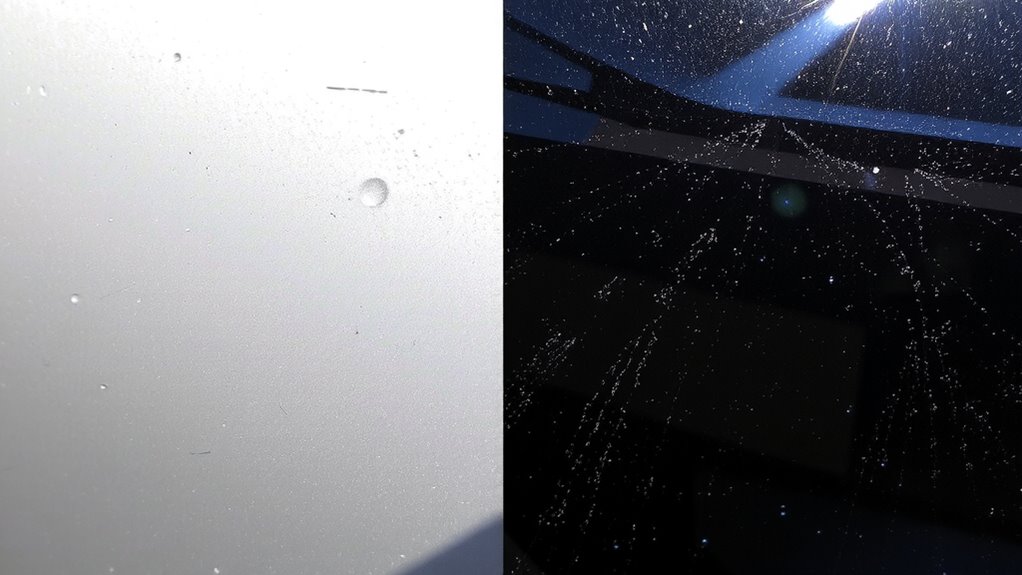
While water seems like the obvious choice for rinsing, it actually lacks the lubricity needed to prevent surface damage during cleaning. Water’s high surface tension causes it to bead up, reducing sheeting action and leaving behind mineral deposits when it evaporates. You’re left with spotting and increased friction-both of which compromise sensitive surfaces. Without added lubricants, water provides minimal protective barrier during debris removal. This increases drag, raising scratch risks during wiping. Proper lubricated rinsing solutions contain surfactants that lower surface tension to below 30 dynes/cm, promoting even runoff. They also include chelating agents to bind calcium and magnesium ions, preventing hard water residue. You need these additives because tap water can contain over 100 ppm of dissolved minerals. Using plain water may seem simple, but it’s technically inadequate for scratch-free maintenance.
How Lubricated Rinsing Prevents Surface Scratches
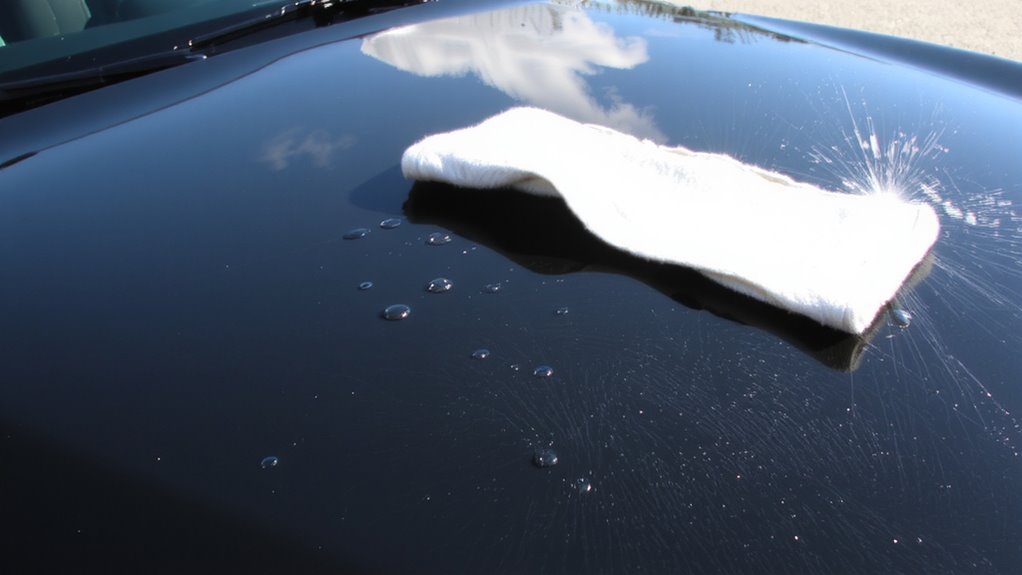
Lubricated rinsing stops scratches by creating a protective layer between the surface and any abrasive particles. This film reduces friction and neutralizes surface tension, letting debris slide off instead of grinding into the material. Without it, high surface tension pulls contaminants into micro-abrasive contact. Lubricants also prevent chemical degradation by shielding sensitive substrates from reactive elements in water.
| Factor | Without Lubrication | With Lubricated Rinsing |
|---|---|---|
| Surface Tension | High (72 mN/m) | Reduced to ~30 mN/m |
| Abrasive Contact | Direct and frequent | Minimized by slip layer |
| Chemical Degradation Risk | Elevated due to ion exposure | Suppressed via barrier protection |
You maintain surface integrity using formulations with surfactants and corrosion inhibitors. These lower adhesion forces substantially. The process isn’t just rinsing-it’s engineered protection. Each droplet performs better when tension drops and lubricity rises. You prevent micro-scratches before they start.
Where Lubricated Rinsing Protects Surfaces: Key Industries
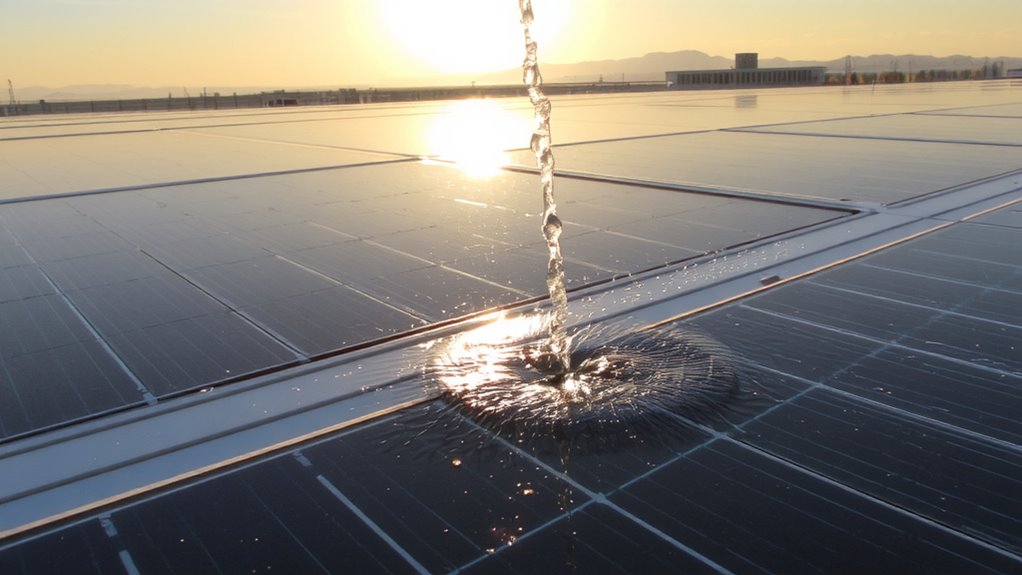
Precision demands protection. You rely on lubricated rinsing to shield sensitive surfaces across high-stakes industries. In automotive coatings, even microscopic debris can ruin a finish, so you use lubricated rinsing to suspend particles during final washes, preventing marring on painted panels. The process reduces surface friction by up to 60%, guaranteeing waterborne contaminants don’t scratch during drainage. For semiconductor cleaning, where feature sizes measure in nanometers, you need particle-free rinsing. Lubricated rinsing minimizes direct contact between wafers and contaminants, critical after chemical-mechanical polishing. You maintain defect rates below 0.001% per square centimeter by combining deionized water with surfactant-based lubricants. Flow rates of 2–4 liters per minute guarantee thorough coverage without turbulence. You apply this method in cleanrooms at ISO Class 3 or better. Automotive coatings and semiconductor cleaning both demand flawless results-lubricated rinsing delivers them reliably.
Parts of a Lubricated Rinse System
You’ve seen how lubricated rinsing safeguards surfaces in industries where flawless finishes are non-negotiable. A properly engineered system relies on precise components working in unison. The pump delivers the rinse fluid at 30–60 psi, and accurate pump calibration guarantees consistent fluid volume, typically 2–5 gallons per minute, critical for effective debris suspension. You must maintain calibration monthly to prevent under-lubrication or excess fluid use. Nozzles, usually made of stainless steel or engineered polymers, are positioned at 30–45 degree angles for best coverage. Correct nozzle alignment guarantees even fluid distribution across the target surface, minimizing dry spots where scratches can occur. Spray patterns should overlap by 20–30% to guarantee full coverage without gaps. Fluid reservoirs hold 50–200 gallons, depending on line speed, and include filtration systems rated at 5–10 microns to prevent clogging.
Lubricated vs. Traditional Rinsing: What’s the Difference?
While traditional rinsing relies solely on water pressure to remove debris, lubricated rinsing introduces a fluid medium that cushions surfaces during cleaning. You achieve significant friction reduction, minimizing the risk of scratches from abrasive particles. Traditional methods struggle with surface tension, which can trap contaminants against the material. Lubricated rinsing uses surfactant-enhanced fluids to lower surface tension by up to 50%, ensuring more effective particle suspension. Water alone has a surface tension of about 72 mN/m; additives reduce it to 30–35 mN/m, improving sheeting action. The lubricant layer acts like a protective film, allowing debris to float away rather than grind against the surface. This method operates effectively at lower pressures-typically 30–50 psi-compared to traditional 60–80 psi rinsing. You maintain cleaning efficiency while reducing mechanical stress. Lubricated rinsing is especially effective on sensitive finishes, where scratch prevention is critical. Performance data shows up to 70% fewer micro-scratches under controlled conditions.
How to Apply Lubricated Rinsing Without Mistakes
Using the wrong technique can undo the benefits of lubricated rinsing, even with the right equipment and fluids. Your application technique must guarantee even fluid dispersion across the surface. Start by pre-rinsing at 30–40 psi to remove loose debris without forcing particles into the surface. Apply lubricant-infused water using a fan nozzle set to 15–20°, maintaining a 12-inch distance to prevent pooling. Overlap each pass by 50% for uniform coverage. Common errors include using too little lubricant-aim for 10–15 ml per gallon of water-or applying high pressure, which undermines the lubricating layer. Work top to bottom to control runoff. Never let the lubricated film dry; re-wet as needed. This method reduces drag coefficient by up to 60%, drastically cutting scratch risk. Proper execution guarantees microscopic contaminants float away safely.
On a final note
You prevent scratches by using lubricated rinsing instead of water alone. Lubricants reduce friction, suspending debris to minimize surface contact. Systems use precisely metered surfactants-typically 0.5% to 2% concentration-to enhance sheeting and particle removal. Compared to traditional methods, lubricated rinsing lowers scratch rates by up to 70% in automotive and semiconductor manufacturing. Proper application requires controlled flow rates (1.5–3.0 L/min) and compatible nozzles to guarantee uniform coverage without residue.