How to Locate the Starter Motor in a Rear-Wheel Drive Chassis
Look under your rear-wheel drive vehicle and find where the engine meets the transmission. The starter mounts low on the bellhousing, just above the crossmember. Follow the thick red 2–4 AWG battery cable-it leads straight to the starter’s solenoid. It’s a 6–9 inch cylindrical unit, weighing 8–15 lbs, aligned with the flywheel or flexplate. Proper positioning guarantees the drive gear engages the ring gear. You’ll see mounting bolts and electrical connections confirming the location-there’s more to understand about its operation and testing.
Notable Insights
- Look where the engine meets the transmission, as the starter is mounted on the bellhousing.
- Check below the vehicle near the transmission bellhousing, typically low and close to the ground.
- Follow the thick red battery cable from the positive terminal to the starter solenoid.
- Locate the cylinder-shaped starter above the crossmember with a top-mounted solenoid and electrical connections.
- Ensure the starter aligns with the flywheel or flexplate for proper engagement with the ring gear.
Find the Starter Motor at the Rear of the RWD Engine
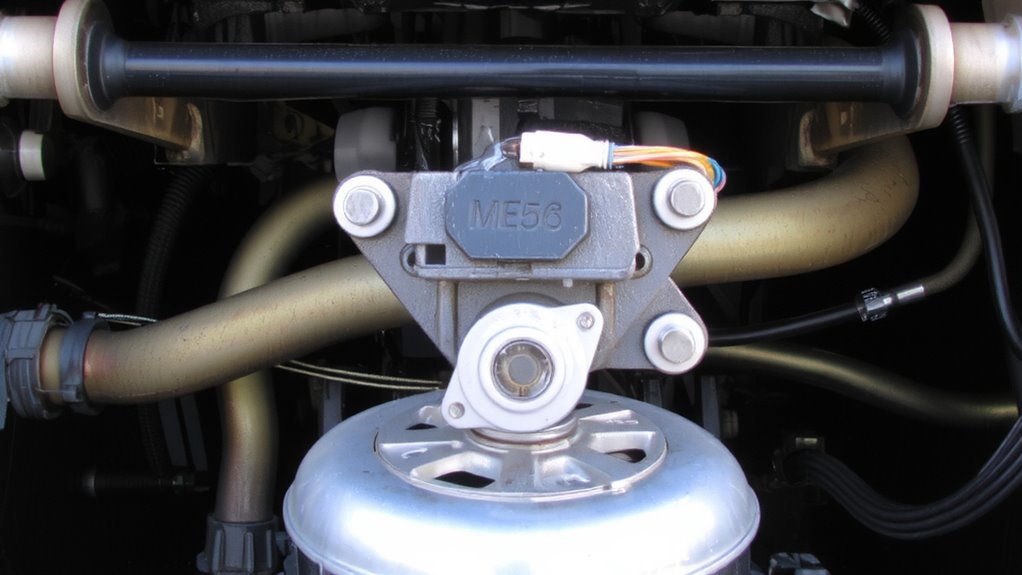
While you’re searching for the starter motor on a rear-wheel-drive (RWD) vehicle, start by locating the engine’s rear end near the transmission bellhousing. Engine access is easiest from below, especially with the vehicle raised and secured. You’ll typically find the starter bolted where the engine meets the transmission. Good rear clearance helps with both visibility and tool maneuverability. Starter motors on RWD platforms usually mount horizontally and measure between 9 and 14 inches long, depending on the engine’s torque requirements. They draw 100–200 amps during cranking and connect via 10–12mm bolts. A small solenoid sits atop or beside the starter body, engaging the flywheel’s ring gear. Most units weigh 8–15 pounds and use a 3/8-inch drive for the starter cable. Proper alignment with the flywheel guarantees reliable starts. Use a creeper and open-end wrenches to reach tight spaces without damaging wiring.
Look Down Low Near the Transmission Bellhousing
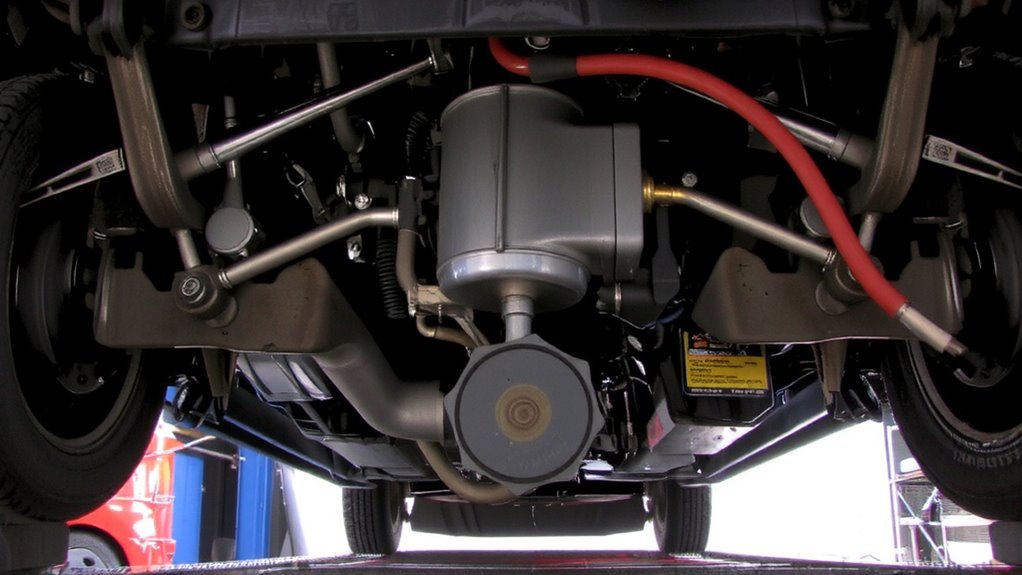
Start your search just below the engine, where the transmission bellhousing meets the engine block-this is ground zero for locating the starter motor in most vehicles. The starter housing is typically bolted directly to the bellhousing, aligning its drive gear with the flywheel. You’ll find it mounted low, often obscured by dirt or exhaust components. Most RWD starters measure 9–12 inches long and weigh 8–15 lbs, depending on gear reduction design. When you turn the ignition switch, voltage travels to the starter solenoid, triggering engagement. Below is how critical factors affect starter performance.
| Condition | Emotional Impact |
|---|---|
| Silent click at ignition switch | Frustration builds fast |
| Corroded starter housing | Doubt creeps in |
| Loose bellhousing bolts | Anxiety spikes |
| No response from starter | Helplessness sets in |
| Solid engagement | Relief washes over |
Follow the Thick Cable to Confirm the Starter’s Location
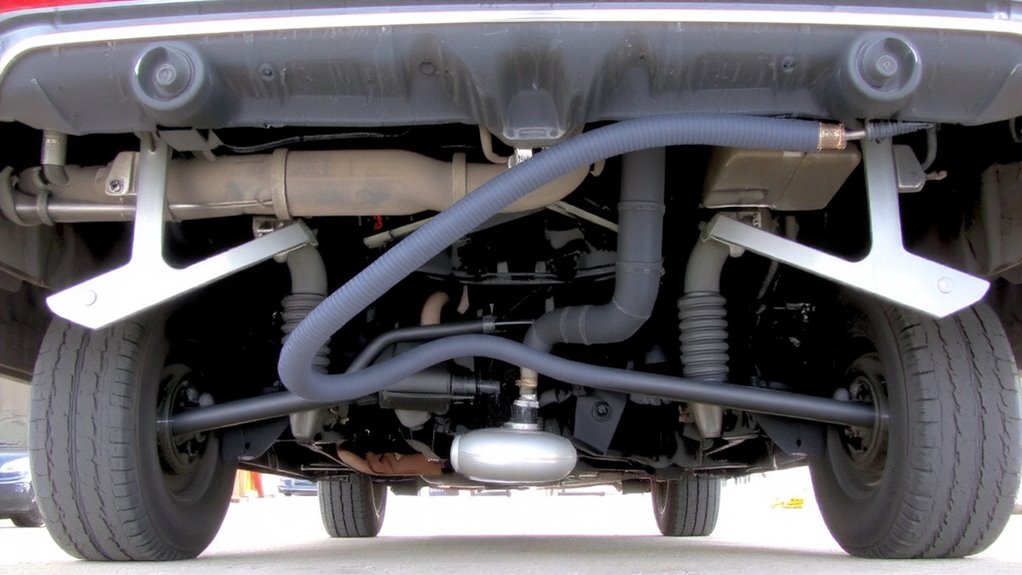
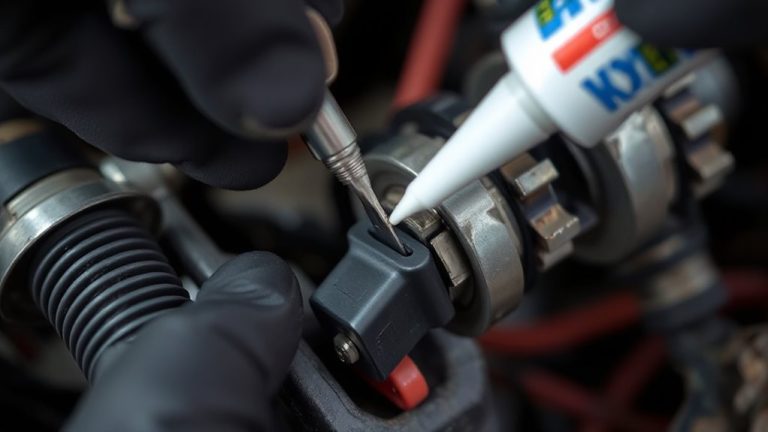
Since the starter motor requires a direct high-current supply from the battery, tracing the thick red or orange cable from the battery’s positive terminal will lead you straight to the starter solenoid. This heavy-gauge cable, typically 2–4 AWG, is designed to minimize electrical resistance during high-amp cranking loads. Inspect the connector points closely-you’ll often find signs of cable corrosion, especially in older vehicles or high-humidity environments. Corrosion increases electrical resistance, which reduces voltage delivery and can prevent reliable starting. A voltage drop above 0.5V across the cable indicates excessive resistance and warrants cleaning or replacement. Follow the cable’s path along the firewall or frame rail, ensuring it remains securely fastened and undamaged. Any fraying, melting, or loose terminals compromise performance. Confirming this connection lands precisely on the solenoid terminal verifies the starter’s location with certainty.
Check Above the Crossmember With a Flashlight
After confirming the battery cable leads to the starter solenoid, shift your attention beneath the engine bay to pinpoint the starter’s physical location. Use a flashlight to inspect above the crossmember, where the starter typically mounts on rear-wheel drive vehicles. The motor is often tucked between the engine block and transmission bellhousing, making visibility limited without proper lighting. Focus on identifying the starter’s cylindrical body, roughly 6 to 9 inches long, with a prominent electrical connection at the top. This solenoid terminal receives the thick positive cable you traced earlier. Other smaller electrical connections may link to the ignition or neutral safety switch. Work systematically through the engine compartment, checking for mounting bolts and wiring harnesses that lead to the starter. Avoid mistaking adjacent components like exhaust shields or sensors. Your light should reveal the starter’s distinct shape and secure attachment above the crossmember.
Confirm It’s Near the Flywheel or Flexplate
Location is key when identifying the starter motor, and one of the most reliable indicators is its proximity to the flywheel or flexplate. You’ll typically find it bolted to the transmission bellhousing, just inches from the engine’s rotating mass. This placement isn’t random-it’s critical for proper starter function. The starter’s drive gear must engage the ring gear on the flywheel (manual) or flexplate (automatic), turning the engine during ignition. Look for a small, cylindrical component about 6–8 inches long with thick electrical connections. These connections deliver 200+ amps from the battery to activate the solenoid and motor. A loose or corroded terminal can disrupt current flow, causing hard starts. Confirm alignment: the starter should sit parallel to the crankshaft, its nose fitting snugly into the bellhousing opening. Any gap or misalignment suggests incorrect installation.
On a final note
You’ll find the starter motor mounted at the rear of the engine in a rear-wheel drive chassis. It connects electrically via a thick 10-gauge cable from the battery. The starter engages the flywheel (manual) or flexplate (automatic), typically 12 to 14 inches in diameter. Mounted near the transmission bellhousing, it sits just above the crossmember. Use a flashlight to spot its 6 to 8-inch cylindrical housing with a solenoid on top.