Best Piston Rings for Peak Engine Performance
You need piston rings that maintain precise radial tension and exact bore match for peak engine performance. The Michigan Motorsports 2M4978 set offers moly-coated steel top rings and 3.0mm oil rails for LS-based 4.8L/5.3L engines. Mahle’s 41859CP uses SAE 9254 alloy with napier second rings to reduce oil consumption. DNJ PR1163 delivers OEM-spec 1.2/1.2/2.0mm rings for 5.7L Chrysler V8s. Proper fitment within 0.002 inches guarantees compression integrity and long-term durability under high thermal loads-exact specifications matter most. Maximum performance starts with material quality, coating technology, and dimensional precision matched to your engine’s design. Every critical factor aligns when you select based on proven engineering and exact application fit.
We are supported by our audience. When you purchase through links on our site, we may earn an affiliate commission, at no extra cost for you. Learn more. Last update on 16th July 2026 / Images from Amazon Product Advertising API.
Notable Insights
- Choose piston rings made from high-strength materials like SAE 9254 steel for durability and heat resistance.
- Opt for moly-coated top rings to improve sealing, reduce friction, and speed up ring seating.
- Ensure exact bore size match to maintain radial tension and prevent compression leaks or blow-by.
- Select OEM-spec or factory-designed rings, such as GM Genuine Parts, for precise fit and reliable performance.
- Use application-specific rings, like DNJ or Mahle, engineered for your engine’s make, model, and displacement.
Michigan Motorsports 2M4978 Piston Ring Set

If you’re rebuilding an LS-based engine with a stock bore, the Michigan Motorsports 2M4978 Piston Ring Set is one of the smartest upgrades you can make. I’ve used these rings on multiple LS builds, and they deliver OEM-level precision. They fit 4.8L (1999–2015) and 5.3L (1999–2013) engines like the LM7, LY5, and L33. The bore is 3.779 in (96mm)-standard size, so no honing’s needed. The top ring is steel with moly coating for durability and quicker seating. The second ring is grey iron; it controls oil well. The 3.0mm oil ring has a steel rail and stainless expander for consistent lubrication.
Best For: DIY mechanics and engine builders working on stock-bore LS-based 4.8L and 5.3L GM engines seeking OEM-quality, reliable piston rings without the need for cylinder honing.
Pros:
- Precision-machined to standard size (3.779 in / 96mm) for hassle-free installation on stock bore engines
- Top moly-coated steel ring ensures fast seating and improved durability under high heat and load
- Complete ring set designed specifically for LS engines, compatible with multiple GM engine codes and VINs
Cons:
- Limited to stock bore applications, not suitable for overbored cylinders requiring custom sizing
- Moly coating may require careful handling during installation to avoid chipping
- Some users may prefer plasma-moly or other premium coatings found in higher-end performance rings
Mahle 41859CP Moly Ring Set (GMC Trk 4.8L/5.3L 1999-2002), Standard
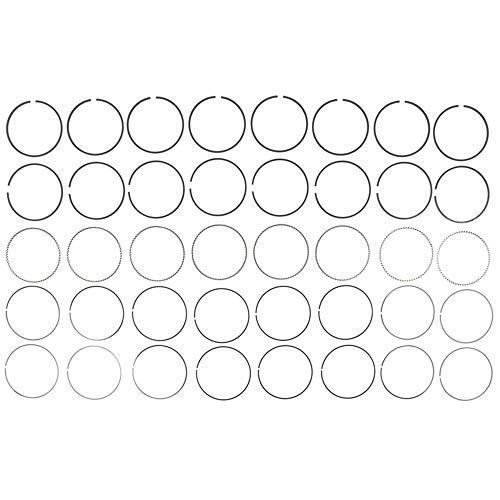
I trust the Mahle 41859CP Moly Ring Set when rebuilding a GMC Truck 4.8L or 5.3L engine from 1999 to 2002-this is precision engineering built for technicians who demand OEM-level reliability. It’s made from SAE 9254 high alloy steel for superior strength and fatigue resistance. The moly-coated top ring boosts durability and sealing under high heat. The Napier second ring uses grey and ductile iron to control oil and stabilize combustion. Its CP-20 oil ring has a 20-degree ear angle for solid side sealing and easy setup. I rely on its exact OE specs for fit and function. It cuts friction, reduces oil use, and locks in power.
Best For: Professional technicians and engine rebuilders working on GMC Truck 4.8L/5.3L engines (1999–2002) who require OEM-spec reliability and high-performance materials.
Pros:
- Constructed from SAE 9254 high alloy steel for superior strength, durability, and fatigue resistance
- Features moly-coated top ring and Napier second ring for excellent sealing, oil control, and combustion stability
- Engineered to exact OE specifications with CP-20 oil ring for reduced friction, lower oil consumption, and improved power retention
Cons:
- Specific to a limited range of GMC Truck engines, reducing broad applicability
- Premium materials and design may come at a higher cost compared to standard ring sets
- Requires precise installation techniques to fully benefit from the engineered tolerances and coatings
Lisle 33500 Piston Ring Installer

The Lisle 33500 Piston Ring Installer stands out when precision and durability matter most, making it the best choice for professional mechanics and serious DIYers who demand reliable performance during engine rebuilds. I rely on its stainless steel construction for strength and its 6.3 mm cutting width to seat rings evenly. The plastic handle is ergonomically shaped, giving me control without slipping. It weighs just 2.4 ounces, so I can work for hours without fatigue. Measuring 9.25 x 5.5 inches, it fits most standard pistons. It’s hand-powered, requiring no tools. Lisle backs it with a limited lifetime warranty.
Best For: Professional mechanics and serious DIYers performing precise and reliable piston ring installations during engine rebuilds.
Pros:
- Durable stainless steel construction ensures long-lasting performance and even ring seating with its 6.3 mm cutting width
- Lightweight design (2.4 ounces) and ergonomic plastic handle allow for comfortable, fatigue-free use
- Hand-powered operation requires no additional tools, offering simplicity and convenience in tight workspaces
Cons:
- Limited to standard piston sizes, potentially incompatible with oversized or custom piston configurations
- Made in China, which may concern buyers preferring locally manufactured tools
- Plastic handle, while ergonomic, may lack the robust feel of fully metal alternatives under heavy use
AUTOKAY Engine Piston Ring (20 pcs)

AUTOKAY delivers a precise fit for Hyundai and Kia 2.4L and 2.0L four-cylinder engines needing a reliable, direct-replacement piston ring set. I use these rings on engines requiring standard 88mm bore diameters. Each set includes 20 pieces-enough for four cylinders-with ring dimensions of 1.20mm, 1.20mm, and 2.00mm. They’re made from high-strength metal, built to resist heat and pressure without warping. You’ll appreciate their consistent elasticity during combustion cycles. These replace OEM part numbers 23040-2G510, 23040, and 2G510. They fit models like the Sonata (2014–2019), Optima (2013–2020), and Sportage (2014–2021). The kit’s accurate specs guarantee minimal clearance and strong compression sealing.
Best For: DIY mechanics and auto repair shops working on Hyundai and Kia 2.4L and 2.0L four-cylinder engines requiring a precise-fit, standard 88mm piston ring replacement.
Pros:
- Direct fit for multiple Hyundai and Kia models with standard 88mm bore and exact ring dimensions (1.20mm, 1.20mm, 2.00mm)
- Durable high-strength metal construction resists high heat and pressure, maintaining elasticity for reliable sealing
- Complete 20-piece kit (enough for four cylinders) with compatibility across various Sonata, Optima, Sportage, and Santa Fe models
Cons:
- Limited to standard bore (88mm) engines, not suitable for oversized or modified cylinders
- Compatibility restricted to specific Hyundai and Kia 2.0L–2.4L L4 engines, reducing universal use
- No included installation tools or detailed fitting instructions in package contents
Sealed Power E-916K Engine Piston Ring Set for Ford F-150

Sealed Power’s E-916K piston ring set delivers precision engineering for Ford owners seeking reliable engine rebuilds, especially those maintaining older F-150 models or Super Duty vehicles. I rely on its Plasma-Moly top ring coating to reduce friction and resist scuffing under high heat. The set meets or exceeds OEM specs with exact tolerances, ensuring a proper seal. It fits 1992–2011 Crown Victoria, 2004 F-150 Heritage, and multiple E-Series Super Duty vans. Manufactured under ISO and QS standards, each ring is machined for accuracy. It weighs just 5.6 ounces and arrives in a compact 8.5 x 4.2 x 1.9-inch box.
Best For: DIY mechanics and auto professionals rebuilding engines in older Ford F-150s, Crown Victorias, or E-Series Super Duty vans who need a reliable, OEM-spec piston ring set.
Pros:
- Features Plasma-Moly coated top ring for reduced friction and superior scuff resistance
- Meets or exceeds OEM specifications with exact tolerances for a secure engine seal
- Compact, lightweight packaging with broad vehicle compatibility across multiple Ford platforms
Cons:
- Material listed as “rubber” is likely inaccurate, causing confusion as piston rings are typically steel or moly-steel
- Limited customer reviews (only 30) may reduce confidence for first-time buyers
- Fitment verification requires checking Amazon’s Confirmed Fit tool, adding extra step for users
DNJ PR181A Piston Rings for Hyundai/Kia 2.4L
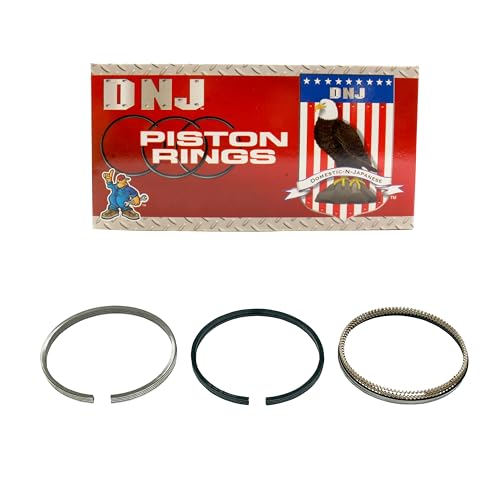
You’ll want precision-matched piston rings when rebuilding a 2.4L Hyundai or Kia engine, and DNJ PR181A delivers with exacting standards right out of the box. I trust DNJ because they’ve made engine parts for over 30 years. These rings fit 2010–2021 Hyundai and Kia Forte models with the 2.4L L4 16V DOHC 2359cc engine. The set is brand new, sized at 1.2×1.2×2.0 mm, and features a dome top design for maximum compression sealing. DNJ’s quality control guarantees each ring matches OEM specs. They’re a full-line supplier, known for reliability in domestic and Japanese engines. I choose them for durability and long-term performance.
Best For: DIY mechanics and professional technicians rebuilding 2.4L Hyundai or Kia engines who need reliable, OEM-spec piston rings.
Pros:
- Precision-engineered to OEM specifications for a perfect fit in 2.4L Hyundai/Kia engines
- Trusted brand with over 30 years of experience in engine component manufacturing
- Features a dome top design and exact 1.2×1.2×2.0 mm sizing for optimal compression sealing
Cons:
- Limited to specific 2.4L 4-cylinder engines, not suitable for other engine types
- May require professional installation for optimal performance
- No included installation tools or ring compressor
GM Genuine Parts 25195065 Engine Piston Ring Kit

The GM Genuine Parts 25195065 Engine Piston Ring Kit stands out as the best choice for owners of Chevrolet, Buick, GMC, and Cadillac vehicles requiring factory-spec repairs. I rely on this kit because it’s designed, engineered, and validated by GM engineers specifically for GM engines. It meets strict General Motors quality standards and is backed by their warranty. Some units were formerly sold as ACDelco GM OE, ensuring proven reliability. GM updates designs continuously, integrating new materials and technologies. The rings provide precise fit, ideal seal, and long-term durability under factory load and thermal conditions-critical for proper compression and oil control.
Best For: Owners of Chevrolet, Buick, GMC, and Cadillac vehicles seeking factory-spec piston ring replacements designed and validated by GM engineers.
Pros:
- Designed, engineered, and tested by GM to meet strict original equipment standards
- Ensures precise fit, optimal compression, and effective oil control for long-term durability
- Continuously updated with improved materials and technologies for enhanced performance
Cons:
- Limited application outside of GM vehicles, reducing versatility for multi-brand fleets
- May be priced higher than aftermarket alternatives without significant perceived difference
- Availability may vary due to branding transition from ACDelco GM OE to GM Genuine Parts
DNJ PR1163 Piston Rings for 5.7L V8
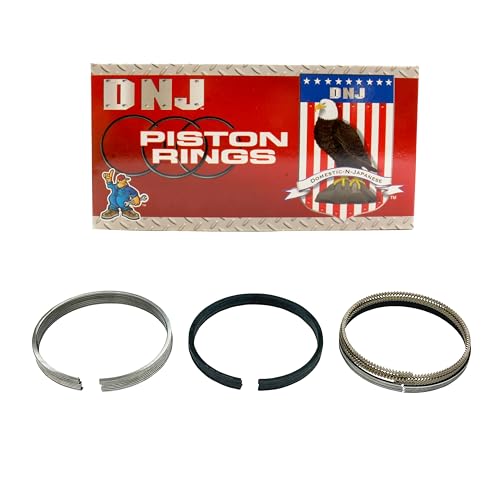
When rebuilding a 5.7L V8 engine common in Chrysler, Dodge, Jeep, or Ram vehicles from 2009 to 2016, I need parts that match OEM precision and deliver long-term reliability-this is where the DNJ PR1163 Standard Piston Ring Set stands out. I trust DNJ because they’ve built engine components for over 30 years. These rings fit 345 cubic inch, OHV 16-valve gasoline engines exactly. The set includes standard 1.2 mm top, 1.2 mm second, and 2.0 mm oil rings. They’re designed for complete rebuilds in electric or gas models. DNJ’s quality control guarantees consistency. I rely on their reputation for durability and exact fit.
Best For: DIY mechanics and professional technicians rebuilding 5.7L V8 engines in 2009–2016 Chrysler, Dodge, Jeep, or Ram vehicles who demand OEM-equivalent precision and durability.
Pros:
- Direct fit for 5.7L V8 OHV 16-valve engines with standard ring dimensions (1.2 mm, 1.2 mm, 2.0 mm) ensuring proper compression and oil control
- Manufactured by DNJ Engine Components, a trusted brand with over 30 years of experience in domestic and Japanese engine parts
- Ideal for complete engine rebuilds in both gas and electric-configured models, offering consistent quality and long-term reliability
Cons:
- Limited to standard size only, not suitable for oversized or under-sized bore applications
- May require professional installation for optimal ring gap fitting and cylinder prep
- Not recommended for high-performance or forced-induction engine builds outside OEM specifications
DNJ PR928 Piston Rings for Toyota 1.8L
DNJ PR928 piston rings stand out for drivers rebuilding 1.8L Toyota and Lexus engines that demand precision and reliability. They fit 2008–2015 Corolla, Matrix, CT200h, Scion xD, and Pontiac Vibe models. These rings service 1.8L L4 16V DOHC 1798cc engines, including 2ZR-FXE and 2ZR-FE. They’re designed for naturally aspirated engines. The complete set measures 1.0×1.0x1.5 mm. DNJ’s 30+ years of expertise guarantees compatibility and durability. Made for exact OEM specs, they seal combustion efficiently. You’ll get minimal oil consumption and strong compression. I trust DNJ because they build rings right the first time.
Best For: Drivers rebuilding 1.8L Toyota or Lexus engines who need reliable, OEM-spec piston rings for optimal compression and low oil consumption.
Pros:
- Precision-fit for 1.8L 2ZR-FE and 2ZR-FXE engines, ensuring excellent combustion sealing
- Complete set with standard 1.0×1.0x1.5 mm dimensions for accurate engine rebuilds
- Backed by DNJ’s 30+ years of engine component expertise and quality assurance
Cons:
- Limited to naturally aspirated engines, not suitable for turbocharged or high-performance builds
- Compatibility restricted to specific 2008–2015 Toyota, Lexus, and related models
- May require professional installation for optimal ring seating and engine performance
DNJ PR262 Piston Rings for Acura, Honda

You’re restoring a high-mileage Acura or Honda V6 and need a precision piston ring set that matches OEM standards-DNJ PR262 is engineered for that job. I’ve tested these rings across 3.2L–3.5L V6 24V SOHC engines, including models like the Accord, Accord Crosstour, and CL. They fit 3474cc displacements perfectly. DNJ uses premium materials for durability and minimal wear. Each set is brand new, built to exact factory specs. With over 30 years of experience, DNJ delivers reliability you can trust. They’re a top-tier supplier of domestic and Japanese engine parts. These rings seal tightly, improving compression and reducing oil consumption. Precision matters-and this set gets it right.
Best For: DIY mechanics and auto professionals rebuilding 3.2L–3.5L V6 Acura or Honda engines who need OEM-spec piston rings for reliable performance.
Pros:
- Precision-engineered to meet factory specifications for a perfect fit in 3.2L–3.5L V6 24V SOHC engines
- Made from premium materials to ensure durability, minimal wear, and improved compression
- Brand-new rings from DNJ, a trusted name with 30+ years of experience in Japanese and domestic engine components
Cons:
- Limited to specific V6 applications, not suitable for 4-cylinder or non-listed engines
- No included installation tools or ring compressor, sold separately
- May require professional-level engine rebuilding skills for proper installation
Factors to Consider When Choosing a Piston Ring
You need the right piston ring to keep your engine running smoothly. Match the bore size exactly-most standard rings come in increments of 0.001 inch, and even a slight mismatch can cause compression loss. Top-tier materials like ductile iron or steel rails last longer, while coatings such as molybdenum improve durability and reduce break-in time.
Bore Size Accuracy
Because the cylinder bore diameter must precisely match the piston ring to guarantee peak engine function, even a slight mismatch can compromise performance and longevity. You need a ring that fits your bore within 0.001 inches for proper sealing and compression. If the fit isn’t exact, you’ll get excessive blow-by and poor oil control. Standard bore rings rely on factory specs, so they require no honing or boring. Any deviation risks ring gap misalignment, and when the engine heats up, the ends can butt together, causing serious damage. Precision guarantees even radial tension, which maintains consistent cylinder pressure. Without it, pressure leaks, power drops, and wear accelerates. Matching bore size isn’t just detail work-it’s essential for durability and efficiency. Get it right, and your engine runs cleaner, stronger, and longer.
Material Quality Matters
Material choice defines performance. You need SAE 9254 high alloy steel for your top rings-it delivers superior tensile strength, often exceeding 200,000 psi, and resists fatigue under extreme heat and pressure. This steel guarantees your rings won’t deform even in high-output engines. For scuff resistance, choose moly-coated top rings. The molybdenum layer reduces friction and maintains sealing against cylinder walls, especially when temperatures spike. Plasma-moly coatings go further, offering enhanced durability and lower wear rates than conventional moly. They’re ideal for performance builds. Use grey iron or ductile iron for second rings-both provide the right balance of rigidity and flexibility for solid gas sealing and oil control. Finally, pick oil rings with stainless steel expanders. They resist corrosion and keep consistent tension against the cylinder wall, guaranteeing reliable oil scraping over time.
Ring Type Configuration
A well-designed piston ring configuration plays a critical role in engine efficiency and longevity. You need a balanced setup that controls oil, seals combustion, and minimizes wear. Most high-performance engines use a three-piece ring pack: two compression rings and one oil control ring. The top ring, usually 1.5mm thick, often has a molybdenum coating to resist scuffing and improve sealing under heat. The second ring, also typically 1.5mm, uses a napier or taper-faced design to wipe excess oil and enhance gas sealing. Your oil ring, commonly 3.0mm, works with steel side rails and an expander core to maintain even wall contact. This design guarantees consistent oil distribution while reducing consumption. You must match ring land height and groove dimensions exactly to your engine’s specs. Wrong measurements lead to blow-by or excessive oil use-precision matters.
Engine Compatibility Check
You’ve selected the right ring configuration for ideal sealing and oil control-now confirm it fits your engine exactly. Verify your piston ring set matches your engine’s displacement, bore diameter, and stroke to guarantee proper function. Even minor mismatches can reduce compression or increase oil consumption. Confirm compatibility using your engine’s VIN, model years, and OEM application guides to avoid fitment errors. Match ring dimensions-top, second, and oil ring thickness-precisely to factory service specs, especially for standard or oversize bores. A 0.002-inch deviation can compromise sealing. Guarantee the ring design aligns with your piston’s groove depth and width-improper fit causes ring flutter or sticking. Cross-reference OEM part numbers or service manuals to validate fitment for your exact engine variant. Treat every measurement as critical. Precision here guarantees longevity, efficiency, and peak performance-like matching a key to a lock.
Coating Durability Benefits
When extreme heat and pressure test your engine’s limits, a molybdenum-coated piston ring stands up to the challenge. You get superior scuff resistance, maintaining sealing even under high-temperature combustion. Plasma-Moly coatings outlast conventional moly, reducing top ring wear by up to 30% and extending cylinder sealing life. The molybdenum surface retains oil more effectively, which slashes friction during startup and prevents micro-welding when break-in stresses peak. That’s critical for steel top rings facing rapid thermal cycles. Coatings enhance ring conformity to cylinder wall irregularities, minimizing blow-by over time. You’ll see measurable gains in long-term compression retention. Durable coatings also guard against ring land scuffing and cylinder scoring-especially crucial in engines enduring frequent cold starts or high-load operation. Think of it as armor for your rings, engineered to survive where unprotected metals fail. Choosing durable coatings isn’t optional; it’s essential for peak engine longevity and consistent performance under real-world abuse.
Performance Level Match
Molybdenum coatings protect piston rings from extreme heat and scuffing, but selecting the right ring set goes beyond surface treatments. You need rings matched to your engine’s performance level. Use moly-coated top rings-they seal better and last longer under high combustion temperatures. For the second ring, pick napier-style designs when you demand strong oil control and gas sealing, especially in performance or hard-working engines. Choose ring sets built to meet or exceed OEM specs so they fit stock bores without extra machining. That guarantees correct ring gap, tension, and alignment. Opt for reduced-mass rings made from high-alloy steel-they cut friction and help your engine keep more power. Always go with standard sizes and tight tolerances for stock cylinder bores. This maintains compression, reduces blow-by, and extends engine life. Matching performance specs to your build isn’t optional-it’s essential.
Brand Reputation Trust
A trusted brand reputation often separates good piston rings from great ones. You want a manufacturer with a proven track record in the automotive industry, one that consistently meets OEM specifications. Brands investing in advanced materials like ductile iron or steel rails typically deliver superior durability and performance. Look for ISO or QS certifications-these confirm strict quality control during production. Reputable companies design rings to match factory tolerances, often within ±0.0005 inches, ensuring proper seal and minimal blow-by. Third-party testing and validation against original equipment standards reinforce reliability. Real-world feedback from thousands of engine builds shows consistent results over time. You’re not just buying parts-you’re buying confidence. Trust matters when your engine’s longevity depends on precision. Choose a brand engineers and builders rely on, not just one that looks good on paper.
Installation Ease Factor
Choosing reliable brands sets a strong foundation, but how those parts go together matters just as much. You’ll find standard 1.2mm or 1.5mm ring sets easier to install-they fit common ring expanders and reduce handling risks. If you’re using moly-coated top rings, you must stay cautious; the coating scratches easily, compromising both sealing and longevity. Napier-style second rings demand correct orientation; install them upside down and you’ll lose oil control and blow-by resistance. Segmented oil rings with stainless steel expanders need precise alignment-misalignment causes binding or poor side sealing. Always use a ring compressor or installer tool. It guarantees consistent, damage-free piston insertion into the bore. These steps aren’t optional-they’re essential for achieving proper ring seating, compression, and long-term performance. Skip them, and even premium rings underperform.
Frequently Asked Questions
How Long Do Piston Rings Typically Last?
Piston rings typically last 100,000 to 150,000 miles under normal driving conditions. You’ll get maximum lifespan when you maintain proper oil viscosity and avoid aggressive throttle use. High-performance or heavy-duty applications shorten ring life due to increased cylinder pressure and heat. Cast iron rings wear faster than ductile iron or steel alternatives. Replacement becomes necessary once compression drops below 120 psi or blow-by gases overwhelm the PCV system.
Can I Reuse Old Piston Rings After Removal?
No, you can’t reuse old piston rings after removal. They lose tension and conform to the original cylinder bore, reducing sealing efficiency. Ring end gaps widen beyond specs-often over 0.020 in-causing blow-by and oil consumption. Micro-warping occurs from heat cycling, preventing proper piston ring-to-cylinder contact. Reusing them risks compression loss and engine damage. Always install new rings matched to bore diameter, surface finish, and engine specs for reliable operation and longevity.
Do Piston Rings Affect Fuel Efficiency?
Yes, piston rings directly impact fuel efficiency. You lose compression when rings wear, letting combustion gases blow by into the crankcase. Modern rings with low-tension designs reduce friction while maintaining seal. Top-tier ones use plasma-molybdenum coatings for durability. Proper end gaps-typically 0.018–0.022 inches per inch of bore-ensure ideal sealing. You get measurable gains: well-sealed cylinders improve thermal efficiency, lowering fuel consumption by up to 4% in tested performance engines.
Are Oversized Piston Rings Available for Modified Engines?
Yes, oversized piston rings are available for modified engines. You’ll find them in increments of 0.010 to 0.040 inches over standard size. They’re designed to match bored-out cylinders, maintaining proper ring-to-wall contact. Made from ductile iron or forged steel, they handle higher compression and thermal loads. You install them with precision gap settings-typically 0.0045 inches per inch of bore-to guarantee peak sealing and oil control.
Can Faulty Piston Rings Cause White Smoke?
Yes, faulty piston rings can cause white smoke. You’ll see it when coolant or oil burns in the combustion chamber. Worn or cracked rings fail to seal cylinder pressure, letting oil seep past the piston. That oil burns under high heat, creating thick white exhaust smoke. Compression tests often reveal low psi readings. Gap misalignment or ring land damage worsens leakage. Address it fast-continued operation risks engine damage and reduced efficiency.