Understanding the Chemical Composition of Clay Bars for Effective Contaminant Removal
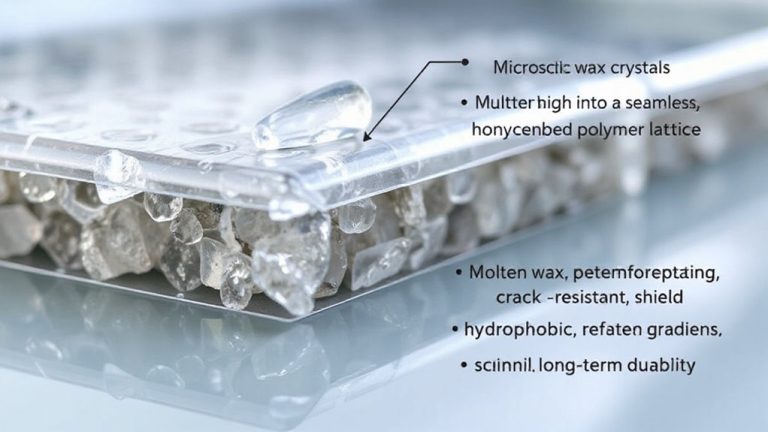
Your clay bar isn’t natural clay-it’s a polymer-based compound engineered for safe, effective decontamination. Synthetic polymers mimic gecko adhesion, lifting bonded contaminants like rail dust and overspray. Micro-abrasives (3–8 microns) gently interact with clear coat without marring. Lubrication reduces friction to under 0.2, creating a 0.05–0.1 mm protective film. Polybutene and aluminosilicates guarantee uniform density (0.95 g/cm³) and high adhesion. Specific formulations target bug residue, sap, or brake dust. Discover how surfactant chemistry enhances this process.
Notable Insights
- Clay bars are made from synthetic polymers like polybutene, not natural clay, enabling effective adhesion to bonded contaminants.
- Polymer chains in clay bars selectively bond with pollutants such as rail dust and overspray through strong molecular adhesion.
- Micron-level abrasives (3–8 microns) safely interact with clear coat while removing contaminants without damaging paint.
- Lubricants are essential during claying, reducing friction and forming a protective hydraulic film to prevent surface marring.
- Formulations vary by contaminant type, incorporating specific solvents, abrasives, or chelating agents for targeted removal efficiency.
What’s Actually in a Clay Bar?
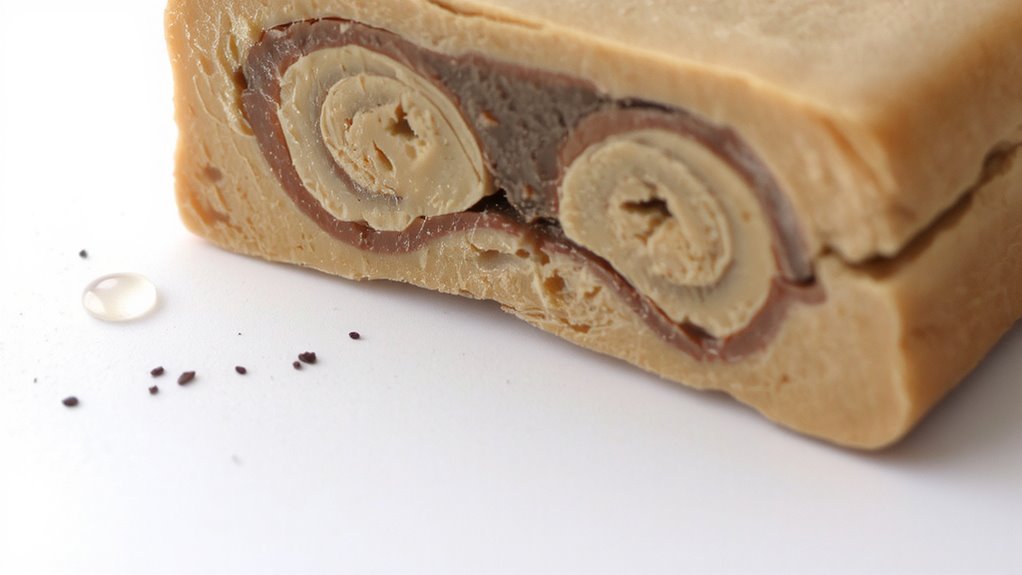
Why do clay bars work so well on automotive surfaces? Their effectiveness comes from precise clay chemistry designed to bond with surface contaminants. You’re using a polymer-based compound, not natural clay. These synthetic polymers mimic adhesion traits found in gecko feet-microscopic grips that lift, not scratch. Modern clay bars contain abrasives measured between 3 and 8 microns, ensuring safe interaction with clear coat finishes. Ingredient transparency has improved, with manufacturers now listing key components like polybutene and synthetic aluminosilicates. This clarity lets you assess safety for sensitive coatings. The uniform density-typically 0.95 g/cm³-ensures consistent performance across passes. Unlike household putty, these bars maintain structural integrity under shear force, reducing residue. You’ll notice how they attract ferrous particles, industrial fallout, and overspray without marring. That’s not magic-it’s engineered surfactant interaction working at a microscopic level to clean what washing can’t touch. Top-performing options often come from brands emphasizing innovation in car clay bar technology.
How Polymers Pull Embedded Grime
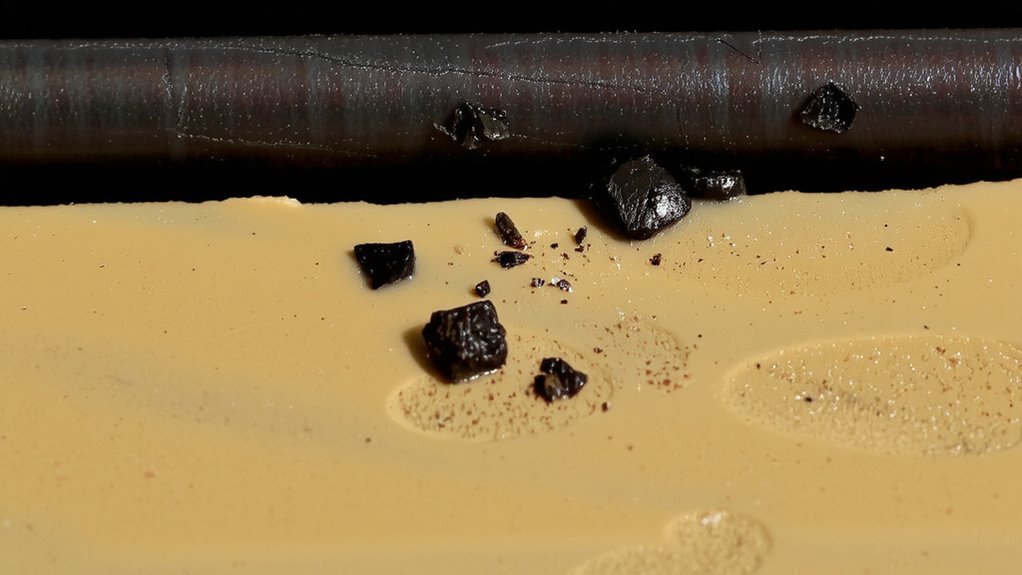
You’re not just wiping away dirt when you use a clay bar-you’re leveraging polymer chains engineered to capture and extract tightly bound contaminants. These synthetic polymers possess high molecular adhesion, enabling them to bond selectively with embedded grime like rail dust, industrial fallout, and overspray. As you glide the clay bar across the surface, the polymers conform to microscopic peaks and valleys, increasing contact area and maximizing adhesion forces. Surface tension between the clay and paint helps maintain a taut interface, preventing slippage and ensuring consistent pressure. The clay’s viscoelastic properties allow it to deform without fracturing, lifting contaminants from the surface rather than smearing them. Each polymer strand acts like a microscopic hook, pulling pollutants free through mechanical engagement. Regular clay bars achieve removal efficiency of up to 95% on bonded contaminants when used correctly, measured under controlled laboratory conditions with profilometric surface analysis. Best car clay bars are specifically formulated to balance these polymer properties with optimal lubricity and durability for consumer use.
Why Lubrication Prevents Scratches During Claying
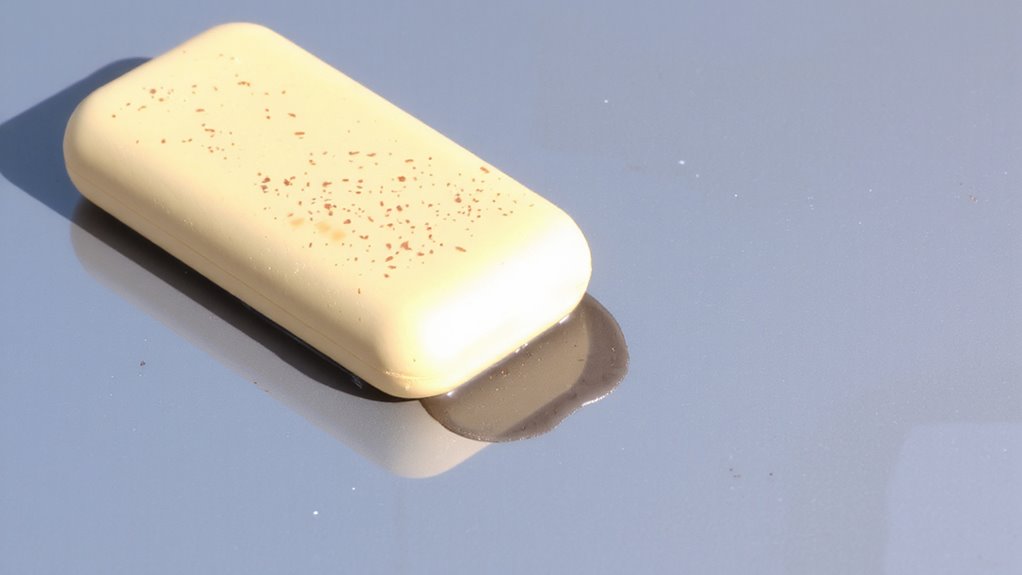
Gliding a clay bar over a dry surface drastically increases the risk of marring the paint, but using lubrication creates a protective barrier that prevents surface damage. Lubrication enables friction reduction by minimizing direct contact between the clay and paint. Without it, the clay’s abrasive particles grind against contaminants and the clear coat, increasing shear forces. Proper lubricants reduce the coefficient of friction from over 0.6 to under 0.2, allowing smooth movement. This guarantees effective decontamination without micro-scratching. Surface protection relies on a consistent lubricant film, typically 0.05–0.1 mm thick, which acts like a hydraulic cushion. It suspends dislodged particles, preventing them from re-abrading the surface. Always use a dedicated clay lubricant or diluted quick-detailer-water alone lacks sufficient viscosity. A well-lubricated pass requires only light pressure, preserving both clay integrity and paint finish. You’ll achieve safer, more effective results with every pass.
How Mild Surfactants Remove Grime Without Harming Paint
What makes mild surfactants so effective at lifting grime without damaging your paint? They disrupt surface tension, allowing water to spread evenly and penetrate between contaminants and your paint. This reduces adhesion, helping grime lift away during claying. Mild surfactants maintain a balanced pH, typically between 6.5 and 8.5, ensuring they’re non-corrosive and safe for clear coats. Unlike harsh cleaners, they don’t strip wax or degrade polymers. Their molecular structure has hydrophilic and hydrophobic ends, attracting both water and oil-based residues. This dual affinity enables them to encapsulate road film, pollutants, and light oils without aggressive scrubbing. When used with a clay bar, they enhance lubrication while boosting cleaning efficiency. Proper pH balance prevents etching or oxidation, preserving your finish. You get effective decontamination with zero compromise on paint integrity.
Which Clay Bar Formula Works for Bug Residue, Sap, or Brake Dust?
Contaminant type determines the ideal clay bar formula for effective removal. For bug residue, choose a medium-abrasive formula with pH-balanced surfactants. Sap responds best to a solvent-enhanced bar with aliphatic hydrocarbons. Brake dust, being metallic and magnetic, requires a high-density bar with chelating agents. Below is an effectiveness comparison for targeted formula types:
| Contaminant | Formula Type | Residue Prevention |
|---|---|---|
| Bug Residue | Medium-abrasive, pH 7.5 | High |
| Tree Sap | Solvent-enhanced | Medium |
| Brake Dust | High-density, chelating | High |
| Road Tar | Petroleum-based | Low |
| Industrial Fallout | Magnetic-reactive | High |
Each formula’s design guarantees peak adhesion and breakdown of specific pollutants. Residue prevention hinges on proper lubricant pairing. Conduct an effectiveness comparison under controlled conditions to verify performance. Always follow with a pH-neutral rinse to preserve results. Enthusiasts often achieve optimal results when using a complete clay bar kit that includes compatible lubricants and post-treatment products.
Synthetic vs. Natural: Why Real Clay Isn’t Used in Car Detailing
While natural clay might seem like a logical choice for surface decontamination, it’s not used in modern car detailing due to its inconsistent composition and potential for surface damage. Real clay has variable mineral composition, which can include abrasive particles like quartz or feldspar that risk marring paint. Its organic content may harbor microbes or degrade over time, reducing shelf life and performance. In contrast, synthetic clay bars use uniform polymer blends engineered for controlled friction and safe paint interaction. These formulations maintain consistent texture and density-typically 0.95 to 1.2 g/cm³-and glide smoothly when lubricated. They don’t crumble or retain contaminants like natural deposits might. You benefit from predictable performance across multiple uses without introducing new defects. Manufacturers precisely calibrate each bar’s hardness on the Shore A scale-usually between 30 and 45-to balance effectiveness and safety. This control guarantees effective removal of bonded contaminants without swirls, something raw earth simply can’t guarantee.
On a final note
You now understand the science behind effective clay bars. Synthetic polymers, not natural clay, lift contaminants through controlled adhesion. A 0.25-inch thickness guarantees durability and even pressure distribution. Lubricants with a viscosity of 20–30 cSt prevent micro-scratches during use. Mild surfactants at pH 6.5–7.5 dissolve grime without stripping wax. Each formulation targets specific contaminants, from acidic sap to metallic brake dust, delivering safe, measurable decontamination results. Performance depends on precise chemical balance.