Why Aluminum Wheels Bend More Easily Than Steel in Impacts
Your aluminum wheels bend more easily than steel because aluminum has lower ductility, failing after just 12% elongation at break. Steel deforms gradually under impact, absorbing energy through elastic behavior. Aluminum’s rigid crystalline structure transfers stress quickly, leading to abrupt failure. With tensile strength between 200–350 MPa, aluminum resists deformation less than steel’s 400–550 MPa. You’ll see damage often at the rim edge from potholes. Lighter weight improves handling, but less impact resistance comes with the trade-off. There’s more to how material choice affects real-world performance.
Notable Insights
- Aluminum has lower ductility than steel, leading to less deformation before failure.
- Aluminum transfers impact energy quickly due to its rigid crystalline structure.
- Steel absorbs impact through gradual deformation and elastic behavior.
- Aluminum’s elongation at break is only 12%, making it more prone to bending.
- Steel has higher tensile strength, offering better resistance to impact-induced bending.
Why Aluminum Wheels Bend More Easily Than Steel in Impacts
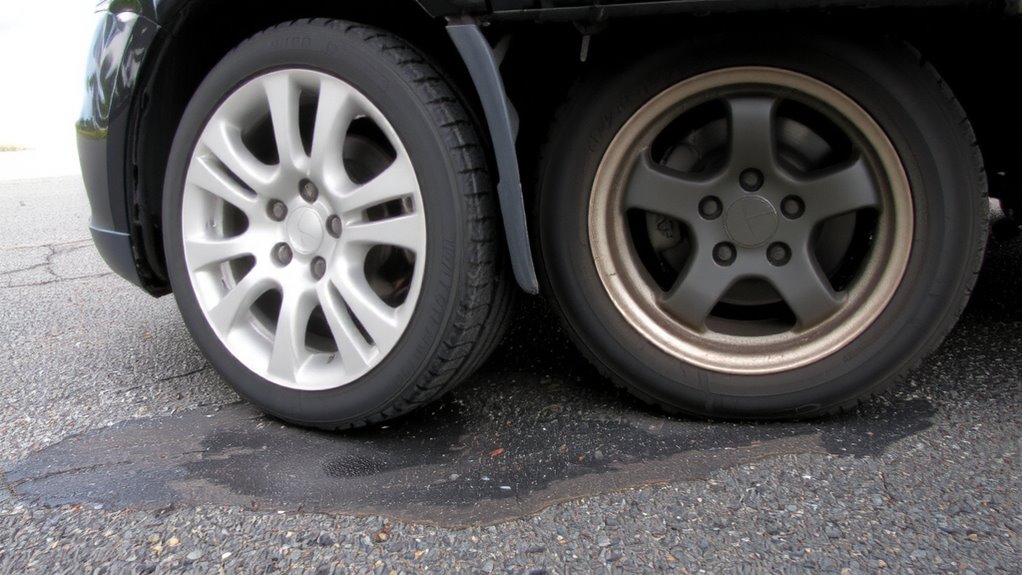
Impact resistance starts with material properties. Aluminum alloys used in wheels typically have lower ductility than steel, making them less forgiving under sudden force. You’ll notice cracks or bends more easily because aluminum transfers energy rather than absorbing it. Impact absorption is weaker due to the material’s crystalline structure, which resists deformation up to a point-then fails abruptly. Steel, by contrast, deforms gradually. Aluminum wheels often use 6061 or A356 alloys with tensile strengths around 310 MPa, yet their elongation at break is only 12%, limiting stretch before fracture. This low tolerance increases susceptibility to material fatigue, especially after repeated impacts. Each pothole or curb strike introduces microfractures that grow over time. Unlike steel’s fibrous yield, aluminum fails with brittle precision. You’re trading weight savings for reduced resilience. Design matters, but physics favors steel when impact severity rises.
How Aluminum and Steel Respond to Impact
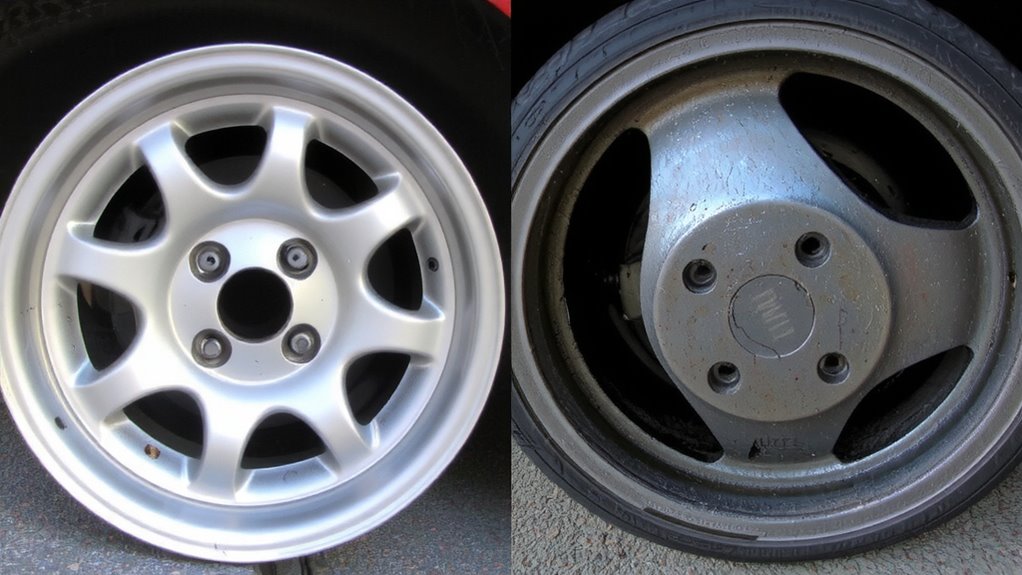
While both materials absorb road shocks, they respond in fundamentally different ways. Aluminum has higher material brittleness, meaning it’s strong but less able to deform under sudden impact. When force hits, aluminum transfers stress quickly through its rigid crystalline structure, often resulting in cracks or bends. Steel, though heavier, offers superior impact resilience due to its ductile nature. It deforms slightly under load, absorbing energy by bending before returning close to its original shape. This elasticity allows steel to withstand repeated impacts without structural failure. Aluminum wheels typically have a tensile strength of 40,000–60,000 psi but low elongation, while steel wheels range from 50,000–80,000 psi with higher elongation rates. So while aluminum looks sleek and reduces unsprung weight, steel better resists sudden deformation from potholes or curbs.
Do Aluminum Wheels Survive Potholes and Curbs?
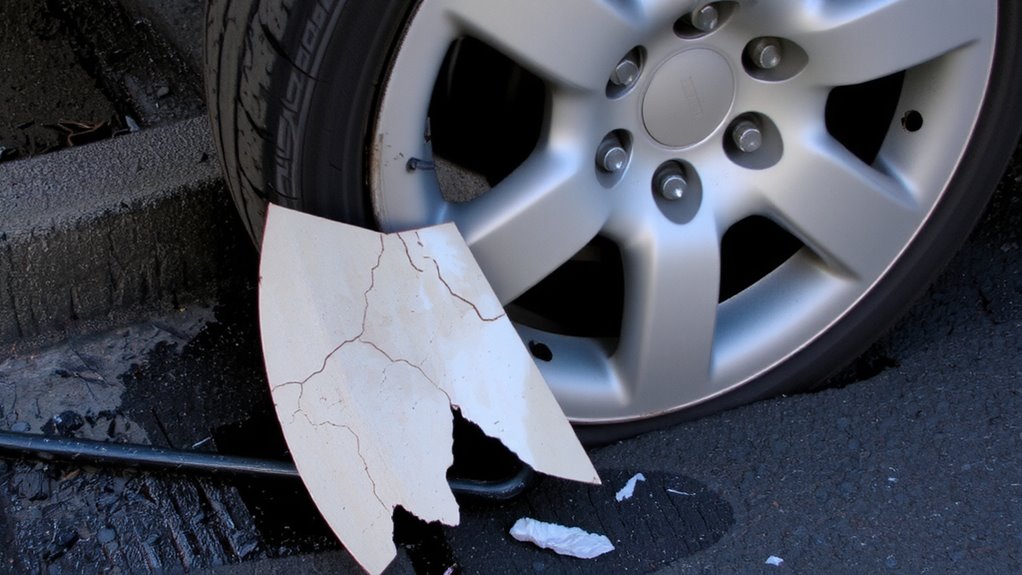
Why do your aluminum wheels seem to bend so easily after hitting a pothole? Their design prioritizes weight distribution and performance, not impact resistance. While aluminum offers excellent corrosion resistance, it’s more brittle than steel under sudden force. A hard curb strike can exceed the wheel’s yield strength, causing visible deformation. Below is how aluminum compares in real-world durability factors:
| Factor | Aluminum Wheel |
|---|---|
| Impact Absorption | Low – transfers more force to suspension |
| Corrosion Resistance | High – won’t rust like steel |
| Weight Distribution | Lighter – improves handling and fuel economy |
You’ll gain better steering response and reduced unsprung weight, but at the cost of resilience. Damage often occurs at the rim edge where structural support is weakest. Proper inflation and cautious driving help, but physics limits protection. Aluminum survives minor scrapes well, yet significant pothole impacts frequently result in bends due to material rigidity.
Steel vs. Aluminum: Strength or Performance?
Aluminum wins on performance, but steel stands strong in durability. You get a clear weight advantage with aluminum-typically 20–30% lighter than steel wheels of the same size. This reduction improves your vehicle’s acceleration, braking, and handling. Aluminum’s stiffness enhances responsiveness, translating steering inputs more directly. However, steel is tougher under impact, deforming less under extreme loads-rated at around 400–550 MPa tensile strength versus aluminum’s 200–350 MPa. Where aluminum excels is corrosion resistance; it forms a protective oxide layer, resisting rust even in wet climates. Steel requires coatings to prevent oxidation. Though stronger in raw metrics, steel’s added mass slows suspension response. Your choice hinges on whether you prioritize longevity or dynamic efficiency. Each material serves distinct performance profiles based on physics, not preference.
Choose the Right Wheel for Your Roads
How often do your daily drives include potholes, curbs, or unpaved roads? If frequently, steel wheels offer superior impact resistance. They absorb sharp blows without permanent deformation, making them ideal for rough terrain. Aluminum alloy wheels, while lighter and stronger in tensile strength, are more prone to cracking under sudden force. The alloy benefits include improved fuel efficiency and handling due to reduced unsprung weight-typically 2 to 4 pounds lighter per wheel. However, this comes with durability tradeoffs. Alloys distribute stress less evenly during impacts, increasing bend or fracture risk. Steel wheels flex slightly, then return to shape; alloys often don’t. For city drivers prioritizing aesthetics and performance, alloys suit well. For rural or winter driving with poor road conditions, steel’s resilience wins. Choose based on your road conditions, not just appearance.
On a final note
You choose aluminum for light weight, not impact resistance. Aluminum wheels typically use 6061 or A356 alloy, with a tensile strength around 45,000 psi-strong, but less ductile than steel. Steel wheels, made from stamped carbon steel, offer higher elongation before failure-up to 25% versus aluminum’s 10%. That ductility lets steel absorb pothole energy through bending. Aluminum cracks under similar stress. For rough roads, steel’s resilience often outweighs aluminum’s performance benefits.