Evaluating Effects of Street Racing on Caliper Piston Seal Longevity
Street racing severely reduces caliper piston seal lifespan. Your nitrile rubber seals typically handle up to 300°F, but racing generates rotor heat over 500°F, transferring to calipers beyond 260°F. This heat causes thermal degradation, hardening seals and reducing elasticity. Sudden pressure spikes exceeding 1,200 psi lead to extrusion and micro-tears. Repeated stress accelerates fatigue. Even fluorocarbon seals degrade under extreme loads. Watch for fluid leaks or brake drag-signs of failure are closer than you think.
Notable Insights
- Street racing exposes caliper piston seals to temperatures exceeding 500°F, surpassing the 300°F limit of standard nitrile seals.
- Prolonged high heat causes thermal degradation, leading to seal hardening, cracking, and loss of elastic recovery.
- Pressure spikes over 1,200 psi during aggressive braking exceed OEM seal tolerances, causing extrusion and micro-tears.
- Combined heat and pressure accelerate elastomer fatigue, reducing seal integrity and promoting brake fluid leakage.
- Regular inspection every 15,000 miles and use of high-temperature seals are critical to maintaining longevity in racing conditions.
What Caliper Piston Seals Do in Your Brakes
A caliper piston seal is a critical component in your brake system, guaranteeing precise piston movement and maintaining hydraulic pressure. It prevents brake fluid from leaking past the piston during applied pressure. The seal’s design allows it to deform slightly under pressure, then retract the piston when braking stops-this maintains ideal pad clearance. Brake fluid compatibility is essential; incompatible fluids can cause swelling or deterioration. Modern seals use rubber compounds like nitrile or fluorocarbon, offering high seal material durability under temperatures from -40°C to 230°C. These materials resist wear after repeated compression and expansion cycles. The seal fits snugly in the caliper bore, typically between 38mm and 56mm in diameter, depending on vehicle specs. Proper sealing guarantees consistent pedal feel and prevents air ingress. Degraded seals reduce braking efficiency. Performance depends on both design precision and chemical resilience.
How Street Racing Damages Caliper Piston Seals
When you’re pushing your car to the limit during street racing, the extreme heat generated can quickly overwhelm your caliper piston seals. Tire friction and fuel combustion produce temperatures exceeding 500°F at the rotor. This heat transfers directly to the caliper, where seals operate beyond their 260°F silicone limit. Standard nitrile seals degrade rapidly under these conditions, losing elasticity and compression. As seals harden, they fail to retract the piston, causing brake drag. Uneven piston movement accelerates pad wear and reduces stopping power. Thermal expansion pressures exceed 900 psi, stressing seal edges and inviting micro-cracking. Repeated exposure fractures seal material, allowing fluid leakage. Once brake fluid seeps past, hydraulic pressure drops, compromising response. You’re left with spongy pedals and longer stopping distances. These effects intensify with each race, degrading performance predictably over time.
Why Racing Heat Breaks Down Brake Seals
Because racing subjects brake systems to extreme thermal loads, caliper piston seals face accelerated deterioration that standard materials can’t withstand. You’re exposing seals to temperatures exceeding 500°F during aggressive stops, far beyond the 300°F limit of conventional rubber compounds. This intense heat causes thermal degradation, breaking down molecular bonds in the seal material. Repeated exposure leads to material fatigue, reducing elasticity and sealing capability. Most OEM seals use nitrile rubber, which hardens and cracks under these conditions. High-performance alternatives like PTFE or fluorocarbon last longer but still degrade over time. As seals lose flexibility, they can’t retract the piston properly, causing brake drag and uneven wear. The result? Reduced braking efficiency and premature caliper failure. Racing-specific seals are engineered for thermal resilience, but even they have thresholds. You need materials rated for sustained high heat to avoid systemic failure.
How Sudden Brake Pressure Ruins Piston Seals
Sudden brake pressure pushes caliper piston seals beyond their mechanical limits, compounding the thermal stress already highlighted. You subject the seals to extreme pressure spikes that exceed OEM design tolerances-often surpassing 1,200 psi during aggressive stops. These spikes deform the seal grooves and hinder retraction, accelerating wear. Combined with thermal expansion from repeated hard braking, the elastomer materials lose resilience. Micro-tears form, letting contaminants enter and fluid to leak.
| Factor | Effect on Piston Seal |
|---|---|
| Pressure spikes | Exceed 1,200 psi, causing extrusion |
| Thermal expansion | Increases internal fitment stress |
| Sudden loading | Prevents seal retraction |
| Material fatigue | Reduces elasticity over time |
| Fluid ingress | Promotes corrosion and seal failure |
You can’t ignore how abrupt force delivery compromises seal integrity-the damage is immediate and irreversible.
Why Repeated Stress Kills Brake Seals
While a single hard stop pushes piston seals to their limit, repeated stress over time is what ultimately leads to seal failure. Each aggressive braking cycle heats the seal, causing expansion and contraction that strains its molecular structure. You’re not just dealing with heat cycles-material fatigue builds microcracks with every application. These tiny fractures spread, reducing elasticity and sealing ability. Most OEM seals use nitrile rubber, rated for around 250°F; track or street racing regularly exceeds this. Repeated stress exposes design limitations-these seals weren’t made for sustained 400°F+ environments. The piston’s edge can nick worn seals, accelerating leaks. Even high-performance polytetrafluoroethylene (PTFE) variants degrade under constant load. After hundreds of high-pressure cycles, deformation becomes permanent. You lose consistent piston retraction, risking drag and uneven pad wear. In short, relentless use overwhelms both material fatigue thresholds and inherent design limitations of stock braking components.
How to Tell If Your Brake Seals Are Failing?
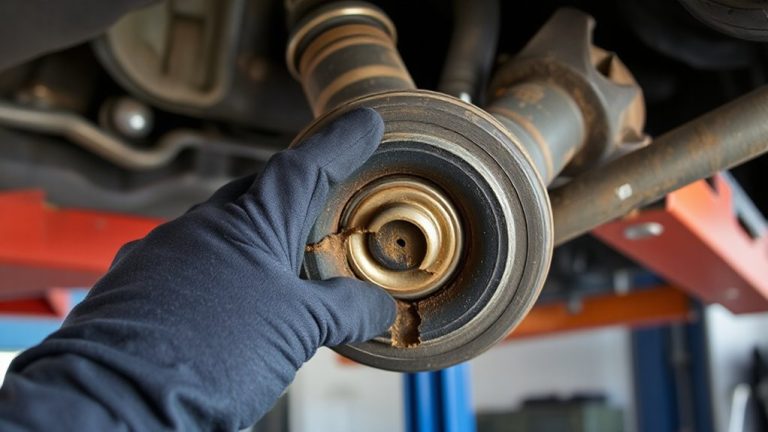
How do you know when your brake caliper piston seals are going bad? You’ll notice reduced braking performance and a soft or spongy pedal feel. These symptoms often stem from fluid leakage caused by compromised seals. Visible brake fluid around the caliper or wheel hub is a clear red flag. Conduct a visual inspection regularly-look for wetness, corrosion, or pooled fluid near the caliper piston. Even minor seepage indicates seal degradation, especially after repeated high-heat events like street racing. The rubber seals, typically made from nitrile butadiene rubber (NBR), degrade under extreme temperatures above 300°F, losing elasticity and sealing ability. As seals wear, they fail to retract the piston, leading to drag and overheating. Catching fluid leakage early during visual inspection prevents total failure, maintains hydraulic pressure, and guarantees peak brake function.
Maintenance Tips to Extend Piston Seal Life
You can spot failing brake caliper piston seals early, but preventing failure starts with proactive maintenance. Check seals every 15,000 miles for cracks or deformation. Replace them if you notice fluid seepage or diminished brake response. Flush brake fluid every two years to prevent brake fluid contamination, which corrodes seal material. Use only DOT 4 or manufacturer-specified fluid to maintain compatibility. Shield calipers from excessive environmental exposure by washing debris and road salts off weekly, especially in coastal or winter climates. Install dust boots to protect pistons from dirt and moisture. Operate within standard temperature ranges-avoid sustained braking above 350°F, as heat accelerates elastomer degradation. Make certain caliper slide pins are lubricated every 10,000 miles to prevent uneven piston movement. Use OEM-specified torque (typically 25–35 ft-lbs) when reinstalling components. These steps extend seal service life beyond 40,000 miles.
On a final note
You risk premature caliper piston seal failure during street racing. Extreme heat from repeated braking exceeds the seal’s thermal limits-often above 300°F, degrading nitrile rubber compounds. Sudden pressure spikes over 1,200 psi deform seals not rated for sustained high stress. This leads to extrusion, leaks, and brake fade. Inspect seals every 5,000 miles if racing. Use high-temp silicone grease and upgrade to fluorocarbon seals rated to 400°F for durability.