Installing a Return-Style Fuel System on Naturally Aspirated Vehicles
You need a return-style fuel system to maintain stable 43–47 psi at the rail for precise atomization and clean combustion. A high-volume 255 LPH in-tank pump delivers fuel through -6 AN lines, while a downstream regulator routes excess back via a -8 AN return. This prevents heat soak, keeps fuel cool, and guarantees consistent delivery. Proper grounding, a 70-micron filter, and sealed fittings are critical. Set baseline pressure accurately and test for leaks. System longevity and performance depend on correct component matching-your next steps hinge on these fundamentals.
Notable Insights
- Use a high-volume 255 LPH+ in-tank fuel pump to support NA engine demands and maintain consistent pressure.
- Install a return-style fuel pressure regulator near the tank to maintain 43–47 psi at the rail.
- Route -6 AN supply and -8 AN return lines to minimize pressure drop and ensure proper fuel flow.
- Connect the regulator to engine vacuum for load-responsive pressure control and stable idle.
- Pressure-test the system pre-startup and ensure all fittings use fuel-rated sealant to prevent leaks.
Why NA Engines Need a Return-Style Fuel System
While fuel delivery might seem straightforward, understanding why naturally aspirated (NA) engines rely on a return-style fuel system is key to maintaining consistent performance. You need stable fuel pressure for precise air-fuel ratios. Without it, combustion suffers. A return-style system maintains 43–47 psi at the rail, critical for ideal atomization. Excess fuel returns to the tank, preventing vapor lock and heat soak. This constant circulation keeps fuel cool, directly improving fuel efficiency. Cooler fuel resists premature ignition, reducing strain on components. That means less wear over time, enhancing engine longevity. Carbureted or forced-induction systems manage pressure differently. But NA engines need regulated, steady supply. The return line acts like a pressure relief valve, ensuring only necessary fuel stays in the rail. You’re not just delivering fuel-you’re managing thermal dynamics. Consistent conditions mean reliable combustion. And reliable combustion means your engine runs smoother, cleaner, and lasts longer.
How a Return-Style Fuel System Works
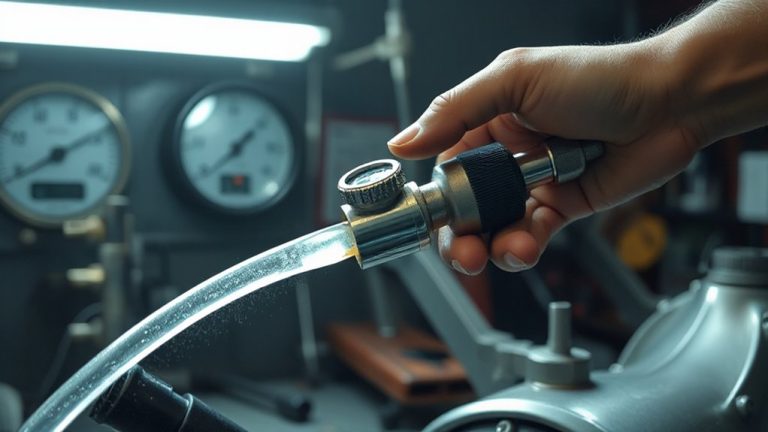
Since fuel pressure must stay within a tight range for ideal engine performance, a return-style fuel system uses continuous feedback to maintain balance. You’ll find fuel pressure regulated by a dedicated component that guarantees consistent delivery to the injectors. The regulator function begins with monitoring pressure downstream of the fuel rail. If pressure rises too high, the regulator redirects excess fuel back to the tank through a return line. This creates a closed-loop system that maintains a steady baseline, typically 43.5 psi for many naturally aspirated setups using a manifold-referenced regulator. Unlike dead-head systems, this method prevents over-pressurization. The constant circulation also helps manage fuel temperature. Proper regulator function depends on accurate vacuum or boost reference, guaranteeing adjustments match engine load. You get precise air-fuel ratios because fuel pressure remains stable regardless of demand fluctuations.
Essential Parts for an NA Return-Style Fuel Conversion
When upgrading your naturally aspirated engine to a return-style fuel system, you’ll need several key components to guarantee proper function and reliability. A high-volume in-tank fuel pump is essential, and your fuel pump selection must match the engine’s horsepower demand-typically, a 255 LPH pump supports up to 500 hp naturally aspirated. You’ll also need a fuel pressure regulator, and regulator placement is vital: mount it downstream near the fuel tank to maintain consistent pressure and reduce vapor lock. Include -6 AN fuel lines for adequate flow with minimal pressure drop. Use a proper fuel rail with a return port. A 70-micron fuel filter guarantees debris doesn’t damage injectors or the pump. Include hose, fittings, clamps, and a return line to the tank. Guarantee all components are compatible with gasoline and rated for continuous duty.
Step-by-Step NA Return System Install
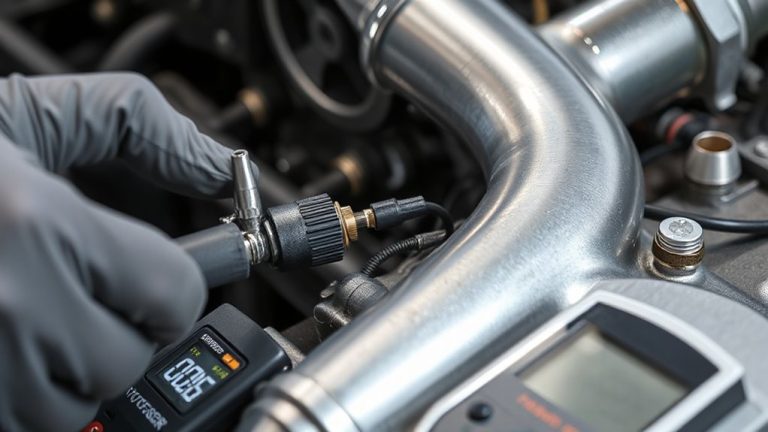
If you’ve gathered all the necessary components, you’re ready to begin installing your return-style fuel system. Start by confirming your fuel pump selection matches your engine’s horsepower requirements-most NA builds use a high-flow in-tank or in-line pump rated at 255 lph or higher. Mount the pump securely, ensuring proper wiring with a relay and fused power source. Route aluminum or steel hard lines from the tank to the engine bay, minimizing bends to maintain flow efficiency. Install the fuel pressure regulator near the fuel rail inlet-this ideal regulator placement guarantees consistent pressure by minimizing vapor lock and pressure drop. Use -6 AN lines for supply and -8 AN for the return to handle flow demands. Set baseline pressure per your injector specs, typically 43–47 psi for stock-style injectors. Secure all fittings with thread sealant rated for fuel. Pressure-test before startup.
Fixing Common Return System Issues
Why is your fuel pressure fluctuating under load? A common culprit is pressure regulator failure, where the diaphragm or spring inside degrades, causing inconsistent fuel delivery. You’ll notice idle inconsistencies or lean spikes on your wideband. Check the regulator’s vacuum reference line and spring rating-most NA setups use 1:1 ratio regulators set to 43.5 psi at the rail with zero vacuum. Another issue is fuel pump overheating, especially with high-flow in-tank pumps running continuously at high amperage. Excess heat reduces pump efficiency and can vaporize fuel, leading to cavitation. Guarantee your pump has adequate fuel volume submersion-minimum 2 gallons recommended in the tank at all times. Use a -6 AN return line to minimize restriction. Verify regulator and pump grounding. Replace foam pre-filters if clogged. These steps prevent most return system issues.
On a final note
You’ve upgraded to a return-style fuel system for precise fuel delivery. It maintains consistent pressure at 43–60 psi, critical for NA engine tuning. The regulator, set at the fuel tank, adjusts flow based on vacuum. An -6 AN return line minimizes restrictions. This setup prevents fuel starvation and vapor lock. Expect steady AFRs across RPM bands. Always verify regulator calibration and hose routing.