A Guide to Selecting pH-Adjusted Cleaning Products Based on Car Detailing Needs
You need the right pH for each car surface to clean safely and effectively. Use neutral to mildly alkaline shampoos (pH 7–9) on paint to preserve waxes and sealants. For wheels, choose a slightly acidic formula (pH 3–5), like pH 4.2, to loosen brake dust without corroding metal. Interiors demand pH-neutral cleaners (6.5–7.5) to protect leather and vinyl. Avoid anything acidic on chrome-it can etch the thin plating. Matching pH to the surface prevents damage and maximizes cleaning. There’s more to get right with dilution and dwell time.
Notable Insights
- Choose pH-neutral to mildly alkaline car wash soaps (pH 7–9) to safely clean painted surfaces without stripping wax or coatings.
- Use slightly acidic cleaners (pH 3–5) for wheels to dissolve brake dust effectively while avoiding corrosion on metal components.
- Avoid pH levels below 4 on chrome surfaces to prevent etching and permanent damage to the thin protective plating.
- Select pH-balanced (6.5–7.5) cleaners for interiors to protect delicate materials like leather and vinyl from degradation and residue buildup.
- Prioritize surfactant quality over extreme pH, as effective cleaning can be achieved without aggressive acidity or alkalinity.
Know Why pH Matters in Car Cleaning
You’ve probably noticed that some car cleaning products work better than others, and the reason often comes down to pH. pH chemistry directly affects cleaning efficacy by determining how well a product dissolves contaminants. The pH scale ranges from 0 to 14, with 7 being neutral. Acidic solutions (pH < 7) excel at removing mineral deposits like brake dust. Alkaline solutions (pH > 7) break down organic soils such as grease and insect residue. Most car wash soaps operate between pH 6 and 9 to guarantee safe use on various surfaces. Outside this range, damage to wax, sealants, or clear coats may occur. Effective cleaning doesn’t require extreme pH-proper surfactant formulation enhances performance without aggressive acidity or alkalinity. Matching pH to soil type improves results while preserving finishes. Understanding pH chemistry helps you choose products that maximize cleaning efficacy safely and efficiently.
Pick a pH-Adjusted Cleaner for Your Paint
Why do some cleaners leave your paint spotless while others dull the finish? The answer lies in pH balance and surface compatibility. Most modern paint finishes, including clear coats, perform best with neutral to mildly alkaline cleaners (pH 7–10). Highly acidic or alkaline products (pH <6 or >11) can degrade paint protection layers, like ceramic or wax coatings, over time. For best results, use a pH-balanced car wash (pH 8–9) to safely lift contaminants without stripping protective layers. These formulas clean effectively while maintaining the chemical integrity of your finish. Surface compatibility guarantees the cleaner interacts safely with painted surfaces, avoiding etching or hazing. Always verify product specifications-look for non-ionic surfactants and zero solvent content. A proper pH-adjusted cleaner preserves gloss, extends paint protection life, and delivers consistent results without compromising your car’s finish.
Clean Wheels Safely With the Right pH
How often do you consider the chemistry behind your wheel cleaner? Understanding wheel chemistry is essential for safe, effective cleaning. Most wheels collect iron-rich brake dust, which bonds aggressively to surfaces. A strong acid-based cleaner might seem effective, but it risks etching aluminum and degrading finishes. Instead, opt for a pH-neutral to slightly acidic formula-between pH 3 and 5-to manage the brake dust reaction without damage. These formulations dissolve metallic particles while preserving clear coats and anodized layers. For example, cleaners with pH 4.2 reduce brake dust adhesion by up to 85% in 3 minutes. Always allow 2–3 minutes of dwell time for best reaction. Overly aggressive pH levels below 2.5 can corrode spokes and calipers. Matching your cleaner’s pH to your wheel type guarantees effective cleaning without compromising integrity-like using the right key for a precision lock.
Protect Interior Surfaces With Balanced Cleaners
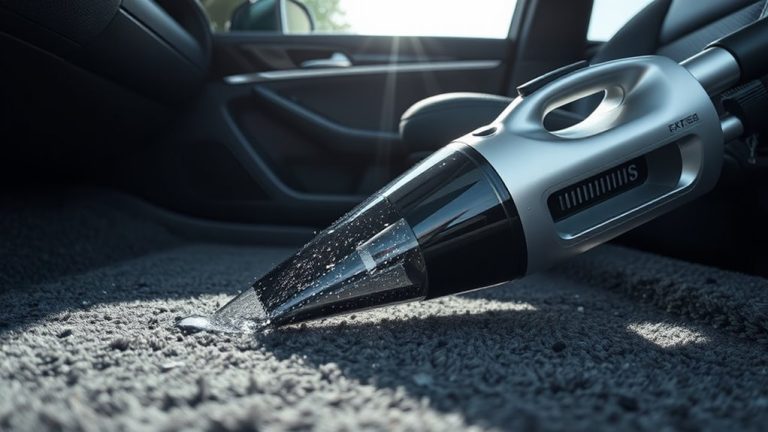
Interior surfaces demand the same level of chemical precision as wheels, yet they often face harsh treatment from improperly balanced cleaners. You should use pH-neutral (6.5–7.5) formulas to protect delicate materials like leather, vinyl, and fabric. These cleaners prevent color fading by avoiding aggressive surfactants that break down dye bonds in upholstery. Low-pH solutions strip protective coatings, accelerating wear and promoting odor buildup in porous surfaces. Balanced cleaners, typically non-ionic with a 0.5–2% dilution rate, lift grime without residue. They maintain surface integrity by matching the pH of most interior substrates. You’ll reduce microbial growth-linked to persistent smells-since neutral formulas don’t leave behind nutrient-rich films. For best results, apply with microfiber pads at 150–200 µm thickness to guarantee even coverage without saturation. This approach guarantees long-term preservation, maintains factory appearance, and prevents premature aging caused by chemical stress. Top-rated car carpet cleaners effectively combine pH balance with deep-cleaning power to tackle spills and stains without compromising material safety.
Skip Acidic Cleaners When Safeguarding Chrome
Even with the gleam of polished chrome, acidic cleaners can cause irreversible etching and dullness over time. These products often have a pH below 4, which risks acid damage to delicate chrome surfaces. Chrome corrosion occurs when hydrogen ions in low-pH solutions react with the thin metallic layer, leading to pitting and tarnish. You should avoid using wheel cleaners or all-purpose degreasers containing hydrochloric or phosphoric acid on chrome trim, exhaust tips, or badges. Instead, opt for neutral (pH 7) or mildly alkaline (pH 8–9) formulas specifically labeled for chrome protection. These preserve the reflective finish without compromising integrity. Chrome plating is only 0.0005 to 0.001 inches thick-once damaged, it can’t be repaired. Preventative care with pH-safe products guarantees longevity. Immediate rinsing after cleaning halts residue buildup. Skip the shortcut; prevent acid damage before it starts. Choosing the right best rims for Toyota Tacoma can also influence the type of cleaning products needed to maintain both wheel finish and surrounding chrome components.
Match Every Surface to Its Ideal pH Level
Why should a waxy carnauba finish endure the same chemical treatment as rubber seals or powder-coated trim? You risk damage without proper surface compatibility. Each automotive material has unique pH tolerance levels. Carnauba wax degrades above pH 8.5; use neutral or slightly alkaline formulas (pH 7–9). Rubber and vinyl seals suffer from swelling or cracking above pH 10-opt for pH 5–8 cleaners. Powder-coated trim resists higher alkalinity, tolerating pH up to 11, but prolonged exposure invites fading. Material sensitivity dictates these thresholds. Glass handles pH 2–12, making it versatile. Always verify pH ranges on product labels. Mismatched pH leads to hazing, etching, or premature wear. You preserve finish integrity by matching pH to substrate. Precision cleaning isn’t one-size-fits-all. Choose solutions calibrated to surface chemistry. Your detailing outcomes depend on it. Effective extraction cleaning also depends on proper pH balance, especially when using carpet extractors for auto detailing.
On a final note
Choose pH-adjusted cleaners to match each vehicle surface. A pH 7.0–8.5 solution protects clear coats without stripping wax. For wheels, use pH 8.0–10.5 cleaners to dissolve brake dust without etching metal. Interiors need pH 6.5–7.5 formulas to preserve leather and vinyl. Avoid pH below 6.0 on chrome-acidic residues cause pitting. Precision in pH selection guarantees safe, effective cleaning across all materials.