Suspension Springs Sagging? Causes & Prevention Tips
Your suspension springs sag from material fatigue, overloading, corrosion, and rough road impacts. Repeated compression cycles cause micro-deformation, especially beyond 500,000 cycles in tempered steel. Exceeding GAWR by just 10% accelerates stress and permanent set. Road salt and moisture compromise SAE 1065–1095 steel, even with zinc plating. Inspect ride height every 12,000 miles; maintain alignment within 3 degrees. Match spring pairs and choose top-tier brands to preserve performance. There’s more to optimizing longevity than just maintenance schedules.
Notable Insights
- Repeated compression cycles cause metal fatigue, leading to permanent deformation and loss of spring elasticity over time.
- Rough roads subject springs to excessive shock loads, accelerating wear and promoting micro-cracking at stress points.
- Overloading beyond Gross Axle Weight Rating increases stress on springs, causing premature sag and alignment issues.
- Rust from moisture and road salt compromises structural integrity, especially when protective coatings are damaged.
- Regular inspections every 12,000 miles and avoiding overloads help maintain ride height and extend spring life.
Why Do Suspension Springs Sag Over Time?
While suspension springs are built to withstand heavy loads and constant stress, they eventually sag due to material fatigue and prolonged exposure to dynamic forces. You’re dealing with metal fatigue-the gradual weakening of the spring’s structure after repeated flexing. Each time your vehicle hits a bump, the spring undergoes coil compression, deforming slightly before returning to shape. Over thousands of cycles, the steel loses elasticity. High-quality springs use tempered steel alloys, rated for 500,000 compression cycles under normal loads. But once metal fatigue sets in, permanent deformation occurs. The coils sit closer together, reducing ride height by as much as half an inch. This sag compromises alignment and handling. You’ll notice uneven tire wear and reduced stability. Coil compression limits are engineered into each spring, but exceeding them accelerates wear. Springs aren’t meant to last forever-eventual sagging is a mechanical certainty, not a defect.
How Do Rough Roads Wear Out Springs?
When you regularly drive over rough roads, your suspension springs face repeated shock loads that exceed standard design tolerances. Each bump induces constant jolting, forcing springs to compress and rebound beyond their intended cycle limits. This accelerates metal fatigue, especially in coil and leaf spring designs with finite flex ratings. Road friction from uneven terrain amplifies stress by introducing lateral forces, promoting micro-cracking at stress points. Over time, high-cycle loading reduces spring temper, diminishing elastic limits and leading to permanent deformation. Springs manufactured with ASTM A228 or A684 steel still degrade when subjected to non-standard impacts, such as potholes or gravel roads at speeds over 30 mph. The result isn’t immediate failure but progressive sag due to cumulative wear. Even minor impacts, when repeated thousands of times, compromise structural integrity. Regular inspection for seat wear and reduced ride height can detect early degradation caused by harsh road conditions.
Are You Overloading Your Suspension?
How much weight are you really putting on your suspension? Exceeding your vehicle’s Gross Axle Weight Rating (GAWR) accelerates spring fatigue, reducing spring rate and causing permanent sag. Every 10% overload increases stress exponentially, degrading coil or leaf spring integrity. Spring fatigue occurs when metal fibers weaken from sustained overstress, losing rebound resilience. You’re not just risking comfort-you’re compromising safety. Overloading shifts axle alignment, altering camber and toe angles beyond OEM specs. Misaligned axles unevenly distribute tire wear and reduce handling precision by up to 30%. Manufacturers design suspensions with specific load limits; ignoring them voids performance warranties. Even short trips with heavy loads contribute to cumulative damage. Check your door-jamb sticker for payload ratings. Distribute weight evenly and use helper springs if regularly near maximum capacity. Prevent premature sag: respect axle alignment and avoid spring fatigue with responsible loading.
Does Rust Damage Suspension Springs?
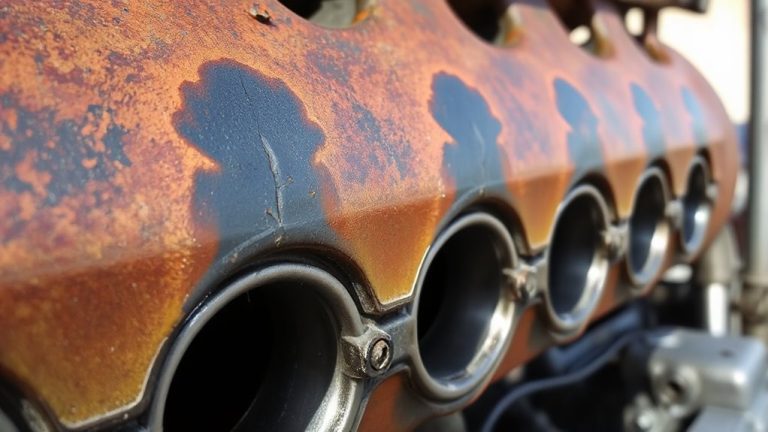
Rust absolutely damages suspension springs, compromising both performance and safety over time. When moisture and oxygen react with the steel, chemical corrosion begins, eating away at the spring’s surface. This weakens the metal’s structural integrity, reducing its ability to withstand repeated stress cycles. Over time, chemical corrosion accelerates material fatigue, especially in environments with road salt or high humidity. Material fatigue means the spring loses elasticity and load-bearing capacity, making it more likely to deform permanently. Most suspension springs are made from high-tensile SAE 1065 to 1095 steel, designed for resilience-yet they’re not immune to rust without protective coatings. Zinc plating or powder coating helps, but scratches expose bare metal, inviting corrosion. Once rust penetrates load-bearing layers, the spring’s fatigue life drops markedly. Preventing rust early preserves spring function and extends service life.
What Are the Signs of Sagging Springs?
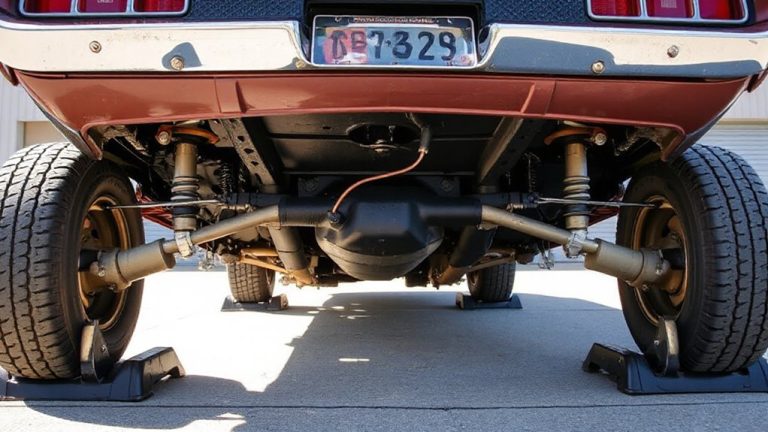
Sagging springs often go unnoticed until they affect your vehicle’s alignment or ride quality. You’ll notice uneven body alignment, such as one corner sitting lower than the others. This dip changes the factory-specified ride height, usually by more than 1 inch, which impacts handling. Your car may list to one side or sit nose-high or tail-high. Tires wear unevenly due to incorrect camber angles caused by altered suspension geometry. You might also see reduced ground clearance, especially under load. Misaligned headlights or scraping on driveways are common. The suspension feels softer on one side, reducing stability in turns. These symptoms indicate metal fatigue in the springs, not just wear. Measuring ride height at each wheel well against manufacturer specs confirms sag. Correct diagnosis requires precise comparison to original equipment data. Ignoring it worsens alignment issues and accelerates tire and component wear.
How Can You Prevent Suspension Spring Sag?
You can avoid the long-term damage of suspension spring sag by understanding the factors that accelerate metal fatigue and taking proactive maintenance steps. Material fatigue occurs when springs endure repeated stress cycles beyond their design limits, typically after 50,000 miles of uneven loading or poor road conditions. High-tensile steel springs lose elasticity over time, especially if overloaded beyond their rated capacity-usually 1,200 to 1,800 pounds per coil, depending on vehicle class. Regular inspections every 12,000 miles help detect early wear. Guarantee proper spring alignment during installation; even a 3-degree angular deviation can create uneven load distribution and premature failure. Misaligned springs transfer stress to weak points, accelerating deformation. Use manufacturer-specified spring rates and matched pairs when replacing. Avoid payloads exceeding Gross Axle Weight Rating (GAWR). Quality-controlled heat treatment during manufacturing reduces internal stress, delaying material fatigue. Proper care extends spring life beyond 100,000 miles. Upgrading to top-tier best car suspension brands can significantly improve load management and longevity.
On a final note
Your suspension springs sag due to metal fatigue, overload, corrosion, and road stress. Repeated compression beyond design limits-typically over 50,000 cycles-weakens the steel’s tensile strength. Overloading by more than 10% of your vehicle’s GVWR accelerates this. Road shocks exceeding 2.5g can deform coils. Rust reduces spring diameter integrity by up to 30%. Prevent sag by adhering to weight limits, inspecting for corrosion, and replacing springs every 80,000 miles.