Vehicle Fire Risks and Causes: Protecting Your Investment From Harm
Your car can catch fire due to electrical faults, fuel leaks, or overheating. Damaged wiring creates short circuits, generating heat over 600°F-enough to ignite insulation. Fuel system pressure (40–70 psi) sprays flammable vapor near hot exhaust manifolds (495°F ignition point). Engine temps above 230°F increase fire risk. Electrical systems running above 14.5 volts stress components. Proper maintenance and correct aftermarket installations reduce hazard exposure. Key warning signs often precede disaster-knowing them strengthens protection.
Notable Insights
- Burning smells or unusual odors while driving can signal fluid leaks or overheating, indicating potential fire risks.
- Electrical faults like short circuits or damaged insulation may generate extreme heat, igniting nearby flammable materials.
- Fuel leaks from cracked lines or loose fittings create flammable vapors that can ignite on hot engine or exhaust components.
- Aftermarket modifications with improper wiring or lack of fuses increase fire risk due to overheating or sparks.
- Regular maintenance, including oil changes and brake inspections, helps prevent overheating and reduces fire hazards.
7 Early Signs Your Car Might Catch Fire
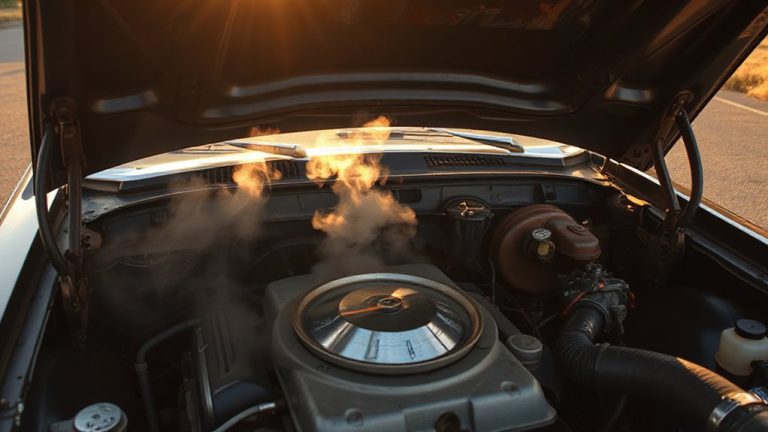
A small burning smell while driving could be your first warning that something’s wrong under the hood. Unusual smells, especially odors resembling burning oil, rubber, or chemicals, often signal fluid leaks or overheating components. These scents may precede hazardous conditions, particularly when paired with dashboard warnings. Dashboard warnings-such as the check engine light, oil pressure, or temperature alerts-activate when sensors detect abnormal readings. For example, engine temperatures exceeding 230°F (109°C) indicate overheating, increasing fire risk. Electrical system faults can generate hot spots exceeding 600°F (315°C), enough to ignite nearby materials. Ignoring these signs escalates danger. Immediate action-safely pulling over, turning off the engine, and inspecting for smoke or leaks-is critical. Monitoring fluid levels, inspecting hoses, and responding promptly to dashboard warnings reduces the likelihood of combustion. Early detection prevents catastrophic failure. Keeping a Top Car Fire Extinguisher in your vehicle can provide a critical first line of defense in the event of an underhood fire.
How Electrical Failures Cause Car Fires
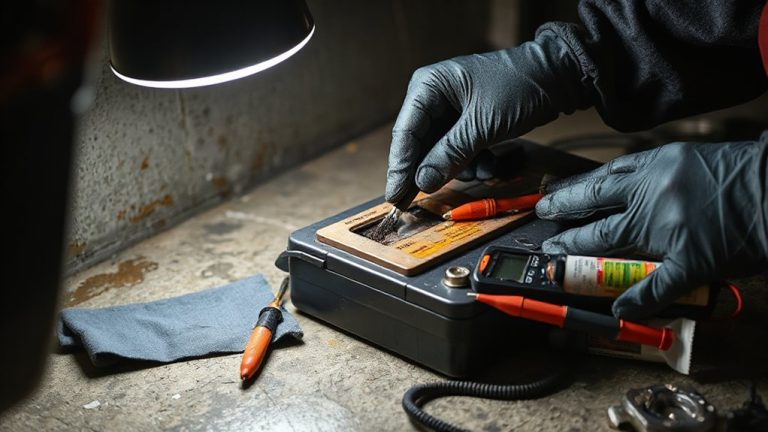
Electrical failures rank among the leading causes of vehicle fires, often starting where you least expect-in the wiring beneath the dash or inside the fuse box. Short circuits occur when damaged or worn insulation allows wires to touch, creating a sudden surge of current. This surge can exceed the wire’s amperage rating-often 10 to 30 amps in automotive circuits-generating intense heat. That heat ignites nearby flammable materials like insulation or carpeting. Overheating components, such as alternators or relays, also contribute, especially if they draw more current than designed. A typical alternator outputs 13.5 to 14.5 volts; deviations beyond this range stress the system. Faulty fuses or improper aftermarket installations increase risk. Most electrical fires begin in circuits powering accessories, lights, or the ignition system. Regular inspection of wiring harnesses, connectors, and fuse integrity helps prevent failure. Address frayed wires or corroded terminals immediately.
Why Fuel Leaks Are a Fire Hazard
Even when your engine’s running smoothly, a fuel leak can turn a routine drive into a dangerous situation within seconds. Fuel line deterioration weakens rubber hoses and metal lines, allowing gasoline to escape under pressure. As fuel pools or sprays, it creates flammable vapor ignition risk near hot engine components or electrical sparks. Gasoline vapors ignite at just 495°F (257°C), a temperature easily reached by exhaust manifolds.
| Cause | Mechanism | Risk Level |
|---|---|---|
| Fuel line deterioration | Cracked or corroded lines | High |
| Loose fittings | Improperly secured connectors | Medium |
| Flammable vapor ignition | Exposure to heat/sparks | Critical |
You should inspect fuel lines every 12,000 miles. Replace rubber hoses every 5 years, even if no cracks appear. Modern fuel systems operate at 40–70 psi-any leak at this pressure disperses fuel rapidly, increasing fire hazard.
Are Your Car Mods Causing a Fire Risk?
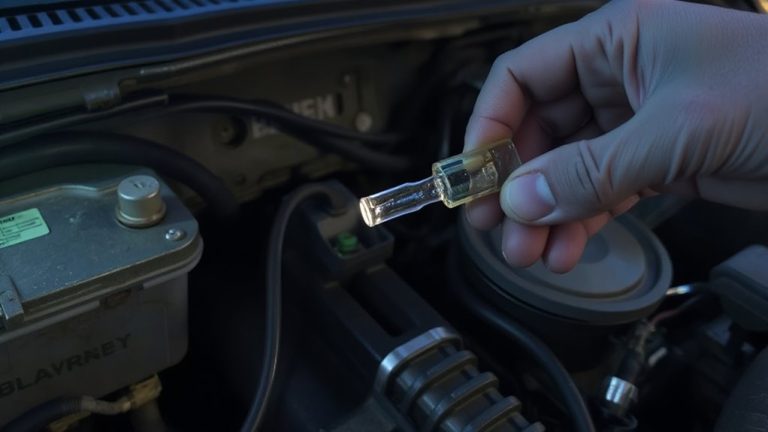
How safe is that upgrade you just installed? Aftermarket modifications can increase performance but may also raise fire risks if improperly installed. Aftermarket wiring, especially when not fused or insulated correctly, can overheat and ignite nearby materials. Wires rated below 16-gauge should never handle high-current accessories like amplifiers or auxiliary lights. Engine tuning, particularly with ECU reflashing or forced induction kits, increases operating temperatures. If cooling systems aren’t upgraded in parallel, heat buildup can ignite oil or debris on hot engine surfaces. Poorly secured components can vibrate loose, creating sparks near fuel lines or dry filters. Use only UL-listed connectors and follow SAE wiring standards. Guarantee tuning includes real-time monitoring of air-fuel ratios and knock sensors. Any modification altering power delivery demands equivalent upgrades in thermal and electrical safeguards. Your mod choices should match proven safety benchmarks-never sacrifice protection for performance.
5 Maintenance Steps That Prevent Vehicle Fires
You’ve upgraded your vehicle for better performance, but without proper upkeep, those same enhancements can become hazards. Regular oil changes prevent sludge buildup, which can obstruct oil flow and increase engine temperature beyond safe limits. Most manufacturers recommend oil changes every 5,000 to 7,500 miles, depending on driving conditions. Overheated oil degrades faster, losing viscosity and lubrication efficiency, raising friction and fire risk. Brake inspections are equally critical. Worn brake pads generate excessive heat from metal-on-metal contact, potentially igniting nearby components. Technicians check pad thickness-anything below 3mm requires replacement. They also examine rotors for warping and fluid leaks in calipers, which can expose hot surfaces to flammable liquids. Combined, consistent oil changes and brake inspections reduce underhood temperatures and electrical load stress. These steps guarantee peak performance and minimize fire hazards. Protect your investment with disciplined, data-driven maintenance.
On a final note
You can prevent most vehicle fires with vigilance and maintenance. Check wiring for fraying or overheating-damaged insulation raises fire risk. Fuel lines must remain leak-free; even a 0.5 mm crack can spray flammable vapor. Aftermarket electronics should meet ISO 6722 standards. Change fluids on schedule and inspect exhaust components for hotspots exceeding 500°F. A fire-resistant barrier, like a 0.8 mm aluminum shield, adds protection.