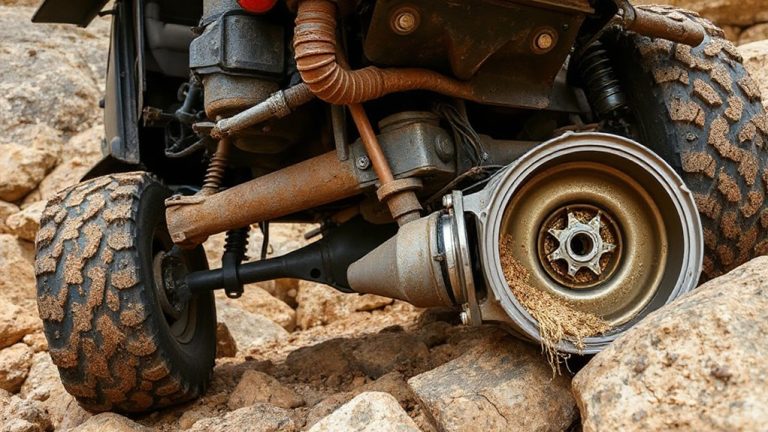
Leaf Springs in Rear Suspension: 2,000-10,000 lb Load Guide
You depend on leaf springs to support heavy loads in your pickup truck or van, thanks to their stacked steel leaves that flex under stress. They handle payloads from 2,000 to 10,000 lbs, maintaining axle alignment and ride height. Heat-treated high-tensile steel resists fatigue, while zinc coatings fight corrosion. Multi-leaf designs dominate rear suspensions for durability, distributing weight evenly across the frame-critical when carrying or towing heavy cargo. Discover how different types and maintenance practices affect long-term performance.
Notable Insights
- Leaf springs support heavy loads by distributing weight evenly between the axle and vehicle frame.
- They maintain rear axle alignment through uniform flexing under cargo weight and road stress.
- Multi-leaf designs handle loads over 3,000 lbs, making them ideal for pickup trucks and vans.
- Friction between steel leaves dampens vibrations, improving stability and reducing chassis fatigue.
- Durable construction with heat-treated steel and corrosion-resistant coatings ensures long service life.
How Leaf Springs Handle Heavy Loads
You’ve probably seen leaf springs supporting heavy-duty trucks, and for good reason-they’re built to handle serious weight. Each leaf spring consists of multiple steel layers, or leaves, stacked and clamped together, forming a durable composite structure. This design enables effective load distribution by spreading weight evenly across the axle and frame. When you haul heavy cargo, the springs flex uniformly, minimizing sag and maintaining axle alignment. Stress absorption occurs as the leaves slide slightly against one another, converting kinetic energy into low-level heat. Most heavy-duty leaf springs have a rated capacity between 2,000 and 10,000 pounds, depending on material thickness, length, and number of leaves. The arc shape, typically with a 2- to 6-inch crown, allows controlled deflection of up to 6 inches under maximum load. This engineered flexibility guarantees stability, reduces frame strain, and preserves tire contact with the road.
Why They’re Built to Last in Trucks
Durability starts with design. Leaf springs in trucks are engineered for relentless use, combining high-tensile steel alloys and controlled heat treatment to resist fatigue. Their layered structure provides excellent vibration damping, reducing stress on the chassis and improving ride stability under load. You benefit from consistent performance, even on rough terrain.
| Feature | Benefit | Specification |
|---|---|---|
| Corrosion resistance | Longer service life | Zinc-rich coatings, ≥500 hrs salt spray test |
| Vibration damping | Smoother ride, less wear | Multi-leaf friction dampening |
| Load distribution | Balanced axle support | 8–12 leafs, 2.5″–3″ width |
Designed for millions of flex cycles, these springs maintain alignment and弧 characteristics over time. Corrosion resistance prevents pitting and cracking, critical in wet or salty environments. You’re not just buying springs-you’re investing in long-term structural reliability.
Types of Leaf Springs and Where They’re Used
Multi-leaf, parabolic, and block-style leaf springs each serve distinct roles in rear suspension systems, tailored to specific vehicle demands. You’ll find multi-leaf springs in most heavy-duty pickup trucks and vans-they stack multiple steel leaves to handle high loads, often exceeding 3,000 lbs. Parabolic springs use fewer, tapered leaves, reducing weight while maintaining strength, making them ideal for lighter commercial vans where ride comfort matters. Block-style springs, compact and robust, commonly support tandem axle setups in delivery vans and utility trucks. They fit tightly between frames and rely on durable spring hangers to maintain alignment under stress. Spring hangers anchor the front and rear of each spring, ensuring stability and proper axle positioning. Each type mounts via bushings and U-bolts, with length and arch varying by application. Match the spring to your load needs, axle configuration, and frame design for best performance and longevity.
Warning Signs of Worn or Broken Leaf Springs
While driving, a noticeable change in ride quality often signals underlying issues with your leaf springs. You may feel excessive bouncing or swaying, especially when cornering or carrying loads. Squeaking noises during suspension movement indicate dry or damaged interleaf pads and potential spring separation. These sounds stem from metal-on-metal contact where lubrication has degraded. Visually inspect your vehicle for uneven ride height; a sagging rear corner suggests weakened or broken leaves. Most OEM specs allow only ±1/2 inch deviation-beyond that affects alignment and handling. Cracks or visible gaps between leaves confirm structural compromise. Misaligned axles or tire feathering can also result. Failed bushings contribute to clunking and reduced control. Immediate inspection is critical-compromised leaf springs impair braking, stability, and safety. Don’t delay repairs once these symptoms appear.
Maintenance Tips for Maximum Durability
You’ve already learned what to watch for when leaf springs begin to fail, but preventing those issues starts with consistent upkeep. Regular maintenance guarantees load-bearing performance and extends service life. Lubrication frequency is critical-grease spring eyes every 3,000 miles or quarterly to reduce friction and wear. Corrosion prevention keeps metal intact, especially in wet or salty environments. Wash undercarriage debris and apply rust-inhibiting coatings annually.
| Maintenance Task | Recommended Interval |
|---|---|
| Visual Inspection | Every 6,000 miles |
| Lubrication | Every 3,000 miles |
| Corrosion Check/Coating | Annually or after off-road use |
Tighten shackle bolts to factory torque specs (typically 80–95 lb-ft). Address shifting or sagging immediately. Proper care maintains alignment, load stability, and ride quality.
On a final note
You rely on leaf springs for durable, load-bearing rear suspension. These layered steel strips absorb road shocks and support heavy payloads, often rated for 1,500–3,000 lbs per axle. Their multi-leaf design distributes stress evenly, reducing fatigue. With proper maintenance, they last 100,000 miles or more. Worn springs lose camber and sag, compromising alignment. Inspect for cracks, loose clamps, or uneven spacing. Replace if deflection exceeds 1 inch from factory specs.