Flushing Brake Fluid in a 2014 Chevrolet Silverado With Brake Line Flushing Tool
You should flush your 2014 Chevrolet Silverado’s brake fluid every two years or 24,000 miles. Moisture contamination lowers the boiling point from 401°F, increasing brake fade risk. Use a brake line flushing tool with 3/16-inch ID clear hose on 8mm bleeder valves. Follow the sequence: right rear, left rear, right front, left front. Use only DOT 3 or DOT 4 fluid meeting GM 6277M. Keep the reservoir above minimum to avoid air. There’s more to get right.
Notable Insights
- Use a brake line flushing tool compatible with 8mm bleeder valves on the 2014 Silverado for consistent pressure and no air entry.
- Flush brake fluid every 24,000 miles or two years, following GM’s recommended interval to prevent moisture buildup and corrosion.
- Begin with the right rear bleeder valve and follow the sequence: RR, LR, RF, LF per GM specifications.
- Use only DOT 3 or DOT 4 fluid meeting GM 6277M standard to avoid contamination and ensure proper performance.
- Keep the reservoir above the minimum line during flush to prevent air bubbles and maintain brake system integrity.
Why Brake Fluid Flushes Matter for Your 2014 Silverado
While brake fluid often goes unnoticed, its condition directly impacts the safety and performance of your 2014 Chevrolet Silverado. Over time, moisture contamination leads to fluid degradation, reducing the boiling point from the factory specification of 401°F (dry) to dangerously low levels. This increases the risk of brake fade under heavy use. Moisture also accelerates brake corrosion, particularly in iron components like calipers and lines. Corrosion byproducts can clog small passages in the ABS module, leading to reduced braking efficiency. GM recommends replacing brake fluid every 45,000 miles to prevent these issues. Fresh DOT 3 fluid maintains ideal viscosity and hydraulic performance. Ignoring fluid degradation compromises pedal feel and increases stopping distances. A proactive flush restores system integrity and protects expensive components. You’re not just replacing fluid-you’re preventing internal damage and ensuring reliable braking in all driving conditions.
Tools You’ll Need for a Brake Flush
You can’t flush brake fluid effectively without the right tools, even if you understand why it’s necessary. A dedicated brake line flushing tool guarantees consistent pressure and prevents air from entering the system. You’ll need a clear plastic hose with an inner diameter of 3/16 inch to fit standard bleeder valves. A vacuum brake bleeder or pressure bleeder enhances efficiency and reduces the risk of contamination. Always check tool compatibility with your Silverado’s ABS module and master cylinder design. Use a clean turkey baster or syringe to remove old fluid from the reservoir. Brake fluid types matter-your 2014 Silverado requires DOT 3; using incorrect fluids compromises boiling point and seal integrity. A fluid catch bottle prevents spills. Digital calipers help verify hose fit. Precision matters-messy work introduces air or moisture.
Where to Find the Brake Fluid Reservoir and Bleeder Valves
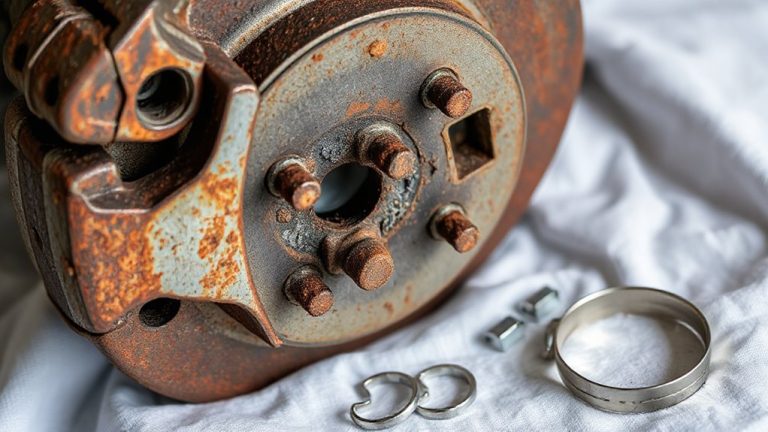
Pop the hood, and you’ll find the brake fluid reservoir mounted on the driver’s side of the engine bay, attached directly to the master cylinder. It’s a translucent plastic tank labeled “Brake Fluid,” near the firewall. Check the brake fluid color-it should be clear to light amber; dark fluid indicates contamination and the need for a flush. The bleeder valve location follows a sequence: start at the wheel farthest from the master cylinder. For your Silverado, begin with the right rear, then left rear, right front, and finally left front. Each bleeder valve is a small, 8mm hexagonal fitting on the back of the brake caliper. Use a wrench to turn it counterclockwise slightly during flushing. Guarantee the reservoir cap is secure but not over-tightened to prevent vacuum lock.
Step-by-Step: Flushing Brake Fluid With a Tool
Start by gathering the right equipment to flush brake fluid efficiently and cleanly. Make sure your brake line flushing tool matches your Silverado’s bleeder valve size-this guarantees proper tool compatibility and prevents leaks. Attach the tubing securely to avoid air ingress during operation. Open the reservoir and inspect the brake fluid color; dark or murky fluid indicates contamination and the need for complete replacement. Use only DOT 3 or DOT 4 fluid, per GM specifications.
| Component | Specification |
|---|---|
| Fluid Type | DOT 3 or DOT 4 |
| Reservoir Capacity | 380 mL |
| Bleeder Valve Size | 10 mm |
Monitor the fluid color as new fluid enters the system-it should shift from dark to translucent amber, signaling a successful flush.
Common Mistakes to Avoid
While proper technique is critical, avoiding common errors guarantees a brake fluid flush performs as intended. You might introduce air bubbles by letting the reservoir run low during flushing-keep it above the minimum line at all times. Air bubbles compromise hydraulic pressure, leading to a spongy pedal and reduced stopping power. Always bleed in the correct sequence: RR, LR, RF, LF, per GM specifications. Skipping steps risks incomplete fluid exchange. Reusing old brake fluid or using non-compliant types increases contamination risks. Always use DOT 3 or DOT 4 fluid meeting GM 6277M standards. Contamination risks include moisture absorption, which lowers boiling point and causes internal corrosion. Use a sealed flushing tool to minimize exposure to air. Over-tightening bleed screws can damage the caliper-torque to 6–8 lb-ft. Never mix incompatible fluids. A clean, dedicated system guarantees excellent brake performance and safety.
When to Flush: Intervals and Warning Signs
Typically, you should flush the brake fluid in your 2014 Chevrolet Silverado every two years or 24,000 miles, whichever comes first. This interval prevents moisture contamination, which degrades performance. Brake fluid is hygroscopic, meaning it absorbs water from the air over time. Excess moisture lowers the fluid’s boiling point, increasing the risk of vapor lock under heavy braking. Check the brake fluid color regularly; fresh fluid is amber and translucent, while dark or murky fluid indicates degradation and contamination. A soft or spongy brake pedal can also signal moisture in the system. Use DOT 3 or DOT 4 fluid per GM specifications. Ignoring flush intervals compromises safety and brake component life. Inspect the reservoir and lines during routine maintenance. Early detection prevents costly repairs and maintains ideal stopping power.
On a final note
You’ve completed a proper brake fluid flush on your 2014 Chevrolet Silverado. This maintenance guarantees peak braking performance and longevity. DOT 3 or DOT 4 fluid must meet GM 6277M specifications. Flush every 24 months or 30,000 miles. Air-free lines yield firm pedal feel. Contaminated fluid reduces boiling point. A flush removes moisture and particulates. Use only clean, sealed brake fluid.