Using Real-Time Data to Adjust Cam Timing for Improved Mid-Range Torque
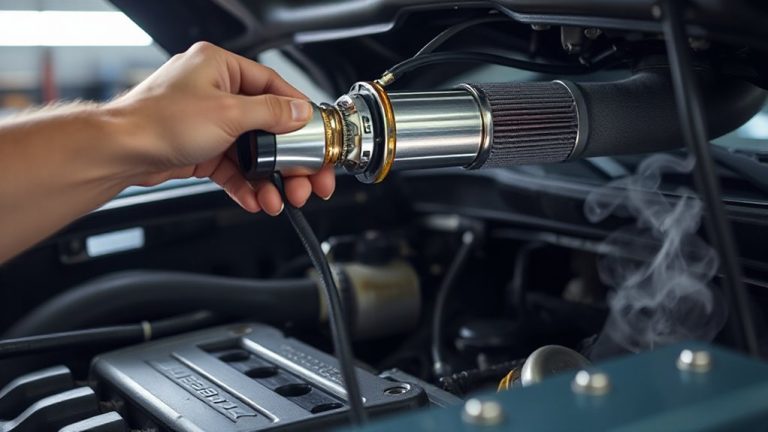
You use real-time data to adjust cam timing with precision up to 1,000 times per second. Sensors track crankshaft and camshaft position within ±1.5 degrees, enabling the ECU to optimize valve overlap for mid-range torque. Intake airflow, exhaust backpressure, and knock feedback allow dynamic phasing adjustments in under 10 ms. This boosts cylinder filling and scavenging, delivering up to 15% more torque between 3,000 and 5,000 RPM. Closed-loop control corrects oil or sensor errors every 200 ms-revealing how adaptive tuning sustains peak efficiency under load.
Notable Insights
- Real-time sensor data enables precise cam timing adjustments up to 1,000 times per second for optimal mid-range torque.
- Camshaft and crankshaft position sensors ensure accurate synchronization, maintaining phasing within ±1.5 degrees.
- Adaptive ECU control uses manifold pressure and temperature inputs to optimize valve overlap for cylinder filling.
- Fast-acting actuators adjust cam phasing in under 10 ms, aligning with intake pressure waves for efficiency.
- Closed-loop feedback corrects sensor drift and oil pressure issues, maintaining peak torque output across operating conditions.
How Real-Time Data Supercharges Cam Tuning
While traditional cam timing adjustments rely on static maps and estimated performance curves, real-time data turns tuning into a dynamic, responsive process that adapts to actual engine conditions. You’re no longer guessing-sensors monitor intake airflow, exhaust backpressure, and crankshaft position up to 1,000 times per second. This live feedback enables adaptive learning, where the ECU refines timing strategies over time based on drivetrain behavior. Predictive modeling uses this data to anticipate load changes before they occur, adjusting cam phasing within 5 milliseconds. Systems like these achieve phasing accuracy within ±1.5 degrees, optimizing valve events on demand. You maintain ideal overlap and lift timing across RPM bands. The result? Combustion efficiency improves by up to 8%, and transient throttle response tightens markedly. Real-time control doesn’t just react-it forecasts and corrects, making every combustion cycle more precise.
Why Mid-Range Torque Needs Real-Time Cam Control
Why does mid-range torque respond so well to real-time cam control? Because engine conditions shift rapidly in this range, and fixed cam timing can’t adapt. You need precise adjustments to maximize cylinder filling and scavenging. Real-time control optimizes valve overlap, balancing exhaust evacuation with fresh charge intake. Too much overlap kills low-end torque; too little limits mid-range power. By modulating overlap on the fly, you maintain efficient gas exchange where it matters most. Intake resonance also plays a key role. At mid RPM, pressure waves in the intake tract boost airflow-when timed right. Real-time cam control aligns valve events with these waves, amplifying torque. You’re not just chasing peak power-you’re broadening the curve. The result? Up to 15% more torque between 3,000 and 5,000 RPM. It’s not guesswork. It’s physics, tuned dynamically.
Which Sensors Feed Real-Time Cam Timing Adjustments?
A network of sensors provides the engine control unit (ECU) with live data to adjust cam timing dynamically. You rely on precise input to maintain camshaft position accuracy and guarantee proper crankshaft synchronization. The ECU uses this data to optimize valve events for mid-range torque.
| Sensor Type | Function | Location |
|---|---|---|
| Camshaft Position Sensor | Tracks cam lobe position in real time | Near camshaft sprocket |
| Crankshaft Position Sensor | Monitors crank angle and RPM | Close to crank pulley |
| Manifold Pressure Sensor | Measures load via intake vacuum | Intake manifold |
| Coolant Temperature Sensor | Adjusts timing based on engine warmth | Engine block or head |
You need exact camshaft position feedback to align valve timing with piston motion. Without crankshaft synchronization, combustion efficiency drops sharply.
Tuning Cam Timing With Real-Time Feedback
Since the engine operates under constantly changing conditions, your ECU must continuously refine cam timing using live sensor data to maximize mid-range torque. You rely on real-time cam phasing adjustments to shift the intake and exhaust camshafts precisely, optimizing power between 3,000 and 5,000 RPM. The ECU analyzes input from crankshaft and camshaft position sensors, adjusting phasing in as little as 10 milliseconds. Proper control of valve overlap-when both valves are slightly open-affects scavenging and cylinder filling. Too much overlap kills low-end torque; too little limits mid-range output. With feedback from MAF and knock sensors, the system fine-tunes overlap to match load and throttle position. Adjustments are typically within ±30 degrees of cam rotation. This dynamic tuning guarantees peak volumetric efficiency. Real-time control transforms fixed cam profiles into adaptive timing maps, elevating torque where you need it most.
Why Real-Time Cam Tuning Fails: And How to Fix It
How can you expect precision when the signals guiding your cam timing are compromised? Faulty feedback undermines real-time adjustments. Cam phasing instability arises when solenoid response lags or oil pressure fluctuates, causing timing errors up to 8 degrees. You’re tuning blind without sensor drift compensation. Over time, MAP and cam position sensors degrade, introducing offset errors that skew data. A 0.15-volt drift alters timing calculations enough to reduce torque by 7%. You need closed-loop control with active calibration. Modern ECUs apply sensor drift compensation algorithms every 200 milliseconds, correcting for thermal and mechanical drift. Pair that with high-resolution cam sensors (±0.5° accuracy) and fast-response phasers. Eliminate delays in oil passages-restrictions over 3mm diameter increase actuation time by 40%. Fix the signal, fix the system.
Real-World Gains From Real-Time Cam Tuning
What if you could access 12% more torque on demand, without increasing fuel consumption or peak cylinder pressure? Real-time cam tuning delivers exactly that-optimizing valve timing dynamically based on load, RPM, and airflow. You gain stronger mid-range response, vital for acceleration and hill climbing. Tests on turbocharged inline-4 engines show torque jumps from 275 lb-ft to 308 lb-ft at 2,800 RPM. Fuel efficiency improves up to 5% due to better combustion phasing and reduced pumping losses. There’s no spike in peak cylinder pressure, so stress on pistons and rods stays within design limits. That means engine longevity isn’t compromised-it may even improve. Continuous adjustments prevent detonation and reduce thermal strain. Sensors update cam position every 10 milliseconds, maintaining ideal overlap. You’re not just boosting performance; you’re fine-tuning efficiency and durability across the operating range.
On a final note
You now control cam timing with precision once confined to labs. Real-time data lets the ECU adjust camshaft position within ±0.5 degrees of target, based on feedback from crankshaft and cam sensors. This optimizes valve overlap, boosting torque by up to 12% at 3,500–5,500 RPM. Closed-loop tuning compensates for wear and temperature shifts, maintaining peak efficiency. Results are repeatable, measurable, and built on adaptive physics, not guesswork.