The Role of Fog Lights in Improving Visibility During Low-Visibility Weather
You use fog lights to see the road clearly when fog, heavy rain, or snow reduces visibility below 500 feet. They’re mounted 12 to 18 inches high and shine a wide, flat beam 10 to 20 degrees up, staying under the fog layer. The 55–65-watt halogen or 15–25-watt LED lights emit 800–1,200 lumens with a 3000K–4000K warm tint to cut glare. Their beam spreads 50–100 degrees horizontally, illuminating edge lines and surface texture without backscatter. Proper aim-5–10 degrees down-ensures compliance and effectiveness. Misuse causes glare, distracts others, and reduces contrast. You’ll discover ideal scenarios and technology trade-offs shortly.
Notable Insights
- Fog lights improve visibility in low-visibility conditions by projecting a wide, flat beam close to the road surface.
- Mounted low on the vehicle, they minimize light reflection off fog, rain, or snow to reduce backscatter.
- Their short-range illumination (10–25 feet) helps define the road ahead without blinding drivers.
- Operating at 3000K–4000K color temperature, fog lights use warm, yellowish light to penetrate haze effectively.
- Designed to complement headlights, they should only be used when visibility drops below 500 feet.
What Do Fog Lights Do in Bad Weather?
Fog lights are designed to improve visibility in low-visibility conditions like heavy fog, rain, or snow. They sit lower on the vehicle to minimize light reflection off fog and reduce glare. The beam angle is wide and flat, typically 10 to 20 degrees vertical and up to 100 degrees horizontal. This pattern cuts under the fog layer, enhancing surface visibility without illuminating airborne moisture. You’ll notice better fog dispersion because the light stays close to the road, avoiding upward scatter. Most fog lights use yellow or white bulbs with color temperatures between 3000K and 4000K, optimizing contrast in wet conditions. They operate at 55 to 65 watts, producing 800 to 1,200 lumens. This intensity balances brightness and control. You use them only when visibility drops below 150 meters. Unlike high beams, their focused output prevents backscatter, giving you clearer, safer forward vision during storms.
How Are Fog Lights Different From Headlights?
You already know fog lights cut through poor weather by staying close to the road, but they’re not meant to replace your regular headlights. They serve a different purpose with unique technical specs.
| Feature | Fog Lights | Headlights |
|---|---|---|
| Beam pattern | Wide, low, and flat | Focused and far-reaching |
| Color temperature | 3000K–4000K (warm) | 4000K–6000K (cool white) |
| Intensity | Moderate, diffused | High, concentrated |
| Range | Short (10–25 feet) | Long (150–300 feet) |
Your fog lights use a wide beam pattern to minimize reflection off fog, snow, or rain. Their warm color temperature improves contrast in hazy conditions. Headlights project farther with a narrow, controlled beam. Using both together in bad weather guarantees peak clarity and safety without glare.
Why Are Fog Lights Mounted So Low?
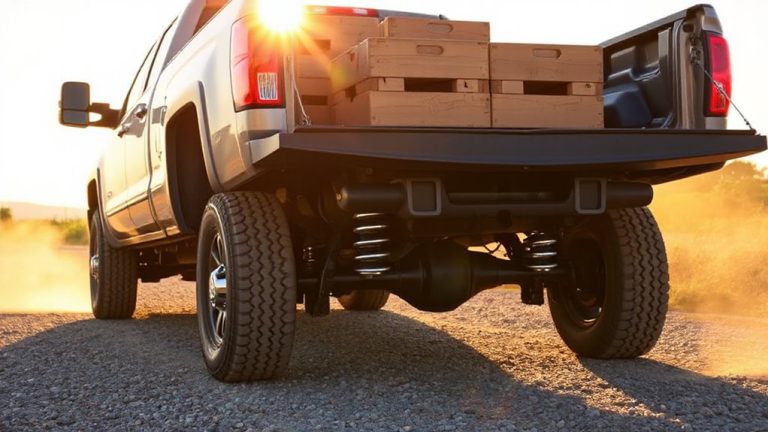
Because fog lights are designed to operate beneath the line of sight where visibility is least affected by airborne particles, they’re mounted low on the vehicle-typically between 12 and 18 inches above the road surface. This mounting position helps direct light under the fog instead of reflecting it back at your eyes. Your fog lights use a wide beam angle-usually 50 to 100 degrees-spreading illumination across the road’s edge and shoulders. The wide beam angle enhances peripheral clarity without reaching far ahead, minimizing backscatter. You’ll find this ideal because fog scatters light, but a low mounting position reduces skyward spill. The combination of precise beam angle and strategic mounting position guarantees concentrated, horizontal light distribution. It’s engineered to cut through dense conditions while avoiding glare. You’re not lighting the distance-you’re defining the road’s shape just ahead. This functional design improves short-range contrast and surface detail, giving you better control in poor weather.
When Should You Use Fog Lights (and When to Avoid)?
When should fog lights actually be used-and when is it better to leave them off? Use fog lights only in low-visibility conditions like fog, heavy rain, or snow-situations where visibility drops below 500 feet. They’re designed to illuminate the road’s edge and median without reflecting glare back at your eyes. Never use them in clear weather or on dry roads, as their wide, low beam can blind other drivers. Fog light legality varies by state; some require they be wired to a separate switch and used only when headlights are on. Misuse risks fines and reduces safety. Fog light etiquette means turning them off when visibility improves or when approaching other vehicles. Improper use creates glare, negating their purpose. Always aim them correctly-typically 1 degree below horizontal-to meet DOT standards and prevent unnecessary light scatter. For optimal performance, choose from the best truck fog lights based on lumens output, beam pattern, and weather resistance.
Are LED or Halogen Fog Lights Better for Visibility?
How well do your fog lights cut through dense weather? LED fog lights typically outperform halogen in visibility. LEDs produce a brighter, whiter light with a color temperature around 5000K–6000K, closely matching daylight and reducing eye strain. Halogens usually emit a warmer, yellowish beam at about 3000K, which some drivers prefer for fog but lacks intensity. LEDs also offer a sharper, more precise beam pattern-wider horizontal spread with a sharp cutoff to reduce glare. They consume less power (typically 15–25 watts) and last longer (15,000–30,000 hours). Halogens use more energy (35–55 watts) and last 500–1,000 hours. The LED’s superior beam pattern and color temperature enhance contrast, helping you see road edges and obstacles faster in low-visibility conditions.
Mistakes Drivers Make Using Fog Lights
Many drivers overlook basic errors that reduce the effectiveness of fog lights, even when equipped with high-performance LEDs. Improper aiming is one of the most common issues-fog lights should be angled downward at a 5- to 10-degree incline to limit reflection off fog. Excessive usage in clear conditions blinds other drivers and degrades your own night vision. Using fog lights at speeds above 45 mph often defeats their purpose, as they’re designed for low-speed, low-visibility navigation. Here’s how to avoid key mistakes:
| Mistake | Solution |
|---|---|
| Improper aiming | Adjust beam angle to 5–10° downward |
| Excessive usage | Use only in fog, rain, or snow |
| Daytime activation | Turn off when visibility exceeds 500 ft |
| Incorrect alignment | Center lights 18–24 inches apart |
| Ignoring beam pattern | Choose wide, low beam (10°H x 30°V) |
On a final note
You must use fog lights correctly to maximize visibility in low-visibility conditions. Fog lights emit a wide, low beam pattern, typically at 24 to 30 inches above the ground, to minimize reflection off fog. They operate at 50 to 55 watts for halogens; LEDs draw 20–30 watts with higher lumen output. Never use them above 50 mph or in clear conditions-they reduce contrast and increase glare.