Choosing High-Temperature RTV Sealant for Repairs Involving Heated Brake Areas
You can’t use standard RTV near brakes-it fails above 350°F, and brake areas hit 400°F regularly, spiking past 600°F. Pick a high-temp RTV rated for at least 650°F continuous, like Permatex Ultra Copper or ThreeBond 1207F. These handle 700°F bursts, resist brake fluids, and bond to metal. Apply a clean, 3–4 mm bead and cure 24–72 hours. Your repair’s durability depends on material science, not guesswork-the right formula makes all the difference. There’s more to optimizing performance where heat and stress meet.
Notable Insights
- Select RTV rated for at least 650°F continuous use to withstand brake heat cycling.
- Choose ceramic- or copper-reinforced formulas for improved thermal resistance and durability.
- Ensure compatibility with aluminum, steel, and exposure to brake fluids and road salts.
- Clean surfaces thoroughly with solvent to remove grease, rust, and old sealant before application.
- Apply a continuous 3–4 mm bead and allow 24–72 hours cure time for optimal bond strength.
Why Everyday Rtv Fails Near Brakes
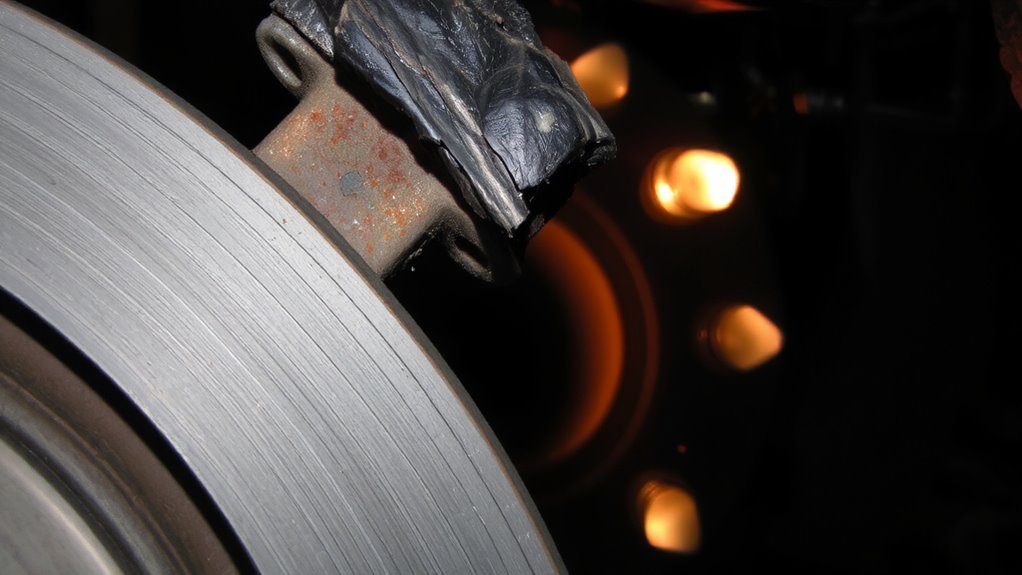
While standard RTV sealants work fine in most underhood applications, they’re not built to handle the intense heat cycling near brake components. You’ll quickly see material degradation when conventional RTVs are exposed to temperatures exceeding 400°F. Brake areas regularly surpass this, spiking above 600°F during aggressive stops. Repeated expansion and contraction stress the cured silicone, causing it to harden, crack, and lose flexibility. This thermal fatigue directly leads to adhesive failure, breaking the bond between the sealant and metal surfaces. Once that happens, gaps form, allowing moisture and debris to enter critical joints. Common RTVs also shrink substantially-up to 8%-further compromising seal integrity. Unlike high-temp variants, they don’t use thermally stable polymers or reinforced fillers. So when you use everyday RTV near brakes, you’re setting up a short-term fix bound to fail.
What Temperature Rating Do Brake Rtvs Need?
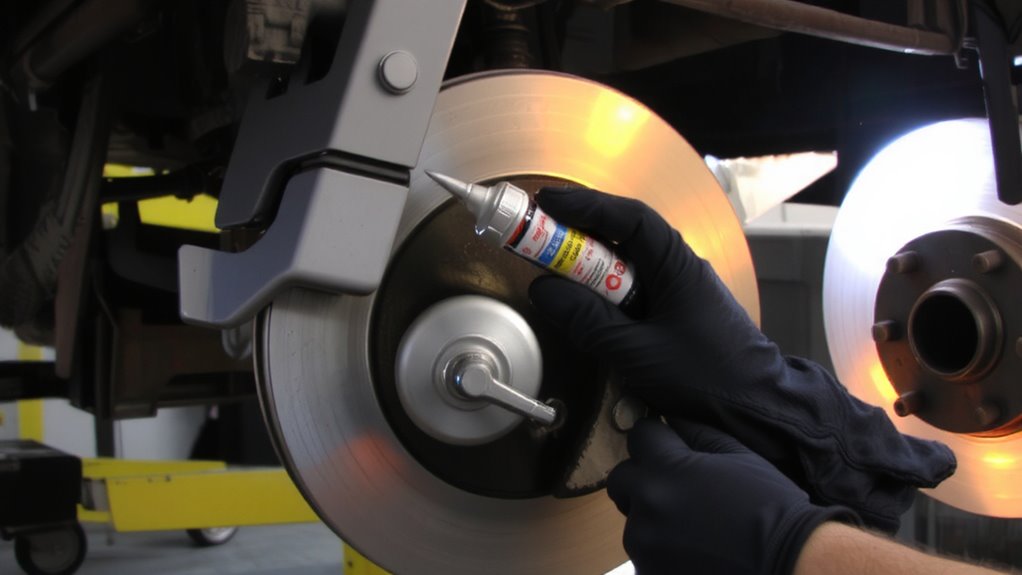
How hot can your brake system really get-and does your RTV sealant stand a chance? Brake components regularly exceed 400°F during normal use, with peak temperatures reaching 600°F or more under heavy braking. Standard RTVs fail under this stress, beginning thermal degradation as low as 350°F. For reliable performance, you need a high-temperature RTV rated to at least 650°F continuously, with short-term spikes up to 700°F. Chemical stability is critical-your sealant must resist brake fluids, road salts, and ozone without breaking down. Look for silicone-based formulations engineered for sustained heat resistance. These maintain integrity under thermal cycling, preventing cracking or shrinking. A sealant that withstands thermal degradation guarantees long-term durability. Always verify manufacturer specs for both temperature thresholds and chemical resistance. Your brake system demands nothing less.
Best Rtv Formulations for Extreme Heat Resistance
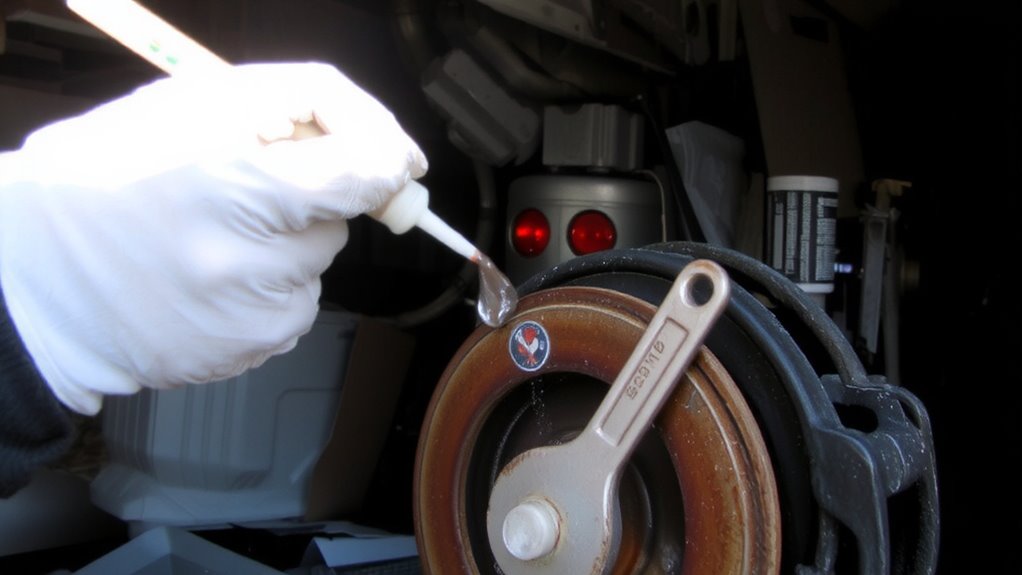
Thermal resilience isn’t optional-it’s essential when selecting an RTV sealant for extreme heat environments. You need formulations that withstand constant exposure to temperatures up to 650°F and intermittent spikes beyond 700°F. The best performers use ceramic reinforcement to enhance thermal stability and resist cracking under thermal cycling. This inorganic additive reflects heat and maintains structural integrity where standard silicones fail. You also rely on silicone durability for long-term sealing in high-vibration brake areas. High-purity silicone backbones resist oxidation and maintain flexibility after prolonged heat exposure. Choose RTVs labeled as “high-temperature” with proven resistance to brake fluids and road contaminants. These formulations bond securely to aluminum, steel, and composite parts. Ceramic-reinforced silicone RTVs outperform organic-based alternatives, offering service lives exceeding 50,000 miles in demanding applications.
How to Apply High-Temp Rtv Correctly
Since proper application determines long-term performance, start by preparing the surface meticulously. Clean all areas with a solvent like isopropyl alcohol to guarantee no grease, rust, or old sealant remains. Surface preparation is critical-without it, adhesion fails under extreme heat. Apply the RTV in a continuous bead, 3–4 mm thick, avoiding gaps or thin spots. Use a nozzle tip to control flow and guarantee even coverage.
| Step | Key Action |
|---|---|
| 1 | Clean and dry surfaces completely |
| 2 | Apply RTV evenly with consistent bead size |
| 3 | Allow full curing time before reassembly |
Curing time typically ranges from 24 to 72 hours, depending on humidity and layer thickness. Avoid disturbing the sealant during this phase. Always follow manufacturer specifications for temperature and load exposure.
Top High-Temp Rtv Brands for Brake Repairs
A properly applied RTV sealant only performs as well as the product you start with, so choosing a high-quality brand matters just as much as following correct application steps. Permatex Ultra Copper RTV withstands up to 650°F and offers excellent chemical resistance, especially against brake fluids and road salts. Its copper formulation enhances thermal conductivity and guarantees long-term product longevity. ThreeBond 1207F resists temperatures up to 700°F and bonds well on aluminum and steel surfaces common in brake calipers. It maintains integrity under thermal cycling, reducing cracking risks. Loctite SI 587 Blue is ideal where flexibility and oil resistance are critical, performing reliably from -60°F to 500°F. All three brands meet or exceed OEM standards for brake system durability. Proper storage below 80°F preserves viscosity and curing performance. Always verify compatibility with substrates and brake system materials.
On a final note
You need high-temperature RTV in brake areas because standard silicones fail above 300°F. High-temp RTV must resist at least 600°F continuously, with peak resistance to 750°F. Look for formulations with ceramic or silicone hybrids, like GE Ultraguard or Permatex Ultra Copper. These cure to 100% silicone rubber, offer 350 psi adhesion, and resist brake fluid. Apply clean, dry metal, let cure 24 hours, and avoid over-torquing.