Designing an Oil Feed and Return System for Reliable Turbo Lubrication
You need the right oil feed and return setup to keep your turbo lubricated and reliable. Use a -4AN or larger feed line to maintain 3–6 ft/s flow velocity, and guarantee oil pressure stays above 25 psi. Return lines must be -6AN or bigger, sloped downward at least 30 degrees, to let gravity clear oil fast-aim for over 2 ft/s flow. Avoid sharp bends, air pockets, and undersized lines. High-quality synthetic oil and a proper cooldown help prevent coking. Getting every detail right means your turbo gets consistent oil delivery under all conditions-and what comes next reveals exactly how to get it all correct.
Notable Insights
- Use a 1/4-inch inner diameter feed line with flow velocity between 3 and 6 ft/s for optimal turbo lubrication.
- Install a return line of at least 3/8 inch diameter, maintaining a continuous downward slope of 30 degrees or more.
- Avoid air traps by routing feed lines with minimal bends, downward-facing fittings, and clamping every 12–16 inches.
- Prevent oil coking by idling the engine 1–2 minutes before shutdown and using high-quality synthetic oil.
- Ensure adequate oil pressure and clean feed by using a 50-micron filter and correctly sized AN fittings.
Size Oil Lines for Steady Turbo Lubrication
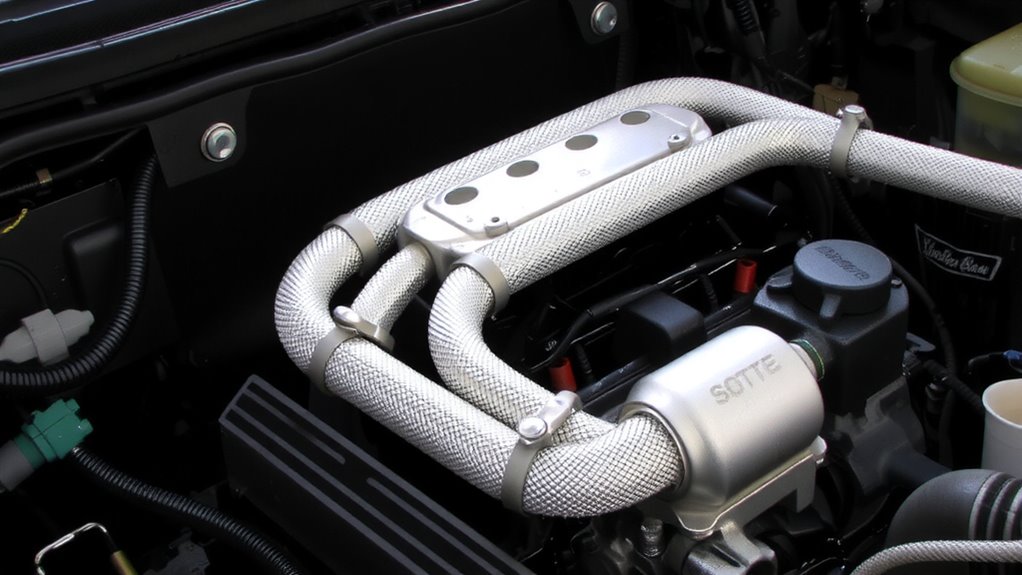
When sizing oil lines for steady turbo lubrication, getting the dimensions right is critical to maintaining proper oil flow and preventing turbocharger damage. You need the correct line diameter to guarantee peak flow velocity. Too small, and restrictions starve the turbo; too large, and oil slows, reducing scavenging efficiency. For most turbo systems, a 1/4-inch inner diameter feed line works reliably with typical oil pumps. This size supports flow velocity between 3 and 6 feet per second-ideal for balancing pressure and volume. Return lines should be 3/8 inch minimum to handle greater volume and prevent pooling. Flow velocity in the return must exceed 2 feet per second to move oil smoothly back to the sump. Undersized lines increase heat and reduce lubrication, risking bearing failure. Always match line diameter to engine oil pressure and turbo requirements, using AN fittings for consistency and leak-free connections.
Route Oil Feeds Without Air Traps or Leaks
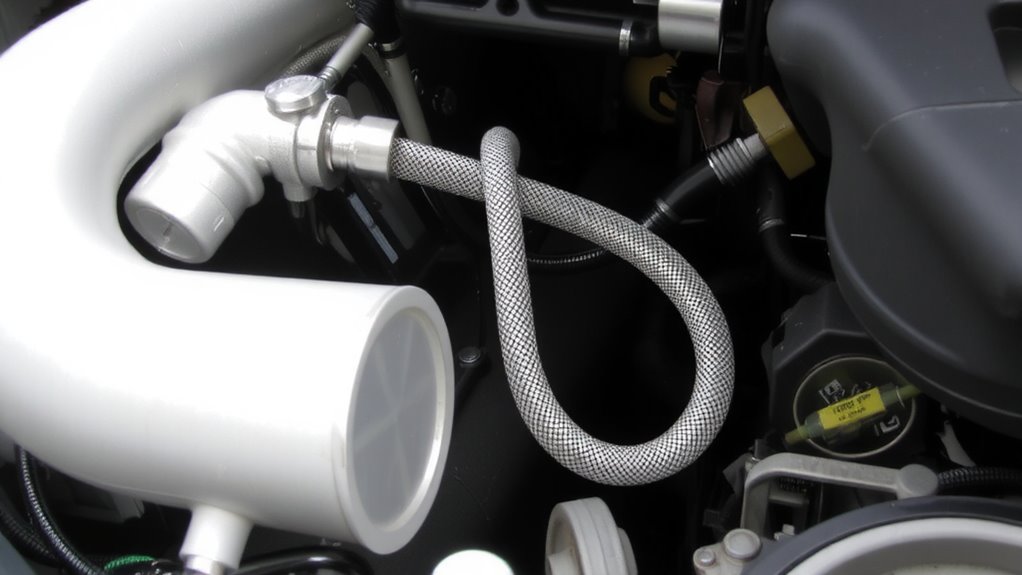
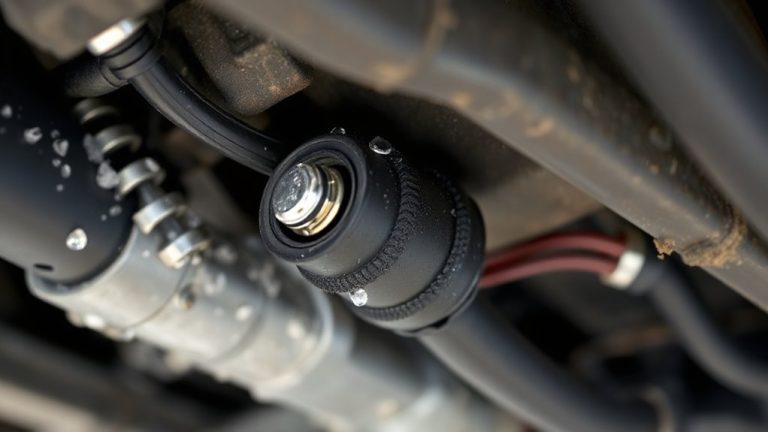
Though often overlooked, proper routing of oil feed lines is essential to guarantee consistent lubrication and avoid catastrophic turbo failure. You must avoid air traps that disrupt oil flow, especially during startup when oil viscosity is high. Use gradual bends instead of sharp kinks to maintain steady pressure. Fitting orientation matters-always position fittings to face downward or inline to prevent air pockets. Secure lines firmly to reduce vibration fatigue. Below are key routing tips:
| Factor | Best Practice | Why It Matters |
|---|---|---|
| Bend Radius | Minimum 2 in. for -4AN lines | Prevents flow restriction |
| Fitting Orientation | Align parallel to flow direction | Reduces turbulence and leaks |
| Line Support | Clamp every 12–16 in. | Minimizes vibration stress |
| Oil Viscosity | Match to engine specs (e.g., 5W-30, 10W-40) | Guarantees flow at startup and operating temp |
Proper attention guarantees reliable oil delivery under all conditions.
Design a Fast, Gravity-Fed Oil Return Path
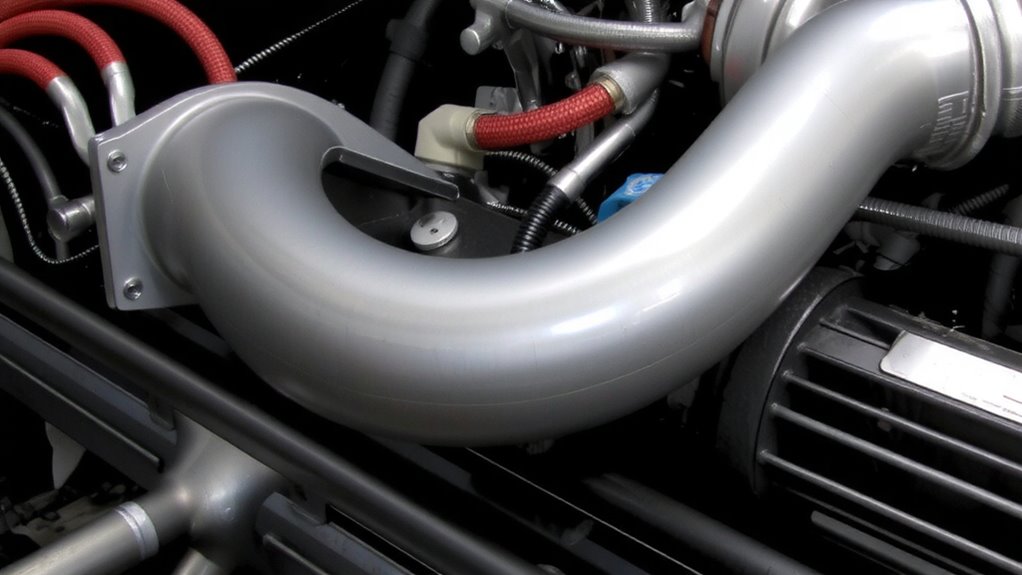
Since oil must exit the turbocharger quickly to prevent coking and buildup, you need a return path that relies on gravity and unrestricted flow. Use a dedicated -16AN or larger return line to guarantee adequate return clearance and minimize restrictions. Keep the route as straight as possible, with minimal bends and a continuous downward slope of at least 30 degrees. This design promotes high oil velocity, helping carry warm oil back to the sump without pooling. Avoid using sharp elbows or reducing fittings-they disrupt flow and create backup. Return clearance should never be smaller than the turbo’s outlet port. Mount the turbo with the return port positioned lowest to maximize gravity assist. A properly sized steel or aluminum tube guarantees structural integrity and durability. Every inch of elevation drop increases flow efficiency. Think of it like a drainpipe: clogs form when flow slows, so speed and clearance are critical.
Prevent Coked Oil and Bearing Failures
If you let oil stagnate in the turbo after shutdown, heat soak will break down the oil and leave behind carbon deposits that restrict flow and damage bearings. Thermal degradation occurs when high exhaust heat soaks into the turbo, causing oil to coke. This is especially true if you’re using an oil with poor thermal stability or incorrect viscosity. Oil viscosity matters-too thick and it won’t drain fast; too thin and it breaks down under heat. Use a high-quality synthetic with a viscosity grade like 5W-30 or 0W-40 for better resistance to thermal degradation. Idle the engine 1–2 minutes before shutdown to let oil circulate and cool the turbo. This simple step prevents trapped oil from cooking inside the center housing. Proper cooldown maintains oil integrity, extends bearing life, and guarantees reliable performance under extreme conditions.
Fix the 5 Most Common Oil Feed Mistakes
Why do so many turbochargers fail prematurely? You’re probably making one of these five oil feed mistakes. First, inadequate oil pressure starves the turbo’s bearings-maintain 25–75 psi during operation. Low pressure causes friction and heat buildup, leading to bearing failure. Second, poor feed cleanliness clogs oil passages; always use a 50-micron filter or finer. Contaminants damage journal surfaces and reduce lubrication efficiency. Third, undersized feed lines restrict flow-use at least -4 AN (1/4″ OD) tubing for stock applications; upgrade to -6 AN for high-horsepower builds. Fourth, sharp bends in the line disrupt oil delivery-maintain bend radii greater than 3x the tube diameter. Fifth, improper mounting of the feed line causes stress and leaks-secure with proper fittings and vibration dampeners. Fix these, and you’ll guarantee reliable oil pressure and feed cleanliness-critical for turbo longevity.
On a final note
You must size oil lines correctly-typically 8–10 mm for feed, 12–16 mm for return-to guarantee adequate flow. Use -AN6 or -AN8 fittings for reliability. Route feeds vertically from the oil gallery, eliminating air pockets. Returns rely on gravity; maintain a continuous 15–30° downward slope. Avoid sharp bends. Prevent coking with timely shutdowns and quality oil. Fix common mistakes: undersized lines, poor routing, inadequate venting, low oil pressure, or subpar materials.