Critical Timing for First Automatic Transmission Fluid Exchange in New Hybrid Sedans
Change your hybrid sedan’s transmission fluid between 30,000 and 60,000 miles-10,000 earlier than most gas cars. Regenerative braking and frequent electric-to-gas shifts cause rapid heat cycling, degrading fluid faster. Toyota recommends 40,000 miles for models like the Camry Hybrid using WS fluid. Honda models often need changes by 50,000 miles. Fresh fluid maintains 6.8–7.5 cSt viscosity at 100°C, critical for lubricating tight-tolerance gearsets. Delaying increases failure risk by up to 40%. Use only OEM-spec fluid like ATF JASO 1-A to guarantee proper hydraulic function and thermal stability. Different drivetrains demand precise friction modifiers-using the wrong type harms efficiency and longevity. You’ll find exact service intervals and fluid specs vary by model and driving conditions.
Notable Insights
- Hybrid sedans need first transmission fluid changes between 30,000 and 60,000 miles due to increased thermal stress.
- Regenerative braking and frequent electric-to-gas shifts accelerate fluid degradation in hybrid drivetrains.
- Toyota and Honda recommend fluid exchanges by 40,000 and 50,000 miles respectively for optimal transaxle performance.
- Delaying the first exchange beyond 60,000 miles increases transmission failure risk by up to 40%.
- Use only OEM-specified fluid like Toyota WS or Honda HCF-2 to maintain proper viscosity and friction properties.
Why Hybrids Need Earlier Transmission Fluid Changes
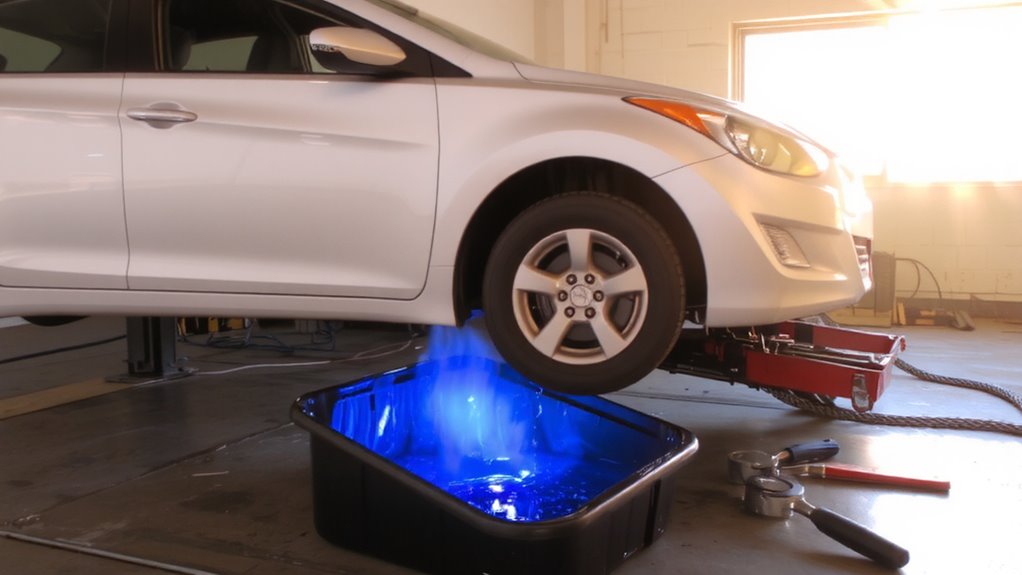
While conventional sedans may wait 60,000 to 100,000 miles before needing a transmission fluid change, hybrid models often require service much sooner-typically by 30,000 to 50,000 miles. You experience more frequent fluid degradation due to regenerative braking, which increases transmission heat cycling. This thermal stress breaks down additives faster than in traditional systems. Electric motor integration alters load dynamics, causing erratic torque delivery that accelerates wear. Hybrids use specialized thin-viscosity fluids, like Toyota WS or Honda HCF-2, engineered for low resistance but less thermal resilience. These fluids lose lubricity quicker under stop-start conditions. The transmission operates under partial electric power, reducing oil pump speed and cooling efficiency. You can’t rely on mileage alone-driving habits and climate affect fluid life. Regular changes prevent valve body varnish and clutch slippage. Early maintenance preserves efficiency, ensuring smooth power shifts between the gasoline engine and electric motor.
When to Change Transmission Fluid: 30K–60K Mile Guide
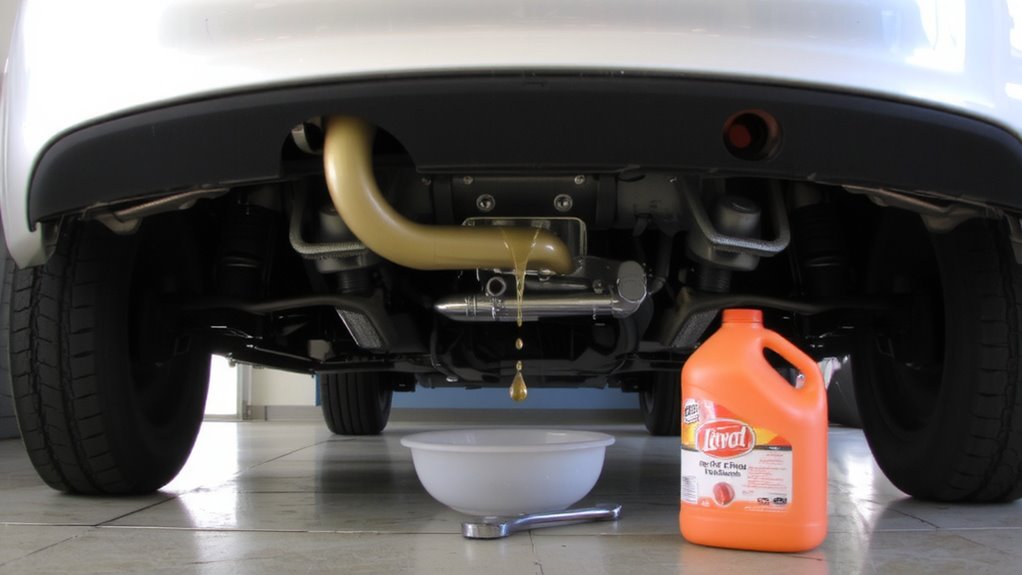
Most hybrid sedans need their first transmission fluid exchange between 30,000 and 60,000 miles, depending on model and driving conditions. Manufacturers set maintenance intervals based on observed fluid degradation under typical use. Short trips, stop-and-go traffic, and frequent electric-to-gas shifts accelerate breakdown. Under hard use, fluid can lose viscosity and oxidation resistance by 30,000 miles. ATF in hybrids operates at lower average temperatures but experiences more frequent thermal cycling. This cycling promotes moisture buildup and additive depletion. Toyota, for example, recommends 40,000-mile exchanges for many hybrid transaxles. Honda models often require service by 50,000 miles. These intervals prevent varnish formation and clutch wear. Using OEM-specified fluid is critical-it meets exact friction modifier and shear stability standards. You can’t rely on fluid color alone. Testing reveals hidden acidity and metal content. Stick to strict maintenance intervals. Fluid degradation directly affects transmission longevity.
The Risks of Delaying Your First Fluid Exchange
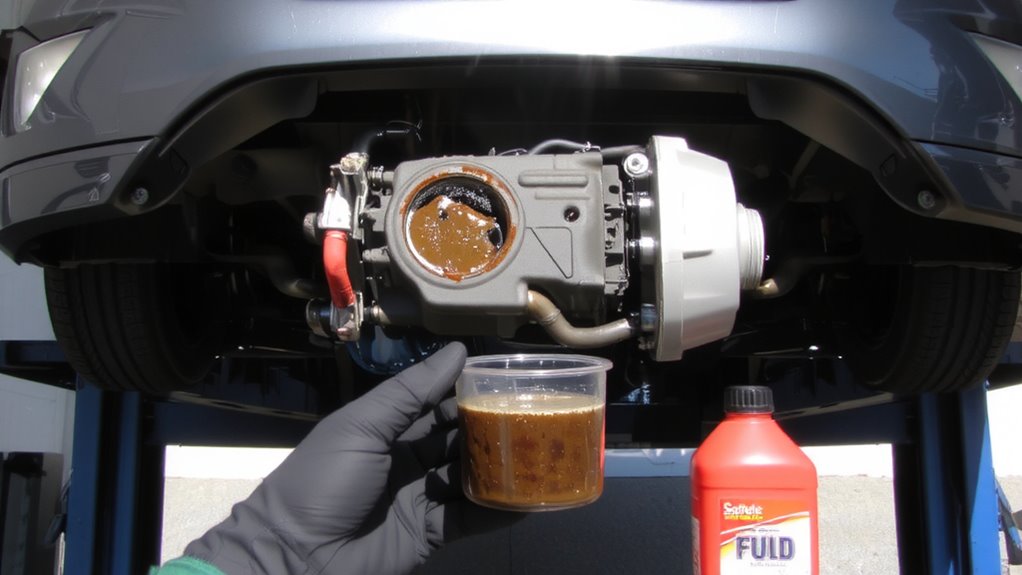
If you put off the first transmission fluid exchange, even by just 10,000 miles, you’re likely accelerating wear in a system designed to operate within narrow tolerances. Fresh fluid maintains viscosity between 6.8–7.5 cSt at 100°C, guaranteeing consistent hydraulic pressure. Delayed service degrades fluid, reducing lubricity and increasing friction in planetary gearsets. This raises internal temperatures, compounding the overheating risk beyond the safe 110°C threshold. Metallic particles accumulate, accelerating wear in torque converter bearings and clutch packs. Over time, contaminated fluid fails to dissipate heat, stressing seals and solenoids. This wear elevates the likelihood of transmission failure by up to 40% past 60,000 miles, especially in stop-and-go driving. Hybrid systems, with frequent automatic restarts, demand precise fluid performance. Ignoring early exchange risks irreversible damage. Timely replacement guarantees maximum efficiency, durability, and seamless power delivery.
Warning Signs Your Hybrid Needs Fluid Now
You’re already aware that skipping the first transmission fluid exchange shortens the lifespan of your hybrid’s drivetrain. You may now be experiencing warning signs it’s too late. Fluid degradation reduces lubricity and heat dissipation, increasing friction in gear sets. Dark, burnt-smelling fluid indicates oxidation and loss of viscosity-key markers of breakdown. Metallic particles in the fluid point to accelerated wear. Without proper lubrication, internal corrosion attacks copper and steel components, compromising valve body operation. You might notice delayed engagement, rough shifting, or a warning light from the transmission control module. These symptoms often appear between 50,000 and 70,000 miles. Manufacturers specify automatic transmission fluid (ATF) service at 60,000 miles for a reason-preventing irreversible damage. Catching fluid degradation early prevents costly repairs and maintains efficiency in your continuously variable transmission (CVT).
Choosing the Right Transmission Fluid for Your Model
The right transmission fluid isn’t just a recommendation-it’s a requirement for your hybrid sedan’s longevity. Using incorrect fluid can lead to poor shifting, overheating, or transmission failure. Always prioritize fluid compatibility as specified by your manufacturer. Hybrid transmissions often require specialized formulations that support both electric and internal combustion components. Check your owner’s manual for the exact OEM specification-common types include Toyota WS or Honda HCF-2. Viscosity ratings are equally critical; most hybrids need low-viscosity fluid like ATF JASO 1-A to guarantee efficient lubrication and heat transfer. This helps maintain performance under variable drive conditions. Never substitute with conventional ATF-even if it seems similar. Mismatched viscosity ratings disrupt hydraulic pressure, reducing efficiency. Proper fluid compatibility guarantees clutch durability, smoother gear engagement, and peak torque converter function. Stick to approved fluids. Your hybrid’s transmission depends on precision engineering-protect it with the right formula.
On a final note
You must change your hybrid sedan’s transmission fluid between 30,000 and 60,000 miles. Delaying increases heat buildup and wear in electric-assist drivetrains. Use only OEM-specified fluid-typically Mercon LV or ATF WS-measured to exact dipstick levels. Modern continuously variable transmissions (CVTs) rely on precise fluid viscosity (32–38 cSt at 100°C) for belt-variator function. Early replacement extends transmission life by maintaining hydraulic pressure and cooling efficiency.