How Seasonal Changes Impact Short-Term Car Care Up to 30,000 Miles
Cold weather saps battery voltage, so make certain your battery holds at least 12.4 volts at rest and maintains 9.6 volts under load. Tire pressure drops 1 PSI per 10°F drop-check monthly when cold to maintain 32–35 PSI. Use a 50/50 coolant mix to prevent summer overheating, and keep wiper fluid seasonally appropriate. Top off fluids regularly and apply paint protection to guard against UV, debris, and chemical damage. You’ll see how simple seasonal adjustments prevent costly issues down the road.
Notable Insights
- Cold weather reduces battery voltage and cranking power, increasing failure risk below 32°F.
- Dropping temperatures decrease tire pressure by 1 PSI per 10°F, affecting safety and wear.
- Seasonal coolant checks ensure a 50/50 antifreeze mix to prevent overheating and freezing.
- Switching wiper fluid to non-freezing formula in winter prevents reservoir and line damage.
- Paint protection and sealants defend against seasonal contaminants, UV rays, and road debris.
Check Your Battery and Fluids Before Winter
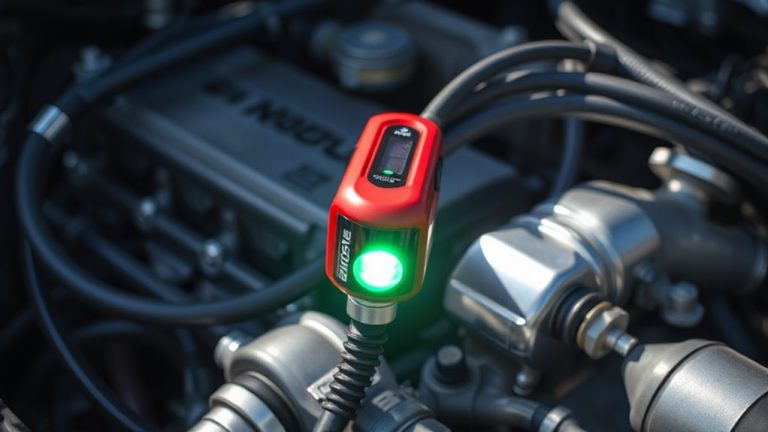
Before the cold sets in, you’ll want to test your battery and inspect all fluids to avoid winter breakdowns. A weak battery often fails when temperatures drop below 32°F, especially if terminal voltage falls below 12.4 volts at rest. Check for battery corrosion-white or blueish buildup on terminals-using a wire brush to clean connections and guarantee conductivity. Corrosion increases resistance, reducing cranking power. Test your battery load with a multimeter: it should maintain at least 9.6 volts under load. For fluids, inspect coolant, brake, power steering, and transmission systems. Fluid contamination-such as coolant mixing with oil or moisture in brake fluid-compromises performance. Coolant should be a 50/50 mix of ethylene glycol and water, effective to -34°F. Contaminated fluid appears cloudy or discolored and must be flushed. Regular checks prevent system damage and maintain ideal viscosity. Using a battery maintainer can help preserve charge during extended cold periods.
Adjust Tire Pressure With Temperature Changes
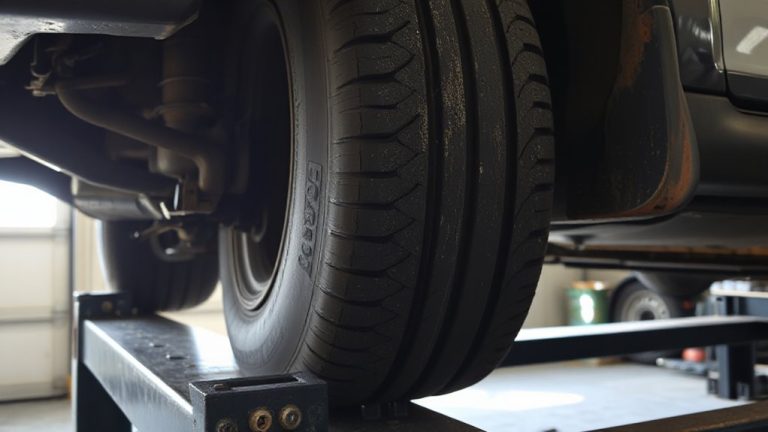
Cold weather doesn’t just sap battery strength-it also hits your tires, and you need to act before your fuel economy and safety take a hit. Tire pressure drops about 1 PSI for every 10°F drop in temperature. Underinflated tires reduce tire traction, increase stopping distances, and accelerate seasonal wear. Most vehicles require 32 to 35 PSI, as specified on the driver’s side door jamb-not the tire sidewall. Low pressure causes uneven contact with the road, leading to excessive tread wear on the edges. Check pressure monthly with a calibrated gauge when tires are cold. Overinflation also harms traction and causes center-tread wear. Proper inflation improves handling, extends tire life, and maintains peak fuel efficiency. Don’t forget the spare-many forget it needs the same 32–35 PSI. Adjusting tire pressure seasonally protects performance, safety, and long-term tread integrity.
Prevent Summer Overheating and AC Failure
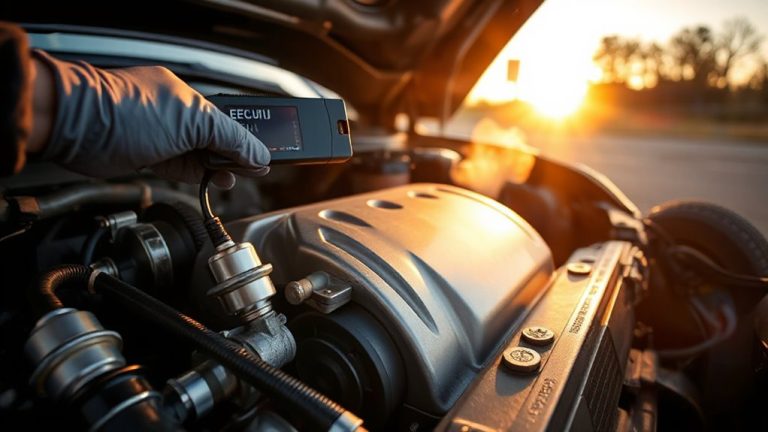
When summer temperatures climb, your vehicle’s cooling system and air conditioning face increased stress that can lead to breakdowns if not properly maintained. Coolant circulation is critical-make certain your reservoir is filled to the proper level with a 50/50 mix of antifreeze and water to maintain thermal regulation. A weak or contaminated coolant solution reduces heat transfer efficiency and may cause overheating. Inspect hoses and belts for cracks or leaks that impede flow. Condenser efficiency directly affects AC performance; the condenser, typically in front of the radiator, must dissipate heat from refrigerant. Dirt, debris, or bent fins reduce airflow and impair cooling. Clean the condenser surface gently with compressed air or a soft brush. Verify refrigerant pressure is within factory specifications-typically 25–45 psi on the low side and 200–250 psi on the high side. Maintaining these systems guarantees reliable operation under peak summer loads. A cooling system pressure test can help identify hidden issues before they lead to failure, and using a cooling system tester ensures accurate diagnosis of leaks and pressure retention.
Protect Your Paint From Rain, Debris, and Sun
While environmental factors like UV radiation, acidic rain, and airborne contaminants constantly threaten your vehicle’s finish, proactive protection can preserve both appearance and structural integrity. Paint sealing creates a durable, hydrophobic barrier that resists pH fluctuations in rainwater, typically ranging from 4.0 to 5.5. Most sealants use SiO2 or polymer-based formulations, offering 6–12 months of protection at 1–2 microns thickness. This coating reduces oxidation from UV exposure, blocking up to 98% of harmful rays. Debris shielding, such as front-end films, uses TPU layers between 6–8 mils thick to absorb road impacts. These films resist rock chips, bug splatter, and minor abrasions at speeds up to 70 mph. Installers apply them using precision-cut patterns for full-coverage adhesion. Together, paint sealing and debris shielding form a complete defense system, maintaining finish quality and resale value across seasons and road conditions. For extended longevity and enhanced gloss, consider applying a ceramic coating kit, which can provide superior resistance to environmental contaminants and simplify maintenance.
Top Off Oil, Coolant, and Wiper Fluid by Season
Your vehicle’s exterior defenses handle environmental threats, but internal fluid levels need just as much attention across changing conditions. Fluctuations in temperature affect oil viscosity, coolant efficiency, and wiper fluid performance. Monitoring these fluids seasonally prevents fluid contamination and maintains peak operation.
| Fluid Type | Check Frequency | Ideal Level |
|---|---|---|
| Engine Oil | Every 1,000 mi | Full, correct oil viscosity grade |
| Coolant | Every 3 months | 50/50 mix with no debris |
| Wiper Fluid | Monthly | Non-freezing formula in winter |
| Brake Fluid | Bi-annually | At MAX line, no moisture |
| Power Steering | Annually | No foaming or darkening |
Low oil increases engine wear, especially when cold weather thickens improper oil viscosity. Coolant breaks down over time, raising the risk of fluid contamination. Always use manufacturer-specified fluids. Refill wiper fluid with seasonal blends-summer for bugs, winter for ice. Regular topping prevents system damage.
Prepare Your Car Seasonally (Under 30,000 Miles)
What if the key to long-term vehicle reliability lies in how well you adapt it to seasonal shifts? You should inspect and replace cabin filters every 15,000 miles or per season to maintain HVAC efficiency and air quality. A clogged filter increases cabin allergens and reduces airflow by up to 30%. Conduct interior detailing biannually to prevent UV damage and material degradation-clean vinyl, leather, and plastics with pH-balanced solutions to avoid cracking. Use a microfiber cloth to remove dust from vents and dashboards, improving air quality and reducing odors. Guarantee floor mats are removed and cleaned to prevent moisture buildup. Check for sunlight-induced fading on dash surfaces; apply a UV protectant with SPF 30+ for shielding. Rotate floor positions seasonally if using rubber mats. These under-30,000-mile preventive steps preserve resale value and guarantee peak system performance.
On a final note
You maintain peak vehicle performance by aligning maintenance with seasonal shifts. Cold weather reduces tire pressure 1–2 psi per 10°F drop; check monthly. Batteries lose up to 35% of charge below 32°F. Summer heat stresses cooling systems-coolant should be a 50/50 mix, effective to -34°F and boiling at 265°F. Protect paint with wax, reflecting UV rays like a thermal shield.