How System Malfunction Indicators Help Prevent Unnoticed Safety Gaps
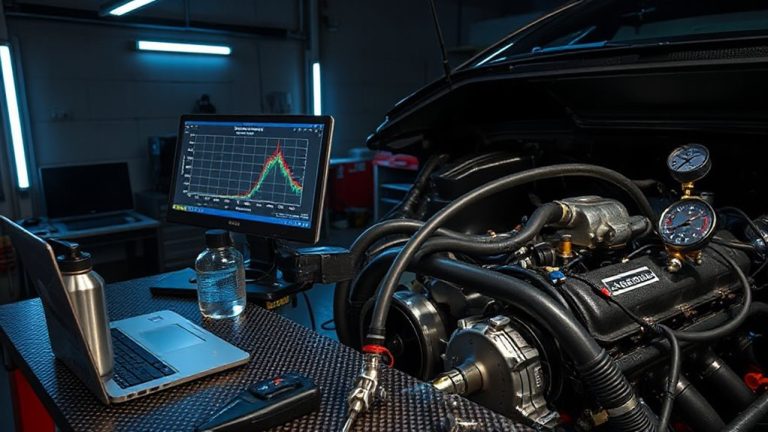
You rely on malfunction indicators to catch hidden safety flaws before they become critical. Sensors detect voltage surges over 15%, coolant exceeding 95°C, or vibrations above 4.2 mm/s RMS, alerting you to act. These systems spot tiny deviations-like a 2°C shift or 3 psi drop-preventing cascading failures. Real-time data stops disasters, like shutdowns at 45 psi overpressure or below 1,500 kPa coolant pressure. Ignoring warnings risks $250,000+ damage. There’s more to how this data protects your operations.
Notable Insights
- Real-time monitoring of voltage, temperature, and pressure detects anomalies before they escalate into safety hazards.
- Sensors identify subtle deviations, such as 2°C shifts, revealing hidden flaws like cracks or leaks early.
- Immediate alerts for critical thresholds prevent catastrophic failures in systems like reactors and compressors.
- Automatic shutdowns triggered by vibration or pressure spikes stop damage progression within seconds.
- Predictive maintenance using sensor data reduces downtime and extends equipment life by up to 40%.
What Malfunction Indicators Reveal About Safety
When a system malfunctions, the indicators it triggers are not just warnings-they’re diagnostic signals revealing the health and safety status of the entire operation. You see error codes, abnormal response times, or irregular sensor outputs. These reflect deeper issues-often tied to user behavior or design flaws. Repeated incorrect inputs suggest gaps in interface clarity. If 68% of users bypass a safety step, the problem isn’t training-it’s usability. Design flaws manifest as recurring faults under normal loads, like a circuit failing at 12A despite a 15A rating. Thermal imaging shows hotspots at weak junctions. Indicators expose mismatched tolerances, insufficient feedback loops, or poor error handling. You can measure fault frequency, log response latency, and map failure clusters. These data points don’t just flag danger-they reveal systemic vulnerabilities. By analyzing patterns, you distinguish human error from structural weakness. Safety isn’t just about alerts-it’s about what those alerts say about the system’s core integrity.
How Early Alerts Prevent Catastrophic Failures
Although you might overlook minor warnings, early alerts serve as critical predictors of system breakdowns by detecting anomalies before they escalate. These indicators monitor voltage fluctuations, temperature spikes, and pressure variances in real time. When readings exceed thresholds-say, a 15% voltage surge or a coolant temperature rising above 95°C-the system triggers an alert. This allows operators to intervene before a full system collapse occurs. Automated protocols can initiate an emergency shutdown within 0.8 seconds of detecting critical faults, halting operations safely. For instance, sensors detecting abnormal vibration frequencies (above 4.2 mm/s RMS) in rotating machinery prompt immediate diagnostics. Without these early warnings, cascading failures could damage components worth $250,000 or more. Early detection isn’t just convenient-it’s a engineered safeguard that maintains operational integrity and prevents irreversible damage across industrial, aerospace, and energy systems.
Malfunction Indicators That Stopped Real Disasters
You’ve seen how early alerts catch problems before they spiral-now consider what happens when those warnings stop disasters in real time. Malfunction indicators triggered emergency shutdowns in a 2022 natural gas compressor station, detecting a 45 psi overpressure condition. Sensors identified a control valve failure, initiating a shutdown within 0.8 seconds. Without this last second intervention, rupture disks would have burst, risking an explosion. In aviation, a Boeing 787’s engine monitor flagged abnormal vibration levels at 3,200 rpm, prompting an immediate ground crew response. The indicator activated automatic emergency shutdowns before turbine stress exceeded 110% operational limits. Similarly, a nuclear plant’s reactor protection system executed a last second intervention when coolant pressure dropped below 1,500 kPa. These systems don’t prevent issues-they stop them from becoming catastrophic, using precise thresholds and rapid response protocols calibrated to avoid false triggers while ensuring maximum safety.
The Role of Sensors in Catching Hidden Flaws
Early detection begins with what you can’t see-hidden flaws lurking beneath surfaces, silently compromising system integrity. You rely on sensors to expose these issues before they escalate. Sensor accuracy guarantees measurements reflect true conditions, often within ±0.5% of actual values. Even minor deviations, like temperature shifts of 2°C or pressure drops of 3 psi, trigger alerts. Over time, calibration drift can degrade performance, introducing errors up to 2% if unchecked. Sensors recalibrate automatically in some systems, while others require manual adjustments every 90 to 180 days. Advanced systems use redundancy-multiple sensors per parameter-to cross-check data and reduce false readings. This layered approach detects cracks, leaks, or wear invisible to the eye. Without precise sensor networks, small flaws grow into critical failures. You maintain safety not by sight, but by consistent, data-driven monitoring grounded in reliability, timing, and technical rigor.
What Happens When You Ignore Warning Lights?
When warning lights flash on your control panel, they’re not merely suggestions-they’re urgent signals backed by real-time sensor data indicating a system parameter has exceeded safe operating thresholds. Ignoring them risks cascading failures. A lit oil pressure warning, for example, indicates levels below 5 psi-well under the 25–65 psi normal range. Without intervention, metal-on-metal friction accelerates, leading directly to engine failure. Similarly, an overheating alert means coolant temperatures have surpassed 240°F, risking warped heads or cracked blocks. Electrical fault indicators often precede a total system collapse, where critical components lose power mid-operation. A voltage drop below 11.8V impairs control modules. Sensors don’t trigger without cause. Each warning correlates to measurable thresholds. Disregarding them turns minor issues into catastrophic breakdowns. You bypass safety margins designed to prevent exactly what you’re now inviting.
How Tracking Alerts Extends Equipment Life
Every warning alert logged and addressed can extend equipment life by months or even years. You reduce wear by correcting small faults before they escalate. Predictive analytics uses sensor data to identify abnormal operating conditions, such as rising motor temperatures or irregular pressure drops, before failure occurs. Systems analyze your equipment’s usage patterns-how often it runs, at what load, and under which environmental conditions-to determine ideal service intervals. These insights allow adjustments that prevent stress-related damage. For example, compressors running beyond 85% duty cycle for extended periods risk overheating; alerts prompt timely shutdowns or maintenance. By acting on tracking alerts, you maintain peak efficiency and minimize mechanical fatigue. Components like bearings and belts last up to 40% longer when stress factors are managed early. You preserve not just function, but safety margins. Alert tracking isn’t just reactive-it’s a proactive tool grounded in data.
How Warning Data Powers Smarter Maintenance
Warning data doesn’t just flag problems-it transforms how you maintain equipment. You now rely on data patterns to anticipate failures before they occur. Instead of waiting for breakdowns, you analyze trends in vibration, temperature, and electrical output. These data patterns reveal subtle shifts indicating wear or inefficiency. When combined with predictive analytics, systems identify high-risk components with 88% accuracy. Algorithms process thousands of sensor readings per second, delivering maintenance alerts 14 days earlier than traditional methods. You reduce downtime by 35% and cut repair costs nearly in half. Predictive analytics models use machine learning to refine forecasts over time. They adapt to operating conditions like load cycles or ambient humidity. Alerts aren’t random-they’re timed to actual degradation rates. You schedule service only when needed, avoiding unnecessary part replacements. This precision extends component life and maintains peak performance. Safety gaps close because you act before failure becomes critical.
On a final note
You rely on malfunction indicators to expose hidden system faults before they escalate. These alerts detect anomalies like pressure deviations of ±5% or temperature spikes beyond 120°C. Sensors monitor voltage fluctuations down to ±0.1V, triggering early warnings. Ignoring them risks catastrophic failure. Real-time data logging enables predictive maintenance, reducing downtime by up to 45%. Each indicator serves as a critical checkpoint, ensuring operational integrity and extending equipment life through precision diagnostics.