How to Apply Rust Inhibitor to Frame Rails on Lifted Trucks
You must clean and prep frame rails thoroughly before applying rust inhibitor. Remove all grime and expose bare metal using a wire brush or 36-grit flap disc. Use compressed air at 90–100 psi to clear debris. Apply Fluid Film or Rust-Oleum with a low-pressure spray, maintaining 6–8 inches from the surface. Use thin, overlapping passes to achieve a 2–3 mil dry film thickness. Allow 15–20 minutes between coats. Proper creep application guarantees protection inside boxed sections. Consistent thickness and full coverage are critical for long-term defense against moisture and salt. Best results depend on correct temperature-apply between 40°F and 90°F. A successful application resists 500+ hours of salt spray. Immediate reapplication is required if bare metal becomes exposed. Ongoing protection requires regular inspection and maintenance, especially in harsh environments. Details on avoiding common errors and establishing a reapplication schedule follow.
Notable Insights
- Clean frame rails thoroughly using degreaser and remove all rust until bare metal is exposed.
- Achieve near-white metal standard (SSPC-SP 10/NACE No. 2) for optimal rust inhibitor adhesion.
- Apply inhibitor with a low-pressure spray, keeping 6 to 8 inches from the surface to prevent runs.
- Use creep application with a wand to penetrate boxed sections and ensure complete internal coverage.
- Apply thin, overlapping coats at 2–3 mil dry film thickness, waiting 15–20 minutes between coats.
Why Lifted Trucks Rust Faster
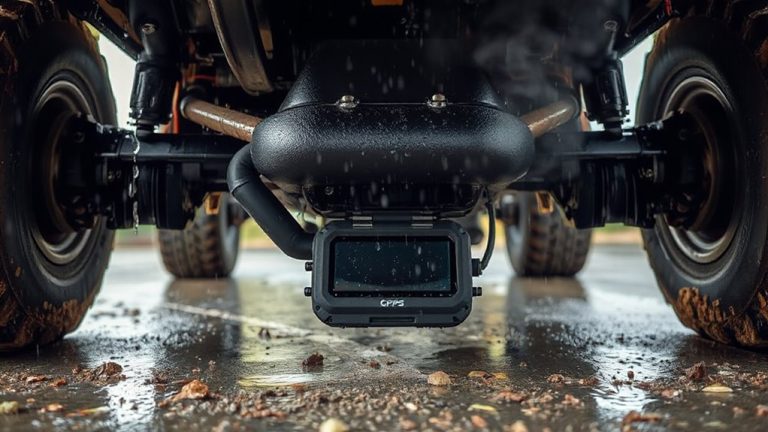
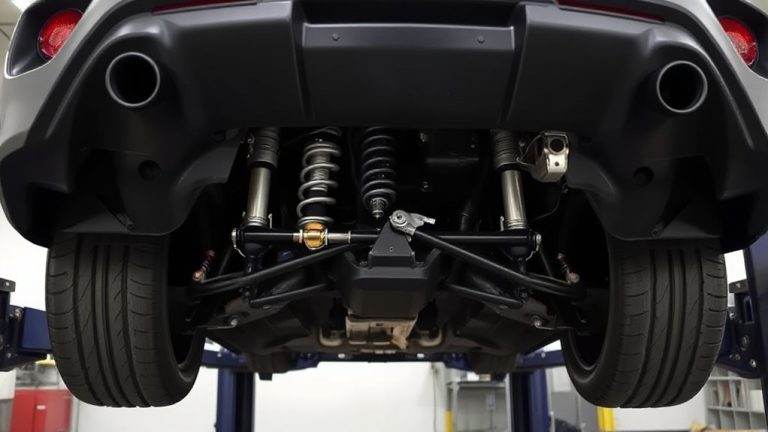
Your lifted truck’s increased exposure to road contaminants accelerates frame rail corrosion. Elevated exposure raises the risk markedly-every mile driven kicks up more gravel, salt, and moisture. These contaminants cling to your frame rails, initiating rust where protective coatings weaken. Increased airflow compounds this issue by promoting rapid temperature fluctuations and moisture cycling. Unlike stock vehicles, lifted trucks often lack full underbody shields, leaving frame rails vulnerable. Your truck likely rides 4 to 10 inches higher, extending the surface area exposed to corrosive elements by up to 35%. Steel frame rails, typically 10- to 12-gauge, provide structural strength but contain iron-a metal prone to oxidation when moisture remains. Without consistent maintenance, microscopic rust pits form within months in high-humidity environments. The combination of elevated exposure and increased airflow creates a persistent degradation cycle, weakening frame integrity over time. Applying a high-quality car undercoating can significantly mitigate this corrosion by forming a durable barrier against moisture and road debris.
Top-Rated Rust Inhibitors for Frame Rails
A high-quality rust inhibitor is essential for protecting the frame rails of lifted trucks from accelerated corrosion. You need a product with a chemical composition that bonds at the molecular level to bare metal, displacing moisture and preventing oxidation. Top-rated options like Fluid Film and Rust-Oleum Rust Reformer contain lanolin-based or oil-soluble chemicals that penetrate tight seams and resist washout. These inhibitors work best when applied within the manufacturer’s specified application temperature range-typically 40°F to 90°F-to guarantee proper adhesion and curing. Look for formulations with a minimum 500-hour salt spray resistance rating. Products should be self-healing, meaning they flow to cover scratches over time. Sprayability, viscosity, and coverage rate-usually 100–150 sq. ft. per quart-also affect performance. Always verify compatibility with steel and any existing undercoating.
How to Prep Frame Rails
Proper preparation of frame rails is critical to guarantee maximum adhesion and long-term effectiveness of any rust inhibitor. Begin with thorough surface cleaning using a degreaser to remove oil, dirt, and road grime. Use a wire brush or angle grinder with a 36-grit flap disc to perform rust removal on affected areas until bare metal is exposed. Target all seams, joints, and boxed sections where moisture accumulates. Cleaned surfaces must achieve SSPC-SP 10/NACE No. 2 near-white metal standard for ideal bonding. Blow off debris with compressed air at 90–100 psi to guarantee no residue remains. Inspect weld seams closely-any pitting or scale compromises coating integrity. Immediate treatment after rust removal prevents flash rusting, especially in humid conditions. Avoid touching prepared surfaces with bare hands-skin oils reduce adhesion. A clean, dry, and profiled surface guarantees the rust inhibitor performs as designed over time.
How to Apply Rust Inhibitor to Frame Rails
Once the frame rails are properly prepped and completely free of contaminants, it’s time to apply the rust inhibitor with precision to guarantee maximum protection. Use consistent application techniques to guarantee even layering and long-term defense. Begin with a low-pressure spray nozzle, keeping 6 to 8 inches from the surface to prevent runs. Apply in thin, overlapping passes-each pass should cover 30% of the previous one-to achieve ideal coverage consistency. For boxed sections, use a creep application method with a wand attachment to penetrate internal cavities. Most oil-based inhibitors require a minimum dry film thickness of 2 to 3 mils for effective performance. Allow 15–20 minutes between coats if multiple layers are needed. Avoid overspray on suspension components. Proper technique guarantees the inhibitor bonds correctly, forming a durable, moisture-resistant barrier essential for lifted trucks exposed to harsh road conditions.
Mistakes That Ruin Rust Protection (And How to Avoid Them)
Skipping surface prep means your rust inhibitor won’t stick, and all that work spraying becomes a waste. You must remove rust, dirt, and grease with a wire wheel or solvent wipe to expose clean bare metal-otherwise, adhesion fails within weeks. Improper ventilation during application traps fumes and creates uneven drying, leading to runs or soft spots that compromise protection. Always use a respirator and work in a well-ventilated area, preferably with cross-airflow of at least 150 CFM. Skipped inspections let hidden corrosion progress unchecked, especially in frame pockets and suspension mounts. Inspect annually with a borescope or mirror, probing for soft metal or flaking. Missed spots accelerate frame degradation. Apply inhibitor at 4–6 mils wet film thickness for full coverage. Too thin, and the layer cracks; too thick, and it stays tacky. Avoid over-spray on brake lines or control arms to prevent contamination.
How Often to Reapply Rust Inhibitor
Regularly reassessing your rust inhibitor’s condition guarantees long-term frame integrity, especially in high-moisture or road-salt-heavy environments. Climate impact directly affects application timing-coastal or northern regions may demand reapplication every 6 to 12 months due to salt exposure and humidity. In drier climates, every 18 to 24 months suffices. Inspect for flaking, thinning, or discoloration annually with a flashlight and mirror. Product performance declines when film thickness drops below 2.5 mils. Use a wet film gauge during application to guarantee proper coverage. Choosing the right best rust encapsulator ensures superior adhesion and lasting protection against corrosion.
| Condition | Reapply In | Emotional Outcome |
|---|---|---|
| Flaking coating | 1 month | Prevents irreversible frame decay |
| Visible metal | Immediately | Avoids costly structural repair |
| Full coverage intact | 12+ months | Confidence in vehicle longevity |
| After undercarriage wash | As needed | Maintains proactive defense |
Precise application timing maximizes protection and cost efficiency.
On a final note
You protect your lifted truck’s frame rails by using proven rust inhibitors like Fluid Film or Rust-Oleum Rust Reformer. These contain petroleum-based compounds or active rust converters. Apply after thorough blasting to bare metal. Coatings must be 5–7 mils thick for full coverage. Reapply every 12–18 months. Avoid trapping moisture under uneven layers. Consistent maintenance prevents structural degradation. Proper application extends frame life by up to 10 years in corrosive environments.