How to Lubricate Steering Rack Boots on a 2017 Ford Fusion
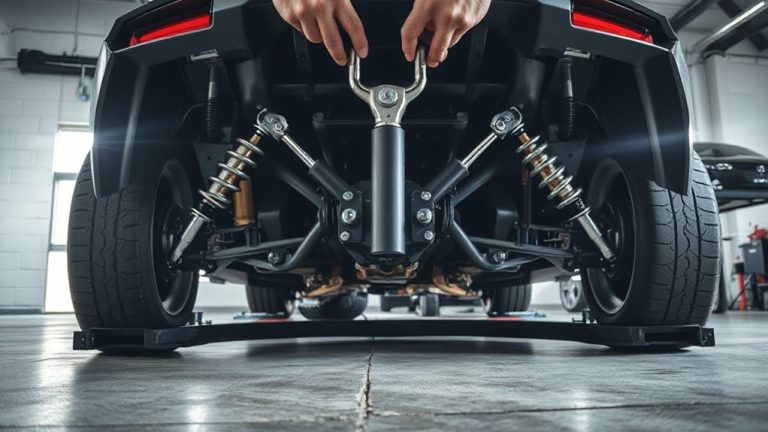
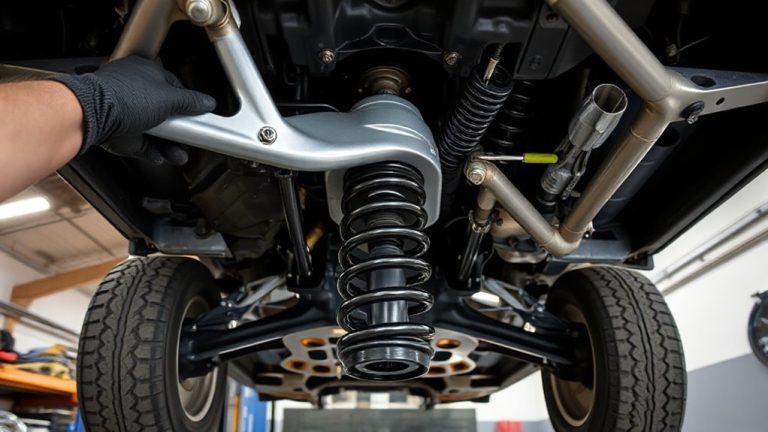
Lift and support your 2017 Ford Fusion securely on jack stands. Remove the steering rack boots using a flathead screwdriver to loosen the clamps, sliding them off without damaging the rack seal. Inspect the rack and inner tie rod joints for wear, corrosion, or play. Clean the exposed shafts with degreaser, then apply synthetic grease like Permatex Ultra Slick evenly to the pivot points. Reinstall the boots with new 18-mm constant-tension clamps, torqued to 3.5 Nm. Turn the wheel lock to lock to verify smooth operation and proper lubrication coverage.
Notable Insights
- Lift and securely support the 2017 Ford Fusion on jack stands before accessing the steering rack boots.
- Remove boot clamps with a flathead screwdriver and slide boots off without damaging the rack seal.
- Inspect boots and rack joints for tears, cracks, and play, ensuring no contamination or wear.
- Clean rack joints thoroughly and apply synthetic steering system grease evenly for smooth operation.
- Reinstall boots with new constant-tension clamps, ensuring a tight seal and proper alignment.
Remove the Steering Rack Boots
While the vehicle is securely lifted and supported on jack stands, begin by removing the steering rack boots to access the inner tie rod ends and rack housing. Use a flathead screwdriver to loosen the hose clamps securing each boot to the rack and tie rod. Slide the boots off carefully to avoid damaging the rack’s seal or inner components. This step is critical in any steering rack removal or boot replacement procedure. The left and right boots are identical, made of reinforced rubber with a 30 mm inner diameter at the rack end and 25 mm at the tie rod. Inspect the clamp torque specs-5.5 Nm is standard. Keep the steering rack centered to prevent gear misalignment during disassembly. Protect the exposed rack surface with a clean rag to block contaminants. Proper boot removal guarantees full access for lubrication and prevents premature wear.
Inspect for Wear and Damage
Now that you’ve removed the steering rack boots and exposed the inner tie rod ends and rack housing, it’s time to check for signs of wear or damage. Begin by evaluating boot integrity-tears, cracks, or swelling indicate contamination risk and require immediate replacement. The rubber should remain pliable, not brittle or hardened from oil exposure. Next, evaluate joint flexibility by manually moving the inner tie rod ends. There should be no lateral play; axial movement must be smooth and consistent, indicating healthy internal seals and lubrication. Excessive looseness or binding suggests wear beyond service limits. Inspect the rack housing for scoring or corrosion along the shaft surface-this can compromise seal performance. Use a flashlight to examine hard-to-see areas. Any damaged component affects steering precision and safety. Address issues before reassembly to guarantee reliable operation and extend system life.
Clean and Lubricate the Rack Joints
Dirt and old grease are your enemies when it comes to smooth steering rack operation. You must remove all grime from the rack joints using a degreaser and lint-free cloth. Contaminants restrict joint flexibility and can distort steering alignment over time. Once clean, apply a high-quality synthetic grease-like Permatex Ultra Slick-designed for suspension and steering systems. Use a brush to coat pivot points evenly, guaranteeing full coverage without excess buildup. Proper lubrication reduces friction, maintains joint flexibility, and supports precise steering alignment during cornering and straight-line driving. The manufacturer specifies a tolerance of ±0.25 degrees for alignment; degraded joint performance risks exceeding this. Movement should be smooth, with no binding or stiffness. Recheck joint movement after lubricating-each joint must pivot freely through its full range, mimicking the motion of a well-oiled hinge. This step guarantees long-term reliability and accurate steering response.
Reinstall the Rubber Boots
You’ve cleaned and lubricated the rack joints, guaranteeing smooth articulation and precise alignment. Now, reinstall the rubber boots carefully to protect the steering rack. Proper boot alignment is essential-the boot must sit flush against the rack housing without twisting or pinching. Misalignment can cause premature cracking or seal failure. Use OEM-spec replacement boots if originals are damaged. Slide the boot into place, verifying the inner lip seals tightly around the steering shaft. Reuse original clamps only if undamaged; otherwise, install new 18-mm constant-tension clamps. Correct clamp tension prevents leaks while allowing slight movement during articulation. Overtightening risks boot deformation, leading to splits. Under-tensioning allows moisture and debris ingress. Torque clamps to 3.5 Nm using a calibrated wrench. Guarantee both inner and outer boots are secure before proceeding.
Test Steering for Smoothness
Once the boots are secured, turn the steering wheel fully from lock to lock to evaluate system smoothness. You should feel consistent resistance with no grinding or binding. Proper lubrication guarantees precise steering alignment and enhances vehicle stability. Check for even movement and confirm the steering returns smoothly to center. Any stiffness or noise may indicate trapped air or inadequate grease distribution.
| Sensation | Likely Cause | Action Needed |
|---|---|---|
| Smooth, fluid turn | Correct lubrication | Proceed with final inspection |
| Binding | Improper boot installation | Recheck boot positioning |
| Slight resistance | Cold temperature effect | Operate system to warm grease |
| Grinding noise | Insufficient lubrication | Re-lubricate steering rack boot |
| Uneven feedback | Misaligned steering | Verify steering alignment |
On a final note
You’ve now properly maintained your 2017 Ford Fusion’s steering rack boots. Correct lubrication prevents corrosion and extends joint life. Use only OEM-specified grease-typically lithium-based with a dropping point of 260°F. Reinstalled boots must seal tightly, with clamps torqued to 3.5 Nm. Test drive at low speed to verify smooth response. Any binding or noise indicates misalignment or insufficient lubrication. This service improves steering precision and long-term reliability.