How to Maintain PPF and Ceramic Coatings in Extreme Winter Conditions
Wash your car every 7–10 days using pH-neutral soap (6.5–7.5) to remove road salts without damaging ceramic coatings. Use lukewarm water (70–90°F) and dry immediately with a microfiber towel to prevent ice formation. Avoid acidic or abrasive cleaners-they degrade silica and harm PPF adhesion. Inspect edges for lifting over 1/16 inch, especially after snow removal. Reapply ceramic coating only when water beads fail or contact angles drop below 70°. Proper care keeps protective layers intact through harsh conditions.
Notable Insights
- Wash every 7–10 days with pH-neutral soap to remove winter salts without degrading ceramic coatings.
- Use lukewarm water and dry immediately with microfiber to prevent ice formation and water spots.
- Avoid abrasive or acidic cleaners that compromise PPF elasticity and ceramic coating integrity.
- Inspect PPF edges regularly for lifting, especially after snow removal, to prevent moisture intrusion.
- Reapply ceramic coating only when water beading fails or contact angle drops below 70°.
Wash Often to Remove Salt and Protect Coatings
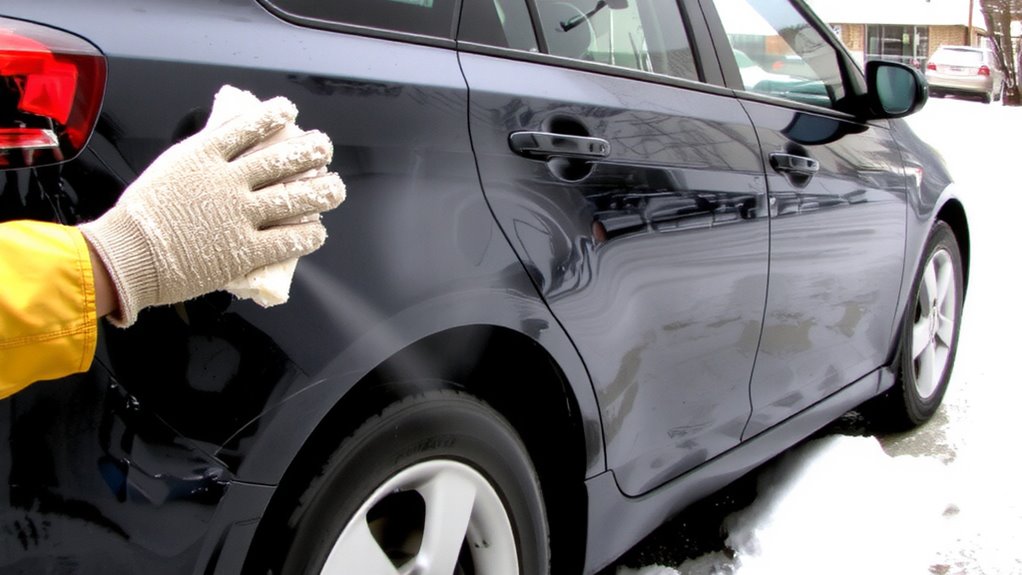
Regularly washing your vehicle during winter is essential to preserve both PPF and ceramic coatings. Road salts and deicing chemicals degrade protective layers over time. You must remove these contaminants before they compromise coating integrity. Snow accumulation introduces corrosive chlorides, increasing surface adhesion risks. Ice buildup exerts physical stress on PPF edges, potentially causing lifting or delamination. Wash your vehicle at least once every 7–10 days during active winter conditions. Use pH-neutral car wash solutions; harsh detergents strip ceramic coatings. A two-bucket method with a grit guard reduces swirl marks. Maintain water temperature above freezing during rinse phases to prevent thermal shock. High-pressure rinsing at 1,200–1,800 psi effectively removes packed snow and salt residue from panel gaps. Consistent cleaning preserves hydrophobic performance and extends coating lifespan by up to 30%. Neglect accelerates degradation, requiring premature reapplication. Using a dedicated car cleaning kit ensures all necessary tools and solutions are readily available for effective winter maintenance.
Wash Safely in Freezing Temperatures
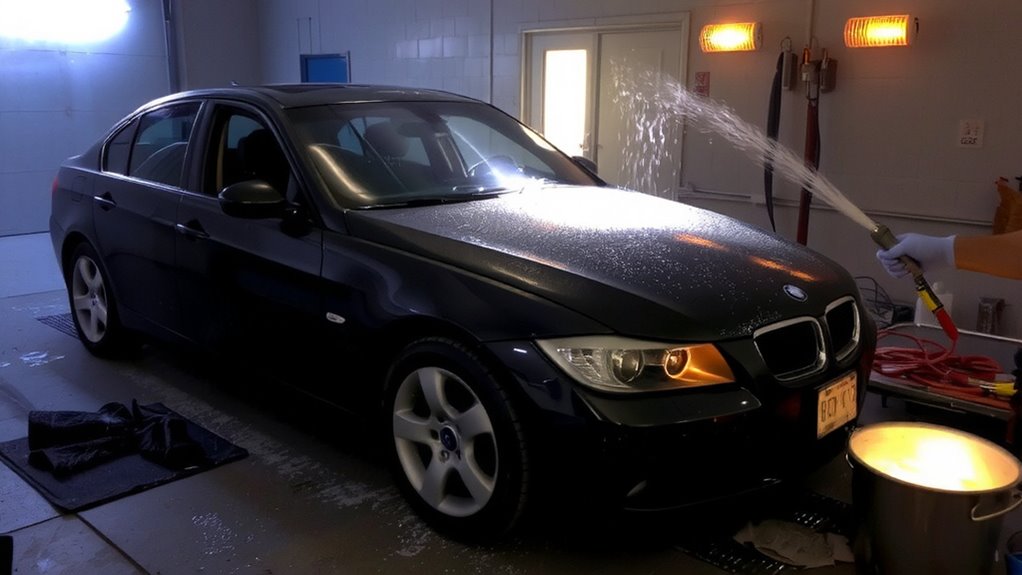
How do you keep your car clean when the thermometer refuses to budge above freezing? Washing safely in cold weather is critical to protect PPF and ceramic coatings. Always use lukewarm water-ideal water temperature ranges between 70–90°F (21–32°C). Cold water risks freezing on contact, potentially damaging the coating or trapping moisture in seams. After washing, immediate drying is non-negotiable. Use a clean, plush microfiber towel with a straight pull motion to avoid swirling. Your drying technique directly impacts coating integrity. Avoid air drying, as it allows water spots and ice formation. Applying a ceramic coating maintenance spray can help preserve hydrophobic properties and add an extra layer of protection during harsh winter months.
| Wash Method | Water Temperature | Drying Technique |
|---|---|---|
| Touchless Car Wash | Moderate | Forced-air dry (risky) |
| Hand Wash | 70–90°F (21–32°C) | Microfiber, pull method |
| Rinseless Wash | Ambient-safe | Synthetic chamois |
Skip Chemicals That Harm PPF and Ceramic
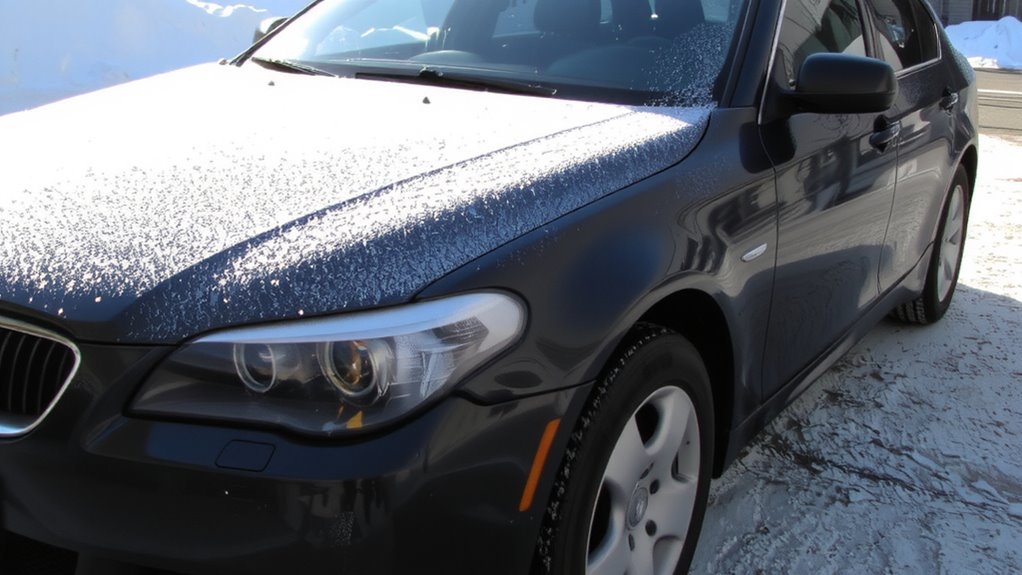
While your car’s finish may look clean after using household detergents or all-purpose cleaners, those products can degrade both PPF and ceramic coatings over time. Avoid abrasive cleaners-they contain particles that micro-scratch the surface, weakening the coating’s integrity. Acidic solutions, like those with vinegar or citrus-based ingredients, break down silica in ceramic coatings and cause PPF to yellow. These coatings rely on strong chemical bonds; harsh chemicals disrupt that stability. Use pH-neutral car wash soaps rated between 6.5 and 7.5. Products like Chemical Guys Mr. Pink or Optimum No Rinse are safe and effective. They clean without stripping protective layers. Your PPF is typically 8–10 mils thick and resists minor abrasions, but repeated exposure to damaging chemicals reduces its elasticity and clarity. Preserve performance: stick to automotive-specific, non-abrasive formulas. For long-term protection, consider applying a ceramic coating as it enhances durability and resistance to environmental damage.
Check PPF for Lifting After Snow Removal
After brushing off snow, give your car a quick once-over before warming it up-residual ice or improper scraping can loosen the edges of your paint protection film. Perform a thorough edge inspection along the hood, fenders, and bumper where PPF is most exposed. Look for gaps or peeling exceeding 1/16 inch, which indicates compromised adhesion. Conduct an adhesive check by gently pressing a clean fingertip along the film’s perimeter; you should feel firm bonding without lifting or bubbling. PPF relies on pressure-activated adhesive layers that degrade if moisture penetrates beneath the film. Even minor lifting exposes the underlying paint to salt and freeze-thaw cycles. Early detection prevents delamination and maintains the film’s self-healing properties. Address concerns promptly but avoid DIY repairs. Document problem areas for professional assessment later. Regular inspection preserves PPF integrity through harsh winter conditions.
Fix PPF Edges Before Winter Damages Spread
A small lift at the edge of your PPF can lead to big problems if left unattended. Water seeps underneath, freezing and expanding, which worsens the separation. This compromises both appearance and protection. Immediate edge sealing is critical for moisture prevention. Use a heat-activated adhesive repair method or manufacturer-approved sealant to reattach and seal lifted edges. Apply even pressure with a squeegee, then heat with a dual-temperature heat gun (180–220°F) to reactivate the adhesive. Proper edge sealing prevents corrosive salt, grime, and slush from reaching the painted surface. Without it, delamination accelerates, especially in repeated freeze-thaw cycles. Sealed edges maintain integrity, ensuring the PPF performs as designed. Check all perimeter zones-fenders, hood, bumpers-where lifting is most common. Fixing edges early preserves the coating’s lifespan and prevents costly paint damage.
Reapply Ceramic Coating Only When Needed
You don’t need to reapply your ceramic coating every winter-only when testing confirms degradation. Coating longevity typically spans two to five years, depending on product quality and environmental exposure. Most professional-grade coatings last 3–4 years under proper care. To assess durability, perform a water-bead test: if water doesn’t sheet or bead, the coating is failing. Maintenance intervals should follow condition-based evaluations, not calendars. Inspect every six months, especially before harsh winters. Deionized water contact angle measurements above 90° indicate active protection; below 70° suggest reapplication is needed. Reapplying prematurely wastes resources and offers no added benefit. Coatings bond at a molecular level with paint; over-application doesn’t enhance performance. Stick to manufacturer guidelines and verified wear indicators. Following data-driven maintenance intervals guarantees peak protection without unnecessary cost or effort.
Park to Shield Your Car From Winter Hazards
Though winter conditions can accelerate coating degradation, strategic parking considerably reduces exposure to harmful elements. You should prioritize indoor storage whenever possible, as it offers maximum protection against snow, ice, and road salts that compromise PPF adhesion and ceramic coating integrity. Indoor storage maintains stable temperatures, minimizing thermal shock that can cause micro-cracking in coatings. When garage space isn’t available, covered parking still provides substantial defense against falling ice and UV exposure, though it offers limited protection from airborne salts. Guarantee your parking spot is elevated and well-drained to prevent pooling of corrosive slush. Use parking covers with non-abrasive linings if outdoor exposure is unavoidable. These structural safeguards extend coating lifespan by up to 30%. Consistent use of indoor storage or covered parking preserves hydrophobic performance and surface hardness, keeping your PPF and ceramic coating effective throughout harsh winter cycles.
On a final note
You must maintain PPF and ceramic coatings rigorously in winter. Frequent washing removes corrosive road salts that degrade coating integrity. Wash above freezing (40°F/4°C) to prevent water freezing on surfaces. Avoid alkaline cleaners; they compromise hydrophobic properties. Inspect PPF edges monthly-lifts exceed 2mm require immediate repair. Reapply ceramic coating only when water contact angles drop below 90°. Park indoors or use a breathable cover to limit exposure.