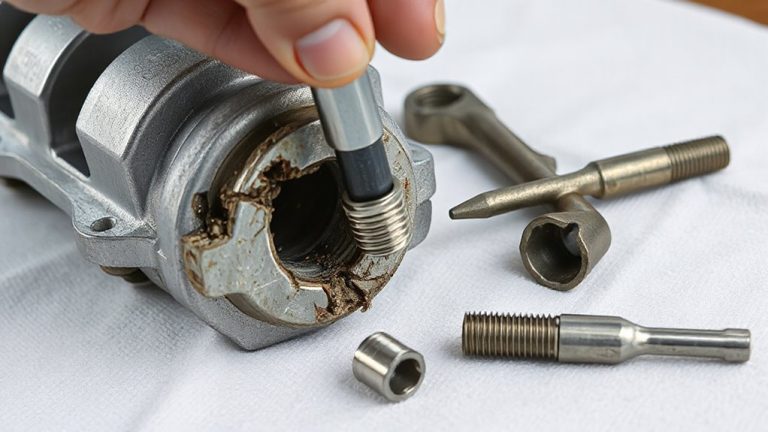
How to Prepare a Home Garage for Winter Vehicle Storage
Clean your garage floor and vehicle to remove debris and food residues that attract pests. Seal cracks larger than ¼ inch with polyurethane caulk or spray foam to block rodents and cold air. Use vapor-barrier paint on concrete and keep humidity below 50% RH with a dehumidifier. Store fluids in sealed containers and avoid cardboard. Install LED lights at 4000K–5000K every 8–10 feet, ensuring over 1500 lumens per fixture for visibility. You’ll soon discover additional steps to fully optimize your storage setup.
Notable Insights
- Clean the garage floor and vehicle thoroughly to remove debris, food residues, and potential pest attractants.
- Seal cracks larger than ¼ inch and use vapor-barrier paint to prevent pests and moisture intrusion.
- Disconnect the vehicle battery or use a trickle charger to maintain charge during long-term winter storage.
- Add fuel stabilizer, fill the tank to 95%, and run the engine to protect the fuel system.
- Apply epoxy floor coating and use a breathable, multi-layered vehicle cover to protect against chemicals and moisture.
Prepare Your Garage for Winter Vehicle Storage
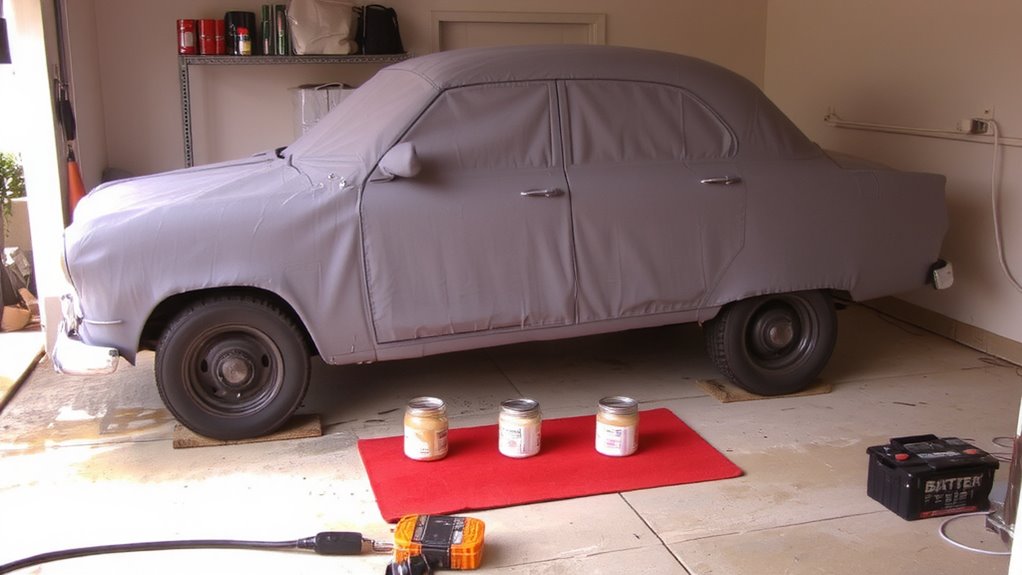
If you’re storing a vehicle in your garage over the winter, start by thoroughly cleaning both the car and the garage floor. Debris and food residues attract rodents and insects, compromising your vehicle’s integrity. Implement a pest control strategy using bait stations or ultrasonic repellents; seal cracks larger than ¼ inch to block entry. Proper garage lighting is essential-install LED fixtures with a color temperature of 4000K to 5000K for ideal visibility. Place lights every 8 to 10 feet, ensuring lumens exceed 1500 per fixture. Motion-sensor lights reduce energy use while maintaining security. Use vapor-barrier paint on concrete floors to prevent moisture intrusion, which attracts pests. Store vehicle fluids and spare tires in sealed plastic containers. A clean, well-lit, and pest-resistant environment preserves your vehicle and safeguards tools. Avoid organic materials like cardboard boxes that rodents use for nesting. Maintain airflow with a dehumidifier set below 50% RH to deter mold and pests. For consistent warmth in unheated spaces, consider a kerosene heater rated for garage use.
Maintain Your Car Before Long-Term Parking
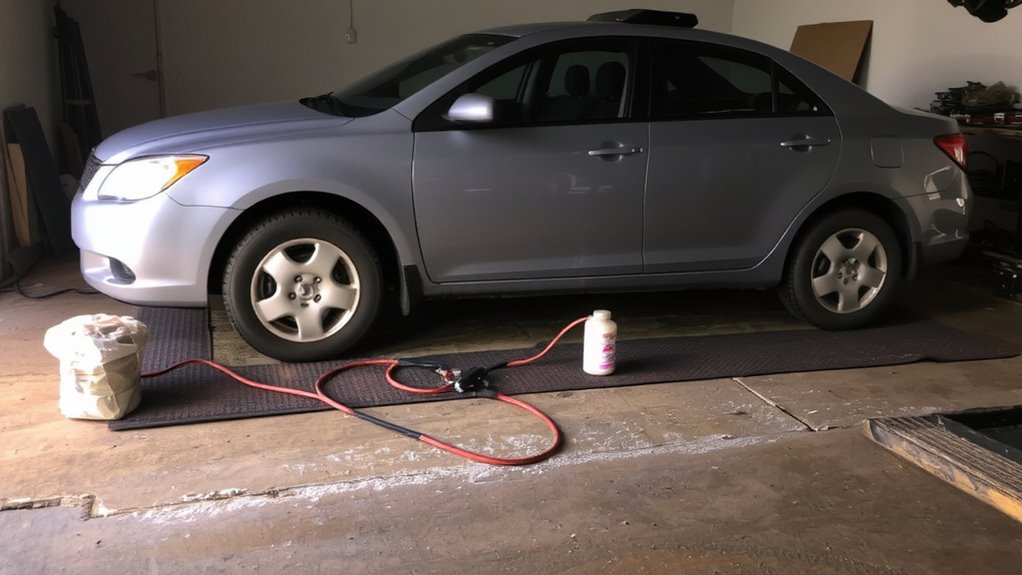
You’ve secured the garage environment-now it’s time to focus on the vehicle itself. Begin with battery maintenance: disconnect the battery or use a trickle charger rated at 1.5 to 2 amps to prevent overcharging. Lithium or AGM batteries should be kept above 12.4 volts to avoid sulfation. Fuel stabilization is equally critical. Add a fuel stabilizer-such as Sta-Bil 360-at a ratio of 1 ounce per 2.5 gallons of gas. Run the engine for 10 minutes to circulate treated fuel through the system. Fill the tank to 95% capacity to minimize condensation. Top off all fluids-especially coolant and brake fluid-to factory specs. Inflate tires to placard pressure, typically 32–35 psi, to prevent flat-spotting. These steps guarantee reliable restart after storage.
Seal Cracks and Block Moisture in the Garage
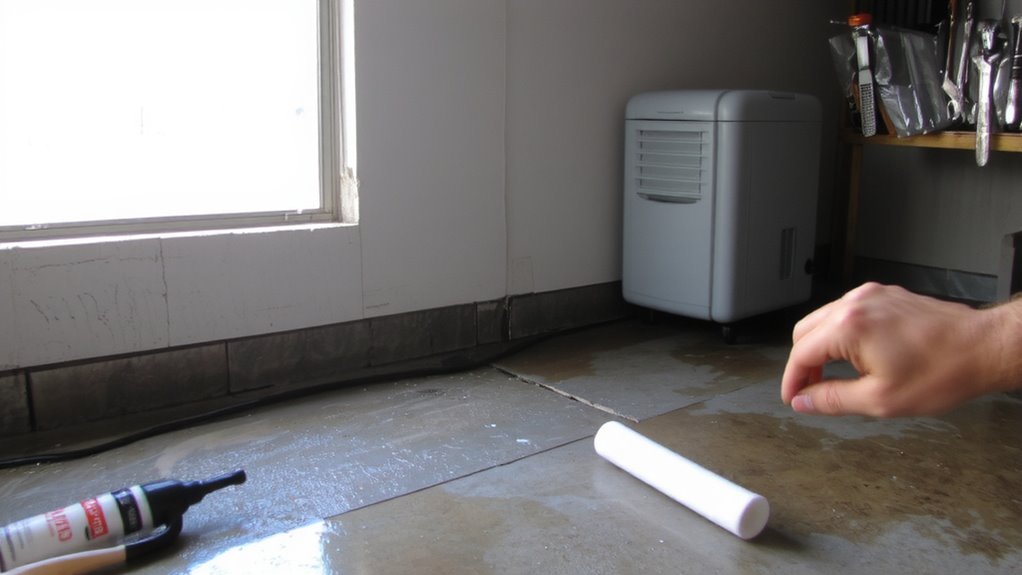
Though cold air alone won’t damage stored items, the moisture it carries can lead to rust, mold, and degradation of both vehicles and equipment. You must seal cracks larger than 1/8 inch with polyurethane caulk or expandable spray foam. For insulation types, rigid foam board (R-5 per inch) works well on walls, while fiberglass batt (R-13 to R-19) suits framed areas. Install vapor barriers on the warm side of insulation to block moisture diffusion. Check garage doors: use rubber compression seals to close gaps, reducing air exchange. Proper ventilation options include passive vents with moisture baffles or electric exhaust fans set to 50 CFM, which manage humidity without overcooling. Avoid sealing the garage airtight-controlled airflow prevents condensation buildup. Use hygrometers to monitor humidity, aiming for 30–50%. These steps, combined, create a stable, dry microclimate ideal for seasonal storage.
Protect Your Floor From Oil and Fluid Leaks
A durable garage floor coating is essential for shielding concrete from oil, coolant, and brake fluid leaks that degrade unprotected surfaces over time. Unsealed concrete absorbs oil stains and fluid spills, leading to permanent discoloration and structural damage. Epoxy coatings with a thickness of 3–5 dry mils provide ideal resistance to chemical degradation. Urethane topcoats add slip resistance and UV stability. For best results, clean and etch the floor before application. Using a high-quality automotive paint stripper can help remove old coatings and contaminants for optimal surface preparation.
| Product Type | Chemical Resistance |
|---|---|
| Epoxy coating | High (oil, coolant) |
| Polyaspartic | Very high, fast cure |
| Urethane topcoat | Superior abrasion resistance |
| Penetrating sealer | Low; only for minor stains |
These solutions prevent oil stains from setting in and reduce cleanup time after fluid spills.
Use a Quality Cover to Shield Your Vehicle
A high-quality vehicle cover is essential for protecting your car from winter’s harsh elements, including snow, ice, road salt, and moisture buildup. Look for a multi-layer, breathable fabric with at least 3.5 ounces per square yard weight to guarantee durability. These materials prevent condensation by allowing vapor to escape, reducing the risk of trapped moisture causing corrosion. A snug, elasticized hem with gussets ensures a secure fit on vehicles up to 20 feet long, minimizing flapping and stress on seams. The outer layer should be UV-resistant and water-repellent, with a soft inner lining to prevent micro-scratches. This inner layer directly contributes to paint protection by reducing direct contact with environmental contaminants. Reinforced front and side mirrors zones add longevity. The fabric also minimizes dust accumulation, reducing cleaning frequency. Always clean and dry your vehicle before covering to avoid trapping contaminants against the finish. For optimal all-weather defense, choose a cover specifically designed for sun and rain protection.
On a final note
Your garage is now ready for winter vehicle storage. Seal all cracks larger than 1/8 inch with silicone caulk to block cold air and pests. Use a dehumidifier or moisture-absorbing crystals to maintain humidity below 50%. Place a 6-mil polyethylene-lined floor mat beneath the car to catch leaks. Cover your vehicle with a breathable, multi-layer polyester cover rated for UV and moisture resistance. This prevents condensation, corrosion, and surface damage.