How to Upgrade Your Clutch System for High-Torque Street and Track Applications
You need a performance clutch rated for at least 500 ft-lbs to handle high-torque driving. Stock organic clutches slip under heat and pressure, degrading quickly. Choose a Kevlar or dual-friction unit for smooth engagement and durability. Pair it with a lightweight flywheel under 0.15 kg·m² for sharper throttle response. Proper installation and break-in guarantee longevity. The right setup keeps power transfer consistent on street and track. Further insights reveal how top brands engineer for extreme conditions.
Notable Insights
- Choose a performance clutch rated for your torque output, such as Kevlar or dual-friction units for 500–600 ft-lbs with street-friendly engagement.
- Upgrade to a light flywheel (0.10–0.15 kg·m²) for sharper throttle response and faster rev changes, ideal for track performance.
- Select a pressure plate with 2,500–3,500 lbs clamp load to maintain grip under high torque and reduce slippage.
- Resurface the flywheel to 32–64 RMS and use a pilot bearing tool for precise clutch alignment during installation.
- Follow a proper break-in procedure with moderate accelerations and avoid aggressive driving for the first 500 miles.
Why Stock Clutches Slip Under High Torque
Torque is the unseen force that exposes the limits of stock clutch systems. You’re pushing more power than factory parts can handle. Stock clutches have torque transfer limits, often rated for just 250–350 ft-lbs, depending on make and model. Once you exceed that, slippage begins. The organic clutch material degrades quickly under high heat and pressure. Clutch material degradation reduces grip efficiency, leading to inconsistent engagement. Most stock facings use organic compounds bonded to the friction surface-they wear faster when overheated. Repeated high-torque launches accelerate this breakdown, creating glazed surfaces that slip even more. You’ll notice a soft pedal and RPM flare without forward motion. That’s the clutch failing to transmit engine output. Over time, degraded materials won’t recover. Even moderate upgrades surpass stock torque transfer limits. Without a performance-oriented design, the system can’t sustain elevated loads. You need a solution built for durability and heat resistance.
Best Performance Clutch Types for Street and Track
A performance clutch upgrade isn’t just about handling more power-it’s about maintaining control, consistency, and drivability under demanding conditions. You need a clutch that delivers firm clutch engagement and superior torque handling. Organic street clutches handle moderate power but wear quickly on track. For mixed use, a Kevlar or carbon semi-metallic clutch offers durability and smooth engagement, typically rated for 500–600 ft-lbs. Full-race puck-style clutches manage 800+ ft-lbs but compromise street comfort. Diaphragm spring pressure matters-look for 2,500 to 3,500 pounds to guarantee clamp load. Dual-friction units combine high torque capacity with usable engagement. Always match the clutch to your flywheel and driving style. Properly spec’d, your clutch won’t slip under load, delivers repeatable performance, and lasts longer-both on street and track.
Light vs. Heavy Flywheels: Driving Feel Compared
Why does your car respond differently when you let off the throttle or shift gears? The answer lies in the flywheel’s rotational inertia. A lighter flywheel reduces rotational mass, sharpening throttle response and enabling faster engine speed changes. You’ll notice quicker revs and sharper downshifts-ideal for track-focused driving. Heavier flywheels maintain momentum, smoothing low-speed driving but dulling acceleration. Rotational inertia directly impacts how agile your car feels.
| Flywheel Type | Rotational Inertia (kg·m²) | Throttle Response |
|---|---|---|
| Light | 0.10–0.15 | Instant |
| Medium | 0.16–0.22 | Responsive |
| Heavy | 0.23–0.30 | Sluggish |
| OEM Average | 0.20 | Moderate |
Choose light for track precision, heavy for street smoothness. Your driving style dictates the best fit.
Top Performance Clutch Brands That Last
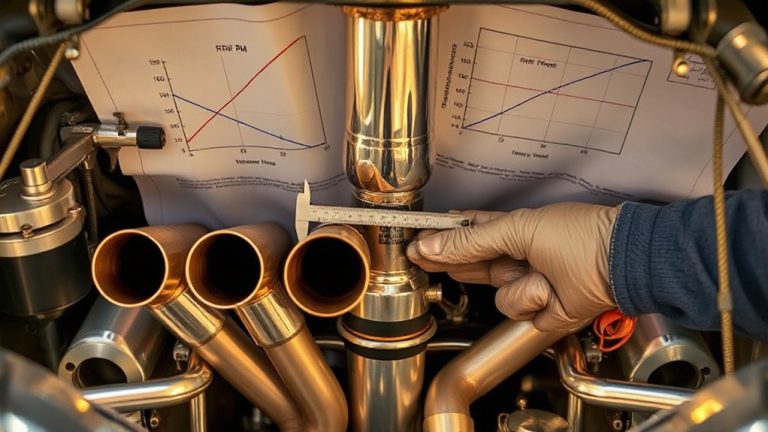
Durability starts with design. You need clutch longevity when pushing high-torque engines on both street and track. Top brands like Centerforce, Exedy, and Sachs engineer for consistent clamp load and heat resistance. Their organic and Kevlar-reinforced friction materials withstand 500+ ft-lbs reliably. Brand reliability matters-Luk and McLeod use precision-machined pressure plates with ±0.001-inch runout tolerances, ensuring even engagement. These clutches maintain performance after 30,000 street miles or 200 track laps. Dual-friction disks, like those in Exedy’s Racing line, combine ceramic facing on the pressure side with organic material toward the flywheel, balancing grip and smooth takeoff. Springs are tempered to resist fatigue, retaining 95% clamping force after prolonged heat cycles. Thermal capacity exceeds 1,000°F in competition models. You’re not just buying a part-you’re investing in calibrated engineering that won’t slip when you need it most.
How to Install a Performance Clutch Without Ruining It
What happens if you skip prep work before bolting in a performance clutch? You risk immediate damage and premature failure. Proper clutch alignment is non-negotiable-use a pilot bearing tool and alignment sleeve to center the disc. Misalignment causes binding, uneven wear, and vibration under load. Always inspect the flywheel surface; resurface it to a 32–64 RMS finish if needed. When installing, torque pressure plate bolts in a star pattern to OEM specs-usually 18–25 ft-lbs. After installation, follow the break in procedure: perform 10–15 moderate accelerations from 20 to 60 mph in third gear, then coast to stop. Avoid aggressive launches or slipping for the first 500 miles. Heat generates friction material transfer; skipping the break in procedure ruins the disc’s ability to engage smoothly. Treat every step like a precision assembly-because it is.
On a final note
You need a clutch built for stress. Stock units slip past 350 ft-lbs. Upgraded organic or twin-disc kits handle 500–700 ft-lbs. Lighter flywheels reduce rotational mass by 8–12 lbs, sharpening throttle response. Brands like ACT, Clutch Masters, and RAM use high-friction ceramics and sprung hubs for durability. Proper alignment during installation prevents chatter. A 1,200-rpm stall speed converter pairs well with aggressive disc materials. Match components to your torque curve. Performance starts with precision.