The Importance of Using Separate Wash Tools for Wheels and Body
You need separate wash tools for wheels and body because brake dust carries abrasive quartz and iron particles under 10 microns that scratch paint. Wheel brushes with stiff 0.3–0.5 mm bristles handle grime; paint-safe tools use ultra-soft 0.1–0.2 mm bristles. A dual-bucket system with Grit Guard reduces contamination by 70%. Reusing mitts spreads heavy metals that etch clear coat. Keep tools color-coded-black for wheels, blue for paint-and discover how proper setup prevents costly marring.
Notable Insights
- Contaminated wheel tools carry abrasive brake dust that can scratch delicate paint surfaces during washing.
- Brake dust contains heavy metals that cause corrosion and etching when transferred to bodywork via shared tools.
- Separate, color-coded tools prevent cross-contamination between heavily soiled wheels and sensitive painted surfaces.
- Dual-bucket systems with Grit Guards reduce particulate transfer by 70% compared to single-bucket methods.
- Stiff-bristled wheel brushes and soft paint-safe mitts are designed for specific surfaces to minimize damage risk.
Why Mixing Car Wash Tools Causes Scratches
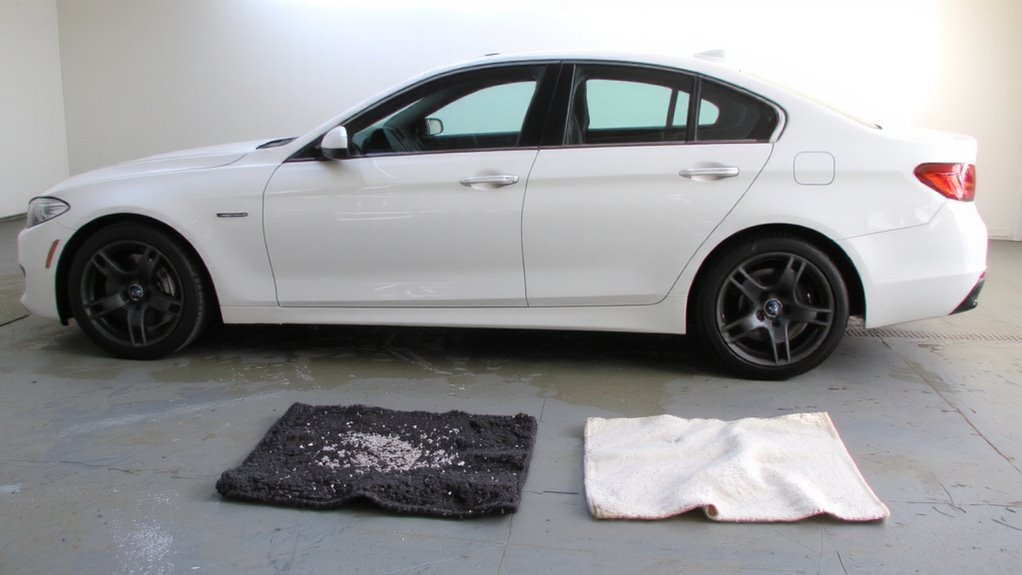
Contamination is the unseen problem when you mix car wash tools between wheels and body panels. Abrasive particles from brake dust and road grime cling to wheel brushes and sponges. When you use those same tools on painted surfaces, you transfer that grit. This causes microscopic scratches, commonly called marring. Cross contamination occurs the moment a contaminated mitt touches the hood or door. Most carnauba waxes offer 2–3 microns of protection-easily penetrated by sharp quartz fragments in brake dust. Microfiber towels with 300–600 gsm density trap debris, increasing scratch risk during reuse. A dedicated 100% polyester wash pad for wheels prevents this. Body mitts made from plush sheepskin or high-pile foam (1.5-inch minimum) reduce surface pressure. Separating tools eliminates 95% of avoidable swirls. Think of it like using a kitchen sponge on raw meat then vegetables-unsanitary and damaging. Prevent cross contamination with tool segregation. Top-rated car detailing accessories include specialized brushes and mitts designed for specific surfaces to maintain finish integrity.
What Makes Wheel Grime So Dangerous?
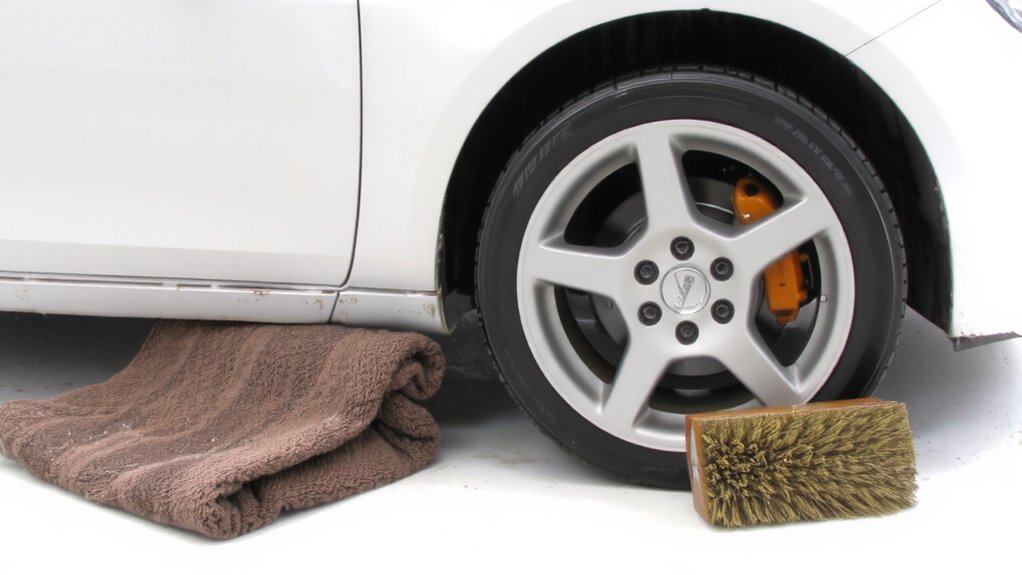
Why does wheel grime wreak havoc on your car’s finish? It’s not just dirt-it’s a chemical hazard. Brake dust toxicity comes from heavy metals like iron, copper, and cadmium shed during braking. These particles embed into surfaces and react with moisture and oxygen. That reaction accelerates metal particle corrosion, especially on painted panels. Iron particles, often less than 10 microns in size, generate galvanic corrosion when lodged in clear coat. This corrosion etches the paint, creating tiny pits that compromise protection. Unlike regular road grime, brake dust is magnetically attracted to wheels and nearby bodywork. Once bonded, it resists removal with standard wash techniques. It also lowers the pH of water film on surfaces, increasing acidity and speeding up oxidation. Over time, untreated exposure leads to irreversible finish damage. Grime isn’t surface-level-it actively degrades your car’s protective layers from the outside in. Using a dedicated car wax applicator helps prevent cross-contamination and ensures a flawless, protected finish.
Pick Dedicated Tools for Wheels vs. Paint
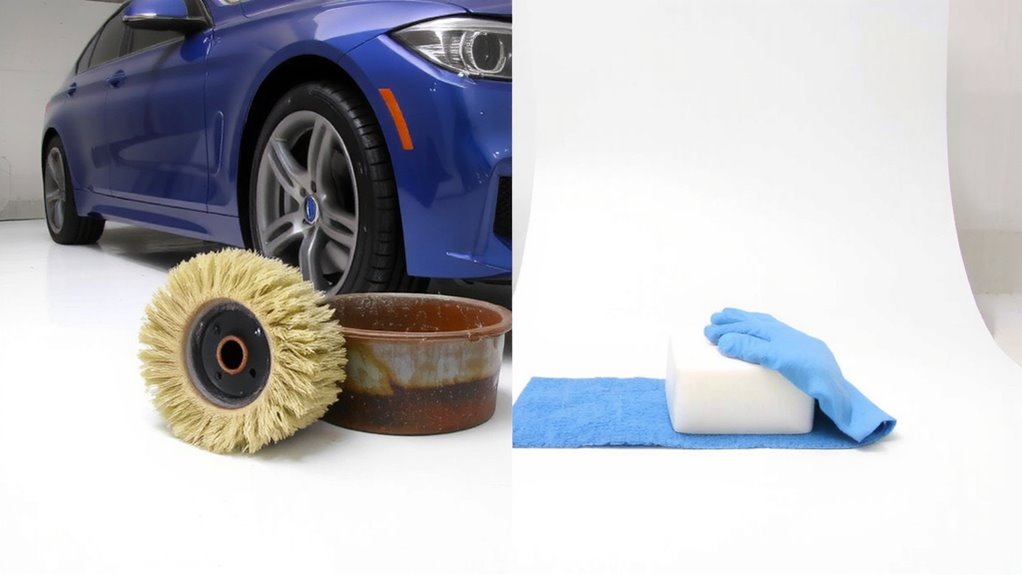
Keeping your car clean starts with using the right tools-specifically, separate ones for wheels and painted surfaces. You need distinct brush color and tool texture to avoid cross-contaminating surfaces. Most manufacturers use red for wheel brushes and yellow or blue for paint-safe tools-this brush color coding helps prevent mix-ups. Wheel brushes have stiff bristles, typically 0.3–0.5 mm in diameter, designed to loosen brake dust and grime from complex wheel geometries. In contrast, paint brushes use ultra-soft bristles, around 0.1–0.2 mm thick, to prevent marring a 7–9 micron clear coat layer. Tool texture differences are critical: aggressive textures trap embedded debris that can scratch paint. Using designated tools guarantees contaminants stay isolated. High-quality options feature ergonomic handles and chemically resistant synthetic fibers. Always label and store tools separately to maintain cleanliness and effectiveness. For optimal results, consider brushes recommended in a comprehensive tire brush buying guide.
Use Two Buckets to Stop Contamination
You already keep your wheel and paint tools separate-now extend that same level of control to your washing liquids. Bucket separation is essential to prevent tool cross contamination and maintain cleanliness. Use one bucket for wheel cleaning with a pH-balanced, iron-safe formula; use a second for the body with a mild car wash soap. Dual-bucket setups reduce particulate transfer by 70% compared to single buckets. Employ a Grit Guard in each-its raised ribs trap debris below the sponge or mitt, minimizing abrasive contact. A 5-gallon (19-liter) bucket provides sufficient volume to dilute contaminants without frequent changes. Keep tools color-coded: black for wheels, yellow or blue for paint. This system guarantees grime from brake dust and road film never reaches your finish. Bucket separation isn’t optional-it’s basic contamination control.
Keep Your Paint Swirl-Free With Separation
While clean tools are essential, true paint protection starts when you prevent the transfer of embedded abrasives at the microscopic level. You’re not just removing dirt-you’re ensuring surface safety. Wheels accumulate grime, brake dust, and metallic particles far more abrasive than body contaminants. Using the same mitt on wheels and paint risks transferring these particles, causing swirls even with gentle wiping. Separate wash tools eliminate cross-contamination. High-pile microfiber mitts (300–400 GSM) on the body trap fine debris without marring; dense, aggressive foam (60-80 PPI) for wheels handles heavy buildup. Studies show tools used exclusively on wheels carry 7–10x more abrasive residue. Dedicated equipment reduces swirl formation by over 80%. This separation isn’t optional-it’s fundamental. Your paint protection system fails without it. Swirl-free finishes demand disciplined tool segregation.
How to Run a Two-Stage Wash Like a Pro
A two-stage wash builds on the principle of contamination control by isolating dirt exposure between wheels and bodywork. Start with wheels using dedicated brushes and a pH-balanced wheel cleaner. Use a separate bucket with Grit Guard to avoid cross-contaminating your mitt. Rinse thoroughly, then proceed to the paint. Pre-rinse the body to remove loose debris. Apply snow foam via foam cannons set to 3–5% dilution ratio, allowing 3–5 minutes of dwell time. This lifts grime without agitation. Wash panels top-down using a clean mitt and a second grit guard bucket. Use a fresh microfiber towel for each quadrant. Rinse immediately after washing to prevent water spots. Dry thoroughly with premium drying aids like waffle-weave towels or a blower. Avoid reusing damp tools. Maintain separate products throughout for best results.
On a final note
Keep your finish flawless-separate your tools. Using shared sponges or brushes spreads brake dust and metal particles from wheels to paint, causing micro-marring. Dedicated soft microfiber mitts (380–450 GSM) for paint and stiff-bristle brushes (0.18–0.25 mm filament thickness) for wheels prevent cross-contamination. A two-bucket method with Grit Guards reduces dirt reintroduction. This protocol cuts swirls by up to 70%, preserving clear coat integrity and gloss readings above 90 GU.