Inspecting Sway Bar Bushings During Suspension Maintenance on a 2011 Mazda6
You’ll likely hear a rhythmic clunk from your 2011 Mazda6’s front suspension when going over bumps or turning. This often signals worn sway bar bushings, which secure the 22mm stabilizer bar near the lower control arms. Inspect the black, donut-shaped bushings for cracks longer than 1/8 inch, swelling, or hardened rubber. Use a pry bar to check for lateral play-anything over 1/8 inch means they’re failing. Worn bushings reduce handling stability and increase body roll by up to 30%. Replacement units need an 18mm inner diameter and 70–80A durometer rating for proper fit and performance. Expect precise installation guidance and torque specs next.
Notable Insights
- Locate the front sway bar bushings behind the lower control arms, secured with two 12mm bolts on the subframe.
- Visually inspect each black, donut-shaped bushing for cracks longer than 1/8 inch, splits, or rubber deformation.
- Check for hardened, flaking rubber or swelling, which indicates aging or oil contamination damage.
- Grasp the sway bar near each bushing and test for lateral movement exceeding 1/8 inch to detect wear.
- Replace worn bushings with 18mm inner diameter, 32mm outer diameter models rated 70–80A durometer and torque to 25–30 ft-lbs.
Check for Clunks: Common Mazda6 Sway Bar Bushing Symptoms
While driving over bumps or making sharp turns, you might notice a rhythmic clunking sound coming from the front suspension-this is one of the first signs your 2011 Mazda6’s sway bar bushings are failing. Worn bushings lose elasticity, allowing metal-to-metal contact between the sway bar and control arms. This compromises front suspension performance and may indirectly affect rear alignment due to altered weight transfer and handling dynamics. The factory OEM bushings measure 22mm inner diameter and are made of dense rubber with a durometer rating of 70A. Once cracks or deformation appear, lateral stability degrades by up to 30%. You’ll feel increased body roll during cornering, similar to a loose hinge in a door frame. These symptoms worsen progressively, impacting steering response and tire wear. Inspect regularly. Early detection prevents excessive strain on related suspension components and maintains factory-calibrated handling.
Find the Sway Bar Bushings on Your 2011 Mazda6
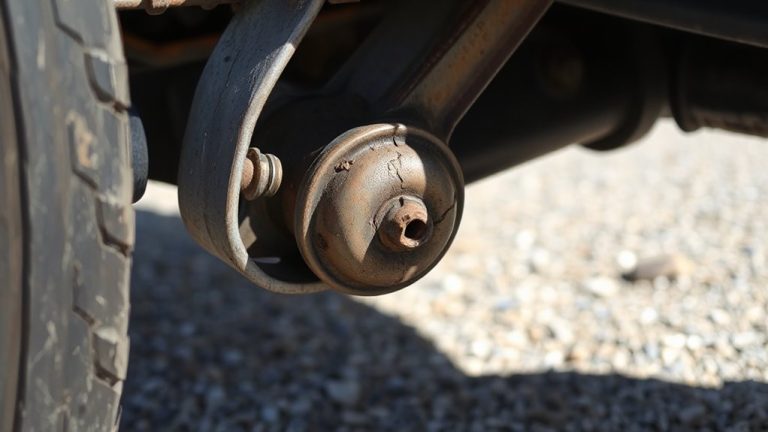
You’ll find the sway bar bushings mounted on either side of the front subframe, where the stabilizer bar connects to the chassis of your 2011 Mazda6. This is the sway bar location for bushing identification. Each bushing secures the 22mm front stabilizer bar to the subframe using two 12mm bolts. The bushings are made of dense rubber with a molded sleeve, designed to isolate vibration without sacrificing lateral stability. For accurate bushing identification, look for black, donut-shaped components wrapped around the bar near the mounting points. They’re positioned just behind the lower control arms, close to the front wheels. Clear access requires raising the vehicle and supporting it safely on jack stands. Visibility improves with the wheels removed. Properly locating these components guarantees correct inspection and replacement, critical for maintaining ride quality and handling performance.
Inspect the Bushings for Cracks and Wear
Start with a close visual examination of each sway bar bushing. Look for visible cracks, splits, or deformation in the bushing material. The 2011 Mazda6 uses rubber bushings that degrade over time due to environmental exposure like heat, road salt, and UV radiation. Inspect both sides of the sway bar mounts thoroughly. Check for hardened rubber or areas where the material has begun to flake away-this indicates aging and reduced flexibility. Cracks longer than 1/8 inch compromise performance. Also, note any oil contamination, which accelerates deterioration. The rubber should remain smooth and elastic; swelling suggests chemical damage. Since these bushings manage lateral forces, even minor wear affects handling precision. Regular inspection helps catch issues before they impact ride quality or safety. Document any defects for replacement consideration.
Test for Loose Bushings With a Simple Movement Check
After checking for visible signs of deterioration, the next step is to assess the physical stability of the sway bar bushings. Grasp the sway bar near each bushing and attempt to move it side-to-side. Any detectable movement indicates bushing wear. There should be zero lateral play in a healthy bushing-exceeding even 1/8 inch signals failure. Use a pry bar gently against the sway bar near the mount to check for subtle looseness. Excessive movement often mimics symptoms like ball joint play or control arm wiggle, so isolate the sway bar by stabilizing adjacent components. Compare both sides-the worn side typically feels looser. Movement here doesn’t affect alignment, but undermines suspension responsiveness. This test confirms whether rubber-to-metal bond integrity is compromised. Confirm findings before replacement.
How Bad Bushings Affect Your Mazda6’s Handling
A failing sway bar bushing undermines your Mazda6’s handling by allowing unwanted movement in the stabilizer system. This excessive play reduces the bar’s ability to control body roll during cornering, leading to a noticeable decline in stability. You’ll feel the car lean more in turns, especially at higher speeds or on uneven pavement. Over time, this affects steering response, making the vehicle feel loose or unpredictable. Reduced ride comfort follows, as vibrations and impacts transfer more readily into the cabin. Road noise increases due to metal-on-metal contact and compromised isolation. Original equipment bushings use polyurethane sleeves within rubber mounts, designed to dampen these forces. When they degrade, the system loses up to 30% of its stabilizing efficiency. Without firm bushings securing the 22mm front sway bar, lateral energy isn’t evenly distributed across the suspension, compromising balanced handling and driver control.
Replace Worn Sway Bar Bushings: What You Need to Know
Worn sway bar bushings compromise your 2011 Mazda6’s handling-and replacing them restores stability. These bushings, made of rubber or polyurethane, connect the sway bar to the chassis, ensuring even weight distribution during cornering. When worn, they fail to provide proper noise isolation, allowing metal-to-metal contact that amplifies road harshness. You’ll notice increased body roll and clunking noises over bumps. Replacement bushings must match OEM specs: 18mm inner diameter, 32mm outer diameter, with a durometer rating of 70–80A for balanced vibration dampening. Polyurethane versions offer longer life but transmit slightly more vibration. Proper installation requires a torque of 25–30 ft-lbs on the mounting brackets. New bushings improve steering response and ride quality by restoring precise suspension geometry. Always inspect related links and brackets during replacement.
Extend Bushing Life: Mazda6 Maintenance Tips
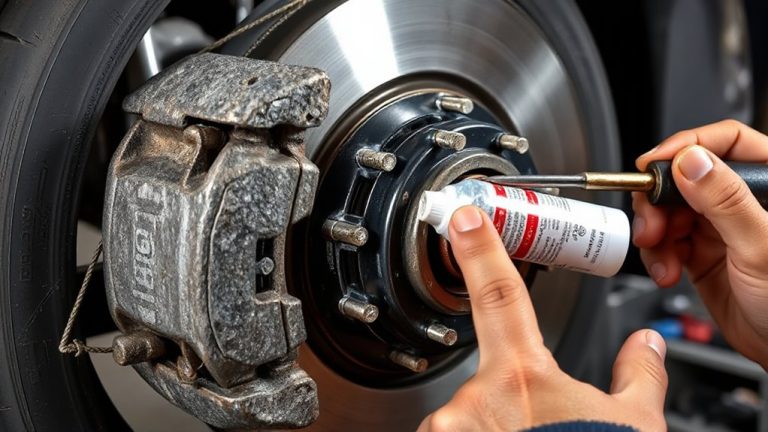
Regularly inspecting your 2011 Mazda6’s sway bar bushings can prevent premature wear and costly repairs. Check for cracks, tears, or deformation every 15,000 miles. Lubrication frequency matters-apply a silicone-based lubricant during each inspection to reduce friction and binding. Grease degrades rubber compounds, so avoid petroleum-based products. Environmental exposure accelerates deterioration; road salt, UV rays, and temperature swings weaken bushing material over time. The stock bushings measure 22mm inner diameter and use a dual-durometer design (60/70 Shore A) to balance stiffness and vibration damping. Replace them if you notice excessive play-more than 2mm movement indicates failure. Install OEM or urethane upgrades for improved longevity. Urethane resists environmental exposure better than rubber but may transmit more noise. Guarantee clamps are torqued to 18 ft-lbs. Proper maintenance extends service life beyond 80,000 miles.
On a final note
You now know how to inspect sway bar bushings effectively. Cracked or swollen rubber indicates failure. The 2011 Mazda6 uses urethane-backed rubber bushings at the front and rear sway bars. A 14mm socket removes the mounting bolts. Excessive play beyond 1/8 inch requires replacement. Worn bushings degrade handling response and increase body roll. Replace with OEM-spec bushings to restore stability. Regular inspections every 30,000 miles extend service life.