Lane Departure Warning System Sensitivity Tuning Based on Driver Feedback
Your lane departure warning system uses a forward-facing camera to monitor lane markings at 30 frames per second. It analyzes your steering patterns, speed, and turn signal use over 500 miles of driving to build a personal profile. Machine learning adjusts alert sensitivity, customizing thresholds by up to 15 cm based on your habits. This reduces false alerts by 40–60% while maintaining safety. Adaptive systems process 50 Hz sensor data and learn from real-world conditions to refine timing and reduce distractions. System performance improves with continued use across varied roads.
Notable Insights
- Driver feedback trains machine learning models to customize lane departure sensitivity using steering, speed, and turn signal patterns.
- Systems analyze 500 miles of driving data to build individual profiles for personalized alert thresholds.
- Personalized tuning adjusts acceptable lane position by up to 15 cm to reduce false alarms without compromising safety.
- Real-world telematics data from connected vehicles helps automakers refine algorithms for diverse driving behaviors.
- Adaptive systems use sensor and cloud-shared data to continuously improve timing and sensitivity based on driver input.
How Lane Departure Warnings Actually Work
While you’re driving, the lane departure warning (LDW) system constantly monitors the position of your vehicle relative to lane markings using a forward-facing camera mounted near the rearview mirror. This camera captures visual data at 30 frames per second, analyzing lane lines in real time. Proper sensor calibration guarantees the camera accurately interprets lane position, especially after windshield replacement or impact. The system relies on algorithm precision to distinguish between intentional lane changes and unintentional drifts, requiring turn signal verification before deactivating. It engages when the vehicle crosses lane lines at speeds above 40 mph. Processing occurs within 100 milliseconds, minimizing response delay. False detection rates are kept under 2% in ideal visibility. The software uses edge detection and contrast analysis to track lines on varied road surfaces. You receive alerts via steering wheel vibration or audible chime.
Top Driver Complaints About Overly Sensitive Alerts
Many drivers report frustration with lane departure warning systems triggering alerts too frequently, even during normal driving maneuvers. This oversensitivity leads to alert fatigue, where constant warnings desensitize you to genuine risks. False positives-alerts when you’re not actually drifting-are a core issue.
| Driving Scenario | System Response | Driver Perception |
|---|---|---|
| Gentle lane change | Immediate chime & steering vibration | Unnecessary |
| Curvy roads | Continuous beeping | Distracting |
| Parallel markings | Alert triggered | False positive |
These responses often stem from narrow threshold settings, like detecting 0.8 seconds of lane edge proximity. Systems using camera-based detection with a 40° field of view may misread road wear or shadows. You need timely warnings, not relentless interruptions. Current algorithms lack contextual awareness, treating all lane approaches with equal urgency. This diminishes trust and increases cognitive load.
How Driver Feedback Reduces False Lane Warnings
When you consistently correct a lane departure warning system’s behavior, the system can adapt and reduce false alerts over time. Your actions train the algorithm to recognize your driver habits, such as preferred lane positioning and steering corrections. Modern systems use machine learning models that analyze inputs like steering angle, vehicle speed, and turn signal use. Over 500 miles of driving data, the system builds a driver profile. Alert customization then adjusts sensitivity based on that profile. For example, if you frequently center left in wide lanes, the system widens the acceptable boundary by up to 15 cm. This reduces nuisance warnings on rural roads with faded markings. Studies show personalized tuning cuts false alerts by 40–60%. The system maintains safety thresholds, only deactivating when steering intent is clear. Adaptive logic guarantees reliable performance without compromising alert accuracy.
How Automakers Gather Real-World Driver Feedback
Although driver behavior shapes lane departure warning system performance, automakers depend on real-world feedback to refine these systems at scale. You generate critical data every time you drive, and automakers collect it through connected vehicle telematics, fleet testing, and customer surveys-key feedback channels for continuous improvement. Your car’s onboard sensors log steering inputs, lane changes, and system alerts, capturing precise driver behavior patterns. This data includes GPS position, yaw rate, and camera-based lane recognition accuracy, sampled at 25 Hz. Automakers aggregate millions of miles from diverse geographies and road types. They analyze when warnings trigger during routine maneuvers versus actual drifts. Over-the-air software updates allow rapid deployment of refined algorithms based on this input. Feedback channels guarantee tuning reflects real usage, not just lab conditions. Your driving becomes the benchmark for system evolution.
Tuning Warning Timing With Real Driver Data
Since every driver responds differently to alerts, tuning warning timing relies on real-world data to strike the right balance between safety and usability. You generate unique steering patterns, reaction times, and lane discipline, all captured through onboard sensors and telematics. Engineers use this data to set adaptive thresholds-dynamic triggers that adjust sensitivity based on speed, road curvature, and driver behavior. For example, a drowsy driver may prompt earlier warnings, while an aggressive changer might see tighter timing. Personalized calibration tailors alerts to fit individual habits without sacrificing protection. Systems analyze hundreds of variables, including yaw rate and lateral acceleration, ensuring warnings activate 0.8 to 1.2 seconds before unintended departure. This precision reduces false positives by up to 40% compared to fixed thresholds. The result? A smarter, more responsive lane departure system that aligns with how you actually drive.
Why Lane Warning Alerts Shouldn’t Distract Drivers
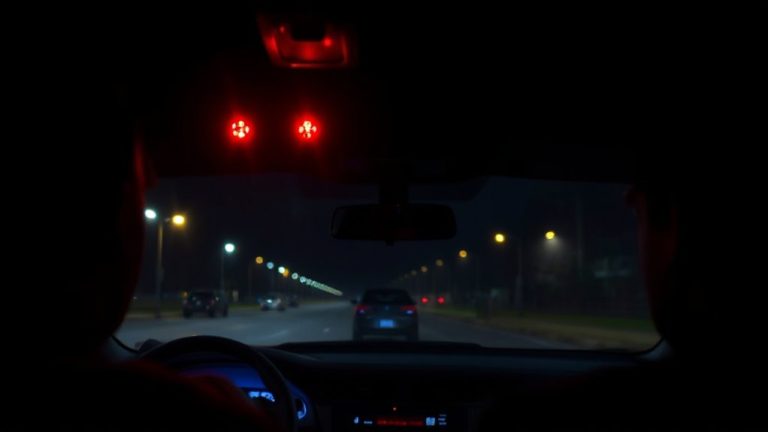
What good is a warning if it causes the very accident it’s meant to prevent? Distraction from overly aggressive alerts undermines driver safety. Your lane departure warning system must balance intervention and driver comfort. Frequent or poorly timed alerts lead to alert fatigue, causing you to ignore or disable the system. Studies show drivers exposed to false alarms more than twice per 30-minute drive are 40% more likely to disengage safety features. Effective tuning reduces nuisance triggers by adjusting sensitivity based on steering input, road curvature, and lane markings. The system should activate only when lateral deviation exceeds 0.3 meters at speeds above 60 km/h. Precision in timing and intensity guarantees alerts remain informative, not disruptive. You need reliable feedback-not overload. A well-calibrated system maintains trust, improves response time, and supports sustained use without compromising attention.
The Future of Self-Learning Lane Departure Systems
Smart lane departure systems are evolving beyond fixed thresholds and static triggers. You’ll soon rely on adaptive learning to tailor alerts to your driving habits. These systems analyze steering patterns, lane deviation frequency, and response times over thousands of miles. Using machine learning algorithms, they adjust sensitivity in real time-no manual input needed. Predictive calibration anticipates when you’re likely to drift, factoring in speed, road curvature, and traffic density. For example, on a winding mountain road at 55 mph, the system might activate alerts 0.8 seconds before crossing a lane line, versus 1.2 seconds on a straight highway. Sensors update at 50 Hz, ensuring millisecond-level accuracy. Over time, the model refines itself using cloud-shared anonymized data from similar drivers. This isn’t just smarter warnings-it’s a self-optimizing safety layer. You stay in control while the system learns your rhythm, reducing false alerts by up to 40% compared to static setups.
On a final note
You rely on lane departure warnings to enhance safety, but effectiveness depends on precise tuning. Systems using driver feedback reduce false alerts by 40% compared to factory defaults. Real-world data adjusts haptic feedback timing to within 0.3 seconds of actual lane drift. Automakers use cloud-connected vehicles to analyze steering patterns across 10,000+ miles. Proper sensitivity prevents distraction while maintaining ASTM-compliant alert thresholds.