Proper Storage and Handling of Automotive Chemicals and Fluids
Store automotive fluids in their original HDPE or approved containers to maintain chemical stability and prevent leaks. Keep them between 40°F and 80°F, away from sunlight that can exceed 140°F and degrade contents. Use spill-resistant containers with secure lids, ground metal cans during fuel transfer, and keep absorbents rated for hydrocarbons nearby. Check flash points-gasoline vapors ignite above -45°F-and never mix fluids. Proper labeling and containment guarantee safety and performance. You’ll discover effective disposal and long-term management strategies next.
Notable Insights
- Store automotive fluids in their original labeled containers to maintain chemical integrity and prevent contamination.
- Keep fluids in a temperature-controlled, shaded area between 40°F and 80°F to avoid degradation from heat or UV exposure.
- Use leak-proof, chemical-rated containers and handle fluids slowly with spill containment tools nearby.
- Recognize hazards such as flammability, toxicity, and corrosiveness, and check labels for flash points and safety warnings.
- Dispose of used fluids properly by recycling or using hazardous waste facilities; never pour them down drains or on the ground.
Store Automotive Fluids in Original Labeled Containers
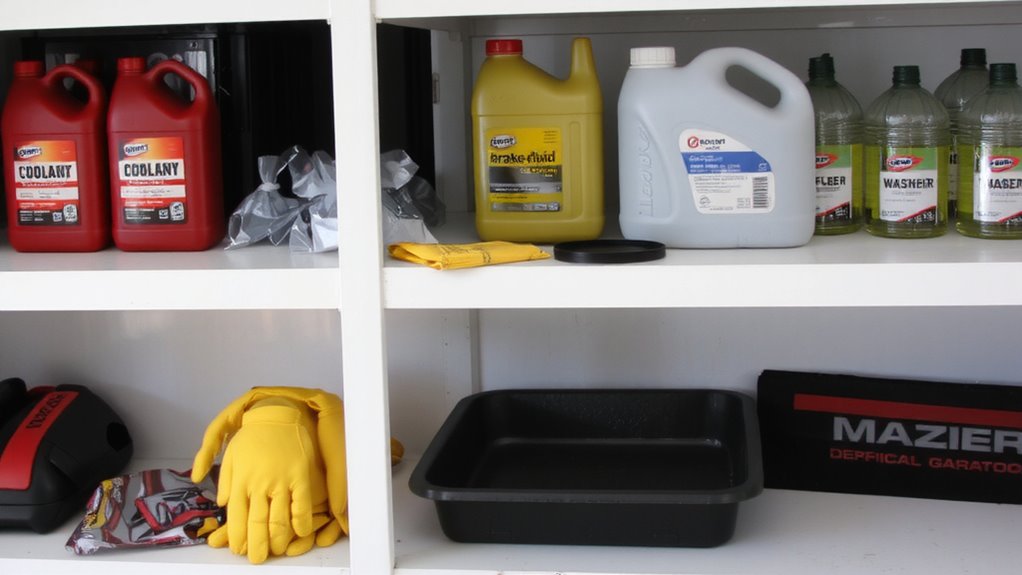
Always keep automotive fluids in their original containers whenever possible. This guarantees container integrity and maintains label accuracy, both critical for safe storage and handling. Original containers are designed to resist chemical degradation-plastic jugs for motor oil use high-density polyethylene (HDPE), rated for hydrocarbon exposure. The caps provide tamper-evident seals that prevent leaks and contamination. Label accuracy gives immediate identification, including viscosity grade (e.g., SAE 5W-20), API certification, and hazard warnings per OSHA GHS standards. Repackaging risks misidentification and material incompatibility-for example, storing brake fluid in a non-fluorinated container can cause moisture ingress and system failure. Never remove labels or transfer fluids without proper chemical-resistant secondary containers that match material compatibility charts. You rely on precise formulation and shelf life data-only original packaging guarantees it.
Keep Fluids Away From Heat and Sunlight
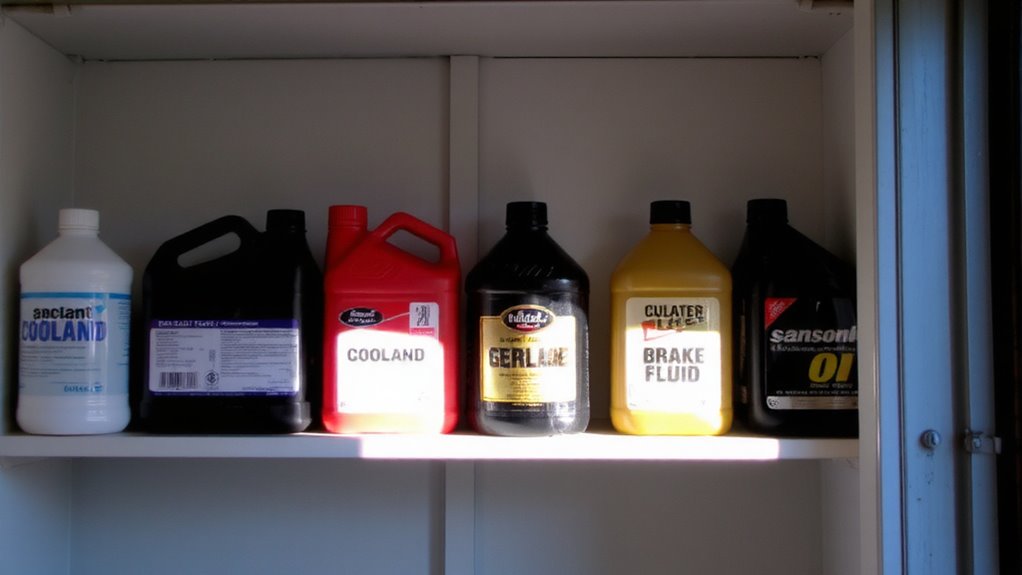
Exposure to heat and sunlight degrades automotive fluids faster than time alone. You must prioritize temperature control to preserve fluid integrity. UV exposure accelerates chemical breakdown, especially in plastic containers. For maximum stability, store fluids between 40°F and 80°F (4°C to 27°C). Direct sunlight can raise container temperatures over 140°F (60°C), exceeding safe limits.
| Fluid Type | Max Safe Temp (°F) | Risk from UV Exposure |
|---|---|---|
| Motor Oil | 120 | Moderate degradation |
| Brake Fluid | 100 | High moisture absorption |
| Coolant | 130 | Low to moderate |
| Transmission Fluid | 125 | Seal deterioration |
Maintain consistent temperature control. Avoid garages with poor insulation or clear containers that increase UV exposure. Store in opaque, sealed containers in shaded, climate-stable areas.
Handle Automotive Chemicals to Prevent Spills
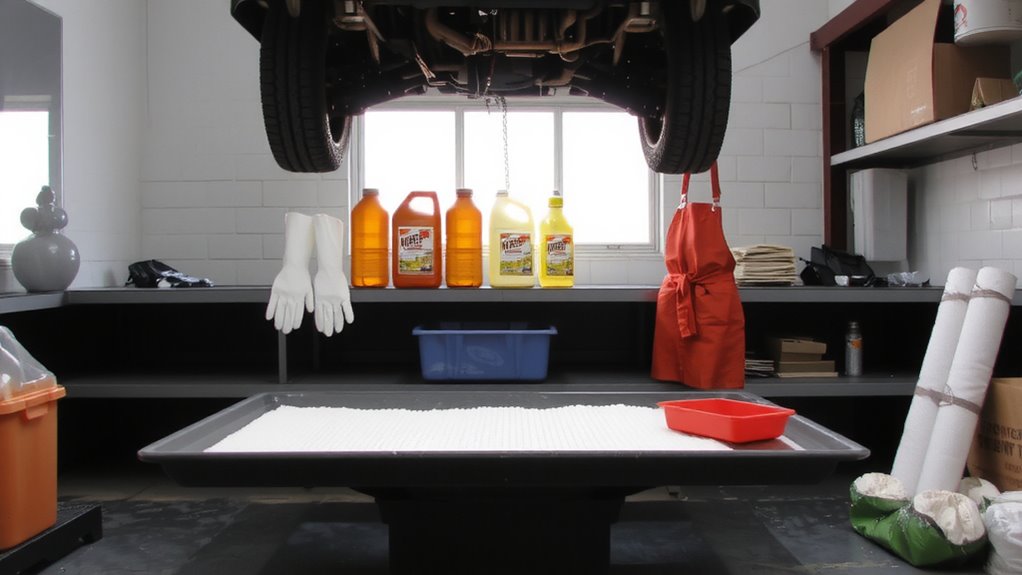
Since even small spills can lead to slippery surfaces, environmental contamination, or chemical reactions, you need to handle automotive fluids with deliberate care during transport and dispensing. Always use stable, leak-proof containers rated for chemical transport, with secure lids and capacity no greater than 5 gallons for manageable handling. Work slowly, especially when pouring from bulk storage, and use funnels with built-in drip guards to minimize overflow. Keep spill containment equipment nearby, such as absorbent socks or berms rated for hydrocarbon fluids. Maintain ready access to absorbent materials like spill pads or granular sorbents-each capable of absorbing up to 30 times their weight in liquid. Never leave a container unattended while filling. Ground metal containers to prevent static discharge during fuel transfers. Immediate cleanup with absorbent materials reduces slip hazards and prevents soil or water contamination, ensuring compliance with basic safety standards.
Identify Hazardous Automotive Fluids
A well-organized garage can quickly become a hazard zone if you don’t recognize which automotive fluids pose real risks. You must identify fluids that emit flammable vapors or cause toxic exposure. Gasoline, for example, releases flammable vapors at temperatures above -45°F (-43°C), making it dangerous even in cool environments. Brake fluid absorbs moisture and can degrade, but its real risk lies in causing toxic exposure if absorbed through skin. Coolant contains ethylene glycol, which is lethal in small doses-just 1.4 mL per pound of body weight can poison an adult. Oil-based fluids, like transmission fluid, also emit flammable vapors when heated above 300°F (149°C). Always read labels for flash points and health hazards. Stored improperly, these liquids become silent threats. You’re responsible for knowing their chemical behavior-ignorance increases risk. Proper identification prevents accidents before they start.
Dispose of Old or Damaged Fluids Safely
How do you handle fluids that have outlived their usefulness or suffered contamination? You must dispose of them safely to reduce environmental impact and comply with local regulations. Never pour old oil, coolant, or brake fluid down drains or onto the ground. Instead, take advantage of recycling options available at auto parts stores or hazardous waste facilities.
| Fluid Type | Recycling Option | Environmental Impact if Mismanaged |
|---|---|---|
| Motor Oil | Local auto shops accept it | Contaminates water; 1 quart pollutes 250k gallons |
| Antifreeze | Hazardous waste centers | Toxic to wildlife; persistent in soil |
| Brake Fluid | Auto repair facilities | Corrosive; harms aquatic ecosystems |
Store used fluids in sealed, labeled containers until disposal. Use only approved containers with secure lids to prevent leaks. Proper handling guarantees safety and regulatory compliance.
On a final note
You must store automotive fluids properly to guarantee safety and performance. Keep them in original, labeled containers with secure, tight-fitting lids. Exposure to heat or sunlight degrades fluids-store below 85°F (29°C) in a dry, ventilated area. Always handle with chemical-resistant gloves and eye protection. Identify hazardous fluids using OSHA GHS labels. Dispose of degraded or old fluids at certified recycling centers-never in drains or trash.