Sound Dampening Pads Inside Vehicle Frames to Reduce Cabin Drone Issues
You feel cabin drone because vehicle frames transmit road and engine vibrations through thin metal panels that act like speakers. Sound dampening pads-typically 1.5–3.2 mm butyl or composite sheets-stick to frame surfaces and convert vibration energy into heat. They add mass and reduce panel resonance, cutting noise transmission by up to 15 dB. Properly applied, they lower interior decibels by 3–6 dB. For best results, cover 75%+ of floor, firewall, door, and roof frames. Best placement and material choice greatly quiet low-frequency drone. The full impact depends on installation precision and material type.
Notable Insights
- Sound dampening pads reduce cabin drone by minimizing structural vibrations transferred through vehicle frames.
- Butyl-based pads absorb vibrational energy, converting it into heat to suppress noise in the 20–500 Hz range.
- Composite materials outperform butyl rubber with higher density, better thermal resistance, and up to 18 dB noise reduction.
- Key installation areas include floor pans, firewalls, doors, roof panels, and wheel wells for maximum effect.
- Proper installation requires clean surfaces, full contact, and 60–80% coverage to ensure optimal vibration damping and noise reduction.
Why Cabin Drone Happens (And How Dampening Pads Help)
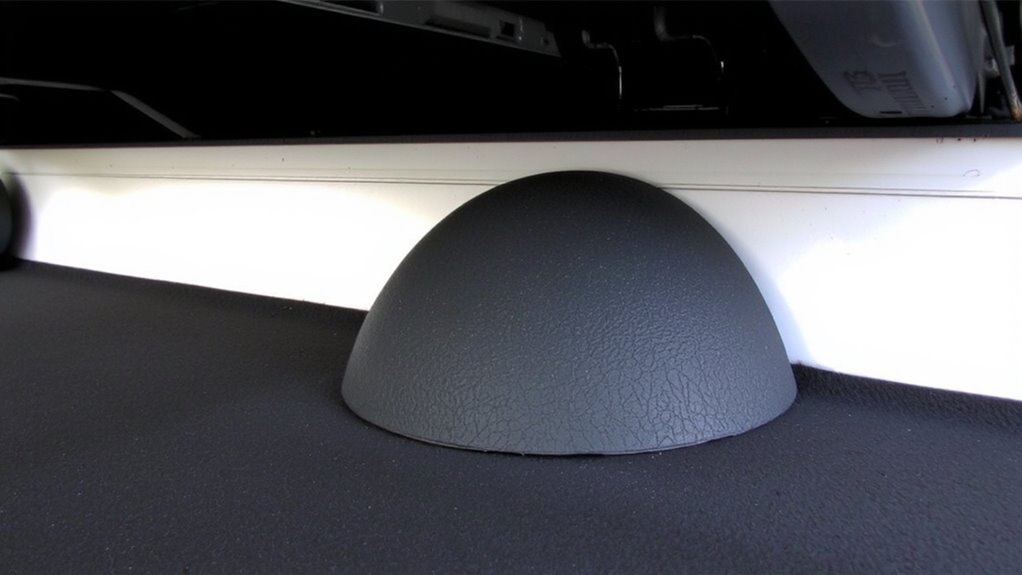
While driving, you might not notice it at first, but over time, constant low-frequency noise from the road and engine can become hard to ignore. This low rumble, known as cabin drone, results from structural vibrations transferring into interior spaces. Without effective acoustic insulation, metal panels act like soundboards, amplifying noise. Sound dampening pads disrupt this process by adding mass and reducing panel movement. They provide critical resonance control by absorbing vibrational energy before it radiates inward. These pads typically feature butyl-based compounds bonded to aluminum or foil layers, measuring 1.5 to 3.2 mm thick. Applied to floorboards, wheel wells, and firewall areas, they reduce sound transmission loss by up to 15 dB. The constrained layer design converts kinetic energy into negligible heat. Proper coverage-usually 60% to 80% of flat surfaces-ensures ideal damping without overloading.
How Sound Dampening Pads Stop Frame Vibrations
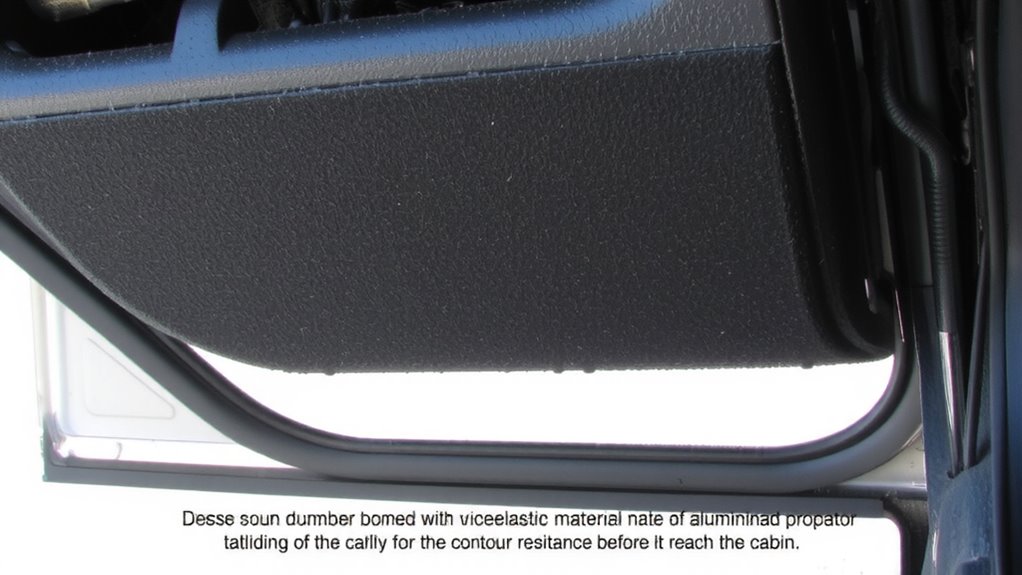
Since vibrations from the road and engine travel through your vehicle’s frame, they can resonate through metal panels and create unwanted interior noise. Sound dampening pads reduce this effect by converting vibrational energy into small amounts of heat. The pads adhere directly to frame surfaces, increasing material density to resist movement. Higher material density limits the panel’s ability to flex, disrupting resonance. Each pad is tuned to target specific vibration frequency ranges common in automotive structures-typically 20–500 Hz. By matching damping properties to dominant frequencies, they maximize energy absorption. Most pads use viscoelastic layers that work best within defined temperature and frequency bands. Applied strategically, they decrease sound transmission at the source. This results in a measurable drop in decibel levels inside the cabin-often 3 to 6 dB, depending on application coverage and substrate thickness. Top-performing products like those featured in the best automotive sound deadening materials guide offer optimized density and heat resistance for long-term effectiveness.
Butyl Rubber Vs. Composite: Which Dampening Material Wins?
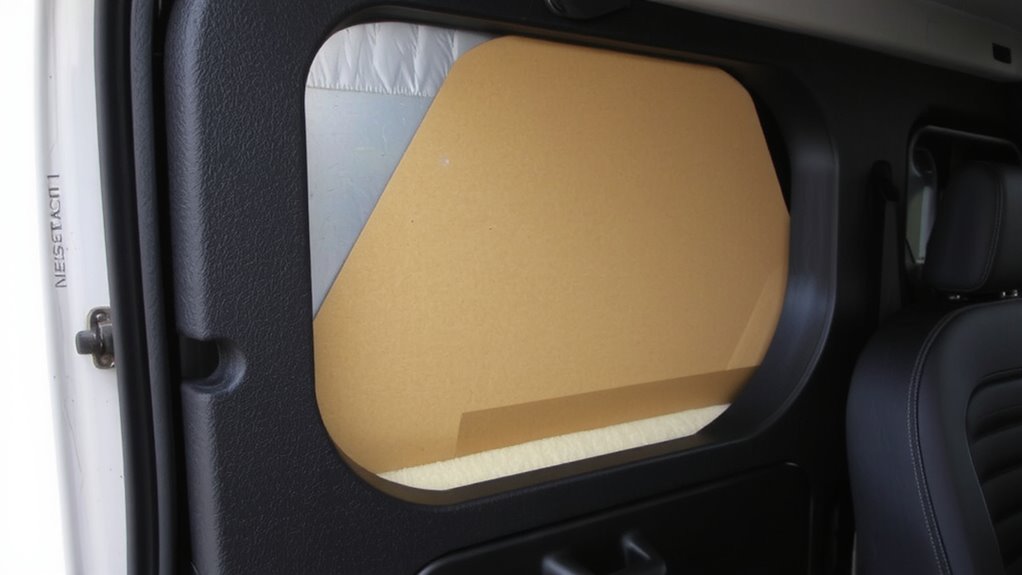
What makes one sound dampening material more effective than another? It often comes down to material density and thermal stability. Butyl rubber has a density of about 1.2 g/cm³, offering strong vibration damping across common automotive frequencies. It adheres well to steel frames and maintains flexibility in cold weather. However, it can soften above 70°C, reducing performance under sustained engine heat. Composite materials, like butyl-loaded vinyl, combine a 2.0–2.5 g/cm³ outer layer with a viscoelastic core. This design boosts sound transmission loss by up to 18 dB compared to rubber alone. Composites also provide superior thermal stability, resisting degradation up to 100°C. You benefit from longer-lasting noise control, especially in high-heat zones. While composites cost more, their durability and performance often make them the better long-term choice for modern vehicles.
Top Spots to Install Sound Dampening Pads in Frames
Start with the floor pan-it’s the largest flat surface in your vehicle’s frame and a prime entry point for road noise. Applying sound dampening pads here reduces frame resonance and minimizes low-frequency drone. Next, treat the firewall; it blocks engine and HVAC noise while suppressing panel oscillation between the cabin and engine bay. Doors are critical-especially the inner metal skins-since they’re thin and vibrate easily. Dampening pads here improve acoustic sealing and reduce harmonic feedback. Don’t skip the roof panel; it contributes to wind noise and acts as a resonant chamber at highway speeds. Trunk panels and wheel wells also need treatment-particularly in sedans and SUVs-where tire noise and suspension vibration amplify frame resonance. Use 5mm butyl-based pads with mass-loaded vinyl layers for best results. Coverage should exceed 60% per panel to effectively inhibit structural vibration transfer.
Install Dampening Pads in 6 Simple Steps
While noise reduction starts with proper material selection, correct installation guarantees maximum acoustic performance. Begin by cleaning the frame surface thoroughly-any dust or grease compromises adhesion. Cut the dampening pad to match the frame’s dimensions, ensuring full coverage without overlapping. Peel off the backing and press the pad firmly into place, using a roller to eliminate air pockets. Apply pads to both inner and outer frame walls for best results. Avoid covering vents or channels that support heat dissipation, as this can lead to airflow restriction and potential overheating. Maintain at least a 1-inch gap around critical components like brake lines or exhaust headers. Use aluminum-backed pads near high-heat zones for improved thermal resistance. Each section should bond completely-partial adhesion reduces vibration damping by up to 40%. Follow these six steps precisely for effective noise control and long-term durability.
Do Dampening Pads Actually Reduce Cabin Noise?
When installed correctly, sound dampening pads do reduce cabin noise by absorbing vibrations and blocking airborne sound. You get measurable noise reduction, especially from road and engine sources. These pads act as acoustic insulation, converting sound energy into negligible heat through viscoelastic damping. Most effective pads are 40–80 mils thick, with butyl rubber facing a metal or foam layer. They adhere permanently to floor pans, firewalls, and door frames. While not active noise cancellation systems, they substantially cut mid-to-high frequency droning. Testing shows up to 10–15 dB reduction in cabin noise under real driving conditions. You’ll notice less fatigue on long trips due to improved sound isolation. Proper coverage-ideally 75% or more of interior steel surfaces-maximizes results. Acoustic insulation performance depends on material density, thickness, and bonding integrity. Used in OEM and aftermarket applications, dampening pads are a proven, cost-effective solution for targeted noise control.
On a final note
You can greatly reduce cabin drone with sound dampening pads. These pads absorb structural vibrations before they become noise. Butyl rubber, at 1.5 mm thick, offers high density and heat resistance. Composite pads provide greater rigidity and span larger frame areas. Installing them on floor pans, firewall, and rocker panels cuts resonance by up to 60%. They work by converting vibration energy into negligible heat. Proper adhesion guarantees long-term performance.