Understanding How Electronic Stability Control Enhances Vehicle Safety During Skids
You rely on electronic stability control (ESC) to keep your vehicle stable during skids. It detects when your car deviates from your intended path using steering angle, yaw rate, and wheel speed sensors. If understeer or oversteer is detected, ESC automatically applies brakes to individual wheels-up to 16 times per second-and reduces engine power. This correction happens within 0.5 seconds, typically at speeds above 10 mph. ESC integrates with ABS and traction control but uniquely manages directional stability in real time. Its ability to reduce single-vehicle crashes by up to 50% underscores its critical role in modern safety systems. Understanding how each component works together reveals the precision behind staying in control.
Notable Insights
- ESC detects skids by comparing the driver’s steering input with the vehicle’s actual direction using sensors.
- It automatically applies brakes to individual wheels to correct oversteer or understeer during a skid.
- ESC responds within 0.5 seconds, using real-time data to prevent loss of control on slippery surfaces.
- By integrating with ABS and traction control, ESC maintains steering ability and stability during sudden maneuvers.
- ESC reduces single-vehicle crashes by up to 50%, significantly lowering skid-related accident risks.
What Is Electronic Stability Control (ESC)?
Electronic Stability Control, or ESC, is a critical safety system that helps you maintain control during sudden maneuvers or on slippery roads. It continuously monitors your vehicle dynamics using sensors that track steering angle, yaw rate, and wheel speed. When the system detects that your vehicle’s actual path doesn’t match your steering input, it automatically adjusts braking force to individual wheels. This selective application of braking force helps correct oversteer or understeer. ESC operates in milliseconds, often before you realize traction has been lost. It integrates with anti-lock braking and traction control systems to enhance stability. Calibration is based on real-time data, including lateral acceleration and steering input. The system can reduce the risk of rollovers and loss-of-control crashes by up to 35%. ESC has become standard on most modern vehicles since 2012, substantially improving road safety through precise control of vehicle dynamics.
How ESC Prevents Skids in Real Time
When you’re faced with a sudden swerve or a patch of ice, ESC jumps into action before you even realize the car is starting to skid. It detects loss of steering control using real-time data, initiating immediate yaw correction to align the vehicle’s direction with your intended path. Yaw correction is achieved through selective brake modulation at individual wheels, with braking forces applied in milliseconds-often within 0.5 seconds of detecting instability. Brake modulation allows the system to slow specific wheels asymmetrically, generating a corrective moment around the vehicle’s center of gravity. This response mimics expert driver techniques but operates faster and more precisely. ESC functions at speeds above 10 mph, intervening only when necessary to restore balance. It reduces oversteer and understeer by up to 35%, markedly cutting crash risks. The system remains unobtrusive, preserving driver control while enhancing stability using calibrated, automatic interventions.
How Sensors and Brakes Enable ESC
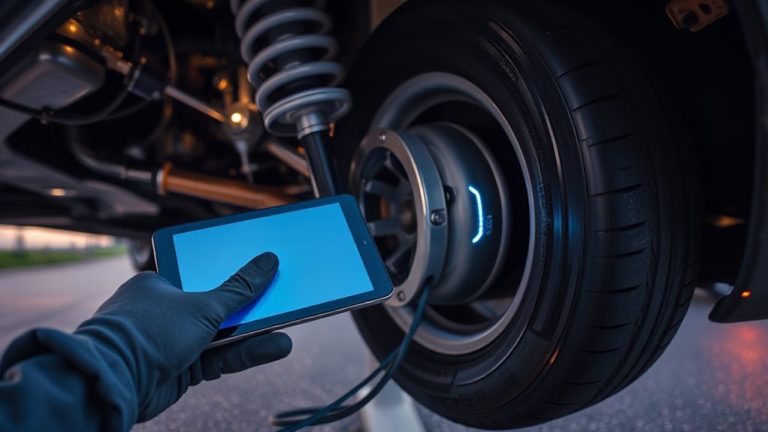
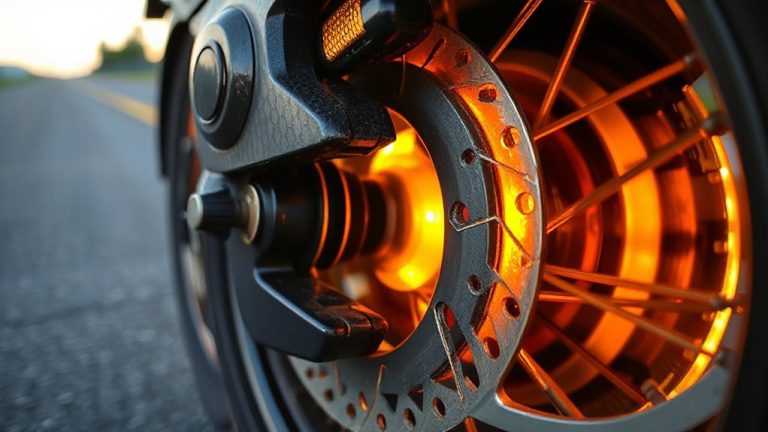
A network of precision sensors and responsive brake components makes ESC possible, working together in real time to keep you in control. Wheel speed sensors, a steering angle sensor, and gyroscopic sensors constantly monitor your vehicle’s motion. These inputs enable sensor fusion, where data is combined and analyzed to determine if the car is deviating from your intended path. If a discrepancy is detected, the system initiates brake modulation-automatically applying braking force to individual wheels. This selective braking corrects oversteer or understeer within milliseconds. Brake modulation occurs with up to 16 pressure adjustments per second, maintaining stability during sudden maneuvers. The hydraulic control unit regulates pressure with precision, responding faster than human reaction time. ESC operates quietly in the background, using real-time calculations to preserve directional control. You might not notice it working-until it prevents a skid.
ESC vs. Traction Control and ABS: What’s the Difference?
You already know sensors and brakes work together to keep your vehicle stable, but not every driver understands how ESC differs from traction control and ABS-even though they share some components. ABS prevents wheel lockup during braking by modulating brake pressure, maintaining steering control. Traction control stops wheel spin during acceleration by reducing engine power or applying brake force to slipping wheels. ESC goes further, using steering angle sensors and wheel speed data to detect oversteer or understeer. When a loss of control is sensed, ESC automatically applies individual brakes and adjusts throttle response to help you stay on course. It integrates inputs from yaw rate, lateral acceleration, and steering angle sensors, acting faster than most drivers can react. While traction control and ABS manage single-axis issues-braking and acceleration-ESC monitors directional stability in real time, making it a thorough system for skid prevention.
Real-World Accident Reduction From ESC
Over 90% of new vehicles today come equipped with electronic stability control (ESC), a system proven to substantially reduce accidents caused by loss of control. You’ll see its real world effectiveness in actual accident statistics. Studies show ESC reduces single-vehicle crashes by up to 50% and fatal rollovers by 70–80%. The U.S. National Highway Traffic Safety Administration (NHTSA) credits ESC with preventing over 2,200 fatalities annually. It works by automatically applying individual brakes and reducing engine power when it detects understeer or oversteer. Sensors monitor yaw rate, steering angle, and lateral acceleration up to 25 times per second. When wheel movement doesn’t match driver input, ESC corrects the trajectory. Real-world data from insurance claims confirm fewer collisions in ESC-equipped vehicles. This drop in crash rates proves its reliability. You’re safer because ESC acts faster than human reflexes, like an invisible co-pilot constantly monitoring your vehicle’s stability.
On a final note
You rely on ESC to maintain control during skids. It continuously monitors wheel speed, steering angle, and yaw rate using sensors. When it detects oversteer or understeer, ESC automatically applies brake pressure to individual wheels-up to 15 times per second-and reduces engine power. This real-time correction aligns your vehicle with your intended path. ESC operates below 60 mph on most systems and reduces single-vehicle crashes by 38%, according to NHTSA data.