Why Using a pH-Neutral Glass Cleaner Preserves Coating Around Windows
You should use a pH-neutral glass cleaner to protect your window’s delicate coatings. Cleaners with a pH below 4 or above 10 degrade anti-reflective and low-E layers just 10–50 nanometers thick. A balanced pH between 6.5 and 7.5 prevents chemical etching and ionic exchange. This preserves hydrophobic performance and avoids micro-etching that causes streaking. Neutral formulas also maintain thermal efficiency and optical clarity over time-key benefits you’ll see continue with proper care.
Notable Insights
- pH-neutral cleaners (6.5–7.5) prevent chemical degradation of delicate anti-reflective and low-E coatings.
- They avoid etching glass and coating layers caused by high or low pH substances.
- Neutral pH minimizes ionic exchange that disrupts thin-film coating structures over time.
- Using them preserves hydrophobic properties, preventing water spotting and residue buildup.
- They maintain optical clarity and thermal efficiency by protecting coating integrity during cleaning.
How Harsh Cleaners Damage Coated Windows
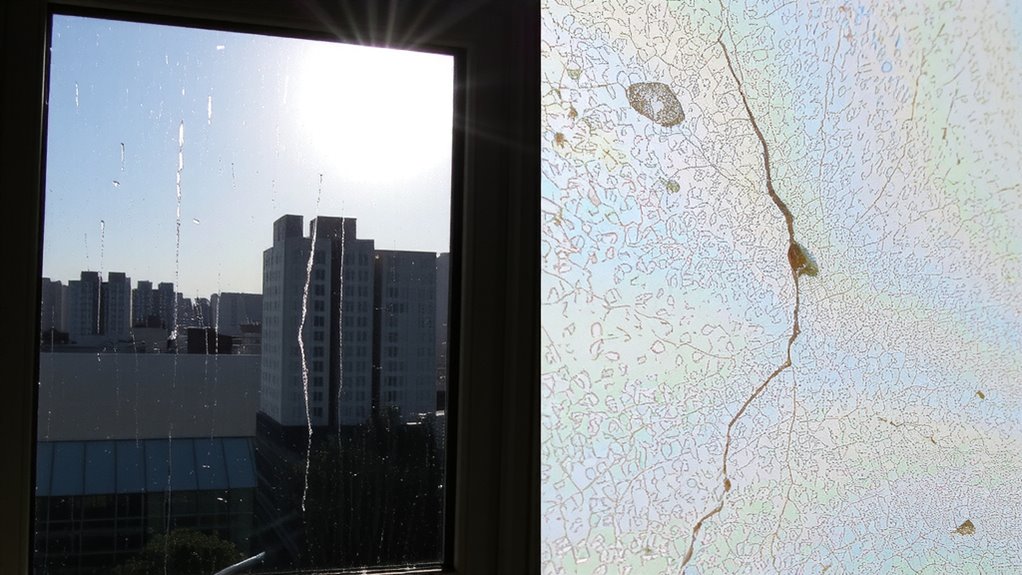
While many glass cleaners promise a streak-free shine, those with high or low pH levels can silently degrade modern window coatings over time. You’re likely unaware that acidic residue from low-pH cleaners attacks anti-reflective and low-emissivity (low-E) coatings, breaking down metal oxide layers just 10–50 nanometers thick. Repeated exposure accelerates erosion, reducing thermal efficiency by up to 15%. Alkaline etching occurs when high-pH solutions dissolve silica in glass and its coatings, creating micro-abrasions that scatter light and weaken structural integrity. These damages accumulate invisibly; a single clean with pH above 10 or below 4 risks irreversible surface modification. Coatings lose hydrophobic properties, inviting water spotting and film buildup. Harsh formulations may remove smudges temporarily but compromise coating lifespan, leading to costly replacements. You need precise chemistry-not aggressive solvents-to maintain both clarity and performance.
Why pH-Neutral Cleaners Are Safer for Coatings
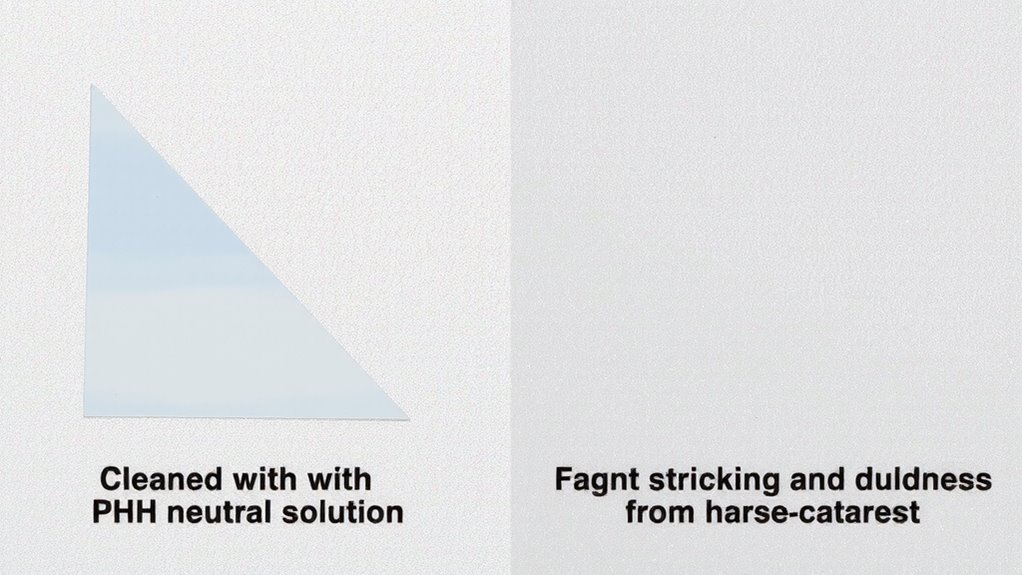
pH-neutral cleaners protect window coatings because they operate within a balanced chemical range that avoids reactive degradation. Their chemical balance prevents unwanted reactions with sensitive coating materials. You maintain surface integrity by using a product with a pH between 6.5 and 7.5-close to pure water. Harsh cleaners strip protective layers; pH-neutral options don’t.
| Cleaner Type | pH Range |
|---|---|
| Acidic | 0–3 |
| Alkaline | 11–14 |
| pH-Neutral | 6.5–7.5 |
| Distilled Water | ~7.0 |
You minimize micro-etching and preserve coating longevity. These cleaners won’t compromise optical clarity or hydrophobic performance. The formulation avoids ionic exchange that degrades thin-film coatings. With pH-neutral solutions, you guarantee consistent surface integrity over time. Your maintenance routine stays effective without unintended damage. Stick to balanced chemistry-it’s the safest choice for coated glass.
What to Look for in a Safe Glass Cleaner
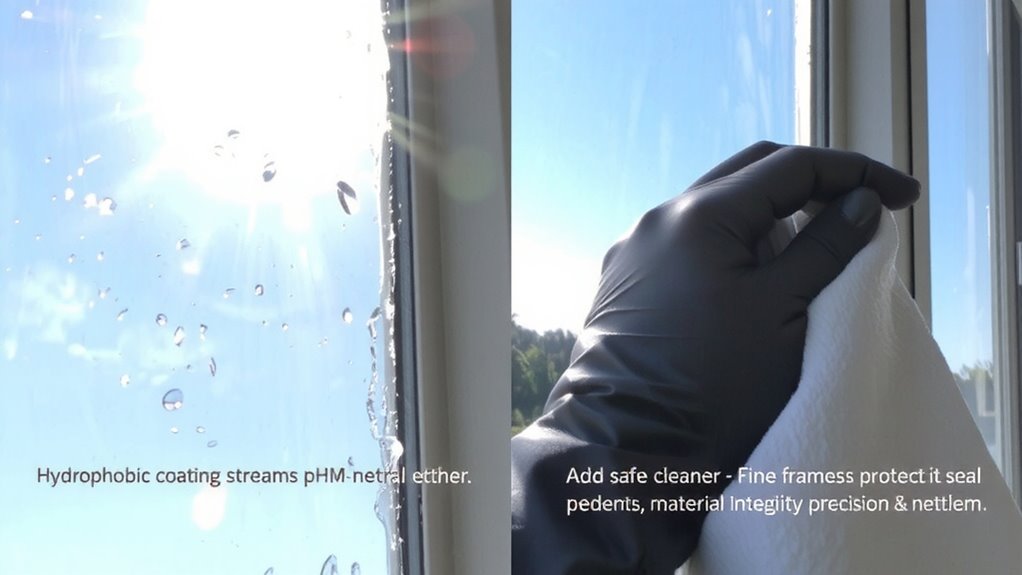
When choosing a safe glass cleaner, the first thing you should check is the pH level, which must fall between 6.5 and 7.5 to avoid damaging coatings. A pH outside this range can degrade protective layers over time. Avoid formulas with abrasive additives like ammonia or alcohol; these scratch micro-surfaces and compromise coating integrity. Even mild abrasives can create micro-fractures invisible to the eye but harmful long-term. If you have chemical sensitivity, opt for cleaners labeled non-toxic and free from volatile organic compounds (VOCs). These reduce respiratory irritation and are safer for indoor use. Check the ingredient list for clarity-reputable brands disclose all components. Look for certifications from independent labs verifying pH neutrality and material compatibility. A safe cleaner won’t sacrifice performance; it should evaporate quickly without streaking. Always verify manufacturer claims with third-party testing data when available.
How to Clean Coated Windows Without Damage
If you want to preserve the integrity of your coated windows, start by using a cleaning method that minimizes physical and chemical stress. Use a pH-neutral cleaner to prevent degradation of the coating’s molecular structure. Avoid ammonia-based or acidic solutions, which can erode hydrophobic or anti-reflective layers over time. Always apply the solution with a clean microfiber cloth, preferably 100% polyester with a 300-thread-count weave, to reduce microscopic scratching. Fold the cloth into quarters to maximize surface area and minimize particulate transfer. Use distilled water to mix or rinse, eliminating mineral deposits from tap water that can etch the coating after evaporation. Apply gentle, even pressure in straight lines or small circles-never scrub aggressively. Let the window air-dry or use a second dry microfiber cloth. This method guarantees effective cleaning without compromising coating performance or longevity. For best results, choose a car glass cleaner specifically formulated for use on coated automotive surfaces.
Signs Your Window Coating Is Already Damaged
What if your windows no longer shed water like they used to? That’s often the first sign your coating is compromised. Beading should occur instantly with a hydrophobic layer intact. If water flattens instead, degradation has begun. Look for foggy residue after cleaning-it shouldn’t linger. This film indicates micro-etching, where harsh chemicals have stripped the protective layer, leaving silica deposits behind. Streak formation is another red flag. Unlike normal grime, streaks from damaged coatings resist pH-neutral wipes and reappear quickly due to uneven surface tension. Inspect edges and high-exposure zones first; UV and abrasion accelerate breakdown here. Coating thickness, typically 100–200 nanometers, can wear down to below 50 nm, reducing efficacy by over 70%. Once damaged, restoration isn’t possible-only reapplication works.
On a final note
You preserve window coatings by using pH-neutral glass cleaners. These cleaners maintain a balanced pH between 6.5 and 7.5, preventing chemical degradation. Harsh alkaline or acidic cleaners strip protective layers. A pH-neutral formula guarantees surfactants lift dirt without attacking silicone or hydrophobic coatings. Always use microfiber cloths to avoid micro-scratches. Regular maintenance with proper products extends coating life up to 5 years.