Best 5W-20 Oil That Keeps Engines Running Smoothly
You need a 5W-20 oil that protects against wear, resists thermal breakdown, and maintains viscosity. Valvoline MaxLife Full Synthetic delivers 50% stronger wear protection and 2.5X better heat resistance than standards. It contains seal conditioners to reduce leaks and meets API SP and ILSAC GF-6A. Mobil 1 Extended Performance lasts up to 20,000 miles with triple-action protection. Castrol GTX offers 6X better wear defense and supports 10,000-mile changes. There’s more to think about regarding performance and fit for your engine.
We are supported by our audience. When you purchase through links on our site, we may earn an affiliate commission, at no extra cost for you. Learn more. Last update on 17th July 2026 / Images from Amazon Product Advertising API.
Notable Insights
- Valvoline MaxLife High Mileage Full Synthetic offers 50% stronger wear protection and enhanced heat resistance for smooth engine performance.
- Mobil 1 High Mileage 5W-20 provides triple-action protection against sludge, heat, and wear, ensuring long-term engine smoothness.
- Castrol GTX Full Synthetic delivers 6X better wear protection and resists viscosity breakdown for consistent engine flow.
- Valvoline Advanced Full Synthetic ensures 40% stronger wear protection and superior cold-start performance in all driving conditions.
- Using 5W-20 oil with seal conditioners and high thermal stability helps maintain engine smoothness, especially in high-mileage vehicles.
Valvoline High Mileage 5W-20 Synthetic Blend Motor Oil
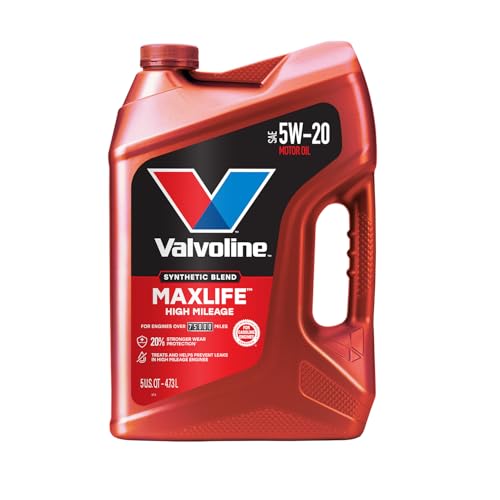
If you own a high-mileage engine, the Valvoline High Mileage 5W-20 Synthetic Blend Motor Oil is engineered to protect and prolong its life. I rely on MaxLife Technology to deliver 40% better wear protection than the industry standard. It includes seal conditioners that fight leaks and reduce oil consumption. I’ve seen it work. The formula contains extra detergents to prevent sludge, rust, and deposits. Advanced friction-fighting additives boost fuel efficiency and performance. It meets or exceeds ILSAC GF-6A, API SP, SN, and SN Plus standards. This American-made oil comes in a 5-quart bottle. Valvoline has been trusted for over 150 years.
Best For: Drivers with high-mileage vehicles seeking enhanced engine protection and longevity.
Pros:
- Provides 40% better wear protection with MaxLife Technology to extend engine life
- Contains seal conditioners to reduce oil leaks and consumption in older engines
- Formulated with extra detergents and friction-fighting additives to prevent sludge and improve fuel efficiency
Cons:
- Synthetic blend offers less thermal stability than full synthetic oils in extreme conditions
- Limited to engines requiring SAE 5W-20 viscosity, not suitable for all vehicle types
- May not provide the same level of protection as full synthetic oils for severely worn engines
Valvoline MaxLife High Mileage Full Synthetic 5W-20 Motor Oil 5 Quart

Valvoline MaxLife High Mileage Full Synthetic 5W-20 Motor Oil is engineered for engines with 75,000 miles or more, serving as a protective lifeline for aging vehicles. I rely on its full synthetic formulation to deliver 50% stronger wear protection than industry standards. It provides 2.5X better heat protection, guarding against breakdown in extreme conditions. Seal conditioners help prevent leaks and reduce oil consumption. I’ve seen it improve fuel economy by minimizing internal friction. It offers 20% stronger sludge defense, keeping engines clean. It meets API SP, SN, SN PLUS, ILSAC GF-7A, and Resource Conserving specs. It also satisfies Ford WSS-M2C960-A1 and Chrysler MS-13340 requirements.
Best For: Drivers of high-mileage vehicles (75,000 miles or more) seeking enhanced engine protection, reduced oil consumption, and improved longevity in aging engines.
Pros:
- Provides 50% stronger wear protection and 2.5X better heat resistance than industry standards for reliable performance in demanding conditions
- Contains seal conditioners that help prevent leaks and reduce oil consumption, extending engine life
- Offers 20% stronger defense against sludge and deposits, keeping engines cleaner and more efficient
Cons:
- Premium pricing compared to conventional or semi-synthetic high-mileage oils may not suit budget-focused consumers
- Formulated specifically for high-mileage engines, making it less ideal for newer vehicles with low mileage
- Not suitable for diesel engines or rotary engines, limiting its application across certain vehicle types
Castrol GTX Full Synthetic 5W-20 Motor Oil, 5 Quarts

Castrol GTX Full Synthetic 5W-20 delivers superior wear protection for drivers who demand long-term engine reliability. I rely on its 6X better wear protection on critical engine parts compared to industry standards. It offers 1.3X better sludge protection, keeping internal components clean. The oil is 3X stronger against viscosity breakdown than leading full synthetics, ensuring consistent performance. I trust it for up to 10,000 miles between changes. It meets or exceeds API SP/SN PLUS/SN and ILSAC GF-6 specifications. Certified for Ford WSS-M2C945-B1 and WSS-M2C960-A1, it’s compatible with many modern engines.
Best For: Drivers seeking reliable, long-lasting engine protection with extended oil change intervals up to 10,000 miles, especially those with modern Ford or high-performance engines.
Pros:
- 6X better wear protection on critical engine parts than industry standards
- 1.3X better sludge protection for cleaner engine performance
- Meets or exceeds API SP/SN and ILSAC GF-6 specifications with Ford-specific certifications
Cons:
- May not be suitable for high-mileage vehicles without supplemental additives
- Premium pricing compared to conventional or synthetic blend oils
- Limited viscosity option for extreme cold or high-temperature performance seekers
Valvoline Advanced Full Synthetic SAE 5W-20 Motor Oil 1 QT

For drivers seeking a high-performance 5W-20 motor oil that delivers robust protection in both extreme heat and cold, Valvoline Advanced Full Synthetic stands out as a top-tier choice. It provides 40% stronger wear protection and 15% better deposit defense than industry standards. I rely on its 2.5X better heat protection to prevent thermal breakdown. Its SAE 5W-20 viscosity guarantees superior cold-start flow, reducing friction and improving fuel economy. This 1-quart bottle weighs 1.81 pounds and fits most gasoline engines. It meets API SP, ILSAC GF-7A, and manufacturer specs like Ford WSS-M2C960-A1. I’ve used it in Toyota, Honda, and Ford engines-it keeps them clean and running longer.
Best For: Drivers of gasoline-powered cars and trucks, including hybrids, seeking superior wear, deposit, and heat protection in all driving conditions.
Pros:
- Delivers 40% stronger wear protection and 15% better deposit defense than industry standards
- Offers up to 2.5X better heat protection and resists thermal breakdown for improved engine longevity
- Meets or exceeds API SP, ILSAC GF-7A, and key manufacturer specifications including Ford and Chrysler
Cons:
- Sold in 1-quart increments, requiring multiple bottles for full oil changes
- Premium full synthetic formula may be more costly than conventional or synthetic blend oils
- Not recommended for use in diesel engines or motorcyles due to specific formulation for gasoline engines
Mobil 1 High Mileage Full Synthetic Motor Oil 5W-20, 5 Quart

If I’m driving a high-mileage vehicle with more than 75,000 miles on the odometer, this oil becomes my top pick for long-term engine protection and performance. Mobil 1 High Mileage 5W-20 is full synthetic and designed specifically for aging engines. Its Triple Action Formula fights sludge, lowers engine temps, and maintains cleanliness. It meets ILSAC GF-6 standards, protects against LSPI and timing chain wear, and supports better fuel economy. I can go up to 10,000 miles between changes. It handles heat up to 500°F and flows smoothly at -30°F, ensuring reliable cold-weather starts.
Best For: Drivers of high-mileage vehicles with over 75,000 miles seeking maximum engine protection, cleanliness, and extended oil change intervals.
Pros:
- Specially formulated for aging engines to reduce sludge, lower temperatures, and maintain engine cleanliness
- Allows up to 10,000 miles between oil changes and meets rigorous ILSAC GF-6 standards
- Provides excellent protection against heat (up to 500°F) and cold starts (down to -30°F), while supporting improved fuel economy
Cons:
- Higher price point compared to conventional or synthetic blend oils
- 5W-20 viscosity may not be suitable for all engines or driving conditions
- Benefits are optimized for high-mileage engines, making it less impactful for newer vehicles
Valvoline MaxLife 5W-20 Synthetic Blend (6-Pack)

One standout option for high-mileage vehicles is the Valvoline MaxLife 5W-20 Synthetic Blend, especially when you’re past the 75,000-mile mark and need targeted protection. I rely on its synthetic and conventional base oil blend to combat wear, friction, deposits, and high-temperature breakdown. It provides 40% better wear protection than industry standards. The oil meets API SP, SN, SN Plus, and ILSAC GF-6A specs. Premium seal conditioners help reduce leaks and oil consumption. Enhanced detergents fight sludge and deposits. Its 5W-20 viscosity guarantees cold-start flow and operating-temperature stability. Flash point: 390°F.
Best For: Drivers of high-mileage vehicles (75,000 miles or more) seeking enhanced engine protection, reduced oil consumption, and improved longevity in gasoline-powered cars, trucks, and SUVs.
Pros:
- Provides 40% better wear protection than industry standards with advanced synthetic blend and MaxLife Technology
- Contains premium seal conditioners to reduce oil leaks and consumption in aging engines
- Meets ILSAC GF-6A and API SP/SN specifications for superior sludge control, fuel efficiency, and engine cleanliness
Cons:
- Discontinued by the manufacturer, potentially affecting long-term availability
- Limited to 1-quart bottles, which may be inconvenient for larger engines or bulk use
- Not suitable for diesel engines or vehicles requiring different viscosity ratings
Castrol GTX High Mileage 5W-20 Synthetic Blend Motor Oil, 5 Quarts

Castrol GTX High Mileage 5W-20 Synthetic Blend Motor Oil is my top pick for high-mileage vehicles with over 75,000 miles. It contains Phosphorus Replacement Technology, protecting your catalytic converter and extending emissions system life. The oil delivers superior dispersancy to prevent sludge, reduces engine wear with advanced additives, and includes seal conditioners to minimize leaks. It exceeds API and ACEA volatility standards, offering exceptional oil burn-off protection. I trust its 5W-20 viscosity for reliable cold starts and sustained thermal stability. It meets API SP/SN PLUS, ILSAC GF-6, and Ford WSS-M2C945-B1 specs, ensuring compatibility. This 5-quart bottle weighs 9.35 pounds.
Best For: Drivers of high-mileage vehicles with over 75,000 miles seeking enhanced engine protection, reduced oil consumption, and extended emissions system life.
Pros:
- Contains Phosphorus Replacement Technology to protect the catalytic converter and extend emissions system life
- Formulated with seal conditioners and advanced additives to reduce leaks and prevent engine wear
- Meets or exceeds API SP/SN PLUS, ILSAC GF-6, and Ford specifications for broad engine compatibility and improved thermal stability
Cons:
- Synthetic blend formulation may not offer the same extreme-temperature performance as full synthetic oils
- Slightly heavier at 9.35 pounds, which could be less convenient for handling or shipping
- Limited to 5-quart packaging, which may not suit vehicles requiring larger or smaller fill volumes
Valvoline Advanced Full Synthetic SAE 5W-20 Motor Oil 5 QT

Valvoline Advanced Full Synthetic SAE 5W-20 Motor Oil is my top pick for drivers who demand durable engine protection without sacrificing performance. It delivers 40% better wear protection than industry standards, proven in the Sequence IVB engine test. I’ve seen how its full synthetic formula resists breakdown under high heat and stress. It provides 25% better deposit protection, verified in the GMOD test, thanks to superior detergents. It offers 24X stronger defense against harmful contaminants compared to leading full synthetics. Made in America, it meets or exceeds ILSAC GF-6A, API SP, and SN specifications. That’s real-world readiness.
Best For: Drivers seeking high-performance, American-made synthetic motor oil that delivers superior wear, deposit, and contaminant protection for modern gasoline engines.
Pros:
- Delivers 40% better wear protection than industry standards, validated by the Sequence IVB engine test
- Offers 25% better deposit protection with advanced detergents proven in the GMOD engine test
- Provides 24X stronger defense against engine-killing contaminants compared to leading full synthetic oils
Cons:
- Higher price point compared to conventional or synthetic blend oils
- 5W-20 viscosity may not suit high-mileage or performance engines requiring thicker oil
- Limited availability in some rural or international markets
Mobil 1 Extended Performance High Mileage 5W-20; 5QT

If you own a high-mileage vehicle with over 75,000 miles, this oil is engineered to deliver extended protection where older engines need it most. I rely on Mobil 1 Extended Performance High Mileage 5W-20 because it protects for up to 20,000 miles or one year. Its Triple Action+ Formula fights sludge, reduces friction, and controls oxidation. It handles extreme heat up to 500°F-20X better than industry standards-and flows at -40°F for fast cold starts. This full-synthetic oil meets ILSAC GF-6, guards against LSPI, and suits modern turbocharged and multi-valve engines. It’s universally compatible with gasoline vehicles needing high-mileage 5W-20.
Best For: High-mileage vehicles with over 75,000 miles needing extended protection up to 20,000 miles or one year.
Pros:
- Provides up to 20,000 miles or one year of engine protection with its Triple Action+ Formula
- Offers superior heat resistance up to 500°F and cold-weather performance down to -40°F
- Meets ILSAC GF-6 standards and protects against LSPI and timing chain wear
Cons:
- Only suitable for high-mileage engines, not ideal for newer vehicles
- Higher price point compared to conventional or semi-synthetic oils
- Not necessary for engines that don’t require extended oil change intervals
Pennzoil High Mileage 5W-20 Motor Oil, 1 Quart (6 Pack)
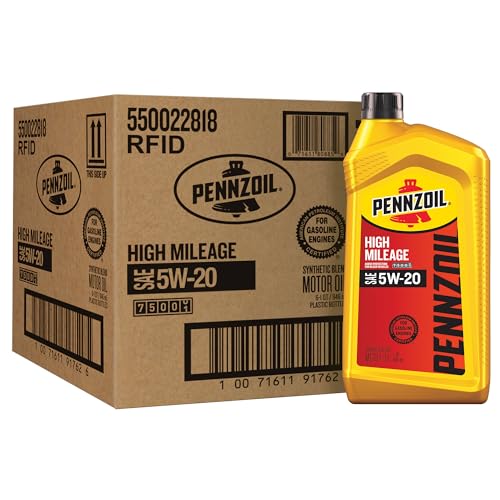
I rely on Pennzoil High Mileage 5W-20 Motor Oil when my vehicle has clocked over 75,000 miles and needs targeted protection against wear and oil burn-off. This synthetic blend is fortified with seal conditioners to reduce leaks and lower oil consumption in aging engines. It meets API SP and ILSAC GF-6A standards, ensuring compatibility with modern 5W-20 specifications. The oil protects against sludge, minimizes compression loss, and supports turbocharged engines. Packaged in six 1-quart containers (11.97 lbs total), it’s ideal for precise top-offs or full changes. Always check your owner’s manual for correct viscosity and OEM compliance.
Best For: High-mileage vehicles with over 75,000 miles needing enhanced protection against oil burn-off, leaks, and engine wear.
Pros:
- Formulated with seal conditioners to reduce leaks and lower oil consumption in aging engines
- Meets API SP and ILSAC GF-6A standards for modern engine compatibility and sludge protection
- Suitable for turbocharged engines and provides wear protection while helping maintain compression
Cons:
- Not recommended for engines under 75,000 miles or without high-mileage wear concerns
- Warranty eligibility requires strict adherence to maintenance schedules and exclusive Pennzoil use
- May not be available at all local retailers, potentially limiting immediate access
Factors to Consider When Choosing 5W-20 Oil
You need to check your engine’s specs before picking a 5W-20 oil-using the wrong type can lead to poor performance or damage. Make sure the oil meets API standards, suits your engine’s mileage, and matches the manufacturer’s viscosity and additive requirements. Full synthetic oils often offer better protection, especially in extreme temperatures, thanks to advanced additive packages and consistent molecular structure.
Engine Compatibility
Selecting the right 5W-20 oil starts with matching the viscosity to your engine’s design. Your engine is calibrated for 5W-20 to guarantee proper lubrication, fuel efficiency, and emissions control. Using the wrong viscosity can increase wear, reduce gas mileage, and harm emissions systems. Always check your owner’s manual-modern gasoline engines often require 5W-20 for maximum performance. This oil must meet specifications like API SP, API SN with SN Plus, or ILSAC GF-6A. These standards guarantee protection for catalytic converters and internal components. If your vehicle has over 75,000 miles, use a high-mileage 5W-20 with seal conditioners and added wear protection. These additives help reduce oil consumption and prevent leaks. Never assume all 5W-20 oils are the same-formulations vary. Matching the oil to your engine’s needs ensures long-term reliability and peak operation.
Viscosity Requirements
While temperature extremes test an engine’s resilience, the right 5W-20 oil maintains consistent performance. You need an oil that flows quickly at cold start, and 5W meets that demand by remaining fluid down to -30°C (-22°F). This guarantees immediate lubrication, reducing wear during startup. The “20” indicates viscosity at operating temperature, providing sufficient film strength for protection without increasing drag. Multi-grade performance relies on viscosity index improvers, which help the oil resist thinning when hot and thickening when cold. Using the correct 5W-20 viscosity optimizes fuel efficiency, engine durability, and overall performance. Car makers specify this grade for a reason-deviating can mean poor cold starts, higher friction, or reduced gas mileage. Stick with 5W-20, and you’re matching factory engineering exactly.
Oil Type Selection
Because engine protection depends on more than just viscosity, the type of 5W-20 oil you choose plays a critical role in long-term performance. You’ll get better wear protection with synthetic blend oils-up to 40% better than industry standards-thanks to their mix of synthetic and conventional base oils plus performance additives. Full synthetic oils go further, offering up to 50% greater resistance to engine wear. They resist thermal breakdown far better, delivering 2.5 times more heat protection under extreme conditions. That means less oil breakdown and longer engine life. Synthetic oils also flow faster in cold weather, ensuring quick lubrication at startup and reducing metal-to-metal contact. Full synthetics include advanced detergents and dispersants that provide up to 20% stronger defense against sludge. Choosing the right type isn’t just about specs-it’s about giving your engine the clean, reliable protection it needs to run smoothly for years.
Performance Standards
Modern engines demand more than just the right viscosity and base oil type-they require motor oils that meet strict performance standards to guarantee reliability and longevity. You need oils certified under API SP to protect against low-speed pre-ignition and timing chain wear while resisting oxidation and deposit buildup. Look for ILSAC GF-6A certification-it ensures better fuel economy, cleaner engines, and full backward compatibility. If fuel efficiency and emissions protection matter, choose Resource Conserving oils verified through standardized tests. Opt for oils meeting Ford WSS-M2C960-A1 for superior thermal stability and seal compatibility, especially in turbocharged engines. Each standard confirms the oil passed rigorous testing for sludge control, piston deposits, wear protection, and viscosity retention. Meeting multiple certifications isn’t optional-it’s proof of thorough performance. Your engine relies on these benchmarks to run cleanly, efficiently, and reliably over time.
Additive Technology
Additive technology plays a critical role in maximizing the performance and longevity of your engine when using 5W-20 motor oil. Detergents in the oil neutralize contaminants, preventing sludge buildup and keeping internal parts clean. Anti-wear additives form a durable protective layer, with some offering up to six times better wear protection than industry minimums. Friction modifiers reduce resistance between moving components, improving fuel efficiency and overall engine responsiveness. Antioxidants fight thermal breakdown, with advanced formulations providing up to 20 times greater resistance to oxidation at high temperatures. These chemical agents work continuously to maintain oil stability and performance under stress. Seal conditioners are included to swell and revitalize older seals, minimizing leaks and oil consumption. You benefit from consistent lubrication, reduced deposits, and extended engine life by choosing an oil with sophisticated additive chemistry designed for modern engine demands.
High Mileage Needs
Every 75,000 miles your engine accumulates wear, heat cycles, and seal degradation that demand specialized protection. High mileage 5W-20 oils are formulated for aging engines with 75,000 miles or more. They contain seal conditioners that swell and rejuvenate brittle seals, reducing oil leaks and burn-off. Advanced detergent packages fight sludge and deposits, keeping internal components clean. You get enhanced wear protection-up to 50% better than industry standards-critical for worn bearings and lifters. These oils maintain viscosity stability under extreme heat up to 500°F and cold starts down to -40°F. The 5W-20 viscosity guarantees quick cold-start flow while sustaining film strength under load. Using high mileage oil isn’t just preventive-it’s a calculated upgrade that addresses real mechanical changes in older engines. Choose it to extend engine life and maintain reliable performance.
Frequently Asked Questions
Can I Mix Synthetic and Conventional 5W-20 Oils?
Yes, you can mix synthetic and conventional 5W-20 oils in a pinch. Both meet the same viscosity and performance standards. However, blending them reduces overall effectiveness. Synthetic oil offers better thermal stability and engine protection, especially under extreme temperatures. Conventional oil breaks down faster. Mixing dilutes synthetic’s advantages. For long-term engine health and ideal performance, stick with one type-preferably full synthetic.
How Often Should I Change 5W-20 Oil in a High-Mileage Engine?
Change your 5W-20 oil every 3,000 to 5,000 miles if you’re driving a high-mileage engine. Older engines burn and degrade oil faster due to worn seals and increased internal clearances. Using high-mileage 5W-20 with seal conditioners and extra detergents helps maintain viscosity and reduce sludge. Always follow your manufacturer’s recommendations, but err on the shorter interval if you tow, idle frequently, or drive in extreme temperatures.
Is 5W-20 Oil Suitable for Diesel Engines?
No, you shouldn’t use 5W-20 oil in most diesel engines. Diesel engines typically require higher viscosity oils like 15W-40 or 10W-30. They operate under higher compression and produce more soot, demanding robust oil films and specialized additives. 5W-20 lacks the thermal stability and shear resistance needed. Always check your manufacturer’s specs-using the wrong oil can damage turbochargers, increase wear, and void warranties. Use only oils meeting API CK-4 or FA-4 standards if approved.
Does 5W-20 Oil Improve Fuel Economy Significantly?
Yes, 5W-20 oil can improve fuel economy noticeably. Its lower viscosity reduces internal engine friction, especially during cold starts. The American Petroleum Institute confirms that low-viscosity oils like 5W-20 enhance fuel efficiency by up to 2% compared to heavier grades. Automakers specify it in many modern gasoline engines for this reason. You’ll see real-world gains in MPG, particularly in stop-and-go driving where engine cycling is frequent.
Can I Use 5W-20 Oil in Extremely Cold Climates?
Yes, you can use 5W-20 oil in extremely cold climates. The “W” stands for winter, and the 5W rating means it flows effectively at temperatures as low as -35°C (-31°F). This low-temperature viscosity guarantees quick engine lubrication at startup, reducing wear. Most modern 5W-20 oils use synthetic base stocks and advanced additives to maintain fluidity and protect engine components in arctic conditions.