Top-Rated BMW Run Flat Tyres That Deliver Grip and Confidence
You get grip and confidence with Bridgestone DriveGuard tires, engineered for BMW’s performance. Their NanoPro-Tech sidewall inserts support your vehicle up to 50 miles at 50 mph after a puncture. Silica-infused treads deliver strong wet traction, while asymmetrical designs reduce hydroplaning. Models like the DriveGuard 225/45RF18 95 W handle up to 168 mph with XL reinforcement. Run-flat capability doesn’t sacrifice control-ideal for BMW’s dynamics. You’ll see how each model matches specific performance demands.
We are supported by our audience. When you purchase through links on our site, we may earn an affiliate commission, at no extra cost for you. Learn more. Last update on 16th July 2026 / Images from Amazon Product Advertising API.
Notable Insights
- Bridgestone DriveGuard tires offer 50 miles of run-flat mobility at 50 mph with strong wet grip from asymmetrical tread and silica-infused compound.
- Goodyear Eagle LS2 ROF delivers confident all-season traction, V-rated speed capability, and run-flat endurance up to 50 miles after a puncture.
- Bridgestone Dueler H/L 400 EXT is engineered for BMW SUVs, providing stable handling, even wear, and reliable run-flat performance.
- Bridgestone DriveGuard All-Season Touring combines H-speed-rated safety, 60,000-mile warranty, and reinforced sidewalls for uninterrupted mobility.
- Blizzak LM001 run-flat winter tires offer superior snow and ice grip with 50-mile zero-pressure range, ideal for winter confidence in BMWs.
Bridgestone Dueler H/L 400 Ext Run-Flat SUV Tire 235/50R18 97 H

If you drive a BMW SUV that relies on run-flat technology, the Bridgestone Dueler H/L 400 EXT is engineered precisely for your needs. I rely on its 235/50R18 radial construction to maintain stability and comfort. The tire’s 27.28-inch diameter and 235mm section width match OEM specifications, ensuring precise fitment. A symmetrical tread design promotes even wear, while the 10/32nds tread depth supports long service life. I’ve seen it earn a UTQG rating of 300AA, reflecting solid traction and durability. It carries a load capacity of 1,609 pounds at 51 PSI, meeting BMW’s demands without compromise.
Best For: Drivers of BMW SUVs seeking a reliable, OEM-spec run-flat tire with excellent wet and dry performance and long tread life.
Pros:
- Engineered for precise fitment on BMW SUVs with run-flat compatibility
- Symmetrical tread design ensures even wear and a smooth, comfortable ride
- High UTQG rating of 300AA indicates strong traction and durability
Cons:
- Limited availability outside of specific vehicle fitments
- Higher price point compared to non-run-flat SUV tires
- Not ideal for drivers seeking aggressive off-road performance
Bridgestone Driveguard Run-Flat Passenger Tire 225/45RF18 95 W Extra Load
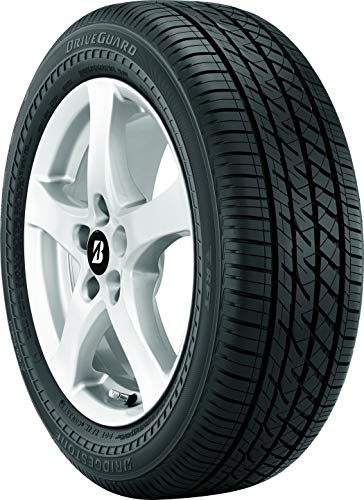
I rely on the Bridgestone DriveGuard Run-Flat Passenger Tire 225/45RF18 95 W Extra Load when safety and uninterrupted mobility are non-negotiable. Its reinforced sidewalls support up to 1,521 pounds and allow me to drive 50 miles at 50 mph after a puncture. The 225mm section width and 18-inch rim diameter deliver precise handling. It’s rated W for speeds up to 168 mph. Run-flat technology eliminates immediate roadside changes. The asymmetrical tread provides wet grip and even wear. Tread depth measures 11/32 inches. UTQG is 460AA. It works with TPMS and suits most BMW sedans.
Best For: Drivers of luxury performance sedans like BMW who prioritize safety, run-flat reliability, and all-season traction without sacrificing handling.
Pros:
- Run-flat technology allows up to 50 miles of continued driving at 50 mph after a puncture, enhancing safety and convenience
- Reinforced sidewalls support high load capacity (1,521 lbs) and maintain stability during high-speed driving (up to 168 mph, W-rated)
- Asymmetrical tread design delivers strong wet grip, even wear, and responsive steering for a comfortable, controlled ride
Cons:
- Heavier than standard tires, potentially affecting fuel efficiency and ride comfort over time
- Higher initial cost compared to non-run-flat all-season tires
- Limited availability in some sizes and regions due to specialized run-flat construction
Bridgestone Driveguard All-Season Touring Run-Flat Tire 225/60RF17 99 H

The Bridgestone Driveguard All-Season Touring Run-Flat Tire 225/60RF17 99 H stands out for drivers who prioritize uninterrupted mobility without a spare tire, especially BMW owners relying on run-flat compatibility. It uses reinforced sidewall technology with a proprietary rubber insert to support the vehicle even at zero pressure. You can keep driving up to 50 miles at speeds up to 50 mph after a puncture. It’s rated for H-speed (130 mph) under normal conditions and carries a 99 load index, handling 1,709 lbs per tire. Engineered for all-season use, it delivers solid wet and dry traction. A 60,000-mile limited warranty supports its durability claim.
Best For: Drivers seeking reliable run-flat performance and all-season traction, especially those with vehicles like BMWs that rely on run-flat tires and prefer not to carry a spare.
Pros:
- Can travel up to 50 miles at up to 50 mph after a complete air loss, ensuring safe travel to a service location
- Reinforced sidewall with proprietary rubber insert provides stability and support during zero-pressure operation
- Backed by a 60,000-mile limited warranty and delivers confident all-season handling in wet and dry conditions
Cons:
- Run-flat technology may result in a slightly firmer ride compared to standard tires
- Limited availability of replacement run-flat tires in remote areas
- Higher initial cost compared to non-run-flat all-season touring tires
Goodyear Eagle LS2 ROF All-Season Radial Tire – 245/45R19 102V

Goodyear’s Eagle LS-2 ROF All-Season Radial Tire is engineered for drivers who demand reliable performance and safety from their BMW, especially when unexpected punctures occur. I rely on its RunOnFlat technology to travel up to 50 miles at 50 mph with zero air pressure. Its 245/45R19 size fits my 19-inch rims perfectly. The XL-rated tire supports 1,874 pounds with a speed rating of V (149 mph). Stepped tread blocks and wide circumferential grooves enhance wet grip and water evacuation. Siped lugs improve ice traction. A 10/32nds tread depth and 400AA UTQG rating guarantee balanced wear and all-season capability.
Best For: Drivers of performance luxury vehicles like BMWs who need reliable all-season traction and the safety of run-flat capability for continued driving after a puncture.
Pros:
- RunOnFlat technology allows continued travel up to 50 miles at 50 mph after a complete loss of pressure
- Excellent wet and ice traction thanks to siped tread lugs, wide circumferential grooves, and stepped tread blocks
- High load capacity (1,874 lbs) and V-speed rating (149 mph) with durable 3-ply sidewalls for enhanced safety and performance
Cons:
- Not available for purchase in the state of Arkansas due to sales restrictions
- Premium pricing typical of run-flat performance tires, which may exceed some budgets
- Tread depth of 10/32nds is average for all-season tires, potentially limiting long-term wear life
Bridgestone Blizzak LM001 Winter Tire 245/50R19
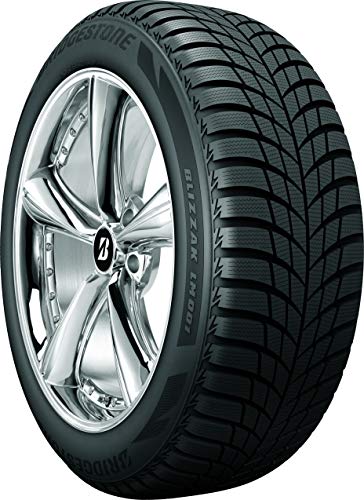
You need reliable winter performance if you drive a BMW equipped with run-flat tires, and the Bridgestone Blizzak LM001 in size 245/50R19 delivers precisely that. This tire is built for snow, ice, slush, wet, and dry roads. It uses Bridgestone’s Blizzak winter compound and directional tread design for maximum grip. With a 10/32-inch tread depth and radial construction, it resists wear while maintaining flexibility in cold temps. The 245/50R19 size fits many BMW SUVs and sedans. It has a 105 load index (4,010 lbs) and V-speed rating (149 mph). Run-Flat technology lets you drive up to 50 miles at 50 mph after a puncture.
Best For: Drivers of luxury performance sedans, coupes, and SUVs-particularly BMW owners seeking reliable run-flat winter tires with strong snow, ice, and wet-weather traction.
Pros:
- Excellent winter performance on snow, ice, slush, and wet roads thanks to Blizzak compound and directional tread
- Run-Flat technology allows continued driving up to 50 miles at 50 mph after a puncture
- High load index (105) and V-speed rating suitable for performance-oriented luxury vehicles
Cons:
- Higher price point compared to non-run-flat winter tire options
- Tread life may be shorter than all-season run-flat alternatives
- Not optimized for dry pavement performance in warm weather conditions
Bridgestone Potenza RE97AS Run-Flat Passenger Tire P225/55RF17 95 V

When precision handling and all-season reliability matter most, the Bridgestone Potenza RE97AS Run-Flat Passenger Tire P225/55RF17 95 V stands out for BMW drivers who demand continued mobility after a puncture. I rely on its run-flat technology to keep me moving for up to 50 miles at 50 mph with zero air pressure. Its symmetrical tread design delivers stable, predictable handling. The high-silica tread compound enhances wet grip while improving wear. It measures 26.7 inches in diameter, supports 1,521 pounds, and features 10/32nds tread depth. UTQG rating is 400AA.
Best For: Drivers of high-performance passenger vehicles like BMWs seeking reliable all-season traction, precise handling, and run-flat capability for continued mobility after a puncture.
Pros:
- Run-flat technology allows driving up to 50 miles at 50 mph after a loss of air pressure
- High-silica tread compound delivers confident wet grip and improved tread life
- Symmetrical tread design provides stable, predictable handling and enhanced steering response
Cons:
- Limited availability and lower customer review count may affect buyer confidence
- UTQG rating of 400AA suggests moderate tread wear resistance compared to higher-rated tires
- Premium price point typical of run-flat performance tires may not suit all budgets
Bridgestone Driveguard All-Season Touring Run-Flat Tire 225/55RF17 97 V
My BMW demands reliability without compromise, and the Bridgestone Driveguard All-Season Touring Run-Flat Tire 225/55RF17 97 V delivers precisely that. Its run-flat technology uses a NanoPro-Tech rubber insert to support the vehicle at zero pressure, letting me drive up to 50 miles safely after a puncture. Cooling fins reduce heat and friction during limp mode. The silica-infused tread compound enhances wet grip, while the asymmetrical design resists hydroplaning. An optimized contact patch guarantees even wear. It’s backed by a 60,000-mile warranty. Touring construction delivers a quiet, smooth ride all year.
Best For: Drivers of performance sedans like BMWs who demand reliable, all-season run-flat tires with extended mobility and long tread life.
Pros:
- Run-flat technology with NanoPro-Tech insert allows safe driving up to 50 miles after a puncture
- Silica-infused tread and asymmetrical design deliver strong wet traction and hydroplaning resistance
- Optimized contact patch and 60,000-mile warranty promote even wear and long service life
Cons:
- Run-flat tires typically offer a stiffer ride compared to standard touring tires
- Higher initial cost compared to non-run-flat all-season tires
- Limited availability in some sizes and regions due to niche run-flat design
Pirelli P Zero 285/45R21 113Y

The Pirelli P Zero 285/45R21 113Y is engineered for drivers who demand peak performance from high-powered luxury and sports vehicles. I rely on its asymmetrical tread design to deliver precise handling and strong cornering grip. It fits 21-inch rims with a 24.84-inch overall diameter, matching large-wheel BMW configurations. My load capacity reaches 1,874 pounds, ensuring stability under heavy use. The 285mm section width and 45-series sidewall balance contact patch and ride control. I’m optimized for dry and wet conditions, not winter. My 10+ inches of tread depth enhances longevity and performance consistency.
Best For: Drivers of high-performance luxury and sports vehicles seeking precise handling, strong cornering grip, and optimal performance in dry and wet conditions with 21-inch wheel fitments.
Pros:
- Asymmetrical tread design enhances handling precision and cornering stability
- High load capacity of 1,874 pounds supports heavy-duty use in performance vehicles
- Optimized for both dry and wet traction with long-lasting tread life due to 10+ inches of tread depth
Cons:
- Not suitable for winter or snow conditions due to non-winter tread compound
- Lower profile 45-series sidewall may deliver a firmer ride quality
- Specific 285/45R21 sizing limits availability to select high-performance vehicle models
Factors to Consider When Choosing BMW Run Flat Tyres
You need to check your BMW’s tire size compatibility before choosing run flats-each model requires specific dimensions like 225/50R17 or 245/40R18, and using the wrong size affects handling and safety. Match the load index and speed rating to your vehicle’s specs; for example, a load index of 91 (615 kg) and speed rating V (240 km/h) guarantees the tire supports your BMW’s weight and top speed. Also, consider all-season performance and the run flat distance limit-most tires let you drive up to 80 km at 80 km/h after a puncture, but performance varies by brand and model.
Tire Size Compatibility
Every BMW model requires precise tire sizing to guarantee peak performance, and matching the correct run flat tire to your vehicle starts with adhering to factory specifications. You must confirm the tire’s width, aspect ratio, and rim diameter match your BMW’s exact requirements. An incorrect aspect ratio alters handling response, while the wrong diameter affects speedometer accuracy and ABS function. You need radial construction-standard on all modern BMWs-for proper integration with the suspension and drivetrain. Match the rim width to the tire’s approved range to prevent uneven wear and secure stable tread contact. Always verify the speed rating meets or exceeds your car’s top speed; BMWs often require at least a V or W rating. This isn’t optional-it’s built into the car’s engineering. Skip guesswork: use only the size encoded in your door jamb or owner’s manual.
Load Index Matching
Matching the correct load index to your BMW’s specifications is non-negotiable for safety and performance. The load index is a standardized numeric code that tells you the maximum weight each tire can carry when properly inflated. You must guarantee this number meets or exceeds your BMW’s manufacturer-specified requirement. For example, a load index of 95 supports up to 1,521 pounds per tire, while 102 handles 1,874 pounds. Using tires with a lower index risks tire failure, poor handling, or even dangerous blowouts under stress. All four tires must match or exceed your vehicle’s gross axle weight rating. This guarantees balanced load distribution and maintains your BMW’s dynamic stability. Load index values are globally standardized, so a 102 on any brand equals the same capacity. Always double-check your BMW’s door jamb or owner’s manual for the correct rating.
Speed Rating Requirements
Because your BMW is engineered for high-performance handling, the speed rating of your run flat tires must match or exceed the vehicle’s maximum speed capability to maintain safety and control. Speed ratings, from Q (99 mph) to Y (186 mph), indicate the maximum safe speed a tire can sustain. You’ll need at least an H, V, or Y rating depending on your model’s top speed. Using tires below this rating risks overheating, tread separation, and blowouts. Ratings are confirmed in labs by running tires under load at increasing speeds until failure. Tires with higher ratings use stiffer sidewalls and advanced tread compounds. These features improve heat resistance and stability at high speeds. Never downgrade the speed rating-it compromises safety. Your BMW’s performance depends on precise tire engineering. Matching the correct speed-rated run flat guarantees you keep full control, even at highway speeds.
All Season Performance
How do your BMW’s run-flat tires perform when temperatures shift and weather turns unpredictable? You need reliable all-season performance, and silica-infused rubber compounds deliver exactly that. They maintain flexibility in cold weather while enhancing wet traction. Asymmetrical tread designs actively channel water away from the contact patch, reducing hydroplaning in heavy rain. Your tire’s tread depth-typically 10/32 to 11/32 inches-balances longevity with consistent wet and dry grip. Look for a UTQG treadwear rating between 300 and 500 to guarantee durability across seasons. These tires handle temperatures above and below freezing, though they don’t match dedicated winter tires in deep snow or ice. Instead, they offer capable, year-round confidence. With the right all-season run-flat, your BMW stays stable, responsive, and safe through spring showers, summer highways, and autumn chills.
Run Flat Distance Limit
Even with strong all-season performance, your BMW’s run-flat tires have strict limits when operating without air pressure. You can drive up to 50 miles after a complete loss of pressure, but only under controlled conditions. Your speed must stay at or below 50 mph, regardless of your BMW’s performance capabilities. This range assumes light load, moderate speeds, and good road surfaces. Heavy cargo, aggressive driving, or high temperatures reduce safe travel distance markedly. The tires’ reinforced sidewalls and cooling features manage heat buildup, allowing temporary operation within these limits. But exceeding 50 miles risks permanent damage to both tire and wheel. Continuing beyond the limit may compromise structural integrity, leading to sudden failure. Always treat run-flat operation as an emergency measure-not a permanent fix. Monitor your driving conditions closely and seek immediate service.
Frequently Asked Questions
How Long Do BMW Run-Flat Tires Typically Last?
BMW run-flat tires typically last 20,000 to 40,000 miles. Your driving habits and road conditions affect lifespan. These tires have reinforced sidewalls, allowing you to drive up to 50 miles at 50 mph after a puncture. They don’t need immediate replacement when flat, but you should inspect them after use. Rotating them every 5,000–7,500 miles guarantees even wear and maximizes performance and safety.
Can Run-Flat Tires Be Repaired if Punctured?
No, you shouldn’t repair run-flat tires after a puncture. Their reinforced sidewalls support the vehicle even when deflated, but internal damage isn’t always visible. BMW and most manufacturers prohibit repairs because structural integrity can’t be guaranteed. Once a run-flat loses pressure, contaminants and heat may compromise the tire’s inner liner and sidewall strength. Reuse risks sudden failure. Replace it instead-your safety depends on predictable performance under stress, and a repaired run-flat can’t deliver that reliably.
Are Run-Flat Tires Noisier Than Regular Tires?
Yes, run-flat tires are usually noisier than regular tires. Their reinforced sidewalls transmit more road vibrations. You’ll notice a firmer ride and increased cabin noise, especially on rough surfaces. The stiff construction reduces suspension compliance, amplifying high-frequency sounds. Some models use foam liners or noise-canceling tech to help, but they can’t match the acoustic comfort of standard tires. You trade a bit of quiet for the safety and convenience of continued driving after a puncture.
Do Run-Flat Tires Affect Fuel Efficiency?
Yes, run-flat tires can reduce fuel efficiency. Their thicker sidewalls add weight and increase rolling resistance. You’ll see a typical 1–2 mpg drop compared to standard tires. The added structural material requires more energy to roll, affecting your car’s overall efficiency. While modern designs minimize losses, physics limits how efficient they can be. You trade some economy for the convenience of extended mobility after a puncture.
Can I Mix Run-Flat Tires With Standard Tires?
You can’t mix run-flat tires with standard tires. Doing so compromises handling and safety. Run-flats have reinforced sidewalls designed to support the vehicle if air is lost, while standard tires lack this feature. Your BMW’s suspension and stability systems are calibrated for uniform tire behavior. Mismatched tires cause uneven grip, unpredictable responses, and increase blowout risk. Always replace all four tires with the same type, matching size, load index, and speed rating.