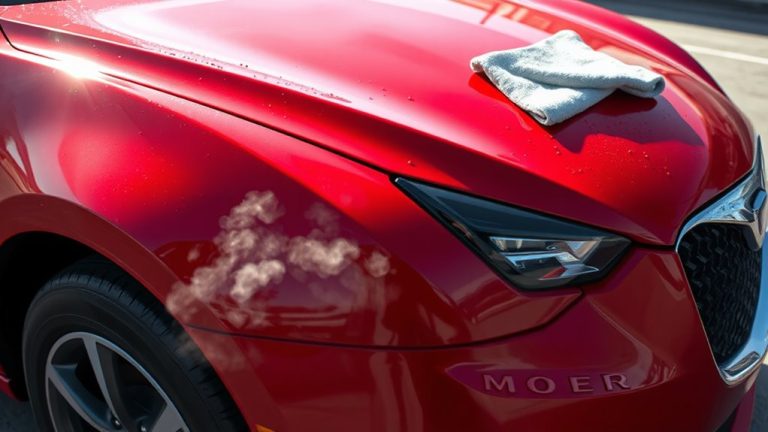
Best Buffing Compounds for a Mirror-Like Shine Every Time
You achieve a mirror-like shine by using compounds with diminishing abrasives and precise grit sequencing. Meguiar’s Ultimate Compound (15.2 oz) removes swirls and oxidation safely on clear coats. For metals, SCOTTCHEN’s 3-pack bars deliver professional results with aluminum oxide grit. The Menzerna 3-Step Set uses HCC1000, MCC2500, and 3800 for progressive refinement. Larger jobs need Perfect-It EX AC (1 qt) or Meguiar’s M10001 (128 oz). Explore how system-based kits guarantee consistent, high-gloss outcomes.
We are supported by our audience. When you purchase through links on our site, we may earn an affiliate commission, at no extra cost for you. Learn more. Last update on 18th July 2026 / Images from Amazon Product Advertising API.
Notable Insights
- Use a progressive system with coarse, medium, and fine compounds for flawless, mirror-like results.
- Meguiar’s Ultimate Compound delivers swirl-free correction on moderate defects for a glossy finish.
- Chemical Guys VSS Compound removes heavy scratches and oxidation with super micro-abrasives.
- 3M Perfect-It compounds use 3000-grit aluminum oxide for high-gloss, swirl-free polishing.
- SCOTTCHEN polishing bars in red, white, and green enable precise metal finishing for reflective shine.
Meguiar’s Ultimate Compound 15.2 Oz

If you’re tackling moderate paint defects like scratches, swirl marks, or oxidation and want pro-level results without risking clear coat damage, Meguiar’s Ultimate Compound is your go-to solution. I rely on its advanced micro-abrasive technology for fast, safe correction. It cuts through flaws quickly while delivering a swirl-free, high-gloss finish. The formula is safe on clear coats and all gloss finishes-no hazing, no damage. At 15.2 oz, it lasts through multiple jobs. I’ve used it by hand and with a dual-action polisher-both deliver showroom-quality results. Backed by Meguiar’s 125-year legacy, it’s correction you can trust.
Best For: DIY enthusiasts and car detailers seeking a safe, effective paint correction solution for removing scratches, swirls, and oxidation without damaging clear coats.
Pros:
- Uses advanced micro-abrasive technology for fast, swirl-free correction
- Safe on clear coats and all gloss finishes with no hazing
- Can be applied by hand or with a dual-action polisher for professional-grade results
Cons:
- May require multiple applications for deep scratches or severe oxidation
- Slightly higher price point compared to basic compounds
- 15.2 oz size may be larger than needed for very small touch-up jobs
SCOTTCHEN Mini Polishing Compound Kit (3-Pack)

The SCOTTCHEN Mini Polishing Compound Kit (3-Pack) delivers ideal results for hobbyists and metalworkers who demand precision finishing across a range of metals. I use its color-coded bars-red (coarse), white (medium/fine), and green (super fine)-to tackle different stages of polishing. Each 35-gram bar measures 2-3/8” x 7/8” x 5/8” and contains aluminum oxide grit, optimized for stainless steel, brass, copper, and other metals. I apply them with a buffing wheel attached to a drill or grinder, letting friction transfer the compound. The super fine green bar achieves a mirror-like finish, especially on softer metals like silver or gold. This kit ranks #1 in abrasive finishing compounds, and I trust its consistent, professional-grade performance.
Best For: Hobbyists and metalworkers seeking a professional-grade, color-coded polishing solution for achieving mirror finishes on a variety of metals.
Pros:
- Includes three color-coded grits (coarse red, medium/fine white, super fine green) for progressive polishing stages
- Contains aluminum oxide grit that effectively polishes stainless steel, brass, copper, silver, gold, and other metals
- Compact, pre-sized bars easily transfer compound to buffing wheels via friction from grinders, drills, or motors
Cons:
- Limited to 35-gram bars, which may wear down quickly with heavy use
- Requires a compatible buffing wheel and power tool for application, not suitable for hand polishing
- Grit specifications list conflicting information (e.g., “grit number: 100” despite including multiple grit levels)
Menzerna Polishing Set (3-Step)

You’ll get the most from the Menzerna Polishing Set (3-Step) if you’re aiming for professional-grade paint correction without compromising finish quality. I use this system when I need flawless results. Step 1, HCC1000, removes light scratches and swirls with aggressive cutting power. Step 2, MCC2500, erases holograms and blending marks left behind. Step 3, 3800 Super Finish, delivers a mirror-like gloss. Each compound comes in 8oz bottles-enough for multiple jobs. The formula works on clear coats and single-stage paints. I achieve showroom-quality finishes every time. This kit suits both pros and serious enthusiasts.
Best For: Automotive detailing professionals and enthusiasts seeking a complete, high-performance paint correction system for flawless, showroom-quality finishes.
Pros:
- Comprehensive 3-step system effectively removes scratches, swirls, holograms, and polishing marks
- Each compound (HCC1000, MCC2500, 3800) is formulated for specific correction and finishing stages, ensuring optimal results
- Generous 8oz bottles provide ample product for multiple detailing projects
Cons:
- May be overkill for minor touch-ups due to its aggressive, multi-stage process
- Requires proper machine polishing technique to avoid paint damage or inconsistent results
- Higher price point compared to single-stage or entry-level compounds
Perfect-It EX AC Rubbing Compound 1 qt
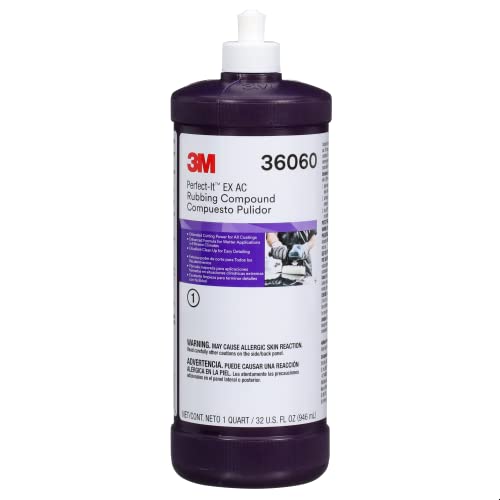
Perfect-It EX AC Rubbing Compound in the 1 qt size delivers fast, reliable cutting power ideal for professionals tackling fine scratch removal on modern automotive finishes. I rely on this compound to eliminate P1200 or finer scratches efficiently. It’s formulated to prevent sticking and reduce dusting, which keeps my workspace cleaner and pads cooler. The absence of residual films means I don’t waste time on extra cleanup. I’ve used it on challenging clearcoats, and it handles smoothly across surfaces without hazing. This product, model 36060, comes in a 32 fl oz container. It’s for industrial use only-meant for trained applicators, not consumer sale.
Best For: Professional automotive detailers and technicians seeking a high-performance rubbing compound for removing fine scratches on modern clearcoats.
Pros:
- Delivers fast, efficient cutting power to remove P1200 or finer scratches
- Prevents sticking and reduces dusting for a cleaner, cooler application
- Leaves no residual films, eliminating the need for additional cleanup
Cons:
- For industrial/occupational use only, not available for consumer purchase
- May be too aggressive for very light polishing tasks
- Packaging may vary, which could affect user consistency or storage
SCOTTCHEN Buffing Polishing Compounds Kit (3-Pack)
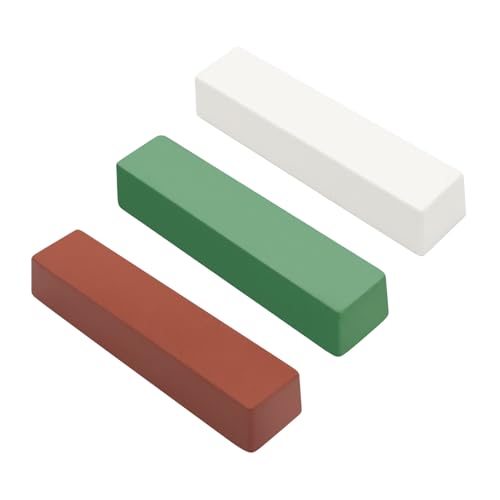
When working on precision metal finishes that demand versatility across multiple stages of polishing, the SCOTTCHEN Buffing Polishing Compounds Kit (3-Pack) stands out as my top choice for efficiency and consistency. It includes three 112g bars: red for coarse cutting, white for medium polishing, and green for super-fine finishing. Each compound uses aluminum oxide for high cut performance and thermal stability. They work seamlessly on stainless steel, aluminum, brass, copper, and even gold or silver. I apply them with a buffing wheel attached to a drill or grinder. Friction heats the wheel, bonding the compound evenly. The color-coding simplifies stage shifts. At 4-3/5” x 1” x 4/5”, they fit standard holders and last through repeated use.
Best For: Metalworkers and DIY enthusiasts seeking a versatile, color-coded buffing compound kit for achieving professional-grade finishes on a variety of metals.
Pros:
- Includes three precision-grade compounds (coarse, medium, fine) for complete finishing control
- Made with durable aluminum oxide that delivers strong cutting power and heat resistance
- Color-coded bars simplify stage progression and ensure compatibility with standard buffing wheels
Cons:
- Requires a compatible rotary tool or grinder, which is sold separately
- May produce dust during use, necessitating protective gear
- Limited effectiveness on non-metal surfaces, restricting application range
Meguiar’s Mirror Glaze M105 Ultra-Cut Compound

Meguiar’s Mirror Glaze M105 Ultra-Cut Compound stands as the definitive choice for detailers facing stubborn paint imperfections. It removes moderate to heavy defects like scratches, swirls, oxidation, acid rain damage, and sanding marks up to 1200 grit. Its ultra-fast cutting power comes from super micro-abrasive technology, which delivers aggressive correction with minimal marring. I’ve used it on clear coats and glossy finishes without paint damage. It works by hand, with a dual action polisher, or rotary buffer, making it versatile for DIYers and pros. This 8 oz pro-grade compound is from Meguiar’s, a brand with over 125 years of automotive care expertise.
Best For: Detailers and automotive enthusiasts seeking aggressive paint correction for moderate to heavy defects without damaging clear coats.
Pros:
- Delivers ultra-fast cutting power to remove scratches, swirls, oxidation, and sanding marks up to 1200 grit
- Utilizes super micro-abrasive technology for high-gloss, swirl-free results with minimal marring
- Compatible with hand application, dual action polishers, and rotary buffers for professional or DIY use
Cons:
- Aggressive formula may require a finishing polish for optimal clarity on lighter defects
- Strong cutting action increases risk of paint thinning if misused, especially with rotary buffers
- 8 oz size may be insufficient for large vehicle fleets or frequent professional use
Chemical Guys Polish & Compound Kit
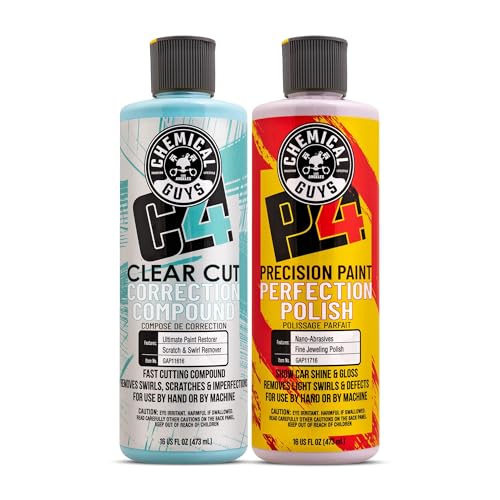
If you’re aiming for show-quality paint correction without needing advanced training, the Chemical Guys Polish & Compound Kit delivers professional results with minimal effort. I use the C4 Clear Cut Compound first-it erases deep scratches, swirls, and oxidation fast, thanks to ultra-fine 2000-grit ceramic abrasives. It cuts aggressively with little dust. Next, the P4 Precision Polish removes micro-marring and refines the surface. I achieve a high-gloss, mirror-like finish. The kit includes two 16 oz bottles (GAP40016). It works on clear coats, ceramic coatings, and OEM or custom paint. I’ve used it with dual-action and rotary polishers-both deliver. Safe for cars, trucks, motorcycles, and boats.
Best For: DIY car enthusiasts and professional detailers seeking show-quality paint correction results with minimal effort.
Pros:
- Delivers professional-grade results with aggressive defect removal and high-gloss finish
- Compatible with dual-action and rotary polish游戏副本, as well as hand application
- Safe for use on clear coats, ceramic coatings, and various vehicle types including cars, trucks, and boats
Cons:
- Higher price point compared to entry-level compounds and polishes
- May require additional products for final protection, such as wax or sealant
- 2000-grit abrasives might be too aggressive for very light correction jobs if not carefully applied
Meguiar’s M10001 Mirror Glaze Pro Speed Compound

For serious defect removal without sacrificing finish quality, Meguiar’s M10001 Mirror Glaze Pro Speed Compound stands out as the go-to solution for professionals and detailers tackling deep scratches, swirls, and oxidation. It removes defects like holograms, acid rain etching, and sanding marks up to 1200 grit. The formula uses aluminum oxide grit for fast, controlled cutting. I’ve used it on clear coats and glossy paints-it’s body shop safe. It weighs 128 ounces and fits most dual action polishers, rotary buffers, or my hand. UPC: 070382008567. ASIN: B00AIYDP2S. Consistent results every time.
Best For: Professionals and automotive enthusiasts seeking rapid correction of severe paint defects while achieving a high-gloss, swirl-free finish on clear coats and glossy paint surfaces.
Pros:
- Effectively removes deep scratches, swirls, oxidation, holograms, and sanding marks up to 1200 grit
- Safe for use on clear coats and compatible with hand application, dual action polishers, or rotary buffers
- Trusted body shop-safe formula with consistent, professional-grade results
Cons:
- Heavy 128-ounce size may be impractical for casual users or small jobs
- Aggressive cutting action may not be suitable for轻微 imperfections or beginner users
- Requires proper technique to avoid overheating or excessive removal on soft paints
1Pk – 3M – Perfect It Buffing & Polishing Compound 06085 06064 06068

The 3M Perfect-It Buffing & Polishing Compound set (models 06085, 06064, 06068) stands as a precision toolkit for detailers tackling moderate to fine paint defects on automotive surfaces. I rely on 06085 for fast-cutting performance-it erases sanding scratches efficiently. The 06064 polish eliminates swirl marks with smooth machine handling and cleans up easily. I use 06068 last; it delivers a swirl-free, high-gloss finish, especially on dark paints. Each compound uses 3000-grit aluminum oxide for precise correction. Together, they weigh 6.5 pounds and measure 6.7 x 6.7 x 9.5 inches. This set remains available, ranked #287 in Automotive Buffing Pads.
Best For: Automotive detailers and professionals seeking a comprehensive, high-performance compound system for correcting moderate to fine paint defects and achieving a flawless, high-gloss finish.
Pros:
- Combines three specialized compounds (06085, 06064, 06068) for progressive paint correction from cutting to finishing
- Utilizes 3000-grit aluminum oxide for precise, controlled material removal with minimal residue
- Delivers swirl-free, high-gloss results, especially on dark-colored vehicles, with easy cleanup and smooth machine handling
Cons:
- Set is relatively heavy at 6.5 pounds, which may be cumbersome for mobile detailers
- Not ideal for beginners due to the need for proper machine polishing technique and sequence knowledge
- Limited availability feedback mechanism suggests potential gaps in real-time market pricing oversight
SPTA 4.06oz Polishing Compound for Cars

SPTA’s 4.06oz Polishing Compound set earns its spot among the best buffing compounds for detailers who demand precise cut control and finish refinement in a three-stage system. I use the heavy cut compound to remove 1500# sanding marks and moderate scratches. The medium cut eliminates 2000–2500# marks, prepping the surface smoothly. Finally, the super fine polish erases 2500# defects and delivers a hologram-free, mirror-like gloss. Each 120ml bottle contains water-based, silicone-free compounds with zirconia alumina and aluminum oxide grits. Diminishing abrasives allow precision correction without marring. I apply them safely on clear coat, gel coat, or single-stage paints using foam, wool, or microfiber pads-by hand or with a machine.
Best For: Detailers and automotive enthusiasts seeking a precise, three-stage polishing system for effective defect correction and high-gloss finishes.
Pros:
- Three-step system with heavy, medium, and fine compounds for complete paint correction
- Water-based, silicone-free formula safe for clear coat, gel coat, and single-stage paints
- Diminishing abrasives technology provides precise correction without marring
Cons:
- Not effective on deep scratches or areas with missing paint
- May require multiple applications for heavily oxidized surfaces
- Higher price point compared to single-formula polishes
Factors to Consider When Choosing Buffing Compounds
You need to pick the right buffing compound for your job, and that starts with the type of abrasive used-silicon carbide cuts fast but leaves swirls, while aluminum oxide offers a balance of cut and finish. Look at the color coding system and grit size selection: red compounds are aggressive (1200–1500 grit equivalent), blue are mid-cut (2000–3000), and white are fine polishes (3000+). Always check compatibility with your paint type and choose the right application method-foam pads work best with fine compounds, while wool suits heavy cutting.
Type Of Abrasive
Abrasive choice shapes the outcome of every buffing job. You need aluminum oxide for its toughness and steady cutting across metals, plastics, and wood. It holds up under pressure, giving you consistent results. For heavy stock removal, use grits between 100 and 1200-these cut fast and deep. When finishing, switch to 2000–3000 grit for ultra-smooth, glossy surfaces. Superfine 3000 grit erases micro-scratches and leaves a swirl-free shine, ideal for delicate finishes. Zirconia alumina offers intense cutting power while resisting heat, making it perfect for aggressive tasks on tough materials. Its hardness guarantees longer life and cooler operation. Diminishing abrasives use round particles that break down gradually, polishing finer as you work-no multiple compounds needed. This tech simplifies the process while achieving progressive refinement. Pick the abrasive that matches your goal: cutting speed, surface sensitivity, and finish quality.
Color Coding System
Following industry standards, most buffing compounds use a color coding system to quickly convey their abrasiveness and intended use. Red indicates coarse compounds designed for aggressive cutting, effectively removing deep scratches and heavy surface damage. These formulas contain larger abrasive particles, making them ideal for initial defect correction on metals or painted surfaces. White signifies medium abrasiveness, serving as an intermediate step to smooth the surface after coarse work. It eliminates light scratches, swirl marks, and residual imperfections while preparing the finish for final polishing. Green represents super fine abrasives, the last stage in the refinement process. It imparts minimal abrasion, focusing on erasing micro-marring and polishing haze. This stage delivers a high-gloss, mirror-like surface. You follow this color-ordered sequence to achieve ideal results, progressing from red to white to green for systematic, professional-grade finishes.
Grit Size Selection
A range of grit sizes-from 1000 to 3000 and beyond-determines how aggressively a buffing compound cuts and how fine the resulting finish. You’ll use coarse grits, like 1000 to 1500, to remove deep scratches and sanding marks. These compounds cut fast and reshape damaged clear coats efficiently. Mid-range grits between 2000 and 3000 refine the surface, eliminating finer defects and prepping for gloss. They balance cutting power with surface refinement. Super fine compounds, rated at 3000 grit or higher, deliver a swirl-free, glossy finish without introducing new marring. Many modern compounds use diminishing abrasive technology-particles break down during use, letting one product progress from cut to polish. Aluminum oxide is a common abrasive across grits due to its hardness, sharp edges, and durability. You get consistent performance and longer working life. Choosing the right grit depends on defect depth, not paint color or brand.
Compatibility With Paint
You need to make certain the buffing compound you choose is compatible with your vehicle’s paint type, especially since most modern cars have clear coat finishes that are sensitive to harsh chemicals and aggressive abrasives. Always confirm the compound is formulated for clear coat use to avoid irreversible damage. Compounds with fine abrasives, like 2000 grit or finer, reduce the risk of marring on delicate or thin clear coats. Water-based formulas without waxes, silicones, or fillers prevent contamination that could hinder future coating adhesion. Avoid products with petroleum distillates or strong solvents-they can swell or dull soft and high-solid paint systems. Look for diminishing abrasive technology, which guarantees the particles break down during use, lowering abrasivity over time. This controlled breakdown safeguards against overheating or burning the paint. Choose compounds engineered specifically for modern finishes to guarantee safe, effective results every time.
Application Method Options
The method you choose to apply a buffing compound directly impacts both the compound’s performance and the final finish. You can apply compounds by hand, with a dual-action polisher, or using a rotary buffer-each offers different levels of cut and control. Hand application demands more effort and time but delivers precision on small areas, eliminating risks of heat buildup or marring. Dual-action polishers generate less heat and reduce swirl marks, making them ideal for safe, moderate defect correction. They typically rotate with an oscillating motion, limiting paint damage. Rotary buffers provide maximum cutting power, best for heavy oxidation or deep scratches, but require skill to prevent burning. High-speed friction demands steady hands. Some compounds perform best under machine-generated heat, ensuring even breakdown and consistent abrasive action. Match your method to both compound specs and surface needs.
Chemical Composition
Think of the compound you choose as a precision tool, not just a polish-its chemical composition directly shapes how it cuts, finishes, and interacts with the paint. You’ll often see aluminum oxide as the main abrasive; it’s tough, consistent, and removes defects like swirls and oxidation without harming the surface. For heavier cutting, some formulas use zirconia alumina, which handles heat better and lasts longer under high pressure. Grit size matters: 1000 grit cuts hard, while 3000+ delivers a refined, smooth base. Many modern compounds use diminishing abrasives-particles that break down during use, self-adjusting from coarse to fine, so you get progressive results with fewer steps. Water-based versions skip waxes, silicones, and fillers, offering cleaner finishes and better clarity. They also won’t interfere with ceramic coatings or paint protection films. Choose smart-your compound’s chemistry is doing the heavy lifting.
Finish Quality Goal
While surface defects vary in severity, matching your buffing compound to the desired finish quality guarantees efficient correction without compromising final clarity. Use a coarse compound (1000–1500 grit) for heavy oxidation or deep scratches-its aggressive cut removes material quickly while maintaining control. For refining, step down to a medium-grade compound to smooth the surface. To eliminate holograms and achieve a mirror-like shine, opt for a super fine compound rated 2500 grit or higher. These ultra-fine abrasives (up to 3000 grit) remove micro-marring and deliver showroom-quality gloss. Choose products with diminishing abrasive technology-they break down during use, ensuring a swirl-free, polished finish. Always align abrasive grade with each stage: coarse for cutting, medium for refining, fine for polishing. This methodical approach maximizes surface smoothness and reflectivity, letting you achieve flawless clarity without unnecessary effort or compound buildup.
Frequently Asked Questions
How Often Should I Buff My Car?
You should buff your car once or twice a year. Buffing removes 1–2 microns of clear coat per session, so overuse thins protective layers. If oxidation, swirls, or hazing appear, assess with a 600–800 lux flashlight at a 45-degree angle. Use a dual-action polisher at 1,200–1,800 OPM with moderate pressure. Always follow with wax or sealant. Frequent polishing accelerates clear coat degradation-treat it like precision machining, not routine cleaning.
Can Buffing Remove Deep Scratches?
No, you can’t remove deep scratches by buffing. Buffing only corrects surface-level imperfections and light swirls. Deep scratches expose the substrate beneath the clear coat and require wet sanding or professional paint repair. Buffing compounds cut up to 3–5 mils of clear coat, but most deep scratches exceed 6 mils in depth. Use a dual-action polisher with cutting pads cautiously. For deep defects, repainting is the only effective fix.
Is Hand Buffing Effective or Should I Use a Machine?
Yes, you can hand buff effectively, but it’s labor-intensive and best for small areas. Machines deliver consistent speed and pressure, essential for uniform results. Use rotary buffers for aggressive correction at 1,200–3,000 RPM; opt for dual-action polishers at 1,200–2,400 OPM for safety. Hand buffing lacks this precision, risking swirls. For large or deep defects, a machine’s efficiency and control outperform manual effort every time.
Does Buffing Damage the Paint Over Time?
Yes, buffing can damage paint over time if done improperly. You remove a microlayer of clear coat each time, typically 1–2 microns per session. Most factory clear coats are 50–60 microns thick. Frequent or aggressive buffing with coarse compounds accelerates thinning. Use the least abrasive pad and compound necessary. Over-buffing leads to burn-through, hazing, or orange peel. Always assess paint thickness with a gauge first.
Can I Use the Same Compound on All Paint Types?
No, you can’t use the same compound on all paint types. Different paints vary in hardness and thickness. Soft clear coats dent easily, so they need mild abrasives like 1-micron particles. Harder paints tolerate more aggressive 3–5 micron compounds. Using the wrong product risks marring or burning. Match your compound to paint type-always check manufacturer specs. You’ll achieve better results and avoid damage.