Best Car Code Readers Every Driver Should Own
You need a reliable OBD2 scanner that supports all five protocols-CAN, ISO9141, KWP2000, J1850 PWM, and VPW-for full compatibility with 99% of vehicles from 1996+ in the U.S., 2002+ in Europe, and 2008+ in Asia. Models like the ANCEL AD410, FOXWELL NT301, and Autel AL319 read and clear generic and manufacturer-specific codes, display live data and freeze frame, and offer lifetime updates. They work on gasoline and diesel engines, feature intuitive interfaces, and connect directly to the OBD2 port. Advanced versions provide Bluetooth, graphing, and I/M readiness checks-key for emissions testing-with more features revealed in the following details.
We are supported by our audience. When you purchase through links on our site, we may earn an affiliate commission, at no extra cost for you. Learn more. Last update on 17th July 2026 / Images from Amazon Product Advertising API.
Notable Insights
- Supports all OBD2 protocols and works with 99% of gasoline vehicles from 1996+, including US, EU, and Asian models.
- Reads and clears generic and manufacturer-specific DTCs with built-in databases covering over 42,000 code definitions.
- Displays real-time sensor data, freeze frame, and I/M readiness status for comprehensive diagnostics.
- Features a color LCD with adjustable brightness, graphing, and true-color coding for easy status interpretation.
- Offers plug-and-play design, powered directly from the OBD2 port, requiring no setup or external power.
ANCEL AD310 OBD2 Scanner (Black)

If you need a no-nonsense diagnostic tool that gets straight to the heart of emissions-related issues, the ANCEL AD310 OBD2 Scanner (Black) is your best bet. I use it to read and clear emission-related trouble codes, view live and freeze frame data, and check I/M readiness. It doesn’t read non-emission engine codes. It works only on OBDII-compliant vehicles-1996 and newer U.S., 2000 and newer EU and Asian models. The device supports all five OBDII protocols: CAN, KWP2000, J1850 VPW, ISO9141, and J1850 PWM. Powered directly from your vehicle’s DLC, it needs no batteries.
Best For: DIYers and vehicle owners seeking a simple, reliable tool to diagnose and clear emission-related check engine light issues on OBDII-compliant vehicles.
Pros:
- Reads and clears emission-related trouble codes, displays live/freeze frame data, and checks I/M readiness with ease
- Supports all five OBDII protocols and works with 1996+ U.S., 2000+ EU, and Asian models
- Compact, durable design powered directly from the vehicle-no batteries or charging required
Cons:
- Cannot read or diagnose engine fault codes unrelated to emissions
- Limited functionality compared to advanced scanners with full-system diagnostics
- Compatibility questions require contacting customer service before purchase
MOTOPOWER OBD2 Scanner Code Reader

The MOTOPOWER OBD2 Scanner Code Reader is a solid choice for do-it-yourselfers who want fast, reliable access to engine diagnostics without needing a laptop or smartphone. It reads and erases engine fault codes using a built-in DTC lookup library. You can view freeze frame data, I/M readiness, vehicle info, and live data like engine RPM, coolant temperature, and vehicle speed. It supports all 9 OBD2 protocols and works with most vehicles from 1996 onward. The 2.8-inch LCD has a white backlight and adjustable contrast. A 2.5-foot cable connects to the OBDII port-no external power needed.
Best For: DIY car owners seeking an affordable, easy-to-use OBD2 scanner for quick engine diagnostics without needing a smartphone or laptop.
Pros:
- Built-in DTC lookup library allows instant reading and clearing of fault codes without external devices
- Supports all 9 OBD2 protocols and works with most vehicles from 1996 onward, including domestic, Asian, and European models
- Clear 2.8-inch backlit LCD with adjustable contrast and intuitive button controls for easy navigation
Cons:
- Does not support non-OBD2 systems such as ABS, airbag, or oil service reset functions
- Limited to basic engine diagnostics and lacks advanced bi-directional control or reporting features
- Replacement screen film required if scratched, with no user-replaceable internal components mentioned
VDIAGTOOL VD10 OBD2 Scanner Code Reader
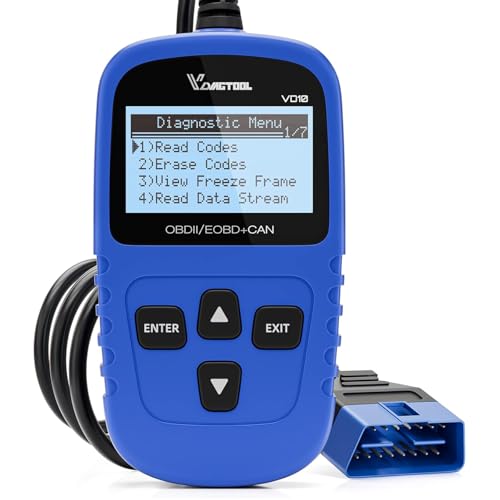
For DIY mechanics who demand reliable diagnostics without the clutter of advanced tools, the VDIAGTOOL VD10 OBD2 Scanner delivers targeted, no-nonsense performance. It reads and clears generic and manufacturer-specific DTCs, supporting over 3,000 trouble codes with instant definitions. I can view live data like fuel trims, RPM, and misfire counts, plus access freeze frame data for accurate fault tracing. It works on 99% of OBDII vehicles from 1996+, including EU and Asian models. The scanner supports all protocols-CAN, KWP2000, ISO9141, and more-and retrieves VIN, CVNs, and calibration IDs. Its plug-and-play design powers directly from the OBD2 port. The 2-line LCD has adjustable contrast for clear visibility. I use the I/M Readiness function to check emissions monitors before smog tests. With a 3-year warranty and lifetime free updates, it supports English, French, German, Spanish, Italian, and Russian-perfect for long-term maintenance.
Best For: DIY mechanics seeking a reliable, user-friendly OBD2 scanner for accurate diagnostics and emissions testing without the complexity of professional-grade tools.
Pros:
- Reads and clears both generic and manufacturer-specific DTCs with instant definitions for over 3,000 codes
- Supports all OBDII protocols and retrieves VIN, CVNs, and calibration IDs for comprehensive vehicle health checks
- Plug-and-play design with no batteries required, plus I/M Readiness function for smog test preparation
Cons:
- Limited to 12V gasoline vehicles, excluding heavy-duty diesel and non-OBDII compliant models
- 2-line LCD screen offers minimal data visibility compared to full-color digital displays
- No Bluetooth or smartphone connectivity, limiting data logging and advanced analysis features
ANCEL AD410 Enhanced OBD2 Scanner

You’re looking for a reliable, no-nonsense code reader that delivers professional-grade diagnostics without the complexity-meet the ANCEL AD410. It supports all 16PIN OBDII vehicles from 1996+ (US), 2000+ (EU), including light trucks and SUVs. It reads and clears engine codes, including pending and emissions-related DTCs, with over 42,000 built-in definitions. The 2.4-inch color screen displays live data clearly. It performs I/M checks and EVAP leak tests, helping pass smog inspections. It works on Windows for firmware updates only-no Mac support. I trust it because even Scotty Kilmer does.
Best For: DIYers and car owners seeking an affordable, easy-to-use OBD2 scanner for reliable engine diagnostics and smog test prep.
Pros:
- Reads and clears engine, pending, and emissions-related codes with over 42,000 built-in DTC definitions
- Features a 2.4-inch color display and supports I/M readiness and EVAP leak testing for smog checks
- Trusted by automotive experts like Scotty Kilmer and powered directly from the OBD2 port-no batteries needed
Cons:
- Limited to engine diagnostics only-does not support ABS, SRS, or transmission systems
- Firmware updates require a Windows PC; no Mac update support
- Cannot perform certain resets (e.g. oil, TPMS) beyond clearing fault codes
FOXWELL NT301 OBD2 Scanner Tool

When pinpointing a reliable, no-frills OBD2 scanner for straightforward engine diagnostics, the FOXWELL NT301 stands out as the best choice for DIYers and certified technicians who value accuracy without unnecessary complexity. It reads and clears DTCs, turns off the check engine light, and retrieves VIN and I/M readiness status. I use its live data with graphing to monitor real-time sensors. It supports all OBDII protocols and works on 1996+ gasoline and 2000+ diesel vehicles across North America, Europe, and Asia. The 2.8-inch color screen, LED indicators, and plug-and-play design make it intuitive. It requires no updates.
Best For: DIYers and professional technicians seeking a reliable, easy-to-use OBD2 scanner for basic engine diagnostics without extra frills.
Pros:
- Reads and clears DTCs, turns off check engine light, and supports all OBDII protocols with no updates required
- Features live data viewing with graphing, a 2.8-inch color screen, and intuitive LED indicators for quick diagnostics
- Plug-and-play design powered by the OBD2 port or USB, with lifetime free updates and printer compatibility
Cons:
- Limited to powertrain diagnostics; does not support ABS, SRS, transmission, or advanced functions like bi-directional control
- Clearing codes only works temporarily if underlying issue isn’t repaired-codes will return
- Compatibility varies by vehicle make, model, and year, with reduced functionality on some Asian and diesel vehicles
BlueDriver Pro OBD2 Scan Tool for iPhone & Android

The BlueDriver Pro OBD2 Scan Tool stands out as the go-to diagnostic solution for DIYers and auto enthusiasts who demand professional-grade accuracy without relying on dealership equipment. It supports advanced diagnostics for ABS, SRS, Airbag, TPMS, and over 7,000 vehicle issues. Compatible with all OBD2-equipped gas vehicles from 1996 onward, it delivers manufacturer-level data for major brands like GM, Ford, Toyota, Honda, BMW, and Mercedes. I use its Bluetooth connectivity to pair seamlessly with my iPhone and Android tablet. The tool reads and clears check engine, ABS, SRS, and TPMS codes. Real-time live data streaming lets me monitor vehicle health while driving. I access unlimited repair reports with detailed fix recommendations and step-by-step videos through the app. There are no subscriptions, hidden fees, or account requirements. I appreciate the 24/7 technical support via phone or in-app chat.
Best For: DIY car owners and auto enthusiasts seeking professional-grade diagnostics with no subscription fees or account requirements.
Pros:
- Supports advanced diagnostics for ABS, SRS, Airbag, and TPMS with access to manufacturer-level data for major vehicle brands
- Wireless Bluetooth connectivity with real-time live data streaming and full code reading and clearing capabilities
- Includes unlimited repair reports, step-by-step video guides, and 24/7 technical support-no subscriptions or hidden costs
Cons:
- Limited to OBD2-equipped gas-powered vehicles from 1996 or newer, not compatible with older or diesel engines
- Requires smartphone or tablet for operation, which may be inconvenient without a mounted device in the vehicle
- Advanced features may overwhelm first-time users unfamiliar with vehicle diagnostics
FOXWELL NT604 Elite OBD2 Scanner

A diagnostic heavyweight for DIY mechanics and technicians focused on accurate fault detection, the FOXWELL NT604 Elite OBD2 Scanner delivers professional-grade analysis without ongoing software costs. It supports Engine, ABS, SRS, Transmission, and Check Engine diagnostics across 60+ American, Asian, and European makes. AUTOVIN automatically detects your vehicle’s VIN, though manual input is available. I get live data streaming, I/M readiness checks, and a built-in DTC library for precise troubleshooting. The 2026 version comes preloaded-no downloads or update fees. It clears codes only after repairs, ensuring issues are truly fixed. Durable with a protective case, it’s built to last.
Best For: DIY mechanics and technicians who need a reliable, no-cost-update OBD2 scanner for accurate diagnostics across a wide range of vehicle makes.
Pros:
- Supports comprehensive diagnostics (Engine, ABS, SRS, Transmission, Check Engine) on 60+ car makes with live data streaming and I/M readiness checks
- Comes preloaded with latest 2026 software-no downloads or subscription fees required
- Durable build with a protective case and features like AUTOVIN, built-in DTC library, and code clearing after repairs
Cons:
- Does not support service functions like oil reset, battery registration, or ABS bleeding
- Code clearing only possible after physical repairs are made, limiting testing flexibility
- Vehicle compatibility varies by make, model, and year-must verify before purchase
ZMOON ZM201 OBD2 Scanner 2026 Upgraded

You get instant access to deep engine diagnostics with the ZMOON ZM201 OBD2 Scanner 2026 Upgraded-ideal for DIYers who want professional-grade tools without complexity. It works on all OBD2-compliant vehicles after 1996 (US), 2002 (EU), and 2008 (Asia). The scanner supports every OBDII protocol, including CAN, KWP2000, and ISO9141. It powers directly from the OBD2 port-no batteries needed. I use it to read and clear engine codes, view live data with graphs, and check freeze frame data. It has over 50,000 built-in DTCs. The 2.8-inch color screen has adjustable brightness. It’s plug-and-play, needs no app, and gets lifetime free updates.
Best For: DIYers and car owners seeking an easy-to-use, professional-grade OBD2 scanner for reliable engine diagnostics without needing technical expertise.
Pros:
- Supports all OBDII protocols and works on vehicles from 1996+ (US), 2002+ (EU), and 2008+ (Asia) with plug-and-play simplicity
- Features a 2.8-inch color screen with live data graphs, freeze frame, and over 50,000 built-in DTCs for comprehensive engine analysis
- Powered by the OBD2 port with no batteries required, includes lifetime free updates and 24/7 brand support
Cons:
- Limited to engine diagnostics only-does not support ABS, SRS, transmission, or other advanced systems
- PC connection for data review only compatible with Windows (not Mac)
- Permanent fault codes can be read but not cleared without underlying repairs
Autel AL319 OBD2 Scanner 2026 Upgraded
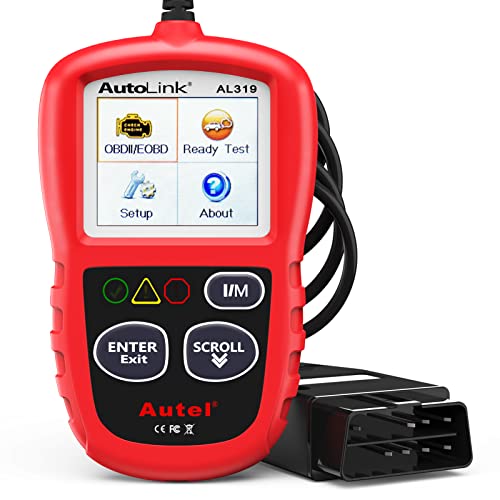
Forget guesswork-when it comes to diagnosing engine issues quickly and accurately, the Autel AL319 OBD2 Scanner 2026 Upgraded stands out as the go-to tool for DIYers and home mechanics. I rely on it to read and clear DTCs, view live data, and access freeze frame and I/M readiness status. It works on all OBD II vehicles post-1996, including Toyota, Honda, Nissan, and Ford. The scanner supports seven languages, including English, French, and Spanish. Its one-click I/M readiness feature saves time. The TFT color display is sharp; the built-in speaker and LED indicator confirm operation. It draws power from the vehicle-no batteries needed. I appreciate the intuitive interface, which requires no prior repair knowledge. Plug-and-play design guarantees immediate use. Autel backs it with a 12-month warranty, lifetime software updates, and responsive technical support via email, hotline, or Q&A.
Best For: DIYers and home mechanics seeking an easy-to-use, reliable OBD2 scanner to quickly diagnose and resolve check engine light issues without prior automotive experience.
Pros:
- Supports comprehensive diagnostic functions including DTC reading/clearing, live data, freeze frame, and one-click I/M readiness for efficient troubleshooting
- Intuitive plug-and-play design with a color display, built-in speaker, and vehicle-powered operation requiring no batteries
- Backed by a 12-month warranty, lifetime software updates, and multi-language support with responsive technical assistance
Cons:
- Limited to OBD2 vehicles from 1996 and newer, excluding older vehicle models
- Lacks advanced bi-directional control or coding capabilities for more complex repairs
- May not support all manufacturer-specific diagnostic protocols beyond basic OBD2 functions
LK11 OBD2 Scanner Plug-Play Code Reader
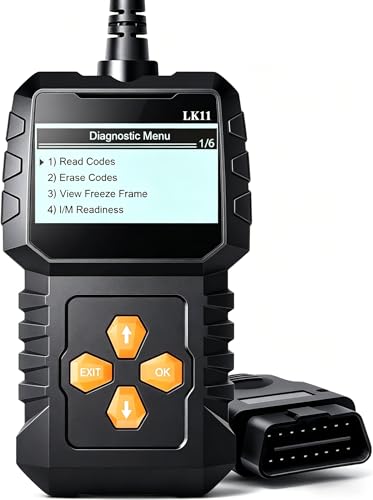
When quick, reliable diagnostics matter most, the LK11 OBD2 Scanner Plug-Play Code Reader stands out as the best choice for both DIYers and seasoned mechanics. It connects directly to your vehicle’s OBDII port-no setup or technical skills needed. I use it to retrieve and clear engine fault codes, view live data, and check I/M readiness. It reads freeze frame data and displays critical values like engine temperature, vehicle speed, VIN, and CVN. Compatible with all OBDII-compliant vehicles made since 1996, it works on gasoline and diesel engines. I rely on it for early issue detection, reducing costly repairs and mechanic visits.
Best For: DIY enthusiasts and professional mechanics seeking a reliable, easy-to-use OBD2 scanner for quick engine diagnostics and preventative maintenance.
Pros:
- Plug-and-play design requires no technical knowledge or setup, making it accessible for all users
- Retrieves and clears fault codes, displays live and freeze frame data, and supports I/M readiness checks
- Compatible with all OBDII-compliant vehicles from 1996 onward, including gasoline and diesel engines
Cons:
- Lacks advanced bi-directional control functions found in higher-end diagnostic tools
- No wireless connectivity or mobile app integration for data logging or sharing
- Limited to basic engine system diagnostics, not suitable for in-depth transmission or ABS analysis
Factors to Consider When Choosing a Car Code Reader
You need to check vehicle compatibility before buying a code reader-most OBD2 scanners work with cars made after 1996, but some advanced models support older or imported vehicles. Look at diagnostic functions and code coverage: basic tools read check engine lights, while professional-grade readers pull live data streams, reset sensors, and interpret manufacturer-specific codes. A clear display and simple menu layout save time, especially when you’re troubleshooting under the hood.
Vehicle Compatibility
A reliable car code reader must first match your vehicle’s technical requirements, starting with OBD2 protocol support. All gasoline-powered cars and light trucks made after 1996 in the US use OBD2-compliant systems, so your tool must support standard protocols like CAN, ISO9141, KWP2000, J1850 PWM, and J1850 VPW. Check your vehicle’s model year and region-EU vehicles after 2000 and Asian models post-2006 often need scanners that handle updated emissions standards. Your reader should retrieve enhanced VIN and CVN data for accurate diagnostics. It must also interpret both generic and manufacturer-specific fault codes, as some brands store critical issues in proprietary formats. Confirm the device works with 12V systems and the correct OBD2 pin layout. Most consumer scanners aren’t built for heavy-duty diesel engines or non-standard configurations, so verify compatibility before buying.
Diagnostic Functions
Beyond confirming your vehicle’s protocol and compatibility, the diagnostic functions of a code reader determine how deeply you can analyze its performance. You need a tool that reads and clears both generic (P0) and manufacturer-specific (P1, P3, U1) codes to diagnose issues accurately. Models with built-in DTC libraries covering over 42,000 definitions let you identify codes instantly-no guesswork. Freeze frame data capture saves sensor readings at the moment a fault occurs, helping you troubleshoot intermittent problems others might miss. Real-time data streaming displays live engine RPM, coolant temperature, fuel trims, and oxygen sensor voltages, giving you a dynamic view of engine behavior. You’ll also want I/M readiness checks to confirm emissions system monitors are complete, ensuring your vehicle passes smog testing after repairs or code resets.
Ease Of Use
Choosing a code reader that prioritizes ease of use guarantees reliable diagnostics without unnecessary complexity. You want plug-and-play functionality-devices that draw power directly from your vehicle’s OBD2 port eliminate the need for batteries or charging. Pick a model with an intuitive interface and clearly labeled buttons; this reduces the learning curve, especially if you’re not technically inclined. A backlit LCD with adjustable contrast secures readability in bright sunlight or low-light conditions. Units that auto-scan for trouble codes within seconds of connection save time and minimize manual input. Look for onboard DTC databases with thousands of built-in definitions-this lets you interpret codes instantly, no internet required. These features work together to streamline diagnostics, making the tool accessible to all drivers.
Display Quality
Screen quality matters when you’re reading diagnostic data in challenging light or tight spaces. A high-resolution color LCD with adjustable brightness guarantees clarity in direct sunlight or dim garages. Look for screens 2.4 inches or larger-they display live data, graphs, and multiple parameters without clutter. Backlit displays with contrast controls help you read codes accurately at night. True-color TFT technology delivers sharp visuals and improves readability by using distinct colors for normal, warning, and critical statuses-think green for OK, red for danger. Multi-line screens (2 lines or more) show fault codes, definitions, and sensor values at once, reducing the need to scroll. You’ll save time and avoid mistakes when parsing complex data. A quality display isn’t just convenient-it’s essential for quick, confident diagnostics. Prioritize resolution, size, lighting, and color performance when choosing your reader.
Code Coverage
Diagnostics start with depth-the range of trouble codes your scanner can detect defines how well you’ll understand a vehicle’s issues. You need a code reader that pulls both generic OBD2 codes (P0xxx) and manufacturer-specific codes (P1xxx, U1xxx) for complete insights. Look for models with databases of over 40,000 DTC definitions-they give instant, clear explanations without extra research. Full code coverage means reading stored, pending, and permanent DTCs, so you catch intermittent faults before they worsen. The best tools also show freeze frame data, locking in sensor values the moment a fault triggers. That’s critical for accurate diagnosis. High-end scanners go beyond engine codes, covering ABS, SRS, and transmission systems. Basic units often limit you to powertrain only. Choose wide code coverage-it’s the foundation of reliable, thorough diagnostics.
Update Policy
While your code reader’s initial capabilities matter, its long-term value hinges on how well it evolves with automotive technology. Choose a model with a strong update policy to avoid obsolescence. Many top-tier readers offer lifetime free software updates, ensuring compatibility with newer vehicle protocols and expanded DTC databases. Regular firmware updates enhance code accuracy, add diagnostic functions, and support new car models. Some devices require PC connections for updates, but check OS compatibility-most support Windows, while macOS options are limited. A few tools come preloaded with current software, enabling immediate use without initial downloads. Without accessible updates, your device may fail to read modern vehicles’ advanced systems. Prioritize tools with seamless, frequent updates. They adapt like a trusted mechanic, staying current across years and vehicle generations. Your smart investment keeps pace with innovation.
Build Durability
Your car code reader takes a beating under the hood and on the shop floor-durability isn’t optional, it’s essential. Choose a model with thick, flexible cable insulation to resist cracking and tangling after repeated use in harsh environments. A rugged outer casing should withstand drops from waist height, ideally tested to military-grade drop standards. Opt for devices powered directly through the OBD2 port-no internal batteries mean fewer mechanical stress points and longer lifespan. Compact, lightweight designs reduce strain on the connector, while reinforced joints resist breakage during frequent insertion and removal. Look for sealed, high-quality buttons and controls that block dust, moisture, and debris from damaging internal circuits. These features guarantee reliable performance in extreme temperatures, humidity, and oily conditions. A well-built scanner won’t fail when you need it most-choose construction that matches your real-world demands.
Frequently Asked Questions
How Long Do Car Code Readers Typically Last?
Car code readers typically last 5 to 10 years with regular use. Your device’s lifespan depends on build quality, frequency of use, and software updates. Well-made models use durable ABS plastic and quality circuitry resistant to heat and vibration. Cheap units often fail sooner due to poor soldering or outdated firmware. Rechargeable batteries degrade over time, usually lasting 3–5 years. You’ll extend life by storing it properly and updating software annually.
Can Code Readers Drain My Car Battery?
No, code readers won’t drain your car battery under normal use. They draw minimal power-typically 20–50 milliamps-only when active. Leaving one plugged in for hours with the ignition off could slowly deplete power, especially on older batteries. Most modern vehicles cut power to the OBD2 port after shutdown, preventing drain. Think of it like a phone charger left in an outlet-it doesn’t charge unless the device is connected and drawing current. Use responsibly; unplug after diagnostics.
Are There Subscription Fees for Some Scanners?
Yes, some scanners charge subscription fees for software updates or advanced features. You’ll encounter them mainly with cloud-based or professionally targeted tools. Devices like certainLaunch or Autel models offer free basic updates but charge for premium services. Others, like Snap-on scanners, require annual fees-ranging from $100 to over $500-to maintain full functionality. Always check the manufacturer’s update policy. Avoid surprises by choosing models with lifelong, no-cost updates if you want to own it outright.
Do Code Readers Work on Diesel Engines?
Yes, code readers work on diesel engines. They connect to your diesel vehicle’s OBD2 port, just like gas engines. Most modern diesels use standard OBD2 protocols after 2004, so your scanner reads diesel-specific codes like P0299 or U0100. Look for a reader supporting CAN, J1939, and ISO 15765 standards. It retrieves live data-boost pressure, fuel rail pressure, EGT-from sensors accurately.
Can I Use a Code Reader on Motorcycles?
Yes, you can use a code reader on motorcycles, but only if it supports the bike’s OBD2 protocol and 12V electrical system. Most modern motorcycles use OBD2 or a manufacturer-specific protocol like Honda’s PGM-FI. Check compatibility-some car code readers lack motorcycle firmware. Use a reader with a wide protocol range, like ISO 15765, CAN, and KWP2000. Always verify voltage ratings and connector type to avoid damage.