Best Car Rust Removers: Adam’s, Rust-Oleum & More Tested
You restore shine and strength by using pH-neutral removers like Adam’s Iron Remover or CARPRO IronX, which dissolve embedded iron without harming clear coats. These turn purple on contact, confirming contaminant removal. For heavy rust, apply Rust-Oleum’s gel or jelly formulas-they cling to vertical surfaces, breaking down corrosion in 10–30 minutes. Converters like Corroseal or Rust-Oleum Reformer chemically stabilize rust, creating a black, paint-ready barrier that stops further degradation. Each product targets specific corrosion types while preserving structural integrity. Further details reveal ideal application methods and surface-specific performance.
We are supported by our audience. When you purchase through links on our site, we may earn an affiliate commission, at no extra cost for you. Learn more. Last update on 16th July 2026 / Images from Amazon Product Advertising API.
Notable Insights
- Use pH-neutral iron removers like Adam’s Iron Remover to safely dissolve fallout without damaging clear coat or ceramic coatings.
- Choose acid-free formulas such as CARPRO IronX for visual rust particle removal while preserving paint integrity and surface shine.
- Apply gel-based removers for cling on vertical panels, ensuring extended contact time to lift rust without scrubbing.
- Opt for rust reformers that convert corrosion into a paintable, black protective layer, restoring strength and prep for finishes.
- Pair rust treatment with anti-corrosion sprays to seal metal, prevent future damage, and maintain long-term surface durability.
Adam’s Iron Remover Spray (16oz)

If you’re dealing with stubborn iron contamination that washing and clay bars can’t remove, Adam’s Iron Remover Spray (16oz) is your best choice. It dissolves bonded iron fallout and rust particles from paint, wheels, and metal surfaces. The pH-neutral, acid-free formula won’t harm clear coat or single-stage paint. You’ll see a purple reaction on contact-proof it’s lifting embedded contaminants. It has a citrus scent and reduced odor, making it safer and more pleasant than older iron removers. Use it before claying or waxing. Spray on a rinsed surface, let it react, then rinse thoroughly. Avoid plastic trim and metal parts to prevent damage. Safe on ceramic coatings.
Best For: Drivers seeking a safe, effective solution to remove embedded iron fallout and rust particles from automotive surfaces without damaging paint or coatings.
Pros:
- Visibly reacts with iron contamination, turning purple to confirm effectiveness
- pH-neutral, acid-free formula safe on clear coat, single-stage paint, and ceramic coatings
- Features a pleasant citrus scent and reduced odor compared to traditional iron removers
Cons:
- Can potentially damage plastic trim and metallic surfaces if not carefully applied
- Requires pre-rinsing and thorough post-rinsing for proper use
- Overspray must be minimized to avoid contact with sensitive areas
Rust-Oleum Rust Dissolver Gel 32 oz

Rust-Oleum Rust Dissolver Gel 32 oz stands out for anyone tackling rust on vertical or uneven car surfaces, where runny liquids fail. Its thick gel formula clings without dripping, staying in place for full-contact rust breakdown. I apply it directly using the trigger spray-no scrubbing needed. It works in 10 to 30 minutes on light or medium rust, longer for heavy buildup. The ready-to-use formula dissolves corrosion on steel, iron, and other metals. After activation, I rinse and wipe, leaving a clean, smooth surface. It’s ideal for prepping metal before painting or coating, delivering reliable, professional-grade results every time.
Best For: DIYers and professionals seeking a no-scrub, heavy-duty rust remover that clings to vertical and uneven metal surfaces for effective, paint-ready results.
Pros:
- Thick gel formula clings to vertical and complex surfaces without dripping
- Dissolves light to medium rust in 10–30 minutes with minimal effort
- Prepares metal surfaces smoothly for painting or coating without additional scrubbing
Cons:
- May require multiple applications for heavy or stubborn rust buildup
- Strong chemical odor necessitates use in well-ventilated areas
- Higher price point compared to basic liquid rust removers
Rust-Oleum 248658 Stops Rust Reformer Spray Paint, 10.25 oz, Matte Black

This rust reformer suits drivers confronting stubborn corrosion on classic cars, restoration projects, or aging vehicles where stripping to bare metal isn’t practical. I rely on Rust-Oleum 248658 because it instantly converts rust into a flat black, paintable surface. Its oil-based formula bonds directly to rust, eliminating the need for aggressive sanding. The spray works in any direction-even upside down-thanks to its any-angle spray technology. It dries tack-free in 20–40 minutes. Wait 24 hours before applying a topcoat. It prevents future rust and creates a durable base on any rusty metal surface, making it ideal for long-term protection.
Best For: Drivers restoring classic cars or dealing with rusted vehicle parts where sanding to bare metal isn’t feasible.
Pros:
- Instantly converts rust into a paintable, flat black surface
- Eliminates need for aggressive sanding with oil-based formula that bonds directly to rust
- Any-angle spray technology allows application in hard-to-reach areas, even upside down
Cons:
- Requires 24-hour wait before applying a topcoat, delaying project completion
- Oil-based formula may have strong fumes, requiring use in well-ventilated areas
- Not suitable for non-metal or rust-free surfaces, limiting overall versatility
Rust-Oleum Rust Dissolver Jelly 8 oz

For anyone tackling rust on vertical or uneven metal surfaces, Rust-Oleum Rust Dissolver Jelly 8 oz delivers reliable, no-scrub performance. Its thick, clingy formula stays put on vertical areas, treating rust without drips or runs. I use it on car frames, bolts, grills, and tools-anywhere rust builds up. It removes light to medium rust in 10 to 30 minutes; heavy corrosion may need a second coat. The active ingredients dissolve iron oxide effectively. Once done, I just rinse and wipe the surface clean. It leaves bare, restored metal ideal for priming or painting. No scrubbing saves time and effort.
Best For: DIYers and professionals seeking a no-scrub rust remover that clings to vertical and uneven metal surfaces for effective rust dissolution.
Pros:
- Thick jelly formula clings to vertical and irregular surfaces without dripping
- Removes light to medium rust in 10–30 minutes; prepares metal for painting or finishing
- No scrubbing required-simply apply, wait, rinse, and wipe
Cons:
- May require multiple applications for heavy or severe corrosion
- Limited 8 oz capacity for larger surface areas
- Not suitable for use on non-metal surfaces due to strong rust-dissolving agents
STA-BIL Rust Stopper Anti-Corrosion Spray (13 Oz)
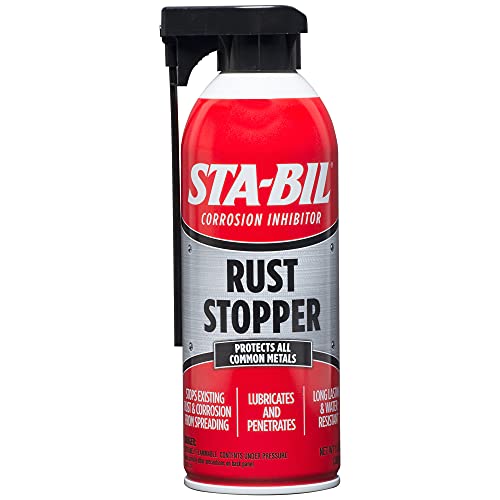
If you’re battling rust on your car’s electrical connections or exposed metal parts, STA-BIL Rust Stopper Anti-Corrosion Spray (13 oz) is your best defense. I use it to prevent corrosion on battery terminals and metal surfaces, and it works instantly. It forms a durable, water-resistant shield that withstands harsh weather and resists wash-off. The spray stops existing rust and protects against future damage. It also lubricates parts, eliminating squeaks. Ideal for cars, bikes, boats, and RVs. This rust inhibitor remains effective for up to 2 years after opening-mark the date on the can. Model 22003 delivers reliable, long-term protection.
Best For: Anyone looking to prevent rust and corrosion on vehicles or metal components, especially owners of cars, bikes, boats, or RVs who need long-lasting protection for electrical connections and exposed metal surfaces.
Pros:
- Forms a durable, water-resistant barrier that resists wash-off and withstands harsh weather conditions
- Protects and stops existing rust while preventing future corrosion on metal and painted surfaces
- Doubles as a lubricant to eliminate squeaks and ensures reliable conductivity at electrical connections
Cons:
- Effectiveness limited to up to 2 years after opening, requiring users to track the opening date
- May require reapplication on high-exposure parts in extremely corrosive environments
- Limited to 13 oz per can, which may deplete quickly with frequent use across multiple vehicles
CLR Calcium Lime Rust Remover 22oz

CLR Calcium Lime Rust Remover 22oz stands out for drivers and car owners battling persistent rust stains on chrome trim, wheels, or exterior surfaces, especially when mineral deposits and moisture leave stubborn marks. I use its 22-ounce spray bottle for targeted applications on rust and hard water stains. It removes calcium, lime, and rust without phosphates, ammonia, or bleach. The formula works on chrome, stainless steel, and vinyl siding. It’s EPA Safer Choice-certified. I’ve seen it dissolve mineral buildup in minutes. It’s safe on glass and porcelain too, but I always spot-test first.
Best For: Drivers and car owners looking to remove rust, calcium, lime, and hard water stains from chrome trim, wheels, and exterior surfaces safely and effectively.
Pros:
- Effectively removes rust, calcium, lime, and hard water deposits without harsh chemicals like phosphates, ammonia, or bleach
- EPA Safer Choice-certified, making it a safer option for household and exterior use
- Safe for use on multiple surfaces including chrome, stainless steel, vinyl siding, glass, and porcelain
Cons:
- May require spot testing to avoid potential damage on sensitive or untested surfaces
- Strong formula requires careful handling and ventilation during use
- Not specifically designed for heavy industrial rust; results may vary on severe corrosion
Adam’s Iron Remover (Gallon) Car Fallout Rust Remover

When tackling embedded iron contamination that standard washes miss, Adam’s Iron Remover (Gallon) stands out for detailers and owners who prioritize safe, visible decontamination. I rely on its pH-neutral, ready-to-use formula to dissolve brake dust, iron deposits, and metallic fallout without harming paint or clear coat. It turns red on contact, clearly showing where it’s lifting contaminants from surfaces. I’ve found it safe on cars, trucks, motorcycles, RVs, and boats. It requires no dilution-just spray, wait, then rinse. Made in the USA, it’s trusted for prep before waxing or ceramic coating.
Best For: Detailers and vehicle owners seeking a safe, effective, and visually indicating iron decontaminant for cars, trucks, motorcycles, RVs, and boats.
Pros:
- pH-neutral, ready-to-use formula that safely removes brake dust, iron deposits, and metallic fallout without damaging paint or clear coat
- Visual reaction (turns red) clearly indicates active contaminant breakdown for precise application
- Made in the USA with premium ingredients, trusted for use before waxing, ceramic coating, or clay bar treatment
Cons:
- May require multiple applications on heavily contaminated surfaces for complete decontamination
- Color change can stain porous surfaces if not rinsed thoroughly
- Higher price point compared to some competitors’ iron removers
Rust Spray Paint Matte Black 14oz

Rust Spray Paint Matte Black 14oz is my top pick for professionals and DIYers who need a single solution that stops rust in place and delivers long-term protection without extensive surface prep. I apply it directly over rust to entrap corrosion and halt further spread-no sanding to bare metal required. Its advanced epoxy formula bonds aggressively to degraded surfaces, forming a permanent barrier. I’ve seen it withstand 1,000 hours of salt spray testing and endure UV exposure and temperatures up to 300°F. It works on metal, wood, concrete, and more. I use it across automotive, marine, industrial, and home projects for fast, reliable rust encapsulation.
Best For: Professionals and DIYers seeking a no-prep, durable rust encapsulation solution for metal and other surfaces in demanding environments.
Pros:
- Stops rust in place without sanding to bare metal, saving time and labor
- Exceptional durability with 1,000 hours of salt spray resistance and UV/heat protection up to 300°F
- Versatile adhesion on metal, wood, concrete, and multiple substrates across automotive, marine, industrial, and home use
Cons:
- Matte black finish may not suit all aesthetic preferences or applications requiring color variety
- Spray application can be difficult to control in windy or tight spaces without proper technique
- Strong fumes require use in well-ventilated areas or with respiratory protection
CARPRO IronX Iron Remover 500mL

If you’re serious about protecting your vehicle’s finish from the hidden threat of iron contamination, CARPRO IronX Iron Remover 500mL is your best defense. I rely on its acid-free, pH-balanced formula to safely dissolve brake dust and embedded iron particles. It stops rust formation and prevents clear coat failure without harming paint, chrome, glass, or wheels. The 500mL bottle includes a precision sprayer for even coverage. Once applied, IronX bonds to ferrous contaminants, turning purple to show contamination levels. I’ve seen it neutralize harmful reactions in under 10 minutes. Professionals worldwide trust it to extend coating life. Production date is clearly marked (Pr/PD) in Day/Month/Year format.
Best For: Car enthusiasts, professional detailers, and vehicle owners seeking a safe, effective solution to remove iron contaminants and prevent rust and clear coat damage.
Pros:
- Acid-free, pH-balanced formula safely removes iron particles without damaging paint, wheels, chrome, or glass
- Visual indicator turns purple when reacting with contaminants, showing effective cleaning in real time
- Trusted by professionals worldwide for preserving coatings and extending paint life
Cons:
- Limited to 500mL capacity, which may require frequent repurchasing for regular users
- Requires prompt rinsing after reaction to avoid residue buildup
- Production date format (Day/Month/Year) may be confusing for users in regions using Month/Day/Year convention
Stops Rust and Converts to Primed Surface
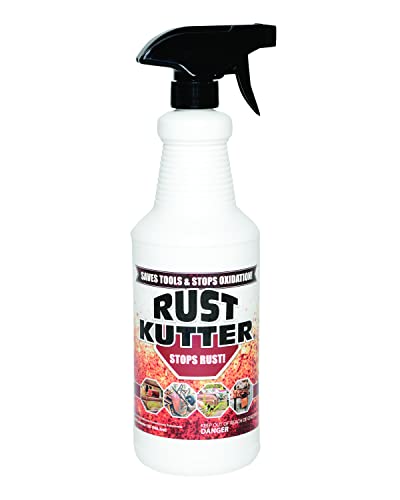
I rely on this rust remover when I need a single solution that stops corrosion and leaves a ready-to-paint surface-perfect for DIYers and pros who demand efficiency. It chemically converts rust into a stable, non-reactive black compound, halting further degradation. The treated area becomes a primed surface, eliminating the need for additional primer in most cases. I apply it with a brush, roller, or sprayer-each method delivers even coverage. Made in the USA, it’s available in quart and gallon sizes. It forms a protective barrier that prevents new rust, ideal for cars, tools, and metal equipment.
Best For: DIYers and professionals seeking an efficient, all-in-one rust converter and primer that stabilizes rust and prepares metal surfaces for painting without additional priming.
Pros:
- Chemically converts rust into a stable, non-reactive black compound to stop further corrosion
- Leaves a primed surface ready for painting, reducing the need for额外 primers
- Can be applied via brush, roller, or sprayer for versatile, even coverage on various metal surfaces
Cons:
- May require multiple coats on heavily rusted surfaces for full effectiveness
- Black converted layer might not be ideal for light-colored paint finishes if not topcoated properly
- Limited to metal surfaces, not suitable for non-metal materials
Factors to Consider When Choosing a Car Rust Remover
You need to match the rust remover to the type of rust you’re dealing with-surface, scale, or penetrating rust-since each demands a specific chemical approach. Choose a product compatible with your vehicle’s material, whether steel, aluminum, or galvanized metal, and check if it uses phosphoric acid or tannic acid, as these react differently with substrates and affect adhesion of primers. Application method and reaction time matter too: aerosols work fast on small areas, while gel formulas stay put on vertical surfaces, with most requiring 10–60 minutes to fully convert rust.
Type Of Rust
Different types of rust demand specific treatment approaches, and identifying the corrosion stage is essential for selecting the right remover. Surface rust appears as reddish discoloration and hasn’t penetrated the metal-use mild chemical removers or light abrasion to stop it early. Scale rust forms flaky, crusty layers that weaken the metal; you’ll need aggressive methods like wire brushing or heavy-duty gels with extended dwell times. Pitting rust creates small, deep cavities, signaling advanced damage-grind it out, patch the area, and use conversion or encapsulation products to halt further decay. Flash rust shows up within hours of bare metal hitting moisture; treat it immediately with fast-acting sprays to prevent worsening. Choosing the correct remover depends on this progression-light rust needs a quick spray gel, while deeper rust demands mechanical prep, prolonged chemical action, or conversion treatments to restore integrity.
Surface Compatibility
Matching the rust remover to your vehicle’s surface type prevents damage and guarantees effective treatment. You must verify the product’s safety for painted finishes, clear coats, or bare metal to avoid etching or discoloration. Acid-free formulas are safer for ceramic-coated surfaces and polished metals, removing rust without compromising surface integrity. These pH-neutral options also protect surrounding rubber, plastic, and trim from chemical degradation. If you’re working on vertical panels, use a gel formulation-it clings longer, increasing contact time without dripping. Such thickened removers maintain performance without running off edges. Products designed for automotive paint won’t harm single-stage or multi-layer finishes, even during decontamination. Always confirm surface compatibility on manufacturer labels to assure your treatment removes corrosion effectively while preserving the material’s original structure and protective layers.
Application Method
When tackling rust on your vehicle, the application method plays a critical role in both effectiveness and efficiency. Liquid sprays give you even coverage over large, flat areas, enabling fast treatment and instant reaction with rust. They’re best for broad surface prep but may run on vertical sections. Gels stick firmly to overhead or upright panels, offering longer dwell time to dissolve heavy corrosion without dripping. Foam removers cling tightly to metal, reducing runoff and improving contact on uneven surfaces-ideal for targeted rust spots. Pre-saturated wipes let you treat tight spaces like seams or joints with precision while cutting waste. If you’re working on big jobs, some formulas work with brushes or spray guns for better control and consistency. Choosing the right method guarantees full coverage, faster results, and smarter product use across different body parts.
Chemical Composition
Chemical composition defines how well a rust remover performs and protects your vehicle long-term. Acid-based formulas use phosphoric or hydrochloric acid to convert iron oxide into iron phosphate, a stable compound that prevents further corrosion. These are effective but can damage paint if not rinsed promptly. pH-neutral removers safely eliminate iron particles without harming clear coats or delicate surfaces, making them ideal for painted areas. Chelating agents bind to iron ions at the molecular level, lifting contaminants without scratching or etching. Oil-based rust converters penetrate deep into porous rust layers, reacting to form a passive, protective seal that stops oxidation. Gel formulations adhere to vertical surfaces, increasing contact time and enhancing chemical penetration without runoff. You get better results on frame rails, wheel wells, and undercarriage components when the active ingredients match the rust severity and substrate type.
Reaction Time
The speed at which a rust remover works directly impacts your repair timeline and overall effectiveness. Some products start reacting within 10 minutes, but heavier rust may need 30 minutes or more to break down fully. You’ll often see a color change-like orange to dark brown-soon after application, but don’t be fooled; full corrosion conversion happens only after the full dwell time. Thick gel formulas cling to vertical surfaces, giving you longer reaction time without dripping. That extended contact boosts effectiveness on deep rust. Ambient temperature matters too-warmer conditions speed up the chemical reaction, while cold slows it. For severe rust, you’ll likely need multiple applications. Always follow the product’s recommended wait time. Rushing it reduces results. Patience guarantees the iron oxide fully converts, leaving the metal stable and ready for treatment.
Ease Of Use
Often, the easiest rust removers to use come ready to apply straight from the container. You avoid the hassle of mixing chemicals or miscalculating dilution ratios. Choose formulas labeled “ready-to-use” to save time and reduce errors. Opt for products with spray applicators or trigger sprayers-these deliver precise, even coverage while minimizing overspray and mess. Gels or thickened liquids cling to vertical or overhead surfaces, preventing runoff and ensuring prolonged contact with rust. These stay-put formulas are ideal for treating fenders, wheel wells, or undercarriage spots. Look for treatments requiring no aggressive scrubbing or sanding; gentle wiping is enough for most surface rust. Some removers include visual cues like color changes-purple to clear, for example-that signal when the reaction’s complete and it’s time to rinse. This removes guesswork and improves accuracy.
Long Term Protection
You’ve cleaned the rust, but without lasting defense, corrosion will return. Long-term protection requires treatments that chemically stabilize iron oxide, halting further oxidation. Look for rust removers with tannic or phosphoric acid; these convert unstable rust into a stable, polymer-like coating that bonds to the metal. The best products create a passivated layer, integrating with the substrate to resist moisture and oxygen. They include corrosion inhibitors that remain active for months, even under fluctuating temperatures and humidity. Some offer protection for up to two years, but only if you seal the surface. A top coat shields against UV rays and abrasion, preserving the barrier. Don’t just remove rust-prevent it. Choose a formula engineered for longevity, not just quick fixes. Lasting defense means less maintenance and stronger metal over time.
Frequently Asked Questions
Can Rust Removers Damage Car Paint if Left Too Long?
Yes, you can damage car paint if you leave rust removers on too long. Most contain acids like phosphoric or oxalic that dissolve rust but also etch clear coat and pigmented layers. Exposure beyond 10–15 minutes risks discoloration, dulling, or peeling. Always follow product instructions precisely. Use timers and rinse immediately after treatment. Apply in thin layers with controlled application tools. Test on inconspicuous areas first to assess paint compatibility and reaction time.
Are Rust Dissolvers Safe for Aluminum or Chrome Parts?
Yes, you can use rust dissolvers on aluminum and chrome, but you must act carefully. Most acidic formulas harm soft metals if left too long. You should choose pH-neutral or acid-free dissolvers labeled safe for aluminum and chrome. Protect surrounding areas with tape. Apply for no more than 10–15 minutes. Rinse immediately with water. Always test on a small area first to prevent pitting or discoloration.
Do I Need to Sand Rust Before Applying a Rust Reformer?
Yes, you need to sand rust before applying a rust reformer. Remove loose flakes and scale with 80–120 grit sandpaper to expose bare metal. This guarantees the reformer bonds properly. Skipping this step leaves contaminants that block chemical reactions. A clean, sanded surface lets the reformer convert remaining iron oxide into a stable black phosphate layer. For best results, finish with 220 grit to smooth edges. Always wipe with isopropyl alcohol afterward to remove dust and oils.
How Often Should I Apply Anti-Corrosion Spray for Protection?
You should apply anti-corrosion spray every 6 to 12 months for maximum protection. Frequent exposure to moisture, road salt, or coastal air demands annual treatment. Use a wax-based or oil-based formula with at least 30% active corrosion inhibitors. Apply at temperatures between 50°F and 90°F. Make certain surfaces are clean, dry, and free of debris. Spray evenly from 8–12 inches away, letting it penetrate seams, joints, and undercarriage panels. Reapplication maintains a continuous protective barrier.
Can I Use Rust Removers in Direct Sunlight or on Hot Surfaces?
You shouldn’t use rust removers in direct sunlight or on hot surfaces. High temperatures accelerate evaporation, reducing dwell time and effectiveness. Most products work best between 50°F and 85°F. Applying them on hot metal causes premature drying, limiting chemical penetration. For best results, work in a shaded, well-ventilated area. Cool surfaces guarantee proper adhesion and reaction time, enhancing rust dissolution and surface restoration. Always follow manufacturer instructions for temperature ranges.