Best Car Safety Window Film: Vepagoo, HTVRONT & More Rated
You get maximum protection with nano-ceramic films like Vepagoo’s 20% and 35% VLT options, blocking 99% of UV rays and infrared heat. These non-metallized tints prevent signal interference while delivering high clarity and glare reduction. SW 80% VLT Nano Ceramic Film offers superior heat rejection with 70%+ solar reflectivity. They’re durable, resist fading, and strengthen glass. For ultimate safety and performance, the next details reveal key differences in installation and long-term value.
We are supported by our audience. When you purchase through links on our site, we may earn an affiliate commission, at no extra cost for you. Learn more. Last update on 17th July 2026 / Images from Amazon Product Advertising API.
Notable Insights
- Choose nano-ceramic films like SW 80% VLT or Vepagoo for maximum UV protection, heat rejection, and optical clarity without signal interference.
- Look for non-metallized films to maintain GPS, radio, and cell phone signal strength while ensuring long-term clarity and performance.
- Opt for multi-layer construction with scratch-resistant coatings (3H–4H) to prevent bubbling, peeling, and fading over time.
- Select films that block 99% of UVA/UVB rays and enhance glass strength to reduce shatter risk during impacts.
- Films with higher VLT (35%–80%) balance daytime privacy, nighttime visibility, and natural light transmission for safe driving.
Car Side Window Sunshade (4 PCS)

If you need reliable UV protection and privacy without permanent window tinting, the Car Side Window Sunshade (4 PCS) is an ideal solution. I use these reusable PVC sunshades to block harmful rays and reduce cabin heat. Each piece measures 16.5 x 14.9 x 0.08 inches and weighs 5.3 ounces. Static cling technology guarantees secure, residue-free installation on clean, moistened glass. I can reposition or remove them easily. The black film resists fading and cuts glare. I trim them with scissors for custom fits. Arc-edged design improves adhesion. They work on most vehicles. Manufacturer: Blilo, Model: Sunshade80.
Best For: Drivers seeking a reusable, non-permanent solution for UV protection, heat reduction, and privacy in cars without installing tinted windows.
Pros:
- Easy to install and remove with static cling technology-no residue or damage to windows
- Provides effective UV protection, glare reduction, and heat insulation
- Customizable fit with arc-edge design and trim-to-size flexibility for most vehicle windows
Cons:
- May require trimming for precise fit, which could affect aesthetics
- Effectiveness depends on proper installation with moistened glass
- Slight color variation possible due to monitor display differences
HTVRONT Window Film Kit with Tools

I rely on the HTVRONT Window Film Kit with Tools when I need a precise, scratch-free installation for static cling films on car windows or smooth glass surfaces. This four-piece set includes a 5.5-inch felt squeegee, 7-inch detachable knife, one replacement blade, and a 100ML spray bottle. The squeegee’s thickened plastic body and anti-slip grip prevent scratches. The metal-blade knife has a transparent guard for safe, accurate trim cuts. The spray bottle delivers mist or stream for wet application. Tools work on vinyl, tint, decals, and wallpaper. Compatible with static cling films. Dimensions: 6.14 x 3.6 inches. Weight: 5 oz. Model: TMGJ-0001. ASIN: B0BNCRNMT2.
Best For: DIY enthusiasts and automotive detailers seeking a reliable, scratch-free tool kit for installing window film, decals, and tints on glass and smooth surfaces.
Pros:
- Includes all essential tools (squeegee, knife, blade, spray bottle) for seamless film application
- Ergonomic, anti-slip designs ensure precision and prevent scratches on sensitive surfaces
- Spray bottle with adjustable nozzle supports both mist and stream for versatile application prep
Cons:
- Does not offer UV protection, limiting sun-performance utility
- Plastic construction may lack durability under heavy or professional use
- Sharp knife included poses safety risks if not handled carefully, especially around children
Safety 1st Cling Car Window Shades

For parents prioritizing sun protection and convenience during travel, Safety 1st Cling Car Window Shades deliver reliable performance without permanent installation. They block up to 99% of UVA/UVB rays, shielding your child’s sensitive skin and eyes. The static cling adheres securely to clean glass-no adhesives or suction cups needed. At 17 x 14 inches, they offer universal fit for most rear side windows and can be trimmed for custom shapes. Roll-down compatible, so windows lower without removal. Made from durable, heat-resistant material, they resist tearing and fading. Two shades included. Weight: 4.6 oz. UPC: 875376017866. ASIN: B0DDPVR3CZ.
Best For: Parents seeking a convenient, temporary sun protection solution for children in rear car seats during daytime travel.
Pros:
- Blocks up to 99% of UVA/UVB rays, providing effective sun protection for sensitive skin and eyes
- Static cling design installs quickly without adhesives or suction cups and allows for easy repositioning or removal
- Roll-down compatible and trimmable for custom fit, with durable, heat-resistant material that withstands frequent use
Cons:
- Requires clean, smooth glass surfaces for optimal cling adhesion, which may limit effectiveness on textured or dirty windows
- May lose static hold over time with repeated use or exposure to extreme temperature changes
- Universal size may not fully cover larger or uniquely shaped vehicle windows without trimming
4PCS Car Window Sunshade (Black)
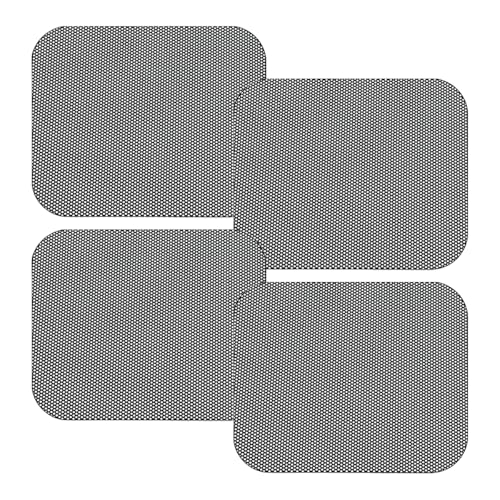
The 4PCS Car Window Sunshade (Black) delivers reliable UV and heat protection, making it an ideal choice for drivers who frequently face intense sunlight during daytime commutes or long road trips. It blocks harmful UV rays and reduces interior heat buildup by up to 40%, minimizing dashboard glare. Made from premium PVC static cling material, it adheres securely without suction cups or residue. Each piece measures 16.92×14.96 inches-fitting most sedan, SUV, and van side windows. I can trim it for precise sizing. It installs fast with a water mist and squeegee, stays in place via electrostatic adhesion, and cleans easily with water for long-term reuse.
Best For: Drivers seeking effective, residue-free sun protection for their vehicle’s side windows during daily commutes or extended road trips.
Pros:
- Blocks up to 40% of interior heat and harmful UV rays, reducing glare and enhancing driving comfort
- Made from durable, reusable PVC static cling material that installs without suction cups or residue
- Easy to apply, clean, and trim to fit a variety of vehicle and glass window sizes
Cons:
- May require reapplication if not properly installed with water mist
- Effectiveness depends on correct sizing and positioning; improper fit may interfere with window operation
- Static adhesion can weaken over time in extremely dry or hot conditions, requiring occasional re-moistening
SINGARO Car Window Tinting Kit (5PCS)
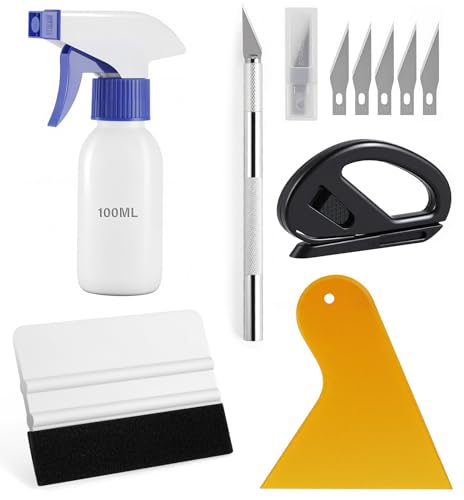
A reliable toolkit makes all the difference when precision and efficiency matter most-especially during delicate installations like car window tinting or vinyl wrapping. I rely on the SINGARO 5PCS Kit for consistent, professional results. It includes a soft-cloth squeegee, yellow vinyl squeegee, safe membrane cutter, 100ml spray bottle with spray/stream/off modes, and a craft knife with five replacement carbon steel blades. The spray bottle’s adjustable nozzle guarantees precise fluid control during film application. Durable ABS plastic and robust construction make these tools lightweight yet built to last. They’re ideal for window tinting, carbon fiber wraps, wallpaper, and trim work. Not for children under 3.
Best For: DIY enthusiasts and automotive detailers who need a reliable, multi-functional toolkit for car window tinting, vinyl wrapping, and other precision applications.
Pros:
- Includes five essential tools with durable ABS plastic and carbon steel construction for long-term use
- Spray bottle features three adjustable modes (spray, stream, off) for precise application of fluids
- Versatile kit suitable for window tinting, vinyl wraps, wallpaper, and trim projects
Cons:
- Not suitable for children under 3 due to small parts and sharp tools
- Limited blade count (only five replacements) for the craft knife
- Compact size may not accommodate users with larger hands comfortably
SW 80% VLT Nano Ceramic Car Window Film
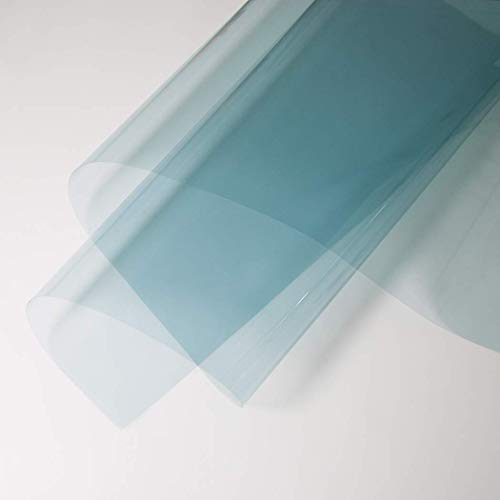
Want maximum UV protection without sacrificing visibility? I rely on the SW 80% VLT Nano Ceramic Car Window Film because it blocks 99% of harmful UV rays, protecting my skin and preventing interior fading. Its nano-ceramic technology absorbs and dissipates heat through sputtering sunlight absorption and thermal exchange, improving comfort. The 2-ply construction includes a scratch-resistant coating, ensuring no bubbling, peeling, or fading over time. It strengthens glass, reducing shatter risks. Non-metallized, so my radio and phone signals stay strong. It cuts glare and enhances clarity. For installation, I use tape on liner corners and soapy water to prevent bubbles-best done with two people.
Best For: Drivers seeking high UV protection, glare reduction, and heat rejection without compromising visibility or electronic signal transmission.
Pros:
- Blocks 99% of UV rays, protecting skin and preventing interior fading
- Uses nano-ceramic technology for effective heat absorption and dissipation
- Non-metallized design ensures no interference with radio or mobile signals
Cons:
- Installation is recommended with two people, which may be inconvenient
- Requires careful application using soapy water to avoid bubbles
- May be more expensive than standard tint films due to advanced technology
4PCS Car Window Sunshade Protector

DUSCOKE’s 4PCS Car Window Sunshade Protector suits drivers prioritizing UV defense and thermal control. It blocks harmful ultraviolet rays, slowing interior aging and reducing AC load. Made from high-grade PVC, it’s durable, water-resistant, and won’t tear easily. Measuring 16.69 x 14.92 x 0.04 inches and weighing just 5.8 ounces, it’s lightweight and fits most side windows. I use static cling-no adhesive-so it leaves no residue. I wet the window first, then apply it smoothly with a squeegee for bubble-free hold. It’s cuttable, repositionable, and reusable. Its mesh design allows me to see out while keeping privacy. I wash it with water; it dries flat, ready for reuse.
Best For: Drivers seeking effective UV protection, heat reduction, and privacy without compromising outward visibility or leaving adhesive residue.
Pros:
- Blocks UV rays and reduces interior heat, helping preserve car interiors and lower AC usage
- Made from durable, water-resistant PVC that is reusable, washable, and easy to reposition
- Uses static cling for residue-free installation and can be trimmed to fit various window shapes and sizes
Cons:
- Requires wet application for proper adhesion, which may be inconvenient in dry or cold conditions
- May not adhere well to heavily tinted or textured windows due to static cling dependency
- Limited sizing options; may need trimming for optimal fit on smaller or unusually shaped side windows
Vepagoo 20% VLT Ceramic Car Window Tint
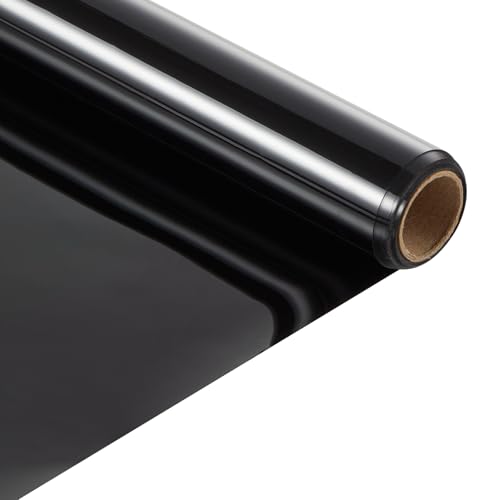
If you demand high-performance heat rejection without sacrificing visibility, Vepagoo’s 20% VLT ceramic window tint delivers. It blocks 99% of UV rays and cuts infrared radiation substantially, reducing interior heat buildup. The 20% visible light transmission strikes a balance between daytime privacy and clear nighttime vision. Made with nano-ceramic materials, it resists scratches and won’t fade or turn purple over time. It adds structural strength to glass, helping hold shards together upon impact. Installation is DIY-friendly, with step-by-step guides and online video support. It’s backed by an 18-month warranty and round-the-clock customer service.
Best For: Drivers seeking a high-performance, durable window tint that balances heat rejection, daytime privacy, and nighttime visibility with a 20% VLT for a sleek, legal tint level.
Pros:
- Blocks 99% of UV rays and significantly reduces infrared radiation and cabin heat
- Maintains excellent clarity and high-definition outward vision day and night
- Scratch-resistant, non-fading nano-cer packed with long-term durability and safety benefits
Cons:
- 20% VLT may not provide complete privacy at night when interior lights are on
- DIY installation, while supported, may challenge first-time users
- Slightly higher price point compared to non-ceramic or lower-tier tints
Vepagoo 35% VLT Ceramic Car Window Tint
I choose the Vepagoo 35% VLT Ceramic Car Window Tint when I need balanced heat rejection without sacrificing visibility. It blocks 99% of UV rays and a high percentage of infrared radiation, reducing interior heat buildup. The 35% visible light transmission provides clear outward vision while offering one-way daytime privacy. Made with nano-ceramic material, it’s scratch-resistant, doesn’t interfere with GPS or cell signals, and strengthens glass to hold fragments during impact. I applied it myself using the included instructions and online tutorials. It’s backed by an 18-month warranty and 24/7 customer support for installation or performance questions.
Best For: Drivers seeking a balance between heat rejection, daytime privacy, and nighttime visibility without signal interference.
Pros:
- Blocks 99% of UV rays and a significant amount of infrared heat, protecting the cabin and occupants
- Provides one-way daytime privacy while maintaining clear outward visibility and 35% light transmission
- Scratch-resistant nano-ceramic material that doesn’t interfere with GPS, cell, or radio signals
Cons:
- 35% VLT may not provide sufficient privacy at night when interior lights are on
- DIY installation, while supported with guides, may challenge beginners and risk bubbles or misalignment
- 18-month warranty is shorter compared to some competitors offering lifetime coverage
Shackcom White Frosted Glass Window Film

For drivers and vehicle owners prioritizing both privacy and structural safety, the Shackcom White Frosted Glass Window Film delivers a functional, durable upgrade. It blocks outside views completely while transmitting natural light, ensuring visibility inside without exposure. The film acts as a safety barrier, holding glass fragments together upon impact, reducing injury risks from shattered windows. Its micro-layered, tear-resistant construction enhances security, deterring smash-and-grab thefts. Scratch-resistant and graffiti-proof, it withstands vandalism. I apply it easily on car windows, providing privacy, light diffusion, and impact resistance in one reliable layer.
Best For: Drivers and vehicle owners seeking enhanced privacy, safety, and security for their vehicles without sacrificing natural light.
Pros:
- Provides complete privacy while allowing natural light transmission for a bright, obscured interior
- Enhances safety by holding glass together upon impact, reducing injury from shattered glass
- Offers tear-resistant, scratch-proof protection against vandalism and smash-and-grab thefts
Cons:
- May require professional application for seamless results on curved or tinted vehicle windows
- Slight reduction in outward visibility in low-light conditions due to frosted finish
- Not easily removable without potential residue if not maintained properly
Factors to Consider When Choosing Car Safety Window Film
You need to prioritize UV protection when choosing a car safety window film-look for products that block at least 99% of UVA and UVB rays to shield your skin and prevent interior fading. Heat rejection matters just as much; films with a solar reflectivity rate above 70% reduce cabin temperature by up to 20°F, improving comfort and lowering AC load. Balance privacy and visibility by selecting a film with the right VLT (Visible Light Transmission) percentage-30–50% is ideal for daytime visibility and nighttime clarity while still offering privacy.
UV Protection Level
Nearly all high-performance car safety window films block at least 99% of UVA and UVB rays, providing essential protection against skin damage and long-term sun exposure risks. You should choose a film that guarantees this level of UV rejection to safeguard both passengers and your vehicle’s interior. High UV protection prevents dashboard fading, leather cracking, and upholstery deterioration caused by prolonged sunlight exposure. Importantly, UV blocking isn’t tied to tint darkness-lighter films can still reject 99% of harmful rays. Look for products using nano-ceramic or sputtered metallic layers, as these advanced materials achieve superior UV filtration without affecting visibility. Unlike basic dyed films, these technologies maintain performance over time. Unfiltered UV exposure through untreated glass raises long-term health risks, including skin aging and potential cancer. A quality safety film acts like daily sunscreen for your car-transparent, reliable, and essential.
Heat Rejection Performance
When you step into a car parked in the sun, the intense heat isn’t just uncomfortable-it’s a sign of infrared radiation pouring through the glass. You need window film that actively blocks this heat. High-performance films reject up to 99% of solar heat by targeting infrared rays. Nano-ceramic films excel here, using sputtering technology to absorb heat without disrupting GPS or phone signals. Heat rejection correlates with Visible Light Transmission (VLT); lower VLT, like 35%, usually means higher heat reduction. Multi-layered films include scratch-resistant coatings that prevent fading or bubbling, ensuring long-term performance. These films maintain efficiency year after year. By reducing cabin temperatures, they also protect upholstery from fading. Less heat means lighter air conditioning loads. That boosts fuel efficiency, especially in stop-and-go traffic. Choose a film with proven thermal rejection data-not just tint darkness. Performance matters more than appearance. Look for independent lab reports verifying infrared and total solar energy rejection specs.
Privacy And Visibility
How much privacy do you really need from your car windows? Choose a film with 5% to 20% VLT for maximum privacy, blocking clear views inside while maintaining good daytime outward visibility. Lower VLT means less light enters, limiting interior visibility from outside. For balanced performance, opt for 35% to 70% VLT films-they reduce glare and shield interiors while keeping external views clear. One-way privacy films rely on daylight; they work well during bright hours but may let outsiders see in at night if interior lights are on. If you need high privacy without sacrificing clarity, nano-ceramic films deliver, offering sharp, high-definition vision even in low light. Static cling films provide temporary privacy, don’t obstruct emergency exits, and maintain full window functionality. Each choice depends on your daily needs and driving conditions.
Material Durability
Durability starts with material. You need high-grade PVC in your window film because it resists tearing, warping, and fading, even when temperatures hit extremes. This material handles desert heat and winter cold without degrading. Nano-ceramic films go further-they won’t bubble, peel, or discolor, even after years of direct sun exposure. Their molecular structure blocks heat while staying optically clear. You’ll also want multi-ply films with scratch-resistant coatings; these boost surface hardness to 3H–4H on the pencil hardness scale, shielding against abrasions from cleaning or accidental contact. Static cling versions use electrostatic adhesion, so they stay strong over repeated use without glue that weakens over time. Plus, integrated UV-blocking layers stop 99% of UV radiation, protecting both the film and your car’s dashboard, upholstery, and trim from cracking or fading.
Installation Ease
A durable film performs best when installed correctly, so choosing one that fits your skill level and tools matters just as much as its material composition. Static cling films attach without adhesives, using only a dampened glass surface for quick, repositionable application-ideal for beginners. Others require a squeegee and soapy water solution to eliminate air bubbles and guarantee full adhesion. Pre-cut films match standard window dimensions, reducing measurement errors and trimming time. Roll-based or custom-cut options provide flexibility for nonstandard shapes. Look for films with transparent carrier liners or alignment guides-they simplify positioning and improve accuracy. Some install solo, while larger windows benefit from two-person setups. Installation time ranges from 15 minutes for small windows to over an hour for full-vehicle coverage, depending on complexity. Choose based on your tools, patience, and precision needs.
Signal Interference Potential
While blocking heat and harmful UV rays, some window films can unintentionally disrupt your car’s electronic signals-especially if they contain metallic components. These metals reflect electromagnetic waves, interfering with radio, GPS, and mobile signals. The thicker and more conductive the metal layer, the greater the signal attenuation-sometimes reducing reception by up to 50%. Aftermarket films using dyed or metalized layers are most likely to cause issues. Vehicles with window-embedded antennas suffer worst, as the film blocks the very wavelengths those systems rely on. You’ll want to avoid such interference for safety and convenience. Non-metallized films-like ceramic or carbon-based options-don’t disrupt signals. They use non-conductive nanoparticles to reject heat without affecting transmission. These films maintain 95% or higher signal clarity across bands. Choose non-metallized for seamless connectivity and reliable in-car electronics performance.
Shatter Resistance Capability
When your car’s windows are struck by debris or involved in a collision, the right safety window film can prevent dangerous glass fragmentation. You need a film with strong adhesive bonding that holds glass shards together on impact. Multi-layered films using micro-layered technology stop shards from scattering, cutting injury risks markedly. Look for nano-ceramic or reinforced polyester layers-they boost the glass’s structural integrity under stress. Some safety-rated films meet impact resistance standards like ANSI Z26.1, ensuring reliable performance in crashes. The film’s ability to absorb and spread impact energy improves both shatter resistance and occupant protection. Thicker gauges, often 4 mil or higher, offer better durability and cohesion. Don’t compromise on tensile strength-films with 30+ kg/cm² perform best. These features work together to keep your windows intact when it matters most.
Frequently Asked Questions
Can I Install Window Film Myself Without Professional Help?
Yes, you can install window film yourself without professional help if you’re meticulous and patient. You’ll need a heat gun, squeegee, precision knife, and soapy application solution. Surface prep is critical-clean glass thoroughly to avoid bubbles. Most DIY films use adhesive activated by water. Cut the film 1/8 inch smaller than the glass to prevent shrinkage gaps. Achieving bubble-free, edge-perfect results demands steady hands and controlled environment-garage temps must be stable.
Will Window Film Reduce My Visibility at Night?
No, quality window film won’t reduce your night visibility if you choose the right type. You install films with high visible light transmission (VLT)-typically 70% or above-which let most light pass through. Low VLT films (under 35%) can impair vision in low light. Ceramic films offer glare reduction without sacrificing clarity. They block infrared heat and UV rays while maintaining optical precision, like wearing polarized sunglasses without darkening your view.
Does Ceramic Tint Prevent Phone and GPS Signal Interference?
Yes, ceramic tint doesn’t interfere with your phone or GPS signals. It uses non-conductive ceramic particles instead of metal layers. Metallic tints block electromagnetic frequencies, but ceramic films are transparent to radio waves. You’ll maintain full signal strength for GPS, Bluetooth, and cellular networks. Independent tests show less than 1% signal loss with ceramic compared to 20–60% with metalized films. It’s ideal for uninterrupted connectivity.
How Long Does Car Window Film Typically Last?
Car window film typically lasts 5 to 15 years, depending on material quality and environmental exposure. You’ll get longer performance from ceramic and crystalline films thanks to UV inhibitors and scratch-resistant coatings. Inferior dyed films fade or bubble in 3–5 years. Proper installation and maintenance prevent premature failure. You can expect 99% UV rejection to remain effective throughout the lifespan, preserving interior components much like sunscreen protects skin from long-term damage.
Can I Roll Down My Windows Immediately After Tinting?
No, you can’t roll down your windows immediately after tinting. The adhesive needs time to cure, usually 48 to 72 hours. Premature movement causes bubbling or peeling. Films bond through a drying process where moisture escapes slowly. Rolling windows up too soon traps moisture and disrupts adhesion. Wait at least three days-preferably five-to guarantee full film stabilization and avoid costly reapplication.