Best Carburetor Cleaners That Restore Engine Performance Fast
You need fast results, and Gumout Carb Cleaner Spray (14 oz) delivers. It dissolves gum, varnish, and carbon in minutes, restoring idle smoothness and fuel economy. Aerosol pressure targets choke valves and throttle bodies without disassembly. CRC Clean-R-Carb (12 oz) removes sludge from EGR and PCV systems. Red Line SI-1 cleans fuel injectors and combustion chambers in one application. All leave no residue on metal. Choose based on application method and VOC compliance-more details reveal ideal use cases.
We are supported by our audience. When you purchase through links on our site, we may earn an affiliate commission, at no extra cost for you. Learn more. Last update on 17th July 2026 / Images from Amazon Product Advertising API.
Notable Insights
- Gumout Carb Cleaner Spray quickly dissolves gum, varnish, and carbon deposits for fast restoration of engine performance.
- WD-40 Specialist Carb Cleaner removes baked-on grime with a pressurized spray that reaches tight engine areas effectively.
- CRC Clean-R-Carb Cleaner targets throttle bodies, EGR valves, and carburetors to restore smooth engine operation quickly.
- STA-BIL Fast Fix treats fuel systems without disassembly, removing water and varnish to revive lost engine power.
- Red Line SI-1 cleans fuel injectors, intake valves, and combustion chambers in one application for immediate performance gains.
Gumout Carb Cleaner Spray (14 oz)

If you’re tackling stubborn carburetor deposits that cause hard starts or rough idling, Gumout Carb Cleaner Spray (14 oz) is your go-to solution for fast, reliable cleaning. This 14-ounce aerosol delivers a powerful, quick-drying formula that penetrates deep into carburetor chambers. It dissolves gum, varnish, and carbon deposits from internal and external components, including choke valves. I’ve seen it restore smooth idling and reduce exhaust emissions in minutes. The cleaner is safe on unpainted metal parts and leaves no residue. Regular use prevents future buildup, improving fuel economy and long-term engine performance. It’s compatible with most carbureted engines, making it a precise, dependable maintenance essential.
Best For: DIY mechanics and automotive enthusiasts seeking a fast, effective solution for cleaning carburetors and restoring smooth engine performance.
Pros:
- Quickly removes gum, varnish, and carbon deposits from carburetors and choke valves
- Improves engine starting, idling, and fuel economy with no residue left behind
- Safe for use on unpainted metal parts and compatible with most carbureted engines
Cons:
- Not suitable for use on painted surfaces due to its strong solvent formula
- Requires proper ventilation during use as fumes can be strong
- Limited to 14 oz per can, which may require multiple cans for extensive cleaning jobs
Gumout Carb Cleaner Spray (14oz, Pack of 2)
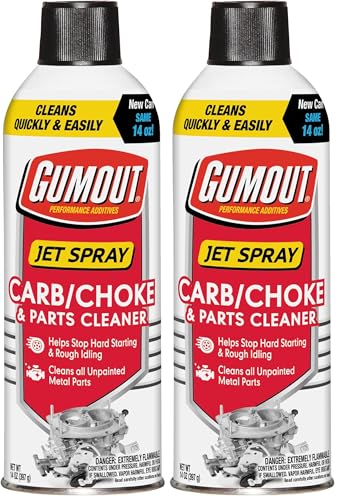
For small engine maintenance where clogged carburetors lead to hard starts and rough idling, Gumout 800002231 Carb/Choke Carburetor Cleaner Spray stands out as a reliable solution. I rely on this 14 oz aerosol, and the pack of two guarantees I’m stocked for multiple uses. It dissolves gum, varnish, and dirt inside and outside carburetor chambers, including choke valves. The fast-drying formula works on unpainted metal parts without residue. I’ve seen it restore smooth idling, reduce stalls, and lower emissions. It also doubles as an intake valve cleaner. Regular use prevents future deposit buildup, preserving engine efficiency and fuel economy over time.
Best For: DIY mechanics and small engine owners needing to clean and maintain carburetors for improved starting, idling, and overall engine performance.
Pros:
- Effectively dissolves gum, varnish, and dirt from carburetors and choke valves
- Fast-drying formula leaves no residue on unpainted metal parts
- Helps prevent future deposit buildup, improving fuel economy and reducing emissions
Cons:
- Not suitable for use on painted surfaces or plastic components
- Aerosol spray may require careful handling in well-ventilated areas
- Limited to carbureted engines, making it less useful for modern fuel-injected vehicles
STA-BIL Fast Fix Small Engine Treatment

STA-BIL Fast Fix Small Engine Treatment is my go-to solution when small engines refuse to start due to fuel-related issues. This 8oz green formula treats up to 20 gallons of fuel. It’s alcohol-free, making it safe for seals and fuel lines. I use 1 oz per 2.5 gallons to fix rough-running engines. It dissolves gum and varnish from ethanol-blended fuel. The additive penetrates deep, removing water from fuel systems without disassembly. It restores fuel flow and combustion. I’ve seen results overnight. It works in lawn mowers, chainsaws, and generators. It cleans carburetors and fuel injectors. Shelf life is up to 2 years after opening-just mark the date.
Best For: Small engine owners struggling with hard starts or poor performance due to ethanol-blended fuel, gum, varnish, or water contamination.
Pros:
- Effectively removes water, gum, and varnish without fuel system disassembly
- Safe for use in all 2-cycle and 4-cycle small engines, including lawn mowers, generators, and snow blowers
- Alcohol-free formula protects fuel lines and seals while restoring fuel flow and combustion efficiency
Cons:
- Limited treatment capacity-only 8oz treats up to 20 gallons
- May require multiple attempts or overnight soaking for severely fouled engines
- Shelf life limited to 2 years after opening, requiring date marking for effectiveness tracking
CRC Clean-R-Carb Carburetor Cleaner (12 oz)

I rely on the CRC Clean-R-Carb Carburetor Cleaner (12 oz) when I need a fast-acting solution for removing stubborn deposits in small engine fuel systems. This aerosol, model 05079 by CRC Industries, delivers 12 wt oz of chemical solvent in a 2.63 x 2.63 x 7.75-inch can. It dissolves gum, varnish, and sludge that disrupt fuel flow and engine performance. Designed for carburetors, EGR valves, PCV systems, and automatic chokes, it works on engines in lawn mowers, boats, and airplanes. It helps prevent hard starting, backfiring, and power loss. ASIN B000M8IEEE. First available March 23, 2009. Backed by Amazon’s 30-day return policy.
Best For: DIY mechanics and equipment owners seeking a fast-acting cleaner for carburetors and small engine fuel systems.
Pros:
- Effectively dissolves gum, varnish, and sludge to restore engine performance
- Versatile application for carburetors, EGR valves, PCV systems, and automatic chokes
- Suitable for a wide range of equipment including lawn mowers, boats, and airplanes
Cons:
- Aerosol format may require careful handling and ventilation during use
- Limited to 12 oz per can, which may require multiple cans for extensive cleaning
- Not a fuel additive-must be used as a direct cleaner, not for in-tank use
STA-BIL Carb Cleaner 12.5 oz (22005)
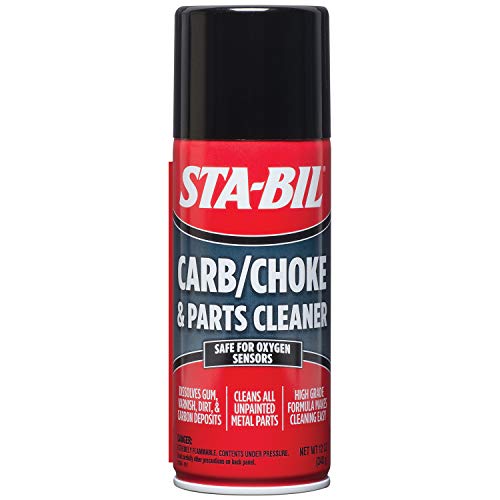
A precise solution for owners of small engines and older vehicles relying on carburetors, this aerosol cleaner delivers targeted performance where it matters most. I use STA-BIL Carb Cleaner 12.5 oz (22005) to dissolve gum, varnish, carbon, and lead deposits fast. Its high-grade formula leaves no oily residue, ensuring clean, unpainted metal parts. The directional spray tube reaches tight spaces effortlessly. I’ve seen improved engine starts and smoother idling after application. It’s safe for gasoline and diesel engines, works with catalytic converters and O2 sensors. Compatible with cars, lawn mowers, motorcycles, and marine engines. Weighs 12 oz; ASIN B00NEG6JIO. Made by Gold Eagle Co.
Best For: Owners of small engines and older vehicles with carburetors seeking a fast-acting, residue-free cleaner to restore engine performance.
Pros:
- Effectively dissolves gum, varnish, carbon, and lead deposits without leaving oily residue
- Directional spray tube allows precise application in hard-to-reach areas
- Safe for use in both gasoline and diesel engines, including those with catalytic converters and O2 sensors
Cons:
- Limited to 12.5 oz per can, which may require multiple cans for extensive cleaning jobs
- Not suitable for use on painted surfaces or plastic parts due to its aggressive formula
- Aerosol propellant may pose environmental concerns with frequent use
Berryman B-9 Chem Dip Parts Cleaner (3/4-Gallon)

If you’re tackling stubborn carbon deposits and varnish on small engine parts without disassembling them entirely, the Berryman B-9 Chem Dip Parts Cleaner in the 3/4-gallon pail is your best choice. I use it because it removes gum, sludge, and grease fast-no heat or agitation needed. Its non-chlorinated, non-flammable formula is VOC-compliant nationwide. It’s safe on plastic, rubber, painted surfaces, and most metals. The 3-quart pail includes a metal basket and Armlock ring for secure soaking. Weighing 6 pounds, it measures 6.75 x 6.75 x 7.75 inches. It won’t cause rust. Customers rate it 4.5 stars from over 2,200 reviews.
Best For: DIY mechanics and automotive professionals cleaning carburetors, valves, and other small engine parts without disassembly.
Pros:
- Fast-acting, no-heat immersion formula effectively removes carbon, varnish, and grease
- Non-flammable, non-chlorinated, and VOC-compliant for safe use across all 50 states
- Includes metal basket and Armlock ring for secure, mess-free soaking
Cons:
- Strong chemical odor may require use in well-ventilated areas
- Not recommended for prolonged soaking of sensitive plastics or rubber seals
- Higher price point compared to some solvent-based alternatives
WD-40 Specialist Carb/Throttle Body & Parts Cleaner, 13.5 OZ

This carburetor cleaner is the go-to solution for mechanics and DIYers tackling stubborn carbon buildup in gas-powered engines. I rely on WD-40 Specialist’s 13.5 oz aerosol spray to dissolve baked-on deposits with its solvent-based formula. The pressurized dual-action system blasts away debris from carburetors, throttle bodies, and metal parts without damage. It works on cars, trucks, motorcycles, boats, and lawn equipment. I’ve seen it restore smooth idle, reduce stalling, and improve high-RPM performance. It’s safe for O2 sensors and catalytic converters. I trust it on both vintage and modern engines.
Best For: Mechanics and DIYers seeking a reliable, heavy-duty cleaner to remove tough carbon deposits from carburetors, throttle bodies, and metal engine parts in gas-powered equipment.
Pros:
- Effectively dissolves baked-on carbon and grime with a powerful solvent-based formula
- Safe for use on oxygen sensors and catalytic converters, reducing risk of damage
- Works across a wide range of equipment, from cars to lawn mowers and boats
Cons:
- Aerosol can may run out quickly during extensive cleaning jobs
- Strong chemical odor requires use in well-ventilated areas or with protective gear
- Not suitable for use on painted or plastic surfaces due to solvent strength
Red Line 60103 SI-1 Fuel System Cleaner

Red Line 60103 SI-1 Fuel System Cleaner stands out for drivers who demand complete, one-step fuel system maintenance without compromising engine performance. I use it because it cleans fuel injectors, carburetors, intake valves, and combustion chambers in a single application. Its 15-ounce formula delivers nearly 100% deposit removal efficiency when added directly to the fuel tank. I’ve seen it boost power, smooth idle, and improve fuel economy. It also prevents corrosion and inhibits gum and varnish buildup. I add one bottle per tank for best results. It stabilizes fuel in extreme temperatures, keeping my gasoline fresh. Regular use keeps my entire fuel system clean and functioning at peak efficiency.
Best For: Drivers seeking a high-efficiency, all-in-one fuel system cleaner to maintain peak engine performance and prevent deposit buildup in gasoline engines.
Pros:
- Removes nearly 100% of deposits from fuel injectors, carburetors, intake valves, and combustion chambers in one application
- Improves engine power, fuel economy, and idle smoothness while protecting against corrosion and varnish
- Stabilizes fuel in extreme temperatures and is easy to use with one bottle per tank for regular maintenance
Cons:
- Limited to gasoline systems, not suitable for diesel engines
- May be overkill for newer vehicles with minimal deposit accumulation
- Higher price point compared to some basic fuel additives
STA-BIL Small Engine Pro Additive (16 fl. oz.)
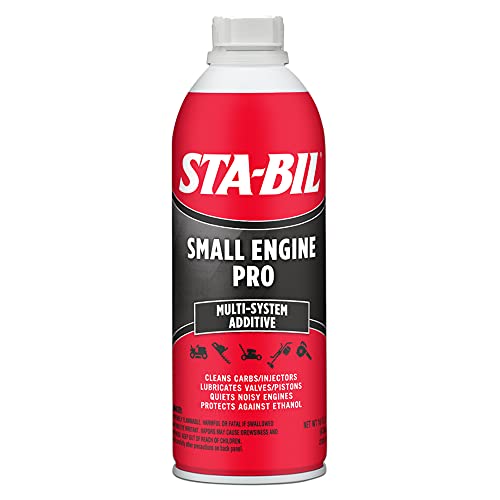
STA-BIL Small Engine Pro Multi-System Additive in the 16 fl. oz. red container (model 22305) is ideal for owners of gas-powered small engines who need a reliable, all-in-one fuel system treatment. I use it to restore lost power and clean gum, varnish, and deposits from carburetors and fuel injectors. It protects against ethanol damage and prevents corrosion with specialized inhibitors. I’ve found it keeps internal components like valves and pistons well-lubricated, reducing noise and wear. It’s safe for lawn mowers, trimmers, chainsaws, generators, and snow blowers. Regular use extends engine life and maintains peak efficiency.
Best For: Gas-powered small engine owners seeking an all-in-one fuel additive to restore performance, protect against ethanol damage, and extend engine life.
Pros:
- Restores lost engine power by cleaning gum, varnish, and deposits from fuel systems, carburetors, and injectors
- Protects against ethanol-related damage and prevents corrosion with specialized inhibitors
- Lubricates internal engine components to reduce noise, prevent wear, and extend engine life
Cons:
- Limited to 16 fl. oz., requiring frequent repurchasing for multiple or larger engines
- May not fully resolve severe fuel system clogs without mechanical cleaning
- Slightly higher price point compared to basic fuel stabilizers
CRC Clean-R-Carb Carburetor Cleaner (50 State Formula), 12 Wt Oz, 05379

If you need a carburetor cleaner that delivers strong performance without risking damage to emissions components, CRC Clean-R-Carb Carburetor Cleaner (50 State Formula) is your best choice. It’s safe for catalytic converters and oxygen sensors. I use it to dissolve deposits on venturis, linkages, butterflies, and PCV systems. It boosts fuel economy and restores engine performance fast. The 12 wt oz aerosol delivers precise application. This 50-State Formula complies with all federal and state VOC regulations. It’s designed specifically for carb and choke cleaning. You’ll notice smoother idling and quicker starts. I trust it because it’s both powerful and emissions-friendly.
Best For: Mechanics and DIYers seeking a powerful, emissions-safe carburetor cleaner that restores engine performance without harming catalytic converters or oxygen sensors.
Pros:
- Effectively dissolves deposits on venturis, linkages, butterflies, and PCV systems for improved fuel economy and engine performance
- Safe for use on vehicles with sensitive emissions components, including catalytic converters and oxygen sensors
- Complies with all 50-state and federal VOC regulations, making it legal for use nationwide
Cons:
- Aerosol format may require careful handling to avoid overspray or inhalation risks
- Limited to carburetor and choke cleaning applications, not suitable for broader fuel system cleaning
- 12 wt oz size may be insufficient for large-scale or frequent cleaning jobs
Factors to Consider When Choosing a Carburetor Cleaner
You need a carburetor cleaner that delivers strong cleaning power to break down varnish, gum, and carbon deposits quickly. Look for formulas compatible with oxygen sensors and safe on rubber, plastic, and metal components-many top cleaners list specific materials they won’t damage. Also, check the VOC compliance for your state, consider the application method (aerosol, liquid, or spray), and note the drying time, since fast-evaporating cleaners reduce downtime.
Cleaning Power
Cleaning power defines the core effectiveness of any carburetor cleaner, determining how thoroughly it restores fuel and air flow. You need a formula that quickly dissolves gum, varnish, sludge, and carbon deposits clogging critical passages. Solvent-based cleaners deliver this by penetrating and breaking down baked-on residues in throttle bodies, venturis, and choke valves. High-strength solvents tackle stubborn buildup without requiring carburetor disassembly, saving time and labor. Some products remove up to 95% of deposits in one application, directly improving idle stability, cold starts, and fuel economy. Their aggressive chemistry clears restricted fuel jets and air bleeds, restoring correct air-fuel ratios. Cleaning effectiveness isn’t just about strength-it’s measured by the cleaner’s ability to fully reopen blocked pathways and return the engine to peak combustion efficiency. You want proven, measurable restoration of flow and function.
Compatibility
A compatible carburetor cleaner guarantees effective cleaning without damaging critical engine components. You need one safe on unpainted metal to prevent corroding sensitive carb parts like jets and needles. Check that it’s formulated to be non-corrosive and non-flammable-this protects delicate internal components and keeps you safer during use. If your carb has plastic or rubber seals, gaskets, or linkages, confirm the cleaner won’t degrade these materials; some aggressive solvents cause swelling or cracking. Always choose a product safe for oxygen sensors and catalytic converters to avoid fouling emissions systems, which can trigger check engine lights or failed inspections. Also, make certain the cleaner is VOC-compliant, especially if you’re in California or other states with strict air quality rules. Using non-compliant formulas may be illegal and harm the environment.
Application Method
The method used to apply a carburetor cleaner plays a decisive role in cleaning efficiency, component safety, and overall service time. You should choose based on your cleaning needs and equipment access. Aerosol sprays deliver high-pressure, targeted cleaning, making them ideal for spot-treating choke valves and throttle bodies without full disassembly. They penetrate tight spaces and dissolve light deposits quickly. Trigger-spray bottles offer controlled flow for broader surfaces but lack the force to remove heavy, baked-on residue. For deep cleaning, immersion involves submerging parts in a solvent bath, ensuring complete contact and effective removal of varnish, carbon, and sludge from complex geometries. This method requires disassembly but delivers thorough results. Fast-drying formulas reduce downtime, letting you reassemble components sooner. Pick the method that balances convenience, depth of clean, and labor.
Voc Compliance
While environmental regulations might seem distant from your toolkit, ignoring VOC compliance can land you with a product that’s illegal to use in your state. VOC compliance limits volatile organic compounds to reduce smog formation, adhering to federal and state air quality rules. You must choose cleaners with VOC levels at or below 70% by weight-this is the legal threshold for most automotive chemical applications. Many non-compliant products exceed this limit and are banned in strict regions like California. Opt for “50-state compliant” labels, which meet CARB standards and guarantee legality nationwide. These low-VOC formulas maintain strong solvent power while reducing environmental impact. Regulatory agencies enforce these limits to improve air quality. Using compliant products guarantees you avoid fines and contribute to cleaner emissions. Always verify the VOC content on the technical data sheet before purchasing.
Drying Time
You’ve checked for VOC compliance to stay within legal and environmental limits, but now it’s time to focus on how quickly you can get the job done-starting with drying time. A quick-drying formula typically evaporates in 1 to 3 minutes, letting you reassemble parts fast and cut downtime. Fast evaporation means no moisture lingers, reducing the risk of water-related damage or corrosion. Many aerosol cleaners use volatile propellants that speed up drying, boosting efficiency. Warm temperatures and low humidity help the solvent dissipate even faster. If the cleaner takes too long to dry, dust and debris can stick again, undoing your work. That’s why drying time matters-it affects both performance and cleanliness. Pick a formula that dries quickly under normal workshop conditions. You want effective cleaning without waiting around. Quick dry means less idle time and faster turnaround on engine repairs.
Residue Type
A quality carburetor cleaner breaks down gum, varnish, and carbon deposits quickly and completely. You need one that dissolves fuel oxidation by游戏副本ts and combustion residues without leaving behind oily or sticky films. Clean取得 with strong solvents like toluene or xylene tackle baked-on sludge and heavy varnish, penetrating tight spaces in venturis and choke plates to restore precise fuel metering. Opt for formulations labeled “residue-free” to guarantee throttle bodies and intake valves stay clean and don’t attract fresh dirt. Some products leave a slight protective film, but this can trap contaminants over time. If your engine ran on leaded fuel or operates in dirty conditions, use an aggressive cleaner designed for high-residue environments. Always verify compatibility with your carburetor’s materials-rubber, plastic, or aluminum components can degrade if exposed to overly harsh chemicals. Choose precision over brute strength for long-term reliability.
Usage Frequency
Typically, you should clean your carburetor every three to six months to prevent performance-robbing deposits from forming. If you operate equipment in dusty or high-humidity environments, you’ll need to clean it more often-every one to two months. These conditions accelerate grime and moisture buildup, which clog small fuel passages and disrupt air-fuel balance. For seasonal tools like lawn mowers or snowblowers, one cleaning per season keeps the system clear and guarantees dependable startup. Commercial equipment used daily, such as landscaping engines, requires maintenance every 25 to 50 hours of operation. That frequent use cycle demands consistent cleaning to sustain peak output. Even if you rarely use an engine, fuel degrades over time, leaving varnish behind. In those cases, monthly preventive cleaning prevents gummed-up components. Choosing a carburetor cleaner suited for your usage pattern guarantees long-term reliability and maximum engine response.
Frequently Asked Questions
Can Carb Cleaner Fix a Flooded Engine?
Yes, carb cleaner can help fix a flooded engine. You spray it into the air intake to dissolve excess fuel. It evaporates quickly, restoring the air-fuel ratio. Most cleaners contain acetone or ethanol, which break down carbon and moisture. Use short bursts for 2–3 seconds, then crank the engine. Don’t overuse-too much may damage rubber or plastic parts. Always follow safety precautions.
Is It Safe to Use Carb Cleaner on Plastic Parts?
No, you shouldn’t use carb cleaner on most plastic parts. Many carb cleaners contain strong solvents like toluene or xylene that can warp, crack, or degrade plastics and rubber. Always check the manufacturer’s chemical compatibility chart. If the plastic is fuel-resistant-like Viton or specific polypropylenes-it might withstand brief exposure. For safety, mask off or remove plastic components before spraying. Use a plastic-safe cleaner instead when in doubt.
How Often Should I Clean My Carburetor?
You should clean your carburetor every 30 to 50 hours of engine operation or at least once per season. Frequent use in dusty or humid conditions demands more regular maintenance. Over time, varnish and gum from stale fuel clog small passages, disrupting air-fuel ratios. A clogged jet can reduce performance by up to 40%. Use a cleaner with non-corrosive, ethanol-safe solvents to avoid damaging seals and plastic parts.
Can I Use Carb Cleaner Instead of Starting Fluid?
Yes, you can use carb cleaner instead of starting fluid in emergencies, but it’s not ideal. Carb cleaner evaporates quickly and has a lower flash point than dedicated starting fluid, which increases ignition risk. Starting fluid contains ether for reliable cold starts, while carb cleaner lacks these optimized combustibility traits. Frequent substitution may damage seals or sensors. Use only in small bursts when no alternative exists. Stick to proper starting fluid when possible for safety, efficiency, and engine longevity.
Does Carb Cleaner Work on Diesel Engines?
No, carb cleaner isn’t designed for diesel engines. It targets gasoline residue and varnish in carburetors, not diesel injection systems. Your diesel engine relies on high compression, not throttle-body fuel mixing. Using carb cleaner can damage sensitive diesel components like injectors or seals. Instead, use a diesel-specific cleaner with cetane boosters and detergents. It dissolves carbon deposits, improves combustion, and protects fuel systems up to 700°F operating temps. Always follow manufacturer specs.