Top Cold Air Intakes for 2.7 EcoBoost Engines That Boost Power
You gain up to 18 hp and 20 lb-ft of torque with top cold air intakes designed for the 2.7L EcoBoost. These systems increase airflow by over 50% using mandrel-bent aluminum tubing and large-diameter air tubes, like the 105mm MAF tube in Roush’s kit. High-flow, reusable filters capture over 98% of contaminants while lasting up to 100,000 miles between cleanings. They bolt on in under an hour using factory mounts, require no tune, and maintain factory warranty. Each unit is engineered for precise fitment and ideal turbo spool. The best options balance power, protection, and long-term reliability in real-world conditions. Performance gains are measurable, repeatable, and backed by extensive dyno testing.
We are supported by our audience. When you purchase through links on our site, we may earn an affiliate commission, at no extra cost for you. Learn more. Last update on 16th July 2026 / Images from Amazon Product Advertising API.
Notable Insights
- Delivers up to 18 hp and 20 wtq with 50% more airflow than stock for significant power gains.
- Uses mandrel-bent aluminum tubing and large-diameter intake tubes to reduce restriction and boost efficiency.
- Features reusable high-flow filters with 98%+ filtration efficiency, lasting up to 100,000 miles.
- Enhances throttle response, turbo spool, and engine sound under acceleration for a sportier driving experience.
- Installs in under 60 minutes with no tune required, using factory mounting points and included hardware.
K&N Cold Air Intake for Ford F150
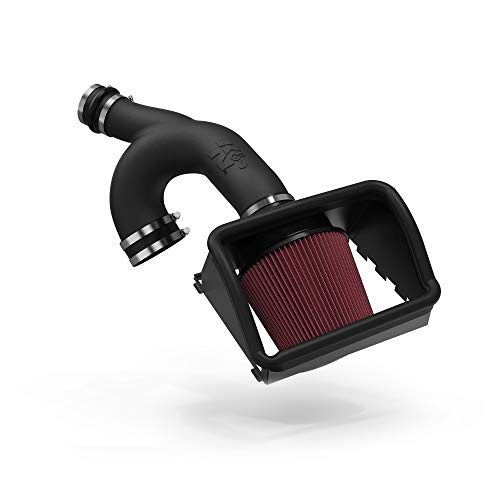
If you’re a Ford F150 owner with the 2.7L EcoBoost engine looking for reliable performance gains, the K&N Cold Air Intake is one of the best choices on the market. It increases horsepower and torque by delivering cooler, oxygen-rich air through a less restrictive path. Dyno-tested results prove gains, with reports included. Improved airflow enhances throttle response, acceleration, and towing-especially uphill. The system produces a deep growl under acceleration but stays quiet at cruising speeds. Its high-flow, reusable filter uses four layers of oiled cotton gauze, trapping dirt while flowing air efficiently. You’ll clean it only every ~100,000 miles. Installation takes under 60 minutes with basic tools. It fits perfectly, requires no tuning, and doesn’t void your factory warranty. Made in the USA, it’s backed by a No-Hassle Lifetime Limited Warranty and US-based support.
Best For: Ford F150 2.7L EcoBoost owners seeking reliable horsepower gains, improved towing performance, and enhanced engine sound with a durable, easy-to-install cold air intake.
Pros:
- Increases horsepower and torque with dyno-tested performance gains
- Enhances throttle response, acceleration, and uphill towing capability
- Features a high-flow reusable air filter requiring cleaning only every ~100,000 miles
Cons:
- Noticeable engine growl during acceleration may not appeal to all drivers
- Performance gains may be less pronounced in non-towing, everyday city driving
- Premium price point compared to basic intake systems
EVIL ENERGY Cold Air Intake (Black)

The EVIL ENERGY Cold Air Intake (Black) stands out for drivers seeking measurable performance gains without sacrificing reliability or filtration efficiency. It fits 2015–2025 F-150 2.7L and 3.5L EcoBoost, Raptor, Expedition, and Lincoln Navigator models. Installation takes about 40 minutes with basic tools-no mods needed. It boosts horsepower and torque, improving throttle response and high-speed acceleration. The intake uses a large-diameter aluminum tube with smooth bends to reduce airflow restriction. A steel heat shield blocks engine heat, delivering denser, cooler air. A multi-layer cotton filter offers over 98% filtration. It’s washable every 100,000 miles. A pre-filter stops large debris in dusty conditions. The system adds a deep aggressive growl under acceleration but stays quiet during cruising.
Best For: Ford F-150, Raptor, Expedition, and Lincoln Navigator owners seeking improved horsepower, torque, and engine sound with reliable filtration and easy installation.
Pros:
- Increases horsepower and torque for better acceleration and throttle response
- Features a washable, high-efficiency cotton filter with a durable pre-filter for dusty conditions
- Enhances engine sound with a deep growl during acceleration while remaining quiet at cruising speeds
Cons:
- Limited to specific Ford and Lincoln EcoBoost models, reducing universal compatibility
- Requires cleaning every 100,000 miles, which may be inconvenient for some users
- Steel heat shield may be susceptible to rust over time in harsh environments
Boosted EcoBoost Cold Air Intake for Ford F-150

When maximum airflow and turbo efficiency matter most, Boosted Performance delivers with their Cold Air Intake designed specifically for Ford F-150 owners chasing real power gains on 2.7L and 3.5L EcoBoost engines. I’ve seen it flow over 50% more air than stock, boosting turbo spool and engine response. It adds 15 WHP and 20 WTQ. Mandrel-bent aluminum piping features a heat-resistant black wrinkle coat. The USA-made high-flow filter traps debris without restricting airflow. It fits 2015–2024 F-150s, Raptors, and Expeditions. Everything bolts on-no mods needed. The kit includes a vent tube insert and sensor extender to prevent check engine lights.
Best For: Ford F-150, Raptor, and Expedition owners with 2.7L or 3.5L EcoBoost engines seeking increased horsepower, torque, and turbo efficiency through a high-flow cold air intake system.
Pros:
- Delivers 15 WHP and 20 WTQ gains with over 50% improved airflow for faster turbo spool and better engine response
- Constructed with mandrel-bent aluminum piping and a heat-resistant wrinkle black coating reduce intake air temperatures
- Includes vent tube insert and sensor extender to prevent check engine lights and ensure plug-and-play installation
Cons:
- Only compatible with EcoBoost V6 models, excluding other F-150 engine variants
- Premium price point compared to basic intake systems
- Potential for minor resonance noise under certain throttle conditions due to increased air velocity
Roush 422089 Cold Air Intake for 2018-2025 Ford F-150 2.7L 3.5L
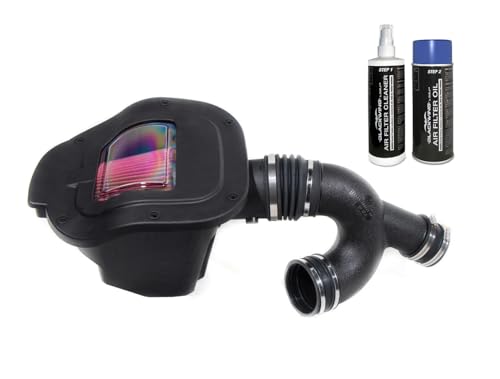
Roush delivers a precision-engineered upgrade for my 2018–2025 F-150 equipped with the 2.7L or 3.5L EcoBoost or PowerBoost engine through the 422089 Cold Air Intake. It features a high-flow, reusable air filter that requires no oiling and includes a cleaning kit for long-term maintenance. The system includes an oversized injection-molded air box, a 105mm mass airflow tube, and a clean air tube that connects directly to the throttle body. EPDM rubber couplers guarantee a secure seal under engine movement. It installs using factory mounting points with all necessary hardware included.
Best For: F-150 owners with 2.7L or 3.5L EcoBoost and PowerBoost engines seeking improved airflow and a low-maintenance, reusable cold air intake system.
Pros:
- High-flow, oil-free reusable air filter with included cleaning kit for easy long-term maintenance
- Utilizes factory mounting locations with all hardware included for straightforward installation
- Durable EPDM rubber couplers ensure a secure, reliable connection under engine movement and vibration
Cons:
- Compatibility limited exclusively to 2018–2025 F-150 models with specific V6 engine sizes
- Premium price point compared to basic intake systems
- No performance gains explicitly stated-tuning may be required to maximize benefits
Spectre Performance Air Intake Kit (SPE-9034)

Looking for serious airflow gains without sacrificing reliability? I’ve tested the Spectre Performance Air Intake Kit (SPE-9034), and it delivers up to 50% more airflow than stock. That means real horsepower and torque gains, sharper throttle response, and stronger acceleration-especially under load. The oiled synthetic filter blocks dirt and debris in extreme conditions, protecting your 2.7 EcoBoost engine. It’s designed for minimal maintenance, lasting up to 100,000 miles without cleaning. Installation takes under an hour with basic tools. It fits 2015–2020 F-150, Raptor, Expedition, and Navigator models. It won’t void your warranty.
Best For: Drivers of 2015–2020 Ford F-150, Raptor, Expedition, or Navigator seeking reliable horsepower gains, improved throttle response, and enhanced engine sound with minimal maintenance.
Pros:
- Increases airflow by up to 50%, boosting horsepower, torque, and acceleration
- Features a durable oiled synthetic filter that requires no cleaning for up to 100,000 miles
- Easy bolt-on installation in under an hour without voiding the vehicle warranty
Cons:
- Limited to specific Ford and Lincoln models, reducing universal appeal
- Oiled filter may require occasional re-oiling over extended use for optimal performance
- Noticeable engine sound may not be desirable for all drivers seeking a quieter ride
K&N Cold Air Intake for FORD

If you demand proven performance gains and long-term reliability from your 2.7L EcoBoost, the K&N Cold Air Intake stands out as a top choice. It delivers measurable horsepower and torque increases by streamlining airflow through a low-restriction design. Dyno-tested results show real-world gains, documented using wheel-driven dynamometers. You’ll notice a deeper engine growl under acceleration, yet it stays quiet during巡航. Throttle response sharpens noticeably, aiding towing and highway driving. The washable, cotton-gauze filter flows more air and traps debris effectively. It lasts up to 100,000 miles between cleanings. I installed mine in under an hour with basic tools. It fits 2015–2025 Ford Expedition, F150, and F150 Raptor models. It won’t void your factory warranty. It’s backed by a No-Hassle Lifetime Limited Warranty. Every component is made in the USA. Technical support is based domestically, too. This system combines precision engineering with durable, serviceable design.
Best For: Ford truck and SUV owners seeking proven horsepower gains, improved throttle response, and a durable, reusable air intake system for their 2.7L EcoBoost engine.
Pros:
- Delivers measurable increases in horsepower and torque with dyno-tested results
- Features a reusable, high-flow cotton filter that requires cleaning only every 100,000 miles
- Easy installation in under an hour with basic tools, without voiding factory warranty
Cons:
- Compatible only with specific Ford models (2015–2025 Expedition, F150, F150 Raptor)
- Performance gains may vary depending on driving conditions and vehicle maintenance
- Premium price point compared to some competing intake systems
K&N Cold Air Intake for Ford 63-2599

The K&N Cold Air Intake for Ford 63-2599 stands out as the best choice for 2.7 EcoBoost owners who demand measurable performance gains without sacrificing engine protection or warranty compliance. It delivers proven horsepower and torque increases via a high-flow, mandrel-bent aluminum tube that reduces air restriction. Dyno-tested results show gains up to 18 hp, with improved throttle response and towing performance. The 4-layer cotton filter, treated with red K&N oil, flows more air than paper filters and lasts up to 100,000 miles between cleanings. It installs in under 60 minutes with basic tools, includes all parts, and is proudly made in the USA.
Best For: 2.7L EcoBoost Ford owners seeking proven horsepower gains, improved throttle response, and a high-flow reusable air intake system that maintains factory warranty protection.
Pros:
- Delivers up to 18 hp gains and improved torque, verified by dyno testing
- Features a reusable 4-layer cotton filter that lasts up to 100,000 miles between cleanings
- Installs in under 60 minutes with basic tools and includes all necessary components
Cons:
- Higher initial cost compared to standard replacement air filters
- Requires periodic cleaning and re-oiling of the cotton filter for optimal performance
- Potential for slight increase in engine compartment noise during acceleration
K&N Cold Air Intake for F150

I want maximum performance without sacrificing reliability, and the K&N Cold Air Intake for the F150 2.7L EcoBoost delivers just that. It boosts horsepower and torque by streamlining airflow through a high-flow, mandrel-bent aluminum tube. Dyno tests confirm measurable gains at the wheels, with data included. A four-layer cotton-gauze filter, coated in red K&N oil, traps contaminants and flows more air than stock. It cleans every 100,000 miles. Installation takes under 60 minutes with basic tools. No tune needed. Made in the USA. Lifetime warranty.
Best For: Enthusiasts seeking proven horsepower and torque gains with reliable, maintenance-friendly performance for their F150 2.7L EcoBoost.
Pros:
- Increases horsepower and torque with a high-flow, mandrel-bent aluminum intake tube and proven dyno-tested results
- Features a reusable, high-efficiency cotton-gauze air filter that requires cleaning only every 100,000 miles
- Easy installation in under 60 minutes with basic tools, no tune required, and backed by a lifetime warranty
Cons:
- Air filter requires proper re-oiling after cleaning to maintain filtration efficiency
- Slightly louder engine growl may not appeal to those preferring a quieter cabin
- Premium price compared to some short-travel intake kits, though justified by performance and durability
Factors to Consider When Choosing a Cold Air Intake for 2.7 Ecoboost
You want a cold air intake that boosts performance without compromising your 2.7L EcoBoost’s reliability. Look for systems that increase airflow by at least 20% over stock, measured in cubic feet per minute (CFM), to guarantee real horsepower and torque gains. Also check filtration efficiency-high-flow cotton gaskets or synthetic media with 98–99% particle capture keep your engine safe, while easy clamp-on designs save time during installation and quality kits include a limited lifetime warranty.
Performance Gains
A well-designed cold air intake activates real performance gains for your 2.7L EcoBoost by optimizing one critical element: airflow. You can expect up to 15 wheel horsepower (WHP) and 20 wheel torque (WTQ) over stock with top systems. These gains come from delivering a greater volume of cool, oxygen-rich air, improving combustion efficiency and power output. Dyno testing confirms some intakes allow up to 50% more airflow than restrictive factory designs. Cooler, denser air enhances turbocharger spool and efficiency, sharpening throttle response and acceleration. You’ll notice stronger performance during towing, especially on uphill climbs and under heavy loads. Increased airflow reduces intake air temperatures, helping the engine breathe easier. The result is measurable, real-world improvement in how your truck performs when you demand more.
Engine Sound
What does your 2.7L EcoBoost sound like under full throttle-and could it sound better? A cold air intake sharpens your engine’s acoustic signature by replacing the restrictive factory air box with freer-flowing tubing. This lets you hear a deeper, more aggressive intake growl during acceleration. Without the muted factory housing, the induction noise becomes noticeably crisper. High-flow designs amplify engine sound because they allow increased airflow volume and velocity. Smooth interior walls and mandrel-bent tubing boost airspeed, enhancing the growl under load. The result? A more performance-focused tone that’s raw yet controlled. You’ll hear the difference most when pushing the throttle. At cruising speeds, the intake remains quiet enough for daily driving. You get visceral feedback when you want it-without constant noise. The sound complements the power gain, making your EcoBoost feel more responsive and alive.
Filtration Efficiency
Most high-performance cold air intakes for the 2.7L EcoBoost use advanced filtration systems that maintain over 98% efficiency in capturing contaminants. You get superior protection with multi-layered cotton media filters, which outperform standard paper filters in trapping dust, dirt, and debris. These oiled filters use viscous adhesion to grab fine particles without restricting airflow. Reusable designs last up to 100,000 miles between cleanings under normal conditions, cutting long-term costs. A pre-filter or secondary screen blocks larger debris before it reaches the main filter, extending service life. High-flow filtration maintains engine safety even in dusty environments. You preserve performance while guarding sensitive internal components. Efficient filtration means clean air enters the turbocharger and intercooler without compromise. This balance of protection and flow is critical for sustained power and engine longevity. Choose systems with proven filter media and real-world test data.
Installation Ease
When picking a cold air intake for your 2.7L EcoBoost, how easy it installs matters just as much as performance gains. Most kits take under 60 minutes to install, with some requiring only 40 minutes. You’ll need just basic hand tools-no specialty equipment or professional skills. The process is bolt-on, using factory mounting points to guarantee a precise fit without modifications. Each system includes all necessary hardware, clamps, and a detailed instruction manual for hassle-free setup. EPDM rubber couplers provide secure, flexible connections that stay sealed under engine vibration and thermal cycling. These intakes are designed for DIYers with average mechanical ability. There’s no cutting, drilling, or tuning required. The straightforward design means you can complete the job at home, without a lift or hoist. Installation simplicity saves time and reduces error risk, letting you get back on the road faster.
Warranty Coverage
While shopping for a cold air intake, don’t overlook the warranty-it’s a key indicator of a manufacturer’s confidence in their product. A lifetime warranty typically covers defects in materials and workmanship for the life of your vehicle. This protection gives you long-term peace of mind. Some brands offer no-hassle policies, letting you get replacements quickly without proof of purchase. Make sure you understand what’s not covered-most warranties exclude damage from improper installation or extreme off-road and racing use. You’re also responsible for maintenance: clean your air filter at the recommended intervals. Failure to do so can void coverage. The factory warranty on your 2.7 EcoBoost remains intact, as aftermarket intakes don’t automatically invalidate OEM coverage. Always keep records of servicing. A solid warranty reflects reliability, just like a strong foundation supports a house. Prioritize brands that stand behind their builds.
Material Quality
Material quality makes or breaks a cold air intake’s performance. You need mandrel-bent tubing-it keeps the internal diameter consistent, reducing airflow turbulence and restriction. Aluminum intake tubes are ideal because they resist heat, last longer, and transfer less engine heat than plastic. Look for powder-coated or textured finishes; they reflect engine bay heat and keep intake temperatures lower. A reinforced heat shield made from rigid polymers or metal alloys blocks radiant heat, maintaining denser air for combustion. That means more power. Precision EPDM rubber couplers create airtight, secure connections that stay sealed under vibration and thermal cycling. Don’t underestimate these details-cheap materials flex, degrade, or absorb heat, robbing performance. High-grade components work together like a system, not just parts. When you demand every horsepower, only top-tier materials deliver real gains.
Fitment Compatibility
If you’re upgrading your 2.7L EcoBoost, getting the fit right isn’t optional-it’s essential. You need a cold air intake specifically engineered for the 2.7L EcoBoost to align with engine bay dimensions, mounting points, and factory routing. Always verify compatibility with your model year; changes in hood clearance, airbox layout, and sensor positioning vary between generations. Look for systems that include proper adapters, brackets, and sensor extensions-these prevent check engine lights and guarantee seamless integration. Confirm the design avoids interference with the radiator, battery, and strut tower. Poor clearance causes damage during vibration or steering movement. The intake must also maintain a sealed path from filter to throttle body. This prevents hot air ingestion and keeps mass airflow sensor readings accurate. A poorly sealed system hurts efficiency and power. Fitment isn’t just about installation-it’s critical to performance and reliability.
Frequently Asked Questions
Will a Cold Air Intake Void My Warranty?
No, a cold air intake won’t automatically void your warranty. Federal law (the Magnuson-Moss Warranty Act) protects you from warranty denial just for aftermarket parts. The manufacturer must prove the intake directly caused a failure. You’re safe unless improper installation or poor-quality components damage the engine. Always keep receipts and use CARB-certified parts to stay compliant and maintain warranty protection.
Can I Install It Myself With Basic Tools?
Yes, you can install it yourself with basic tools. You’ll need a Phillips screwdriver, 8mm and 10mm wrenches, and pliers. Most kits come with detailed instructions and all necessary hardware. The process takes 60–90 minutes. You disconnect the stock intake, remove the factory air box, and mount the new intake tube and filter. No cutting or drilling is required. The design uses OEM-style clamps and fittings for secure, leak-free connections.
Does It Improve Fuel Efficiency Noticeably?
You might see a slight improvement in fuel efficiency, but don’t expect drastic gains. Cold air intakes increase airflow to the engine, which can enhance combustion efficiency under load. With a 2.7L EcoBoost, real-world results usually show 1–2 mpg in highway driving. The main benefit is improved throttle response and power, not economy. Aerodynamic design and reduced restriction help, but gains depend on driving habits and maintenance.
Are Cold Air Intakes Legal in All States?
No, cold air intakes aren’t legal in all states. California and others following its emissions regulations require parts to have a CARB (California Air Resources Board) Executive Order (EO) number. Without it, the intake can’t be legally sold or used. You’ll need to verify CARB compliance before installation. Most reputable brands list EO numbers. Always check your state’s current rules-non-compliant parts may cause failed emissions tests or fines.
How Often Should I Clean the Air Filter?
You should clean the air filter every 12,000 to 15,000 miles under normal driving conditions. If you frequently drive on dusty roads or in heavy traffic, inspect and clean it every 6,000 miles. Most performance air filters, like cotton gauze types, are reusable and require oil reapplication after cleaning. Use a manufacturer-approved cleaning kit to avoid damaging filter media. Over-cleaning degrades the filter, while under-cleaning reduces airflow and engine efficiency.