Best Decal Removers That Wipe Away Residue in Seconds
You get fast, complete residue removal with Perco Glue Off and Goo Gone Automotive. Perco’s 3.3 fl. oz. low-odor formula penetrates in 5–10 minutes, lifting tree sap, wax, and silicone. Goo Gone’s 12 fl. oz. no-drip gel clings to vertical surfaces, dissolving gum, tar, and bumper stickers in seconds. Both are safe on factory paint, glass, and metal. For immediate physical removal, drill-powered eraser wheels like S SATC or CowboyBOB work at 1,500–3,000 RPM without marring surfaces. More efficient options and key selection criteria follow.
We are supported by our audience. When you purchase through links on our site, we may earn an affiliate commission, at no extra cost for you. Learn more. Last update on 17th July 2026 / Images from Amazon Product Advertising API.
Notable Insights
- Perco Glue Off removes adhesive residue in seconds with a precision nozzle for targeted application and minimal soak time.
- Goo Gone Automotive spray gel clings to surfaces and dissolves tough residues like tree sap and bumper stickers quickly.
- S SATC Decal Eraser Wheel attaches to a drill and removes decals in seconds using friction at 1,500–3,000 RPM.
- Adhesive Remover Spray works in seconds without scrubbing, leaving no residue on glass, metal, or plastic surfaces.
- Gomake Decal Remover Kit uses drill-powered rubber wheels to erase vinyl graphics fast without damaging paint or glass.
Perco Glue Off Adhesive Remover & Scraper
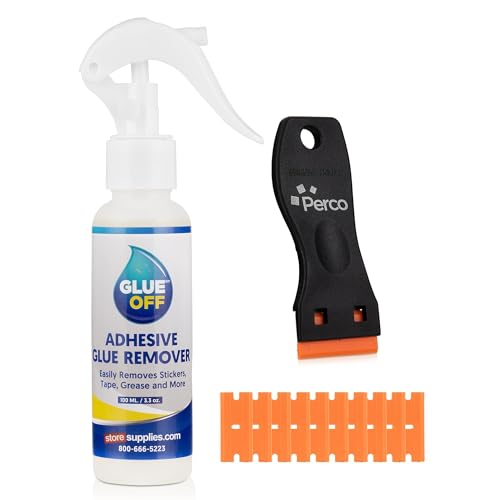
If you’re dealing with stubborn adhesive residues on durable surfaces like metal or painted automotive finishes, the Perco Glue Off Adhesive Remover & Scraper stands out as a top choice. I rely on its precision nozzle for targeted application, minimizing waste. The included plastic razor scraper safely lifts residues without scratching surfaces. I apply it generously and let it soak 5–10 minutes for best results. It tackles tree sap, tar, wax, glue, and even silicone caulk. At 3.3 fl. oz, it’s portable but efficient. Safe on plastics and finished wood, it fails on rubber, fabric, or matte finishes. Low odor means I can use it indoors with standard ventilation-no harsh fumes.
Best For: DIY enthusiasts and automotive detailers dealing with tough adhesive residues on non-porous, durable surfaces.
Pros:
- Effectively removes a wide range of substances including glue, tar, tree sap, and silicone caulk
- Includes a plastic scraper for safe, scratch-free residue removal
- Low odor and safe for use on painted surfaces and plastics with minimal fumes
Cons:
- Not suitable for use on rubber, fabric, or matte/satin finishes
- May damage absorbent or unsealed surfaces like unfinished wood and drywall
- Limited 3.3 fl. oz capacity may require frequent repurchasing for large jobs
S SATC Decal Eraser Wheel Tool

The S SATC Decal Eraser Wheel Tool stands out for professionals and DIY users needing fast, clean removal of vinyl graphics, pinstripes, and adhesive residues without damaging underlying surfaces. I rely on its solid, oversized black rubber wheel to strip decals efficiently from cars, trucks, boats, and signs. It attaches easily to any electric drill, works best between 1,500 and 3,000 RPM, and shouldn’t exceed 4,000 RPM. The medium-density rubber won’t mar metal or glass but avoids lacquer finishes. A built-in stop-use line shows when replacement is due. Its size and material cut removal time dramatically compared to scraping or solvents.
Best For: Professionals and DIY enthusiasts who need a fast, efficient, and non-damaging solution for removing vinyl decals, pinstripes, and adhesive residues from smooth surfaces like vehicles, glass, and metal.
Pros:
- Drastically reduces decal and adhesive removal time compared to scraping or chemical solvents
- Compatible with standard electric drills and operates efficiently at 1,500–3,000 RPM
- Medium-density rubber wheel removes material without marring metal, glass, or painted surfaces
Cons:
- Not suitable for use on lacquer coatings, limiting use on certain vehicle finishes
- Single-use design requires replacement when worn past the built-in stop-use line
- Performance may suffer if drill speed exceeds 4,000 RPM, risking material damage
Gomake Decal Remover Tool Kit (2-Pack)

I rely on the Gomake Decal Remover Tool Kit (2-Pack) when tackling stubborn, sun-damaged decals and adhesive residue across automotive and household surfaces. It includes two rubber eraser wheels-4-inch diameter, one 1-inch thick, the other 0.8-inch-for use with a standard drill via the included adapter. The thicker wheel handles heavy-duty removal on large areas; the thinner wheel delivers precision on edges and curves. A stainless steel scraper tackles grime on glass, tile, or ovens; the plastic razor suits delicate surfaces like walls and windows. Together, they enable fast, complete cleanup of vinyl, glue, and paint without damaging substrates.
Best For: Automotive detailers, restoration enthusiasts, and DIYers needing efficient removal of stubborn decals, adhesive residue, and paint from vehicles and household surfaces.
Pros:
- Includes two durable rubber eraser wheels of different thicknesses for both heavy-duty and precision cleaning tasks
- Comes with a drill adapter for fast, power-tool-assisted decal and adhesive removal
- Combines stainless steel and plastic scrapers to safely handle a wide range of surfaces from glass to delicate walls
Cons:
- Requires a drill to use the eraser wheels, which is not included
- Plastic scraper may wear quickly with heavy adhesive buildup
- Limited effectiveness on extremely thick or multi-layered wraps without pre-treatment
Goo Gone Automotive Cleaner 12 Fl Oz

You’ll find Goo Gone Automotive Cleaner especially effective if tackling stubborn adhesives like bumper stickers or dried tree sap without risking damage to your vehicle’s surfaces. I use it on metals, glass, plastics, rims, and upholstery-safe across interiors and exteriors. Its 12 fl. oz. spray gel sticks to vertical surfaces, reducing waste. The no-drip formula removes gum, grease, tar, brake dust, and spray paint. It won’t harm factory finishes when used as directed. Ideal for cars, boats, and RVs, it cuts through gummy buildup fast. I wipe clean with a cloth-no scrubbing hard. It preserves appearance while dissolving tough residues.
Best For: Drivers and vehicle owners looking to safely remove tough automotive messes like adhesives, sap, grease, and stains from interiors and exteriors without damaging surfaces.
Pros:
- Effectively removes stubborn residues like tree sap, bumper stickers, gum, and brake dust
- Safe for use on multiple surfaces including metal, glass, plastic, and upholstery
- No-drip spray gel formula clings to vertical surfaces and minimizes waste
Cons:
- May require ventilation during use due to strong chemical odor
- Not recommended for non-factory or aftermarket finishes without spot testing
- 12 fl. oz. size may need frequent reapplication for larger vehicles or heavy buildup
4 Pcs Plastic Razor Blade Scraper with 100 Blades
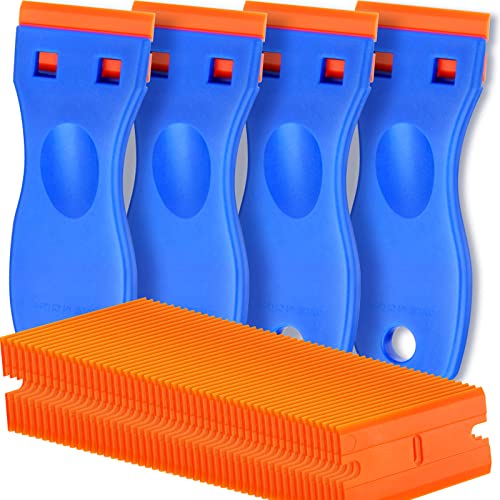
A pack of 4 plastic razor blade scrapers with 100 replacement blades delivers serious value for detail-oriented users tackling tough adhesive residues. I rely on these scrapers for cleanly removing decals, stickers, glue, and wax without harming surfaces. The plastic blades are double-edged and designed to prevent scratching on glass, painted walls, or 3D printer beds. Each handle has a thumb-dent grip for precision control and fast blade changes-one flick removes a used blade; light pressure installs a fresh one. They work well on cars, appliances, and metal. I’ve tested them repeatedly-they stay durable. Customer support responds within 24 hours if needed.
Best For: Detail-oriented users and professionals needing a reliable, scratch-free solution for removing adhesives, decals, and residues from sensitive surfaces.
Pros:
- Includes 4 durable plastic scrapers and 100 double-edged replacement blades for extended use and convenience
- Plastic blades effectively remove stubborn residues without scratching glass, paint, or 3D printer beds
- Ergonomic thumb-dent handles allow precise control and tool-free, quick blade changes
Cons:
- Plastic blades may require more frequent replacement compared to metal when tackling heavy-duty materials
- Not ideal for removing thick, hardened paint or industrial coatings
- Limited blade tightness retention over time with repeated installations
3M Stripe Off Wheel Adhesive Remover (07498)
The 3M Stripe Off Wheel Adhesive Remover (07498) is built for professionals who need precision and speed in tight, intricate spaces. I use it to remove decals, stripes, vinyl, tape, and graphics fast. It’s a solid molded wheel-4 inches in diameter and 5/8 inch thick-designed for high-speed jobs without damaging substrates. It attaches via a 3/8-16 threaded mandrel, fitting most drills and rotary tools securely. I’ve run it at up to 4,000 rpm with no issues. Its durable build guarantees long life. It’s for industrial use only-precision, efficiency, and safety built in.
Best For: Professionals who need precision and speed to remove adhesives in tight, intricate spaces.
Pros:
- Effectively removes decals, stripes, vinyl, tape, and graphics without damaging substrates
- Durable construction supports long service life and reliable performance up to 4,000 rpm
- Compatible with most drills and rotary tools for secure and easy attachment
Cons:
- Designed for industrial use only, not suitable for consumer or light-duty applications
- Requires a compatible rotary tool or drill, adding to equipment needs
- Limited reach in extremely confined areas despite compact design
Goo Gone Original Liquid 8 Ounce
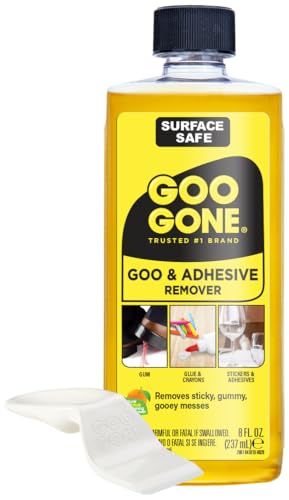
Goo Gone Original Liquid 8 Ounce stands out for users dealing with stubborn adhesive buildup on delicate surfaces. I rely on its citrus-based formula to dissolve stickers, tape residue, crayon, gum, grease, tar, and glue without damaging finishes. It’s safe on glass, metal, plastic, and wood, preserving surface integrity. The 8-ounce bottle offers precise application for small jobs or detailed work. I’ve used it effectively on wine glasses, windowsills, and vintage items from thrift stores. Parents, teachers, and collectors find it indispensable for removing labels and craft messes. Its pleasant citrus scent beats harsh chemical odors. It works fast, often in seconds.
Best For: Parents, teachers, and collectors needing a safe, effective solution for removing adhesive residues and craft messes from delicate surfaces.
Pros:
- Citrus-based formula safely removes stickers, glue, grease, and other sticky residues without damaging glass, metal, plastic, or wood
- Pleasant citrus scent avoids the harsh chemical odors common in adhesive removers
- Precision application from 8-ounce bottle makes it ideal for small, detailed cleaning tasks
Cons:
- Not recommended for use on porous surfaces like unsealed stone or delicate fabrics
- May require multiple applications for heavy or long-standing adhesive buildup
- Higher price point compared to generic adhesive removers
CowboyBOB Decal Remover Eraser Wheel (1 Pack)

You get fast, clean decal removal on vehicle paint without swirls or scratches when using the CowboyBOB Decal Remover Eraser Wheel. I rely on its premium soft rubber construction to lift vinyl decals, stickers, pinstriping, and adhesives from cars, trucks, RVs, boats, and motorcycles. It’s safe on paint but not for plastic, fiberglass, or lacquer-always test first. The wheel attaches to any standard electric or pneumatic drill via its integrated arbor. I run it at 1,500 to 3,000 RPM for best performance, never exceeding 4,000 RPM. A molded stop-use line indicates when replacement is needed. It’s efficient, precise, and backed by a satisfaction guarantee.
Best For: Professionals and DIYers looking for a fast, scratch-free solution to remove decals, stickers, and adhesives from painted vehicle surfaces.
Pros:
- Removes vinyl decals, pinstriping, and adhesives quickly without damaging paint
- Attaches easily to standard electric or pneumatic drills for efficient operation
- Features a built-in stop-use line indicator for safe and consistent performance
Cons:
- Not safe for use on plastic, fiberglass, or lacquered surfaces
- Requires careful RPM control; exceeding 4,000 RPM may reduce effectiveness or cause damage
- May require test area application to ensure compatibility with certain paint finishes
Adhesive Remover Spray with Scraper & Blades

If you’re dealing with stubborn adhesive residues on sensitive surfaces, this adhesive remover spray with scraper and blades stands out for its precision and safety. I rely on its 3.3 fl.oz water-based formula because it dissolves sticker residue, super glue, tar, and wax without harming glass, paint, or carpets. One spray works instantly-no scrubbing delays. The 2-in-1 scraper includes 19 durable plastic blades and an ergonomic handle for control. Double-edged blades allow reverse use when dulled. It excels on bumpers, windows, and floors. I’ve removed tree sap and silicone sealant with zero surface damage. The kit includes everything I need. A satisfaction guarantee covers replacements or refunds-no risk.
Best For: DIY enthusiasts, auto detailers, and homeowners seeking a safe, efficient solution for removing tough adhesives from delicate surfaces without causing damage.
Pros:
- Fast-acting, water-based formula dissolves stubborn residues like sticker glue, super glue, tar, and wax with just one spray
- Includes 2-in-1 scraper with 19 durable, double-edged plastic blades for precision and extended usability
- Safe on a wide range of surfaces including glass, car paint, bumpers, carpets, and floors with no damage
Cons:
- Small 3.3 fl.oz spray bottle may require frequent refills for large or multiple jobs
- Plastic blades, while safe for surfaces, may dull quickly on heavy-duty adhesives
- Limited coverage area per spray may necessitate repeated applications for larger stains
QWORK Car Decal Remover Wheel Set

The QWORK Car Decal Remover Wheel Set stands out for users who prioritize speed and surface safety in adhesive removal. I rely on its dual-wheel system-one 4-inch grooved wheel and a 3.5-inch pneumatic rubber wheel-to strip decals, vinyl wraps, and bonded stickers cleanly. The soft rubber construction protects automotive paint but isn’t safe for plastic or painted aluminum; test first. It attaches to any household drill via the included adapter, turning slow scraping into fast, precise removal. I’ve cleared sun-damaged pinstripes from trucks and boats in minutes. Drill-powered action guarantees non-abrasive, efficient results on rigid surfaces like windows and metal.
Best For: DIY car enthusiasts and detailers who need a fast, non-abrasive way to remove decals, vinyl wraps, and adhesives from vehicles without damaging paint.
Pros:
- Dual-wheel design with 4-inch grooved and 3.5-inch rubber wheels for versatile, efficient removal
- Safe on automotive paint and powered by a household drill for quick results
- Effectively removes sun-damaged vinyl, stickers, and pinstripes from rigid surfaces like metal and windows
Cons:
- Not safe for use on plastic surfaces such as plastic or painted aluminum
- Requires testing on a discreet area before full application
- Performance may vary if drill speed is not properly adjusted
Factors to Consider When Choosing a Decal Remover
You need to check surface compatibility first-some removers work on paint but damage vinyl or plastic. Look at the application method: sprays offer even coverage, while gels stay put on vertical surfaces without dripping. Tool durability, removal speed, and material safety matter too-choose non-toxic formulas that break down adhesive fast without harming surfaces or tools.
Surface Compatibility
One critical factor stands out when selecting a decal remover: surface compatibility. You must verify the product’s safety for your material, as some removers damage rubber, leather, matte finishes, or unsealed stone. While safe on glass and metal, harsh solvents can degrade sensitive surfaces. Water-based removers are gentler, making them ideal for painted finishes and plastics, reducing risks of discoloration or chemical degradation. Solvent-based options, though stronger, often compromise delicate substrates. Porous materials like unfinished wood, drywall, or fabric can absorb liquids, leading to staining or warping-avoid direct application. Tools matter too: rubber or plastic scrapers prevent scratches on automotive paint, glass, and coated metals. Never use high-speed rotary tools on lacquer or soft plastics-excessive RPM generates heat and causes irreversible damage. Match both chemical and mechanical methods to your surface specs.
Application Method
After confirming surface compatibility, the next step is selecting the right application method for effective decal removal. You’ll need to decide between chemical and mechanical approaches. Spray-on removers deliver fast, even coverage-ideal for large or multiple decals-activating within 60–90 seconds to loosen adhesive bonds. Gel formulas stay in place on vertical surfaces, offering 10–15 minutes of dwell time for stubborn residues without dripping. Some products require manual scrubbing with a plastic scraper or microfiber cloth to lift softened adhesive. Others work passively after application, needing just a final wipe. For speed on durable surfaces, rotary eraser wheels attach to a drill and use friction to erase decals in seconds. Your choice depends on adhesive strength, surface sensitivity, and time available. Each method has trade-offs in labor, precision, and exposure.
Tool Durability
A high-quality decal removal tool must withstand demanding conditions without compromising performance. You need tools made from solid molded rubber with a stop-use line indicator-this shows when wear demands replacement, guaranteeing safety and efficiency. Durable construction withstands rotational speeds up to 4,000 RPM, maintaining integrity during aggressive adhesive removal. Look for reinforced wheels with thick profiles; models exceeding 5/8-inch thickness resist deformation under prolonged pressure. Medium-density rubber balances abrasiveness and longevity, letting you work repeatedly on rigid surfaces without rapid wear. Secure attachment matters-choose tools compatible with standard drill adapters and threaded mandrels. This minimizes wobble, reduces stress on the tool, and prevents premature failure. These features combined guarantee reliable, consistent performance across tough jobs. Don’t settle for flimsy designs-your tool should last, perform, and deliver precision every time.
Speed Of Removal
When removing decals efficiently matters, speed becomes a critical factor in selecting the right tool. Electric drill-powered eraser wheels remove decals in seconds, operating ideally between 1,500 and 3,000 RPM. This cuts labor time drastically compared to scraping by hand. Larger 4-inch eraser wheels cover more surface per rotation, speeding up removal on big decals or full vinyl wraps. High-speed rotary tools reach up to 4,000 RPM, breaking down tough, bonded adhesives and layered graphics fast. Mechanical scrubbing with a drill-mounted wheel applies steady friction and pressure, removing aged or sun-damaged vinyl quicker than heat guns or solvents alone. Precision nozzles on liquid removers let you target adhesive spots directly, reducing soak time to just 5–10 minutes before wiping. Together, these features slash removal time while boosting efficiency. Choose tools that maximize speed without sacrificing control.
Material Safety
Surface integrity hinges on selecting a decal remover compatible with your material type. Always verify the chemical composition of the remover against your surface, especially on matte, satin, or unpainted finishes. Solvent-heavy formulas can stain or warp unsealed wood, drywall, or fabric due to absorption. Avoid using them on porous materials. Rubber or plastic-based removers may degrade faux stainless steel, lacquer coatings, and sensitive polymers-test first on a hidden spot. High-speed tools generate heat that can melt plastic, fiberglass, or thin paint if operated above 3,000 RPM. Instead, use soft rubber eraser wheels or plastic blades. They’re non-abrasive and ideal for painted or delicate surfaces. These tools remove residue without damaging the finish. Matching your remover to material specs prevents costly damage. Safety and compatibility guarantee clean removal without compromising the underlying surface.
Ease Of Use
Because your efficiency depends on how easily a decal remover integrates into your workflow, prioritize tools designed for comfort and precision. Ergonomic handles and lightweight builds reduce hand fatigue during extended use, improving control. Look for models with textured grips to prevent slippage under stress. Spray gels and precision nozzles deliver targeted application, minimizing overspray and simplifying cleanup. Some removers work efficiently with electric drills, cutting removal time by up to 60% on large surfaces. This compatibility enhances speed without sacrificing surface integrity. Pre-marked wear indicators, like stop-use lines on eraser wheels, guarantee consistent performance and prevent substrate damage. Dual-sided scrapers and quick blade replacement systems minimize downtime, letting you switch edges in seconds. These features streamline repetitive tasks. Choose designs that balance automation support with manual versatility. Each detail directly impacts how fast and safely you complete jobs.
Frequently Asked Questions
Can I Use Decal Removers on Painted Surfaces Without Damage?
Yes, you can use decal removers on painted surfaces without damage if you choose formulas labeled safe for clear coats. Most quality removers contain non-abrasive, non-corrosive solvents like citrus-based D-limonene. These break down adhesive polymers without softening paint binders. Always test in a hidden area first. Apply sparingly with a microfiber cloth. Wipe gently-aggressive rubbing risks marring. Rinse with water afterward to halt chemical action.
Are Adhesive Removers Safe for Indoor Use?
Yes, most adhesive removers are safe for indoor use if you guarantee proper ventilation. You must check the volatile organic compound (VOC) content-opt for formulas under 50 g/L. Apply in well-ventilated areas using gloves and eye protection. Water-based removers release fewer fumes than solvent-based ones. Always follow manufacturer safety data sheets (SDS). You avoid respiratory irritation by using products labeled “low odor” or “indoor-safe.”
How Do I Dispose of Used Adhesive Remover Products?
You dispose of used adhesive remover products by checking local hazardous waste regulations first. Most contain solvents that can’t go in regular trash. You pour leftover liquid into a sealed container, label it, and take it to a certified disposal facility. Wipes or rags with residue dry completely outdoors before disposal to prevent spontaneous combustion. You never flush solvents down drains-they contaminate water systems. Always follow product-specific instructions on the SDS sheet.
Can These Tools Remove Vinyl Wrapping Residue?
Yes, these tools remove vinyl wrapping residue effectively. They contain solvents like dipropylene glycol methyl ether that break down adhesive polymers. Apply with a microfiber cloth, let sit 30–60 seconds, then wipe clean. Most formulas work on acrylic and rubber-based adhesives. Use in well-ventilated areas. Avoid prolonged contact with painted surfaces-limit exposure to under two minutes to prevent finish damage. Results vary by adhesive age and surface type.
Do Any of These Products Have Strong Chemical Odors?
Yes, some have strong chemical odors due to potent solvents like limonene or toluene. You’ll notice an immediate sharp scent upon application. Products with >80% citrus-based solvents often emit a pungent, orange-like smell. Ventilate the area-wear gloves and a mask. Odor intensity correlates with evaporation rate; faster drying means more fumes. Low-VOC options exist but may require longer dwell times. Check SDS sheets for exact chemical composition and exposure limits.